


Walk into any well-run nutritional testing lab today, and you’ll notice a pattern: the labs that consistently deliver fast, accurate results aren’t necessarily the ones with the biggest budgets—they’re the ones that matched their equipment to their actual sample mix.
Over the past few years, we’ve talked with dozens of lab managers—some setting up from scratch, others upgrading piece by piece. The questions are almost always the same:
“We do mostly nutrition labeling—moisture, ash, fat, protein, fiber, etc. What’s the smartest way to equip without overspending?”
There’s no one-size-fits-all answer, but there is a clear logic behind every sensible equipment list. This article breaks down the five core analytical categories, what each really does for your workflow, and which configuration options actually matter in daily use. We’ll also point to specific Drawell models where they’ve proven themselves in real labs—not as a sales pitch, but as a reference point.
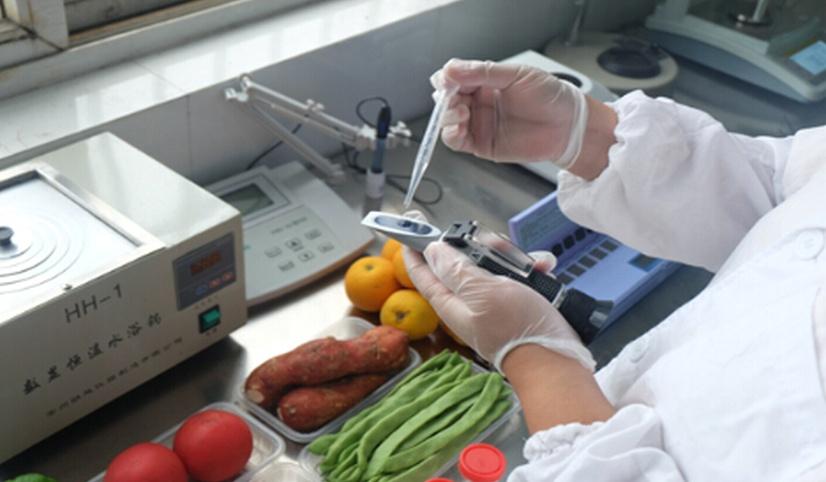
1. Moisture Analyzers: The Baseline That Affects Everything Else
What’s on the market
- Halogen moisture analyzers – Fast heating, go to for routine food, feed, grains.
- Infrared moisture analyzers – Non contact heating, better for sticky or foaming samples (chocolate, jam).
- Convection oven method – Reference method, paired with an analytical balance; takes 4–6 hours.
- Microwave moisture analyzers – Quick penetration, used for tobacco, paper, but rare in nutrition labs.
Why it matters
Moisture content isn’t just a quality spec—it’s the anchor for every other component reported on a dry basis. A 1% error in moisture can shift protein or fat values by more than 5% after conversion. For high value products like milk powder or meat, moisture is both a cost control point and a compliance baseline.
Key configurations at a glance
| Parameter | What to look for | What fits your lab |
| Balance precision | 1 mg (0.001 g) / 0.1 mg (0.0001 g) | 1 mg is enough for QC; reference method needs 0.1 mg + oven |
| Heating element | Halogen / IR ceramic | Halogen for general use; IR for high sugar samples |
| Temperature control | Step programmed ramping | Prevents surface crusting – essential for syrups, doughs |
| Data handling | RS232/USB, GLP export, built in method library | Multi matrix labs benefit from stored methods (50–100 profiles) |
| Accessories | Glass fiber pads, quartz sand, splash shields | Mandatory for sugary/fatty samples |
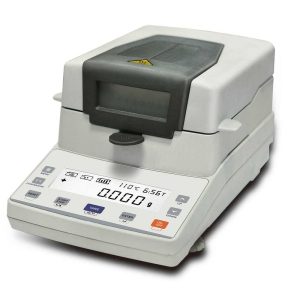
Drawell providing you Halogen series, Automatic Intelligent Moisture Analyzer is also avaliable.
2. Ash Determination Systems: More Than Just Burning
Equipment types
- Muffle furnace – Basic batch ashing, still the workhorse for low throughput labs.
- Automated ash systems – Combine carbonization, ashing, cooling, and weighing in one sequence.
- Microwave ashing furnace – Cuts time from 4–6 hours to 30–60 minutes; suited for high volume labs.
Why it matters
Ash value reflects total mineral content. Beyond nutrition labeling, ashing is the mandatory first step for heavy metal analysis (Pb, As, Cd). If your lab plans to expand into elemental testing, don’t let ash capacity become your bottleneck.
Quick configuration guide
| Parameter | What to look for | What fits your lab |
| Temperature range | 550–600 °C (standard), up to 1200 °C | 550 °C covers 99% of food/feed; high temp for plastics |
| Control accuracy | ±1 °C to ±5 °C | ±5 °C is perfectly adequate for routine ashing |
| Throughput | Batch size; continuous feed option | >20 samples/day → consider automated or microwave |
| Exhaust | Built in or external fume vent | Protein/fat rich samples (fishmeal, meat) must have exhaust |
| Safety | Over temp alarm, door interlock, double wall casing | Standard on all reputable brands |
Here are four types of muffle furnaces provided by Drawell:

3. Fat Analyzers: The “Bound Fat” Trap
Equipment types
- Soxhlet extractors – Classic principle, now semi or fully automatic.
- Automated fat analyzers (Randall method) – Boiling + rinsing, cuts time to 1–2 h, solvent recovery >85%.
- Acid hydrolysis fat analyzers – For bound fat in dairy, baked goods, emulsified meats; works alongside Soxhlet to give total fat.
- NIR fat analyzers – Non destructive screening, needs calibration, best for uniform matrices.
Why it matters
Total fat is the main calorie contributor. If you only run Soxhlet, you’re reporting free fat only—bound fat stays in the residue. For dairy, infant formula, or processed meat, the difference can exceed 30%. Acid hydrolysis isn’t optional for those samples; it’s mandatory.
| Parameter | What to look for | What fits your lab |
| Extraction principle | Classical Soxhlet / Randall | Randall method is 3× faster, same accuracy |
| Solvent recovery | ≥80% (pass), ≥90% (excellent) | Recovery rate directly affects running cost |
| Batch size | 6 / 12 / 24 positions | 6 position for <20 samples/day; 12 position for 20–50 |
| Acid hydrolysis module | Standalone or integrated | Must have if you test dairy, bakery, meat products |
| Anti bumping | IR level sensor vs. classic siphon | IR sensor prevents sudden boiling spray – genuine safety feature |
| Filtration crucible | Ceramic fiber / sintered glass | Ceramic reusable, resists clogging; glass cheaper but fragile |
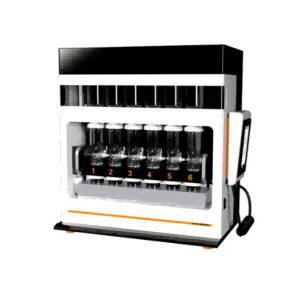
Drawell recommended models for fat analysis:
| Model | Key Features | Best suited for |
| DW SXT 02 / DW SXT 06 Soxhlet Extractors | • 2 position / 6 position | Small labs, teaching, occasional testing |
| • Digital temperature control | ||
| • Solvent recovery system | ||
| • Glass or stainless steel condensers | ||
| DW SOX406 / DW SOX606 Automatic Fat Analyzers | • Randall (boiling + rinsing) method | Routine fat extraction in food/feed labs; SOX606 for larger sample sizes |
| • Analysis time: 1–2 h | ||
| • Solvent recovery ≥85% | ||
| • 6 position (SOX406) / 6 position with larger flasks (SOX606) | ||
| • IR level sensor for anti bumping |

4. Protein / Nitrogen Analyzers: Kjeldahl vs. Dumas – No Universal Winner
Two roads, neither obsolete
- Kjeldahl analyzers – Wet chemistry, universal matrix tolerance, 1–2 h digestion, uses sulfuric acid + catalyst.
- Dumas combustion analyzers – Dry combustion, 3–5 min per run, no acids, higher initial cost.
- NIR protein analyzers – Rapid screening, needs robust calibration, suited for grain/feed mills.
Why it matters
Protein is calculated from nitrogen × conversion factor (usually 6.25). Kjeldahl is the official method in most food standards. Dumas is the cleaner, faster alternative—dominant in large commercial labs and increasingly affordable for mid sized labs.
Specs that separate smart buys from regrets
| Parameter | What to look for | What fits your lab |
| Distillation & titration | Semi auto (manual titration) / Fully auto (distill titrate in one) | >30 samples/day → go fully automatic; productivity doubles |
| Nitrogen range | 0.1–200 mg N | Covers all routine food/feed |
| Recovery | ≥99.5% | Baseline for any Kjeldahl system |
| Digestion block capacity | 20 / 40 / 60 tubes | Digestion is the true throughput bottleneck |
| Automation | Auto reagent dosing, waste discharge, tube cleaning | Reduces operator contact with hot acid – real lab safety upgrade |
| Dumas parameters | Combustion 900–1200 °C, 60–120 autosampler, ≥3 stage CO₂ traps | High volume labs should calculate cost/test, not just instrument price |
Drawell recommended models for protein/nitrogen analysis:
| Model | Key Features | Best suited for |
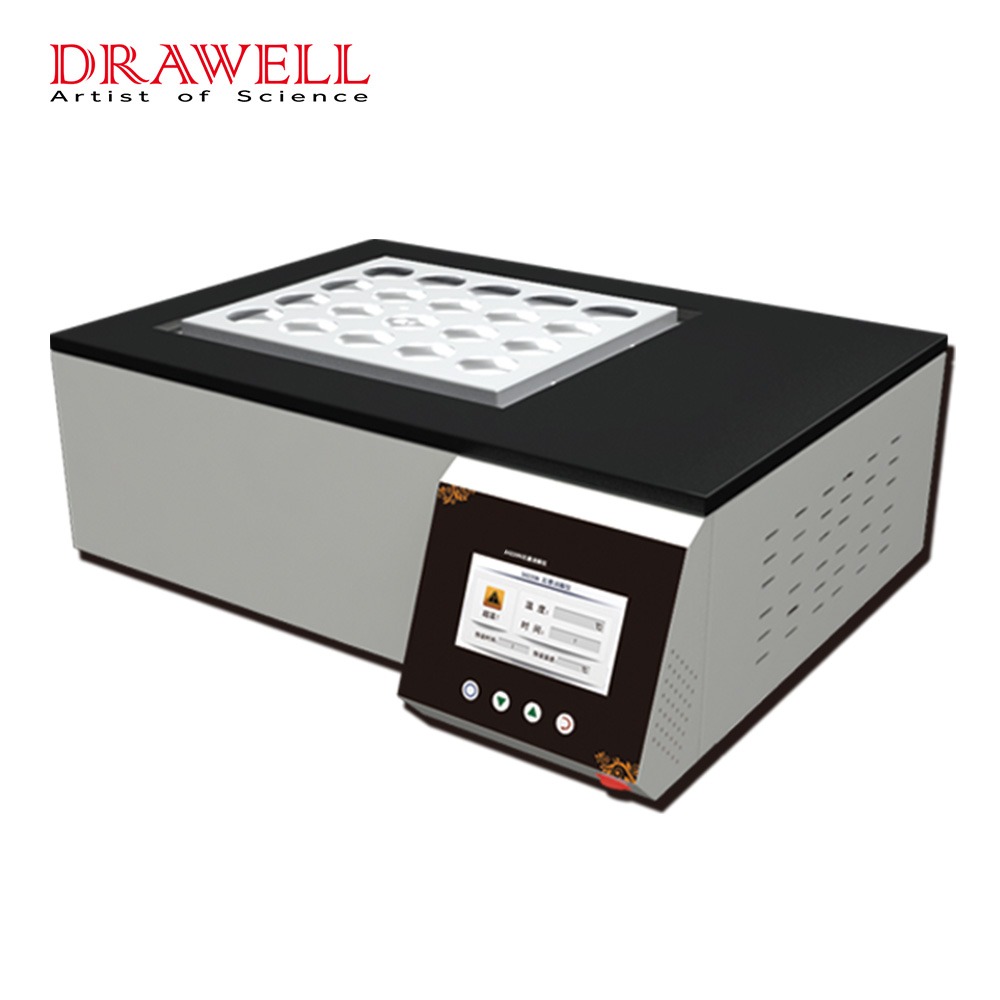
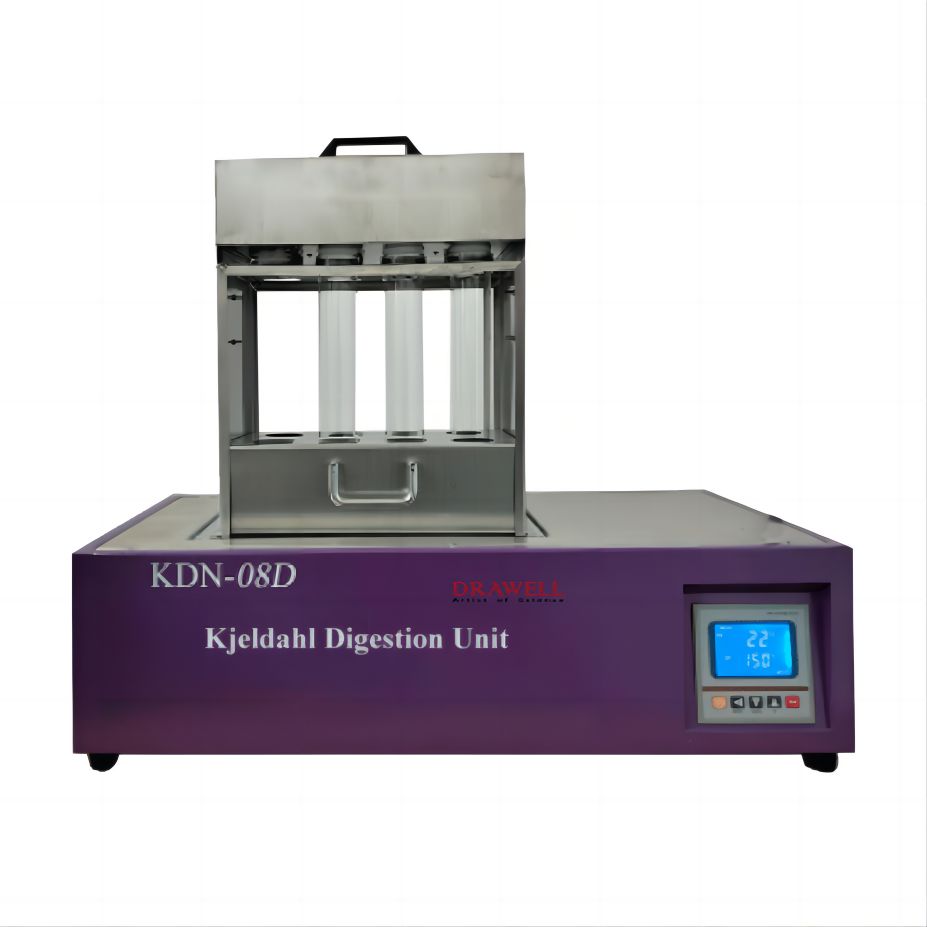
| DW KDN D Series Digestion Furnace | • 20 / 40 / 60 holes• Digital display, program temperature control (room 450 °C)• Aluminum block, even heating• Exhaust manifold optional | Kjeldahl digestion – the capacity your lab actually needs |
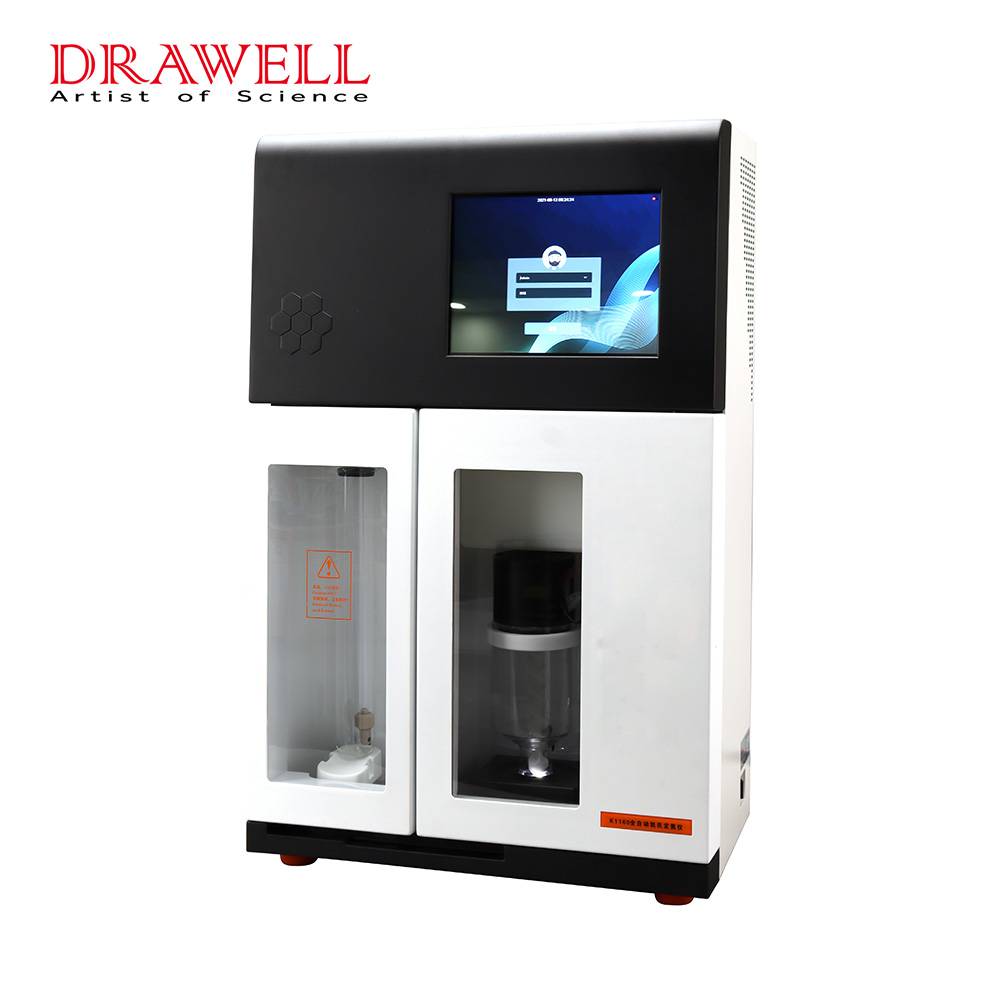
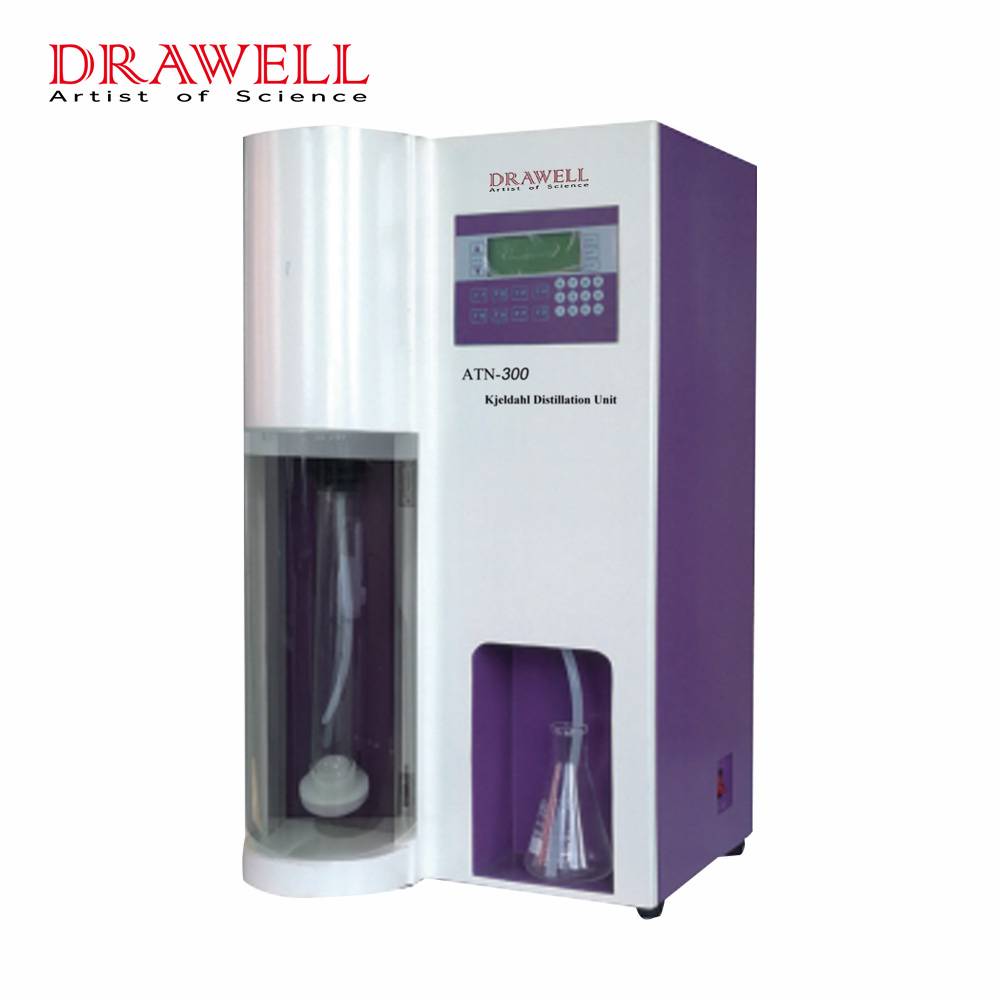
| ATN 1100 / DW K1160 Automatic Kjeldahl Analyzers | • Distillation only (manual titration)• Automatic alkali/boric acid/water addition• Distillation time: 5–10 min• Recovery ≥99.5% | Labs that prefer external titration or already have titrators |
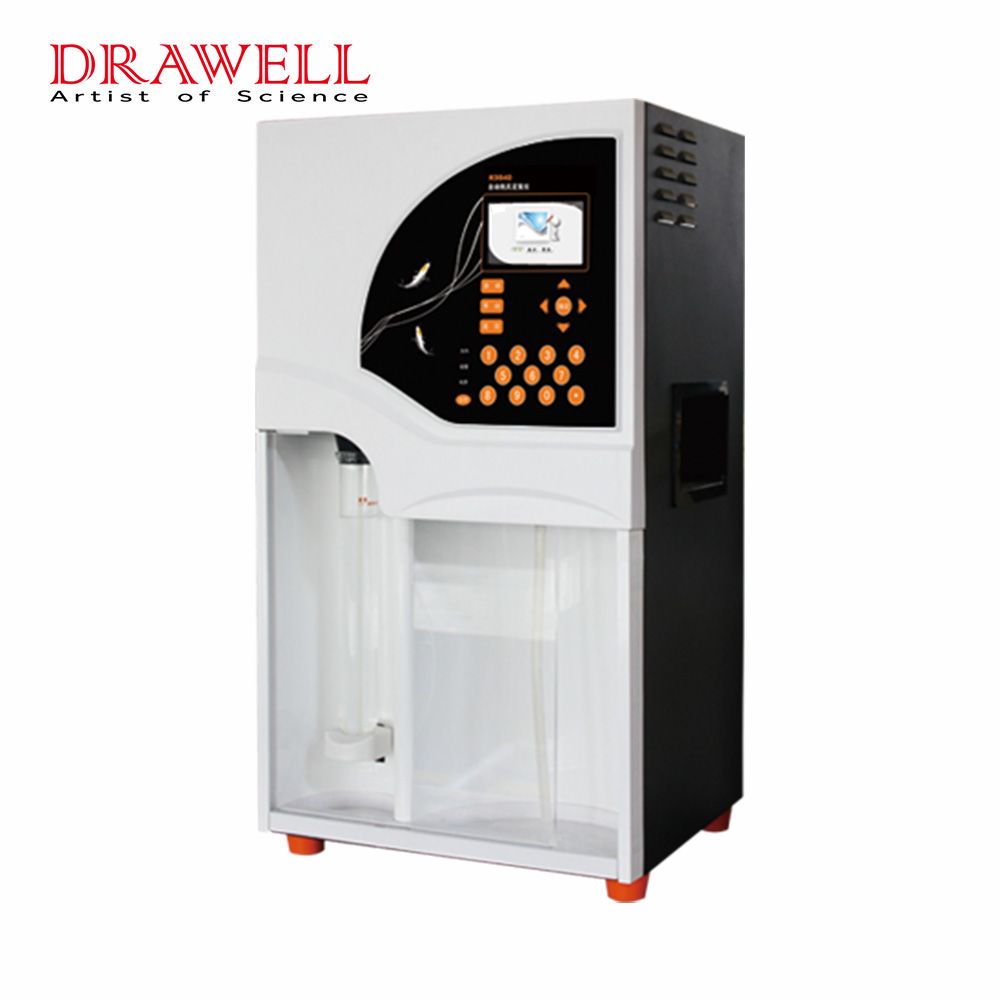
| DW K9840 Auto Kjeldahl Distillation Unit | • Distillation + built t in titrator (optional)• 0.1–200 mg N range• USB/RS232, GLP functions | Mid volume labs wanting single instrument simplicity |
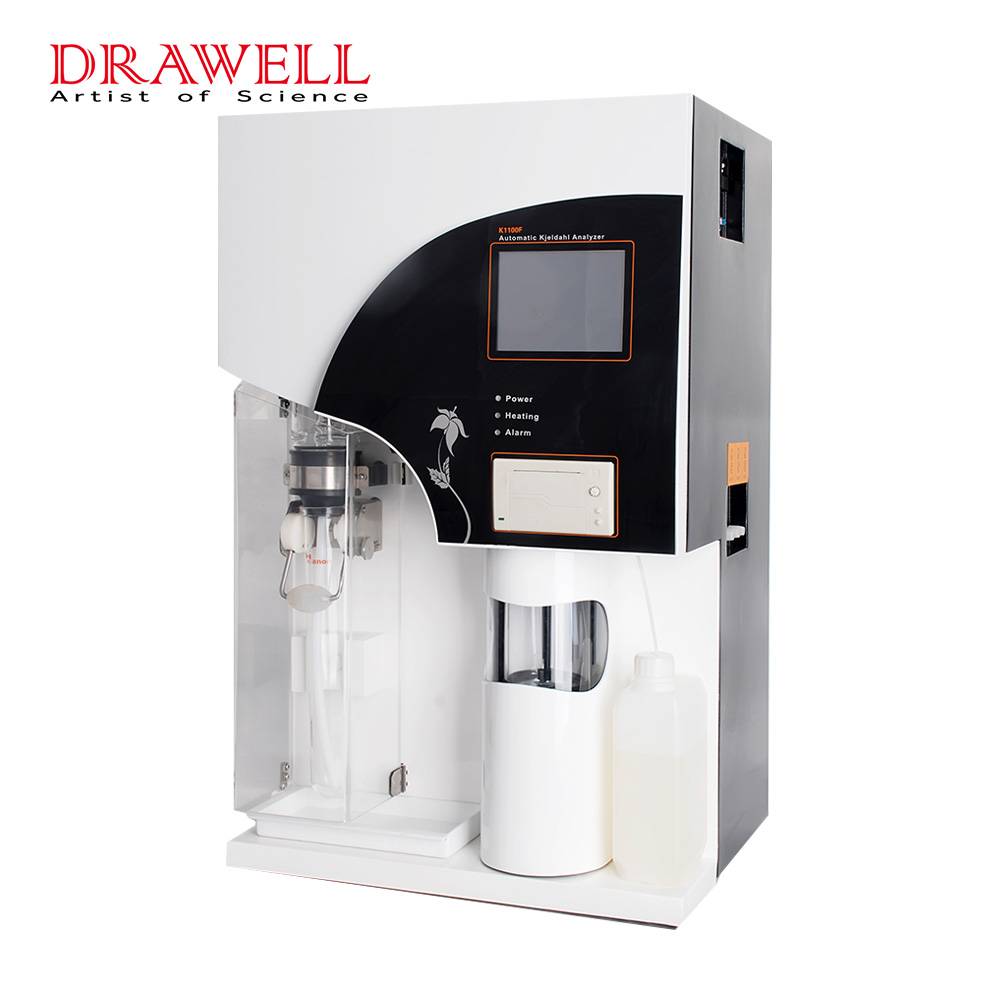
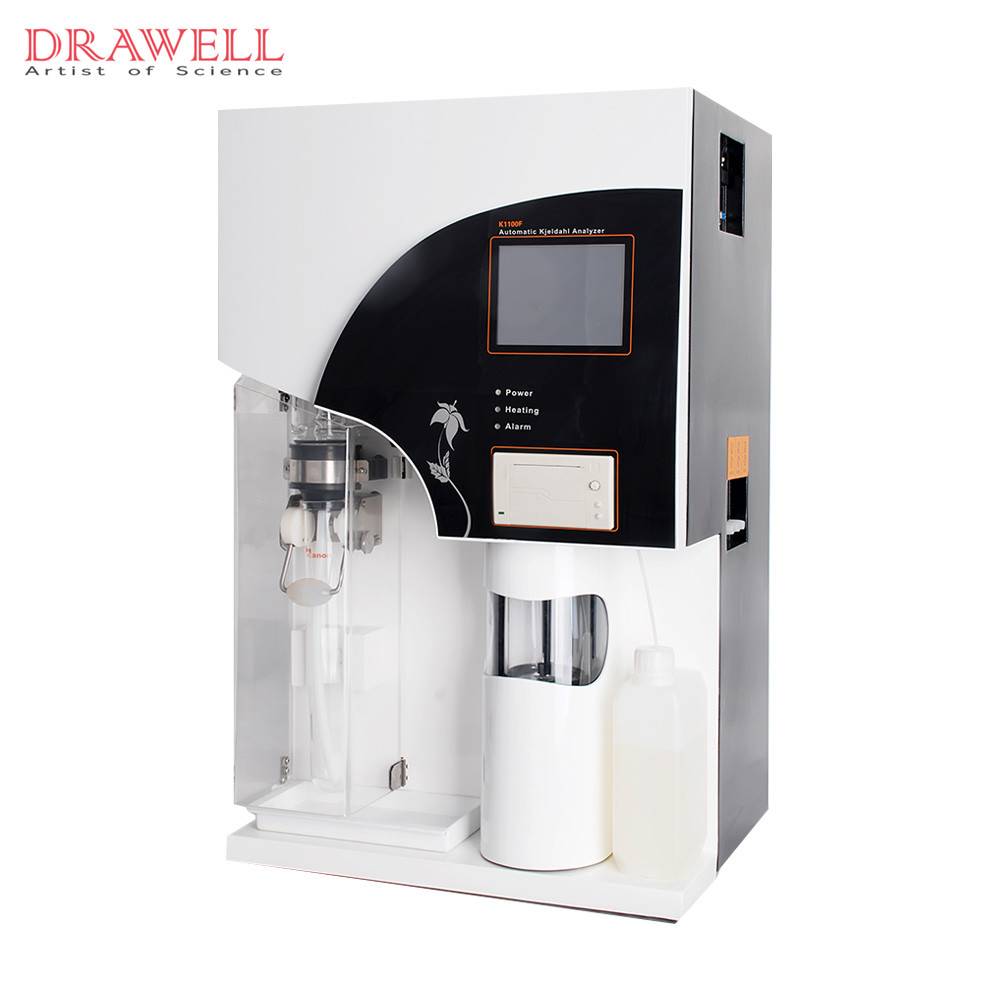
| DW K9860 / DW K1100F Automatic Kjeldahl Analyzers | • Fully integrated distillation & titration• K1100F: ARM processor, 300 mL tubes, titration during distillation• K9860: 2 titration cups, compatible with 300/400 mL tubes• Burette resolution: 1.0 μL/step | High throughput labs, maximum automation and accuracy |
| DW ATN 100 / DW ATN 300 Automatic Azotometers (Dumas) | • Combustion method, no hazardous chemicals• Analysis time: 3–5 min• 60 position (ATN 100) / 120 position (ATN 300) autosampler• TCD detector, ≥99.5% recovery | Labs seeking green chemistry, high sample turnover, or running both solid and liquid samples |

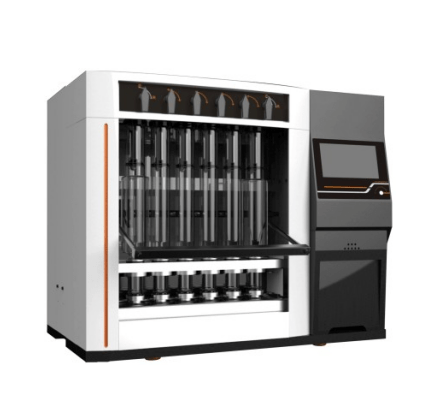
5. Fiber Analyzers: Crude Fiber and Dietary Fiber – Not Even Cousins
They serve completely different purposes
- Crude fiber analyzers – Acid/alkali digestion, measures cellulose+hemicellulose+lignin. Feed industry standard.
- Dietary fiber analyzers – Enzymatic gravimetric method, measures total/soluble/insoluble dietary fiber. Mandatory for human food nutrition labels.
- Filter bag technology – Samples digested inside sealed filter bags; batch sizes up to 30+, no filter clogging.
Why it matters
You cannot use a crude fiber analyzer to report dietary fiber—the methods share nothing but the word “fiber.” If your lab accepts food testing contracts (bakery, cereals, health foods), a dietary fiber system is non negotiable.
What to check before buying
| Parameter | What to look for | What fits your lab |
| Crude fiber digestion | Automatic pre heated acid/alkali dosing, constant temp digestion | Basic requirement; watch for filter clogging |
| Filtration material | Ceramic filter plates / sintered glass | Ceramic lasts longer, resists corrosion |
| Filter bag system | Batch size ≥30, no frit cleaning | High throughput feed labs should consider bag technology |
| Dietary fiber enzymes | Automatic addition of heat stable α amylase, protease, amyloglucosidase | Full automation saves hours of manual pipetting |
| Precipitation unit | 78% ethanol pre heating, constant temp precipitation, vacuum filtration | Historically the bottleneck; newer systems integrate it |
| Correction step | Need separate protein & ash data for blank correction | Dietary fiber results are incomplete without protein/ash correction |
Drawell recommended models for fiber analysis:
| Model | Key Features | Best suited for |
| DW F800 Fiber Analyzer | • For crude fiber in feed and food• 6 position digestion• Automatic pre heating of acid/alkali• Ceramic filter plates for long life• Optional cold extraction unit | Feed mills, compound feed QC, agricultural labs |
6. Supporting Equipment – Briefly
- NIR analyzers – Moisture, protein, fat, fiber in under 1 min; excellent for incoming raw material screening.
- HPLC systems – Fat soluble vitamins (A, D, E, K), amino acids, sugars.
- AAS / ICP OES – Minerals (Ca, Fe, Zn) and trace elements.
- Sample preparation – Centrifugal mills (particle size control), homogenizers, shaking water baths, pH meters.
Every equipment category in this list has a “good” version and a “fast” version. The good version gets the result; the fast version gets you ten more results in the same shift.
There’s no shame in starting with the good version. But if your sample volume is already past 30 per day on any of these methods, do the math: the time saved over two years will almost certainly cover the upgrade cost. That’s not an upsell—it’s just the arithmetic of running a lab.
All Drawell models mentioned are current production items. For the latest specifications or to compare configurations, visit the product pages or contact us now.
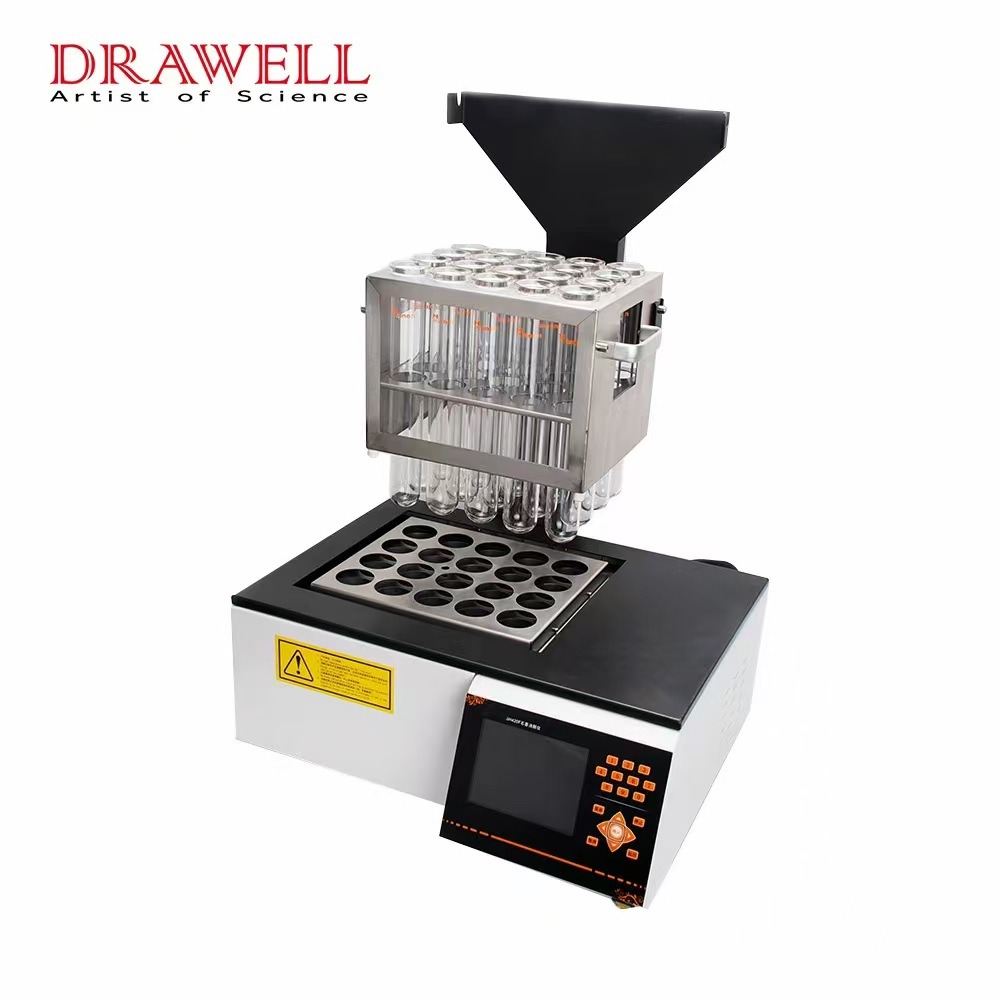
Related Products Recommendation

Get Quote Here!
Latest Posts


What Next?
For more information, or to arrange an equipment demonstration, please visit our dedicated Product Homepage or contact one of our Product Managers.


