


Rotary Evaporator
What is Rotary Evaporator?
Rotary evaporator, also known as rotavap or rotovap, is an evaporation instrument widely used in laboratories. It is composed of motor, distillation bottle, heating pot, condenser tube and other parts. It is mainly used for continuous distillation of volatile solvents under reduced pressure, used in chemistry, chemical industry, biomedicine and other fields. Rotary evaporators can be used to recover and evaporate organic solvents. It uses a motor to drive the distillation bottle to rotate. Since the distiller is constantly rotating, the addition of zeolite can be avoided without bumping. At the same time, due to the continuous rotation, the liquid is attached to the wall of the distiller, forming a layer of liquid film, which increases the evaporation area and accelerates the evaporation speed.
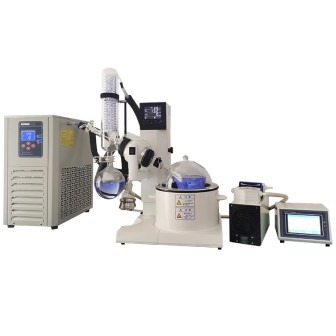
Features of Rotary Evaporator
- Explosion-proof rotary evaporator with condenser for high recovery.
- Reasonable structure, exquisite materials.
- Fast drying.
- The volume of a single sample can be processed at one time.
- The price is reasonable.
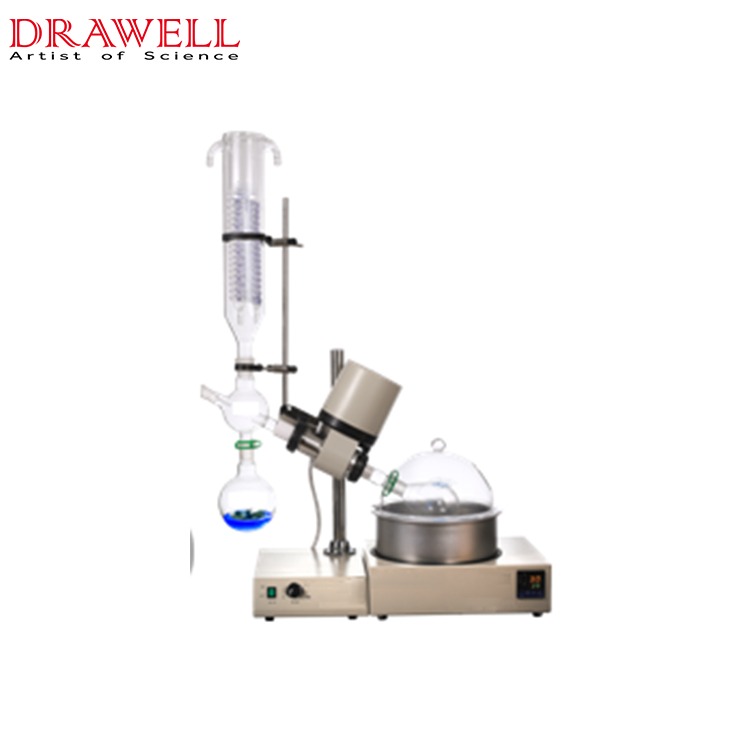
DW-52 Series of Water Bath Rotary Evaporator
• Capacity: Max.0.18/0.21L/min
• Digital display; 0-150/130rpm/min
• Flask Volume: 0.25-2/3L
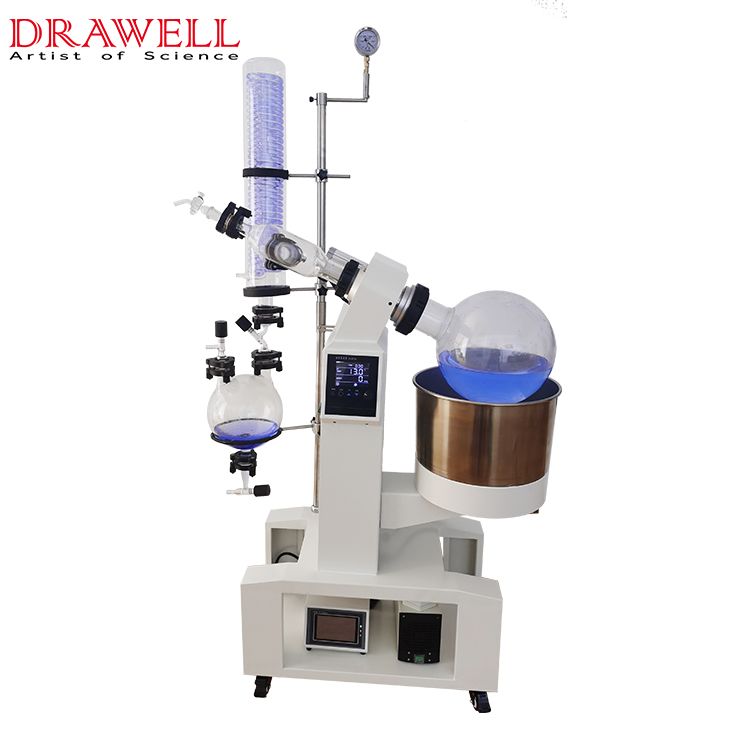
DW-5210A Large Capacity Floor Type Rotary Evaporator
• Capacity: Max.3.5L/min
• LCD Screen, 10-130rpm/min
• Flask volume: 5-10L
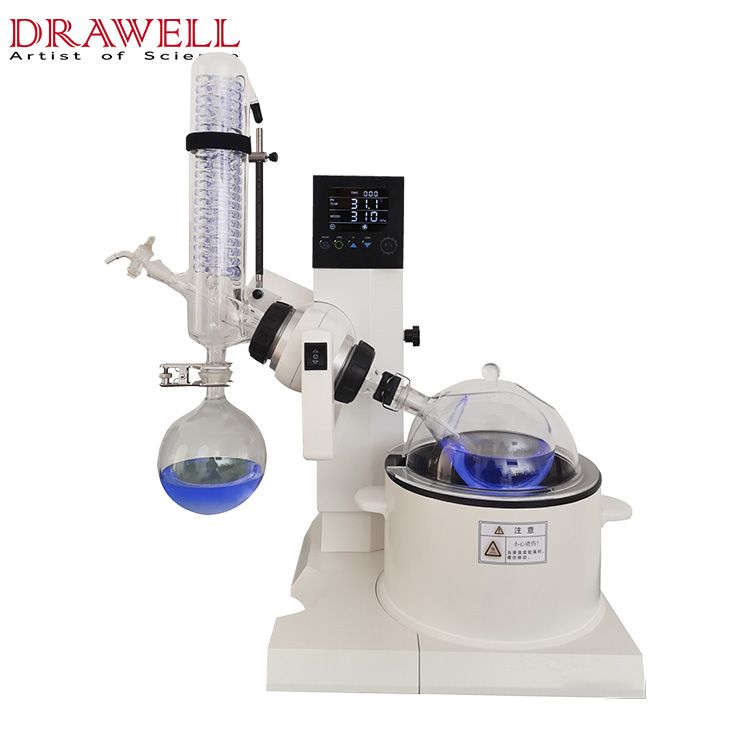
DW-ADQ Series Multi Manifold Rotary Evaporator
• Capacity : Max.25/27/43ml/min
• LCD Screen; 0~310/200rpm/min
• Flask volume: 0.25–2/3/5L

DW-ORE Series Oil Dual-Purpose Rotary Evaporator
• Oil Bath:RT.-210℃±2℃
• Capacity : Max.25/43ml/min
• LCD Screen; 0~310/200rpm/min
• Flask volume: 0.25–2/3/5L
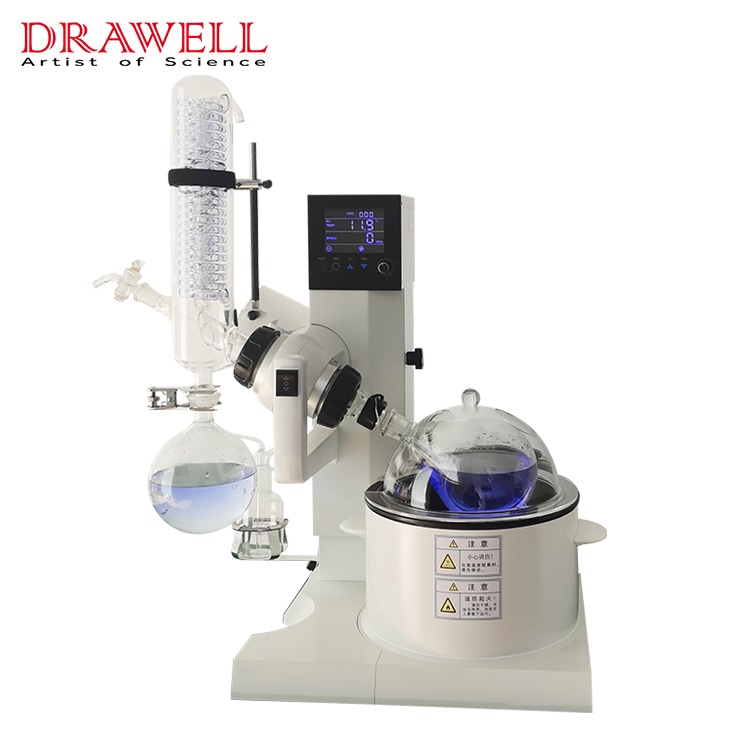
DW-RE Series Water Dual-Purpose Rotary Evaporator
• Capacity : Max.25/43ml/min
• LCD Screen; 0~310/200rpm/min
• Flask volume: 0.25–2/3/5L
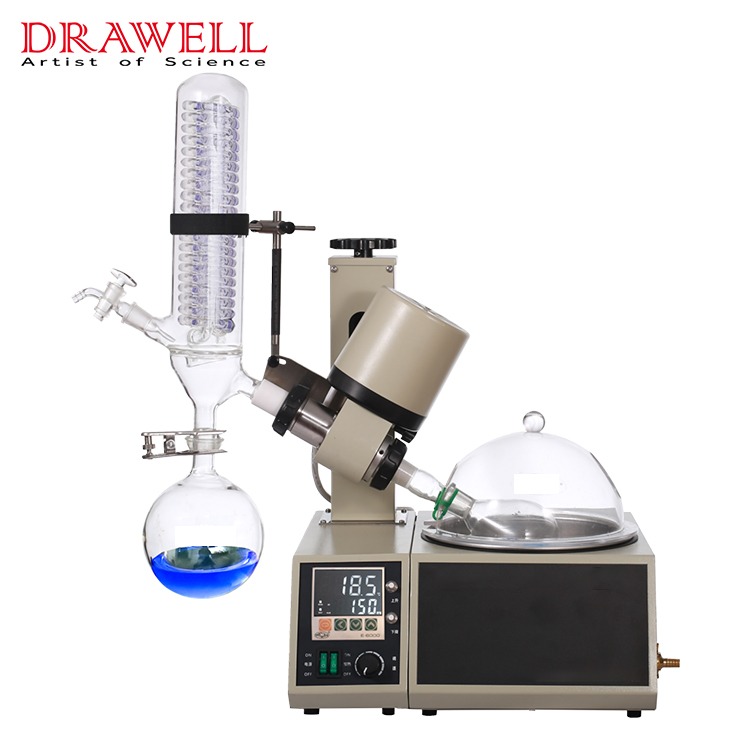
DW-RE-52AA Water Bath Rotary Evaporator
• Capacity : Max.21ml/min
• Digital display; 0-150rpm/min
• Flask volume: 0.25–2L

SZ Series Automatic Pure Water Distiller
• Single/Double/Triple stage automatic pure water distiller
• Input power: 1.5/3/4.5Kw
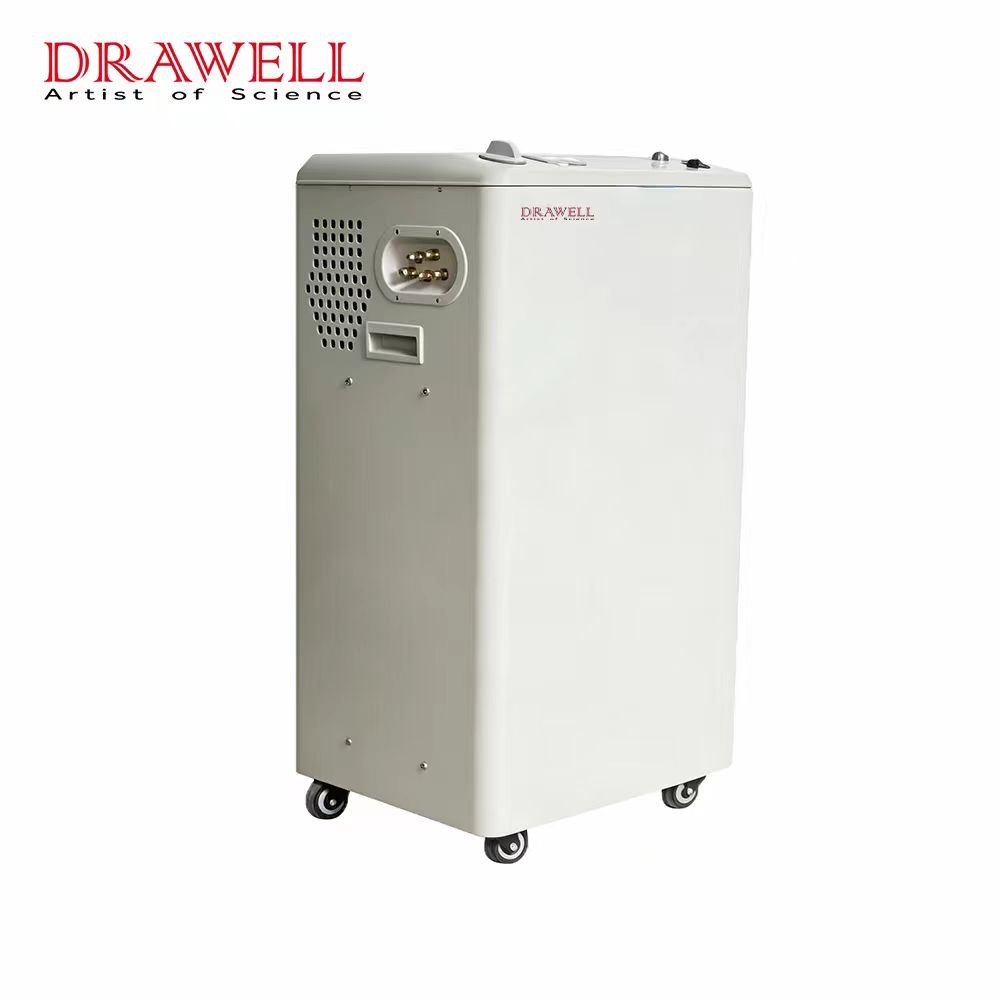
SHZ-95B Circulating Water Vacuum Pump
• 10 L/min Unit Extraction
• ≥50 L Tank
• ≥80 L/min Water Flow
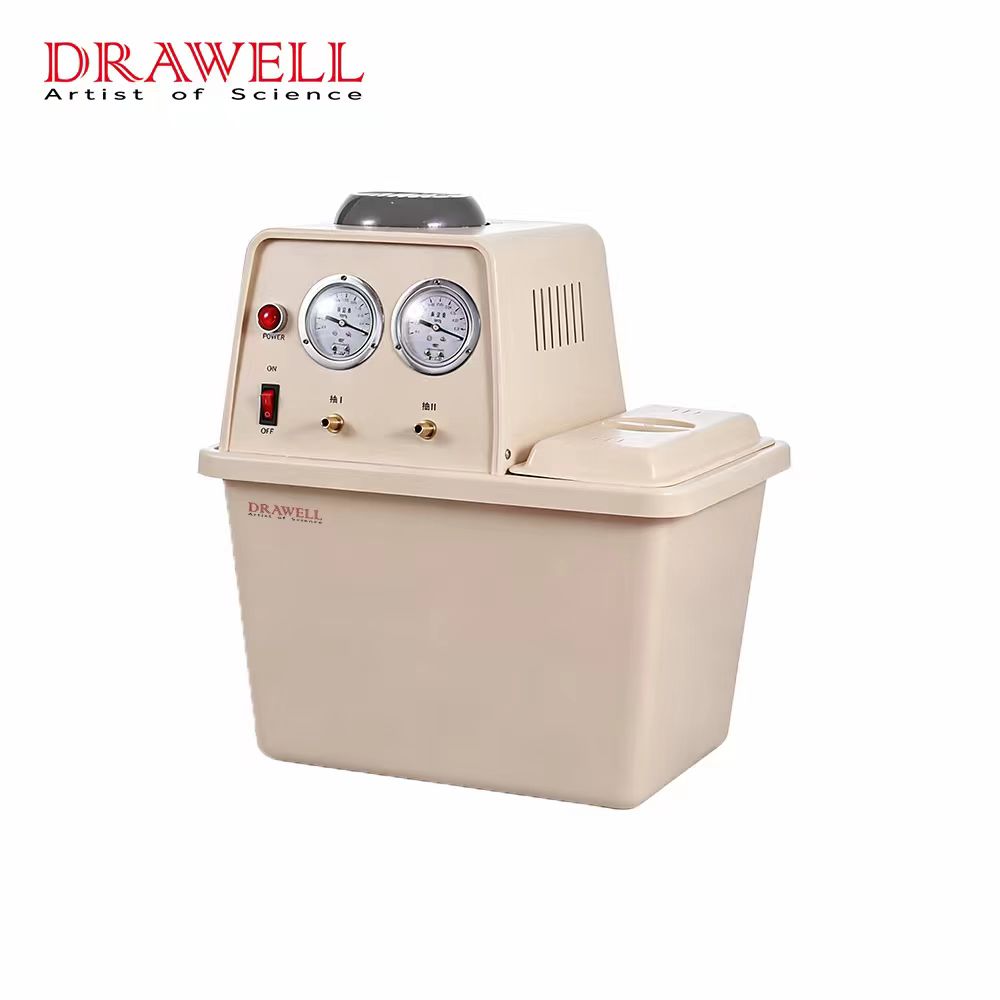
SHZ-III Circulating Water Vacuum Pump
• 10 L/min / Head
• 15 L Tank
• 60 L/min Water Flow
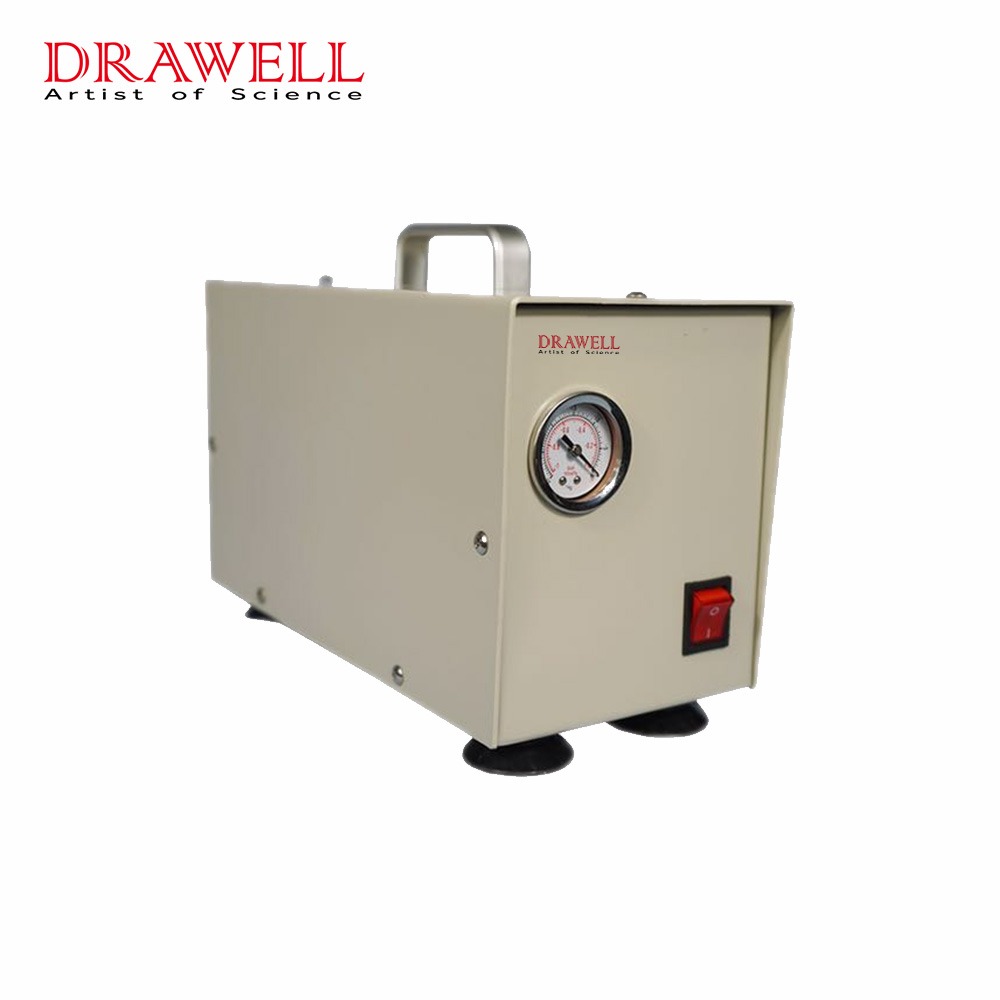
DWGM-0.5B Corrosion Resistant Diaphragm Vacuum Pump
• Double Pump Head
• Φ6 mm Customizable Inlet
• Bypass Pressure Relief
Rotary Evaporator Universal Accessories
 Washer
- Washer
 Multi-manifold
 Heating Pot
- Cooling Device
- Evaporating Flask
- Evaporating Flask
- Evaporating Flask
- Evaporating Flask


Applications of Rotary Evaporator
It is mainly used for continuous distillation of volatile solvents under reduced pressure, and is widely used for large-scale concentration, drying, extraction and recovery of samples.
- Extraction of natural products and active ingredients: Extraction and concentration of active ingredients from traditional Chinese medicines, medical cannabis, cosmetics, and health supplements.
- Pre-analytical testing: Concentration and purification of sample solutions for environmental testing (e.g., pesticide residues) and food safety testing (e.g., pesticide and veterinary drug residues).
- Chemical synthesis and pharmaceuticals: Separation and purification of reaction products, or removal of solvents.
- Food and creative industries: Applications include concentrating juices, extracting flavors, and even developing new cocktails and creative beverages.
 Marijuana Extraction and Concentration
- Active Ingredient Extraction
- Flavor Extraction
- Separation Purification of Reaction Products


How to Choose the Right Rotary Evaporator?
How to Clean and Maintain a Rotary Evaporator?
- Daily cleaning. Glass parts should be cleaned and dried promptly after use. If heavily soiled, use dilute hydrochloric acid to clean.
- Regularly replace the seals. Depending on frequency of use, inspect and replace aged or damaged seals regularly to maintain vacuum levels.
- Keep moving parts lubricated. Clean the rotating shaft regularly and add an appropriate amount of special lubricant to prevent sticking and unusual noises.
- Change the water bath medium. The water in the heating water bath should be changed regularly to keep it clean and prevent scale and microbial growth.
How to Fix Insufficient Vacuum On a Rotary Evaporator?
- Check the seals. Verify that all glass connections are tightened. Check the seals for aging, deformation, or damage, and replace if necessary. Check that vacuum grease is applied between the spindle and the seals.
- Check the vacuum pump. For oil-operated vacuum pumps, check for insufficient oil or oil deterioration. For dry-type vacuum pumps, check the filter element for blockage.
- Check the glass components. Carefully inspect the glass components, such as the evaporating flask and condenser, for microcracks or damage. Spray suspected areas with alcohol and observe whether the vacuum gauge reading changes. A change indicates a leak.
- Check the piping. Verify that the vacuum piping is not cracked or loose.
If the problem persists, please feel free to contact Drawell. Our professional engineers will answer your questions and resolve your concerns.
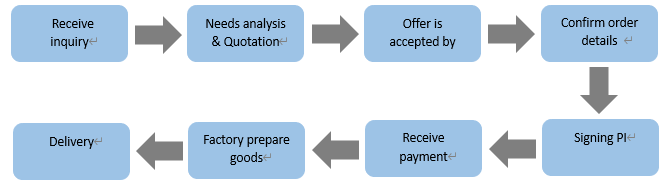
Order Process
Why Choose Us?
“Multiple suppliers” have always been an issue in the procurement process. Drawell as a one-stop laboratory equipment and scientific instruments supplier, can perfectly solve this problem. In addition to manufacturing our own equipment, we also represent other laboratory equipment. Our product lines are rich and diverse at competitive prices. Provide one-stop service to customers.
User Training – Training by Drawell skilled engineers about installation, debug tests, technical services, etc. It can happen in our factory in China, or at the site in the customers’ country. Cost depends on where and when the training happens.
To discuss the problem and get it resolved, online chats, real-time video calls, and remote guidance. For the after-sales stage, our online technical guidance is free and ready forever.
1 year free official warranty, including repairing quality-damaged parts, and offering replacements of selected parts (shipping cost is extra). 5% of the product price is charged for extending the warranty before the end of the official warranty.