

Auto Hematology Analyzer

Auto Hematology Analyzer
Drawell offers automatic hematology analyzers for routine CBC and white blood cell differential testing, with both 3-part and 5-part configurations available. The current range covers compact 60 samples/hour systems through 90 samples/hour 5-part analyzers for different laboratory workloads.
Compare models by differential type, throughput, sample volume, reported parameters, QC requirements, connectivity and available bench space.
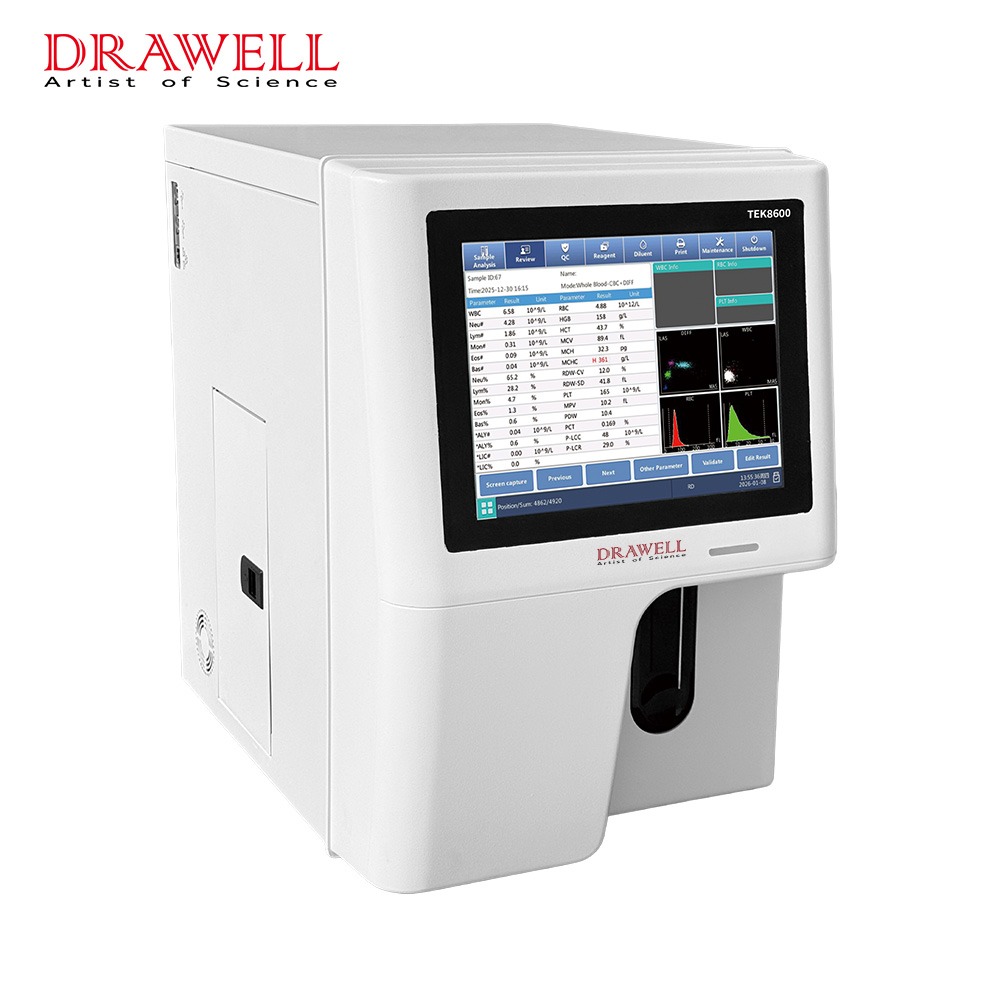
TEK8600 Automatic 5-diff Hematology Analyzer
• 25 Parameters
• 4 Scattergrams + 2 Histograms
• 20 μL Sample Volume
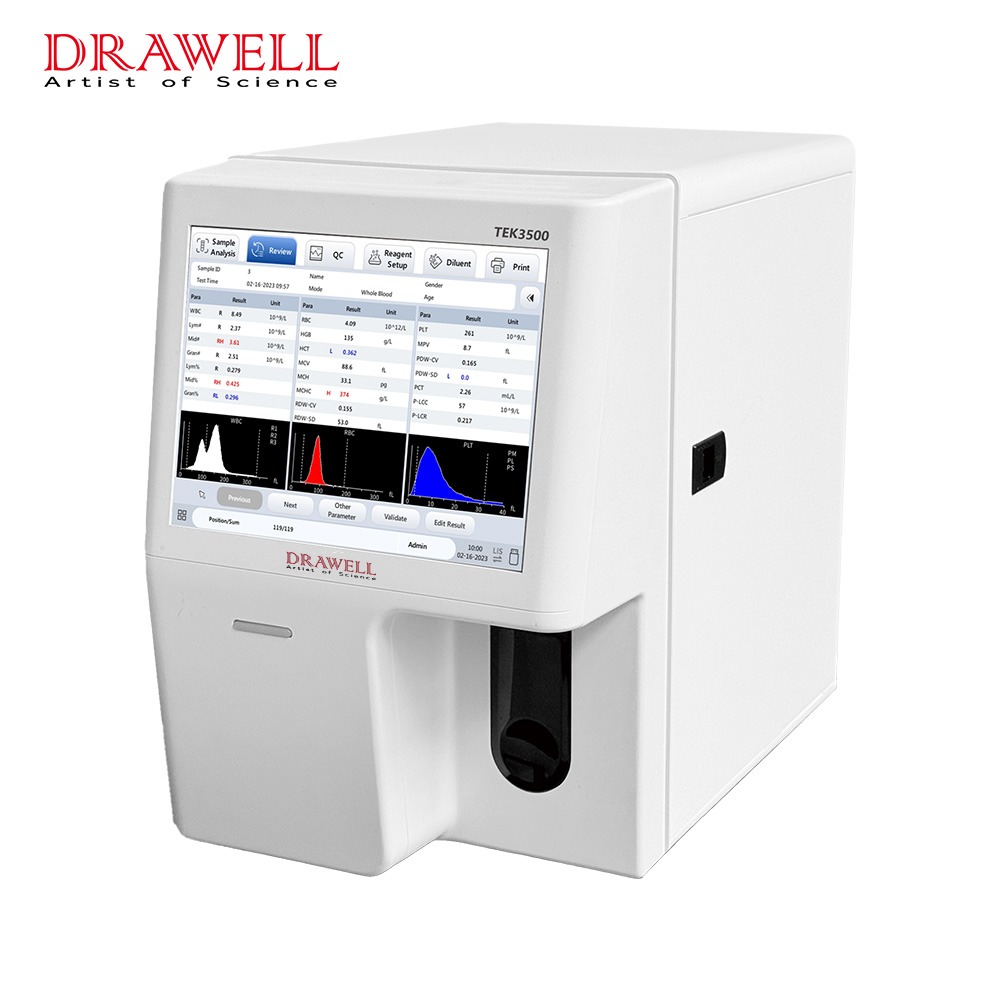
TEK3500 Automatic 3 diff Hematology analyzer
• 21 Parameters
• 3 Histograms — WBC / RBC / PLT
• 10 μL Whole Blood
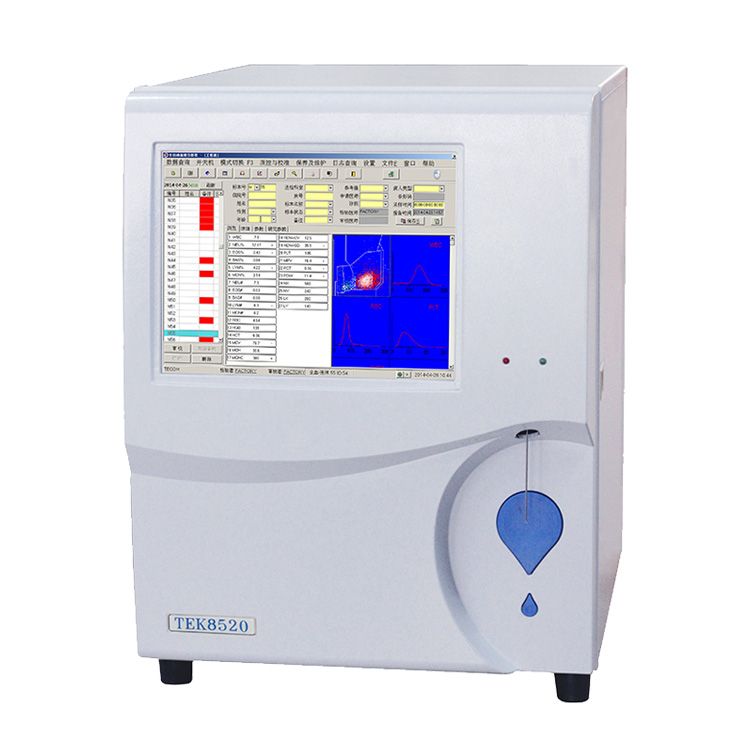
DW-TEK8520 Automatic Hematology Analyzer
• 27 Parameters
• 4 Histograms + 1 Scattergram
• 10 μL Whole Blood
3-Part vs 5-Part Hematology Analyzer
3-Part Differential
A 3-part analyzer groups white blood cells into:
LYM | MID | GR
TEK3500 provides 21 parameters and WBC/RBC/PLT histograms, with a throughput of 60 samples/hour.
5-Part Differential
A 5-part analyzer separately reports:
LYM | MON | NEU | EOS | BAS
TEK8600 and DW-TEK8520 use 5-part WBC differential configurations for laboratories requiring more detailed WBC classification.
Supported Sample Types
TEK3500
Venous Blood
Peripheral Blood
Prediluted Blood
TEK8600
Whole Blood
Peripheral Blood
Prediluted Blood
DW-TEK8520
Whole Blood
Prediluted Blood
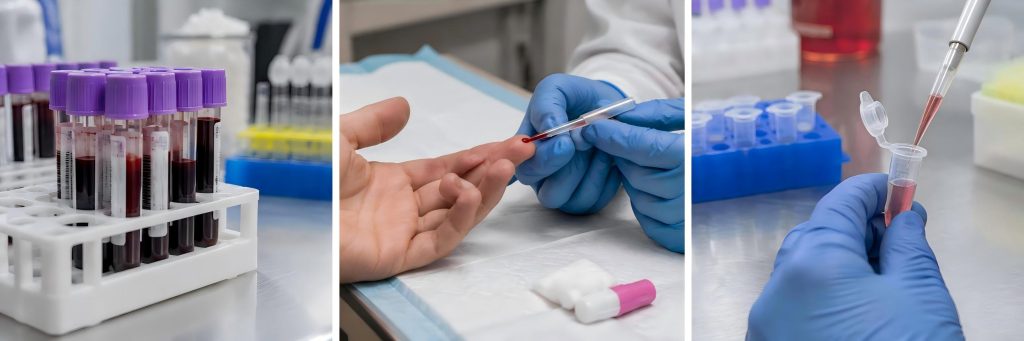
Applications of Auto Hematology Analyzer
The automatic blood cell analyzer is suitable for blood cell count, white blood cell classification, and hemoglobin concentration measurement in clinical testing. Such as:
WBC, LYM#, MID#, GRA#, LY%, MID%, GR%, RBC, HGB, HCT, MCV, MCH, MCHC, RDW-SD, RDW-CV, PLT, MPV, PDW, PCT, P-LCR, P-LCC and Histogram for WBC, RBC, PLT
1. Red blood cell series: The RBC count, Hb determination, and HCT of the blood cell analyzer are mainly used to judge whether there is anemia and the degree of anemia.
2. White blood cell series: The blood cell analyzer can be used to count white blood cells: to determine the type and degree of infection.
3. PLT series: The PLT count of the hematology analyzer is mainly used to evaluate the coagulation function of blood.
4. Applications of histograms: The blood cell analyzer can measure the volume of each blood cell while counting RBC, WBC, and non-PLT. The volume histogram of blood cells is formed by taking the cell volume as the abscissa and the relative frequency of cells as the ordinate. , the histogram can not only explain the analysis results, but also help the diagnosis of some diseases and LX observation, and can also judge whether the test results are credible based on the histogram.

How to Choose the Auto Hematology Analyzer?
- How to choose three 3 or 5 part differentiation?
3 part differentiation is generally applicable to the daily testing needs of individual outpatient clinics and primary medical care, as well as the annual medical examination tasks of grade-level hospitals in the countryside, and the reagent prices are relatively cheap;
5 part differentiation is suitable for the daily testing needs of grade hospitals, and the price of reagents is relatively high.
- According to the selection of testing items.
Different models of hematology analyzers have different numbers of testing items. The more testing items, the more expensive the relative price. According to the actual clinical needs, select the corresponding hematology analyzer model.
- How to choose according to the sample processing capacity of the hematology analyzer?
DW-TEK5000P up to 60 samples per hour, DW-TEK8520 up to 90 samples per hour.
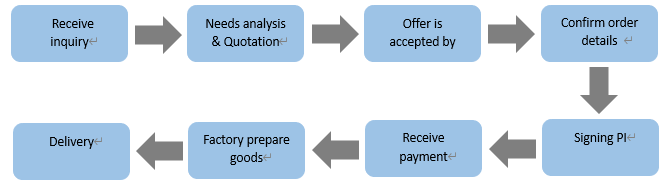
Order Process