

Gas Chromatography

Gas Chromatography
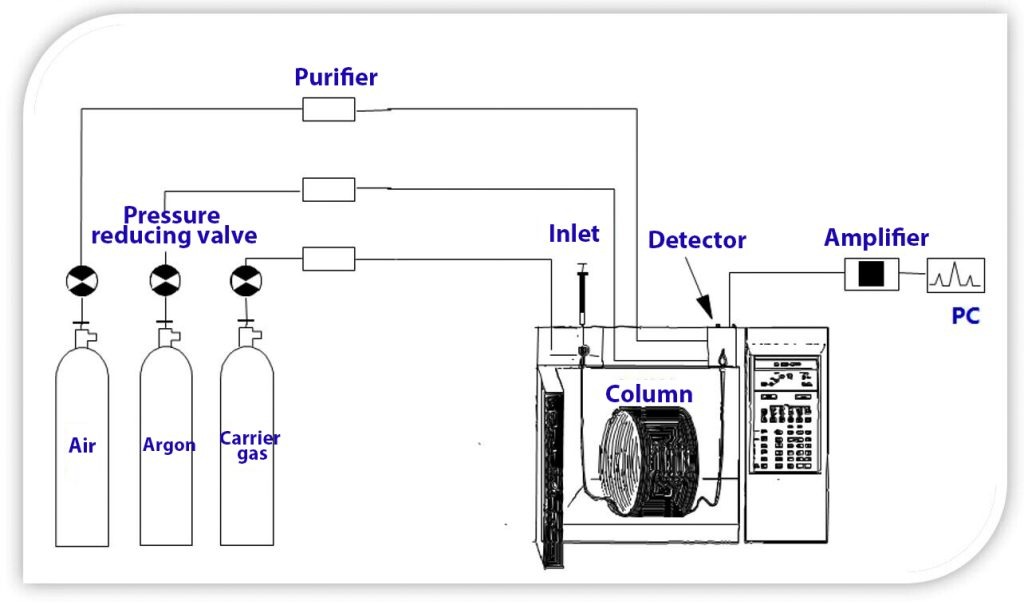
The gas chromatograph is a Chromatography that uses chromatographic separation technology and detection technology to perform qualitative and quantitative analyses of complex multi-component mixtures. There are many types of gas chromatographs with different functions, but their basic structures are similar.
Principle: Separation of mixtures based on differences in boiling points, polarity, and column.
Components: A gas chromatograph is generally composed of carrier gas system, sample introduction system, separation system, temperature control system, detector.
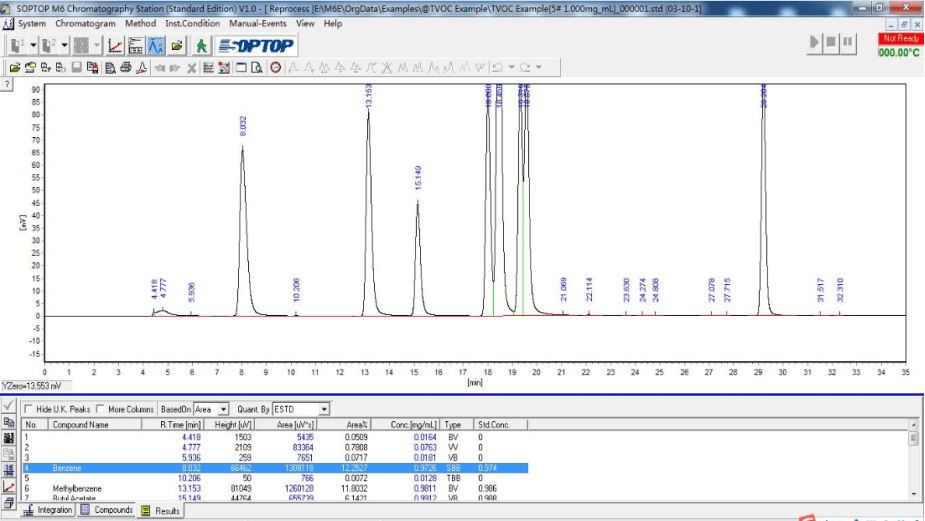
Features of Gas Chromatograph
- Control system: designed for monitoring and controlling the instrument via the computer.
- Column Compartment/oven with superior thermal performance, multistage programmed temperature control function
- Advanced built-in data acquisition system , supporting real time instrument status monitoring, detection signal acquisition and PC control
- High sensibility and stability detector.
- 2 independent and analog signals output.
- M6 software, compatible with GLP/FDA-21 CFR Parti 1 requirements and regulations.
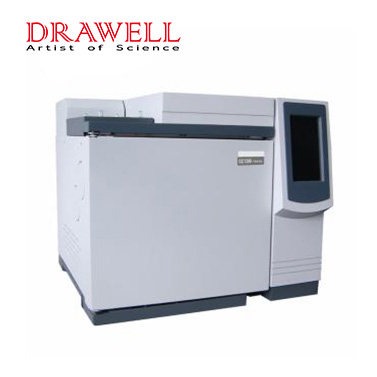
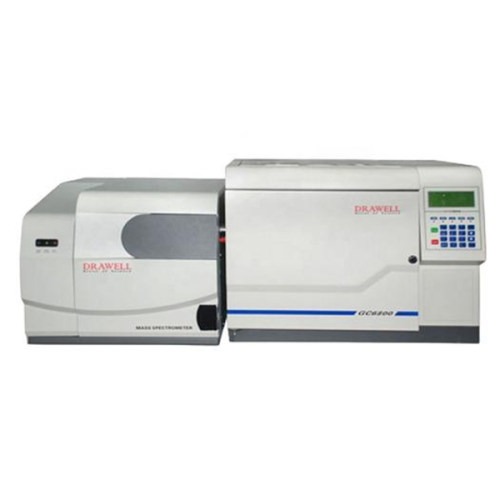
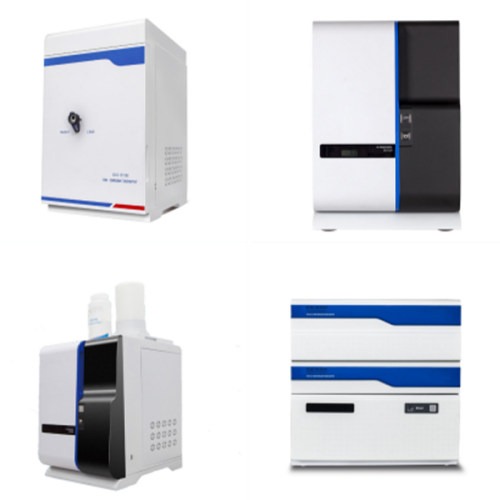
GC1290 Gas Chromatography (LCD Touch Screen)
• Various injection ports
• Working software complies with GMP regulations
• Connected to mass spectrometer detector
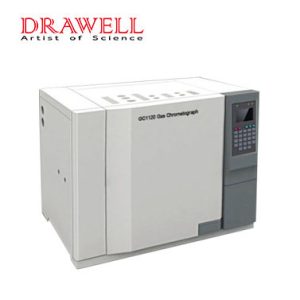
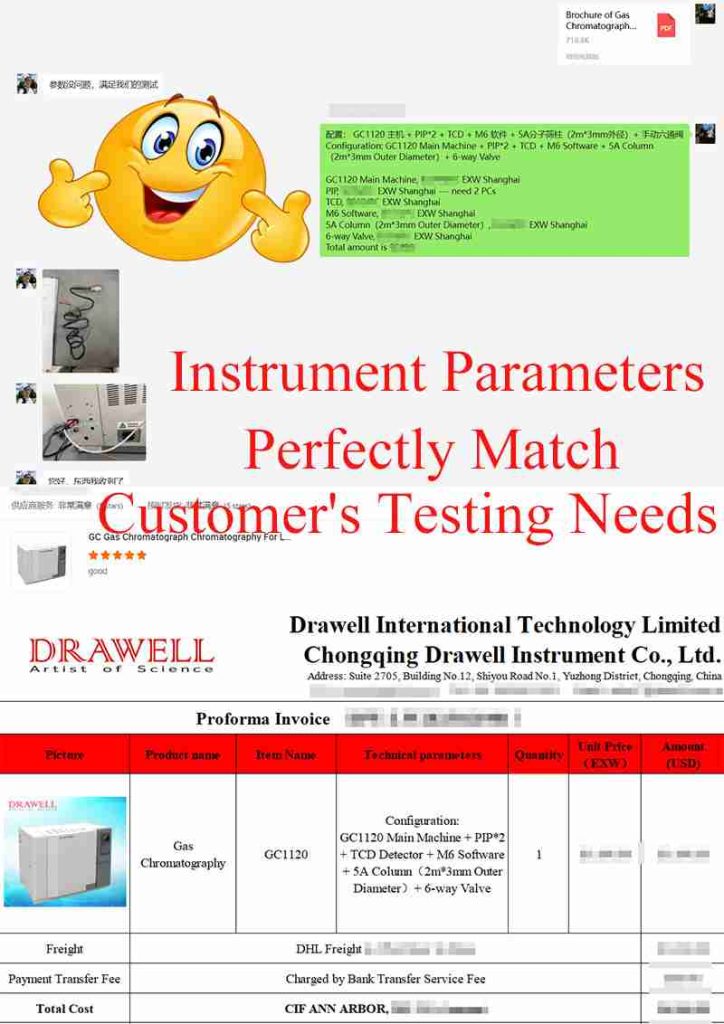
DW-GC1120 Gas Chromatography
• Three injectors at most
• Both capillary columns and double-packed columns
• Built-in acquisition system
Different Application Solution of Gas Chromatograph
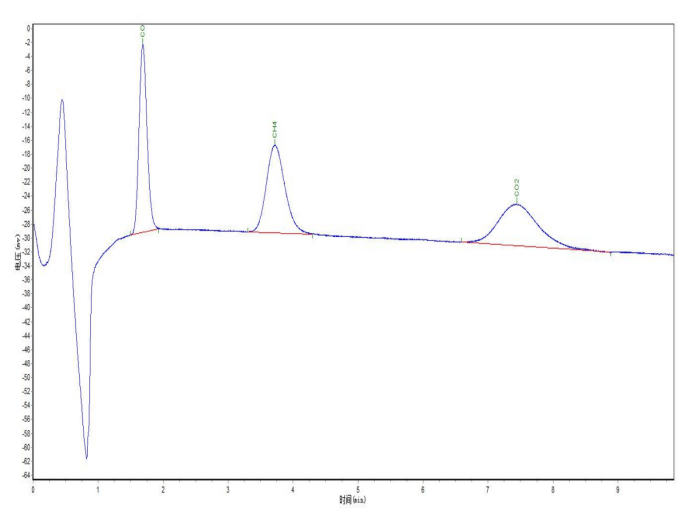
- Gas testing
What are the components (all) in the gas to be tested?
What is the approximate content?
Which components need to be tested?
If your sample is gas, please let us know the answer, then we can recommend suitable configuration.
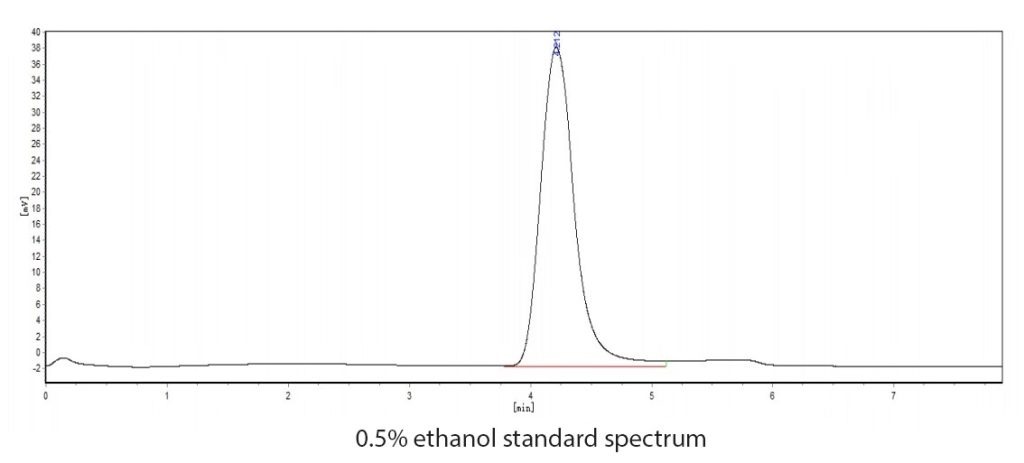
- Determination of ethanol content in ethanol disinfectants
Ethanol disinfectant refers to a disinfectant made mainly of ethanol as raw material, in which the ethanol content is usually detected by gas chromatography.
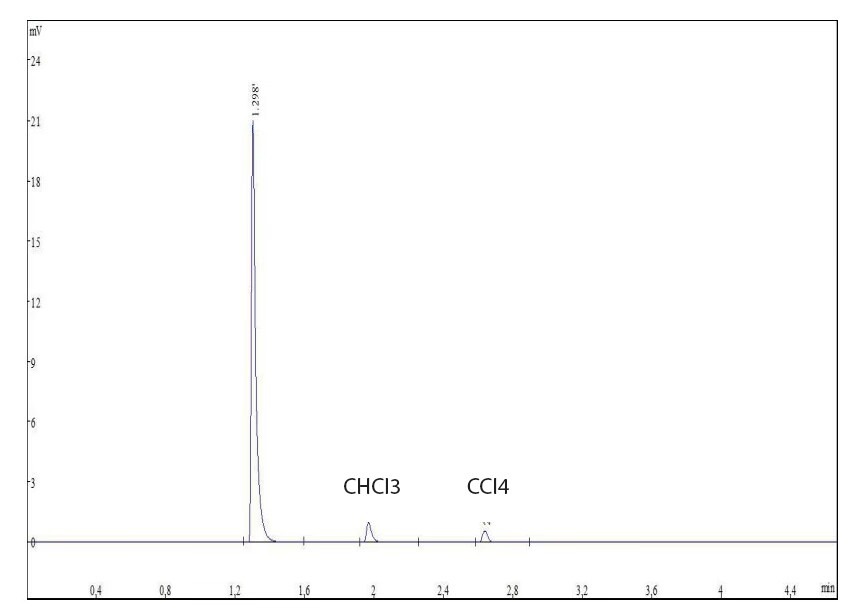
- Determination of chloroform(CHCl3) and carbon tetrachloride(CCl4) in water
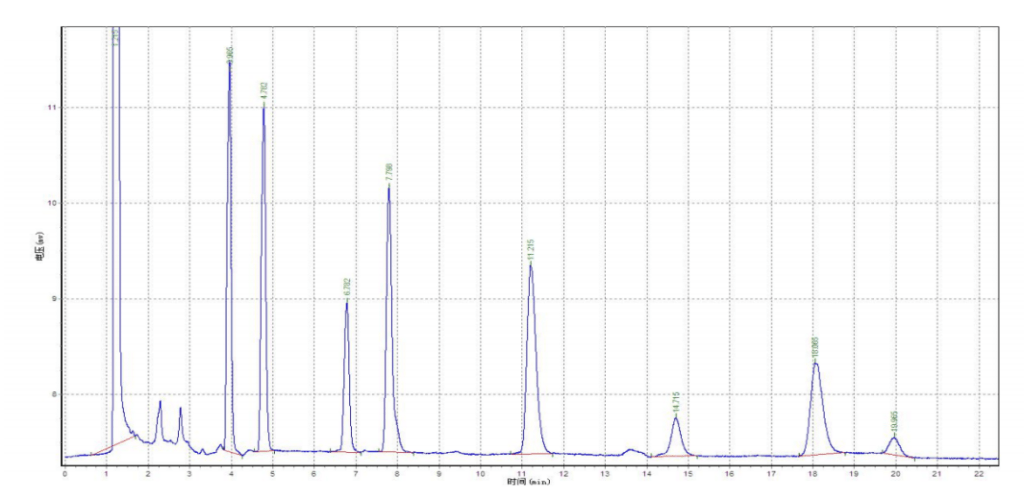
- Determination of organochlorine pesticides
Organochlorine pesticides are organic compounds containing organochlorine elements in their components used to control plant diseases and insect pests. They are mainly divided into two categories: those using benzene as raw material and those using cyclopentadiene as raw material.
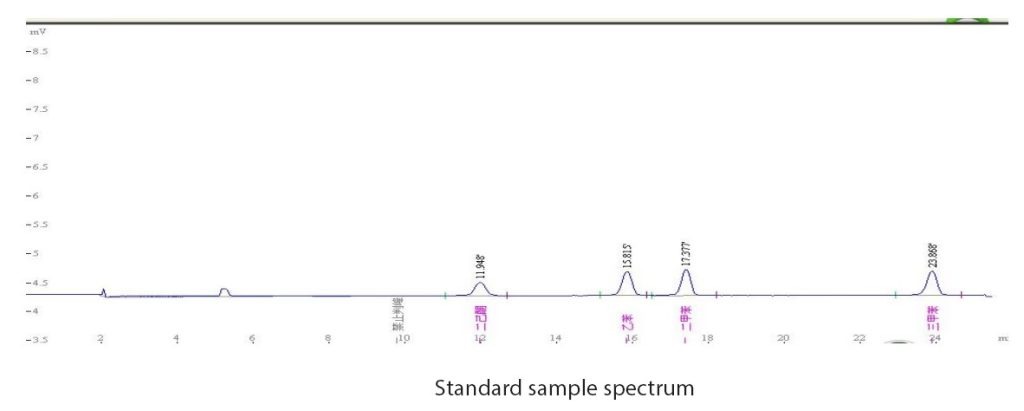
- Determination of aromatics content in gasoline
Benzene is a recognized carcinogen. Although it contributes a lot to the octane number of gasoline, it is harmful to the human body when it is discharged into the atmosphere due to incomplete evaporation and combustion. Therefore, from the perspective of environmental protection, it is necessary to limit the benzene content in gasoline.
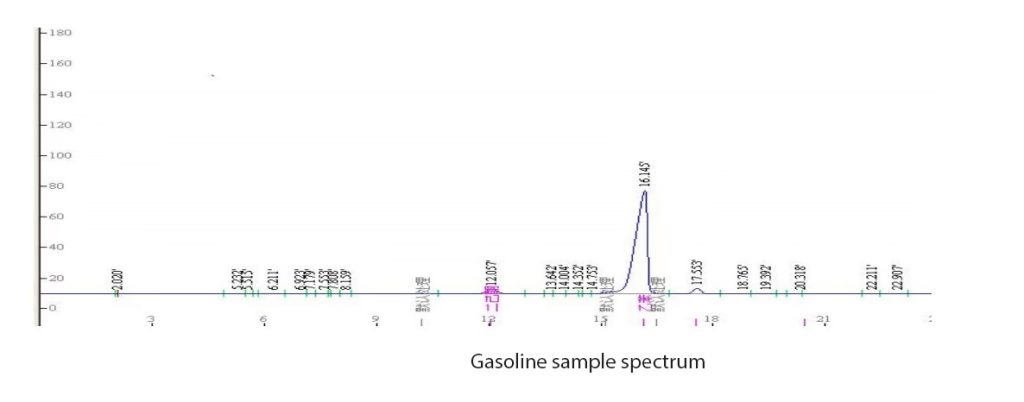
Please contact staff for specific applications and configuration recommendations.
Applications of Gas Chromatograph
1. Environmental protection: analysis, monitoring, and research of trace toxicants in polluted places such as atmospheric water sources.
2. Biochemistry: clinical application, pathological and toxicological research.
3. Food analysis: analysis and research of trace components in microbial beverages.
4. Chinese and Western medicine: analysis of raw material intermediates and finished products.
5. Petroleum processing: analysis and control of petrochemical industry, petroleum geology, oil composition, and ore control research.
6. Fine chemical analysis: additive analysis, catalyst analysis, raw material analysis, and product quality control.
7. Pesticide residue analysis: organochlorine pesticide residue analysis, pesticide residue analysis, herbicide residue analysis, etc.

Why Choose Us for Gas Chromatograph?
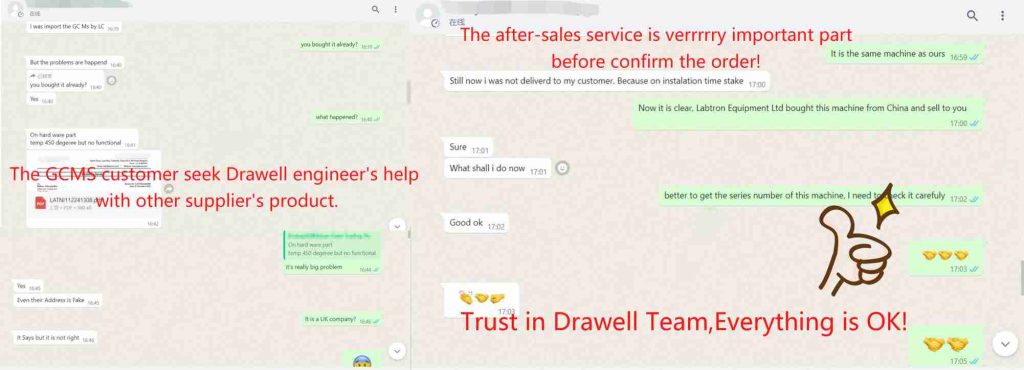
“Multiple suppliers” have always been an issue in the procurement process. Drawell as a one-stop laboratory equipment and scientific instruments supplier, can perfectly solve this problem. In addition to manufacturing our own equipment, we also represent other laboratory equipment. Our product lines are rich and diverse at competitive prices. Provide one-stop service to customers.
User Training – Training by Drawell skilled engineers about installation, debug tests, technical services, etc. It can happen in our factory in China, or at the site in the customers’ country. Cost depends on where and when the training happens.
To discuss the problem and get it resolved, online chats, real-time video calls, and remote guidance. For the after-sales stage, our online technical guidance is free and ready forever.
1 year free official warranty, including repairing quality-damaged parts, and offering replacements of selected parts (shipping cost is extra). 5% of the product price is charged for extending the warranty before the end of the official warranty.
Customer Feedback of Gas Chromatograph