


Nitrogen determination requires accurate measurement in various industries which include food processing, agriculture and environmental testing, pharmaceutical production, etc. The Kjeldahl nitrogen analyzer and the Dumas combustion method stand as two of the most common nitrogen analysis methods. The two methods both aim to measure nitrogen levels but they show major differences in their fundamental concepts, operational processes and their ability to function in different situations.
Nitrogen determination requires accurate measurement in various industries which include food processing, agriculture and environmental testing, pharmaceutical production, etc. The Kjeldahl nitrogen analyzer and the Dumas combustion method stand as two of the most common nitrogen analysis methods. The two methods both aim to measure nitrogen levels but they show major differences in their fundamental concepts, operational processes and their ability to function in different situations.
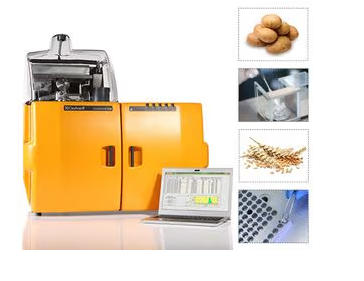
Kjeldahl Method Explained: How It Works and Key Features
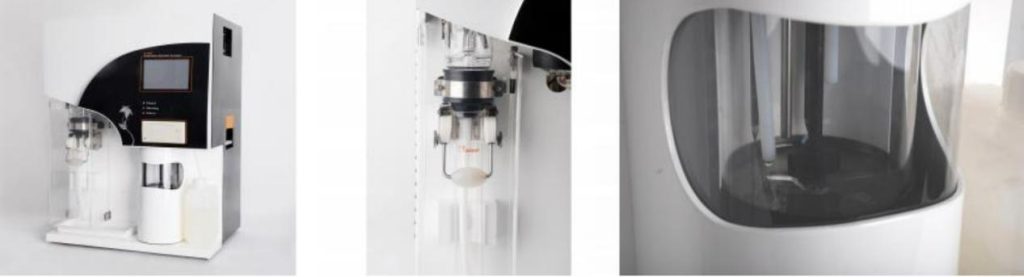
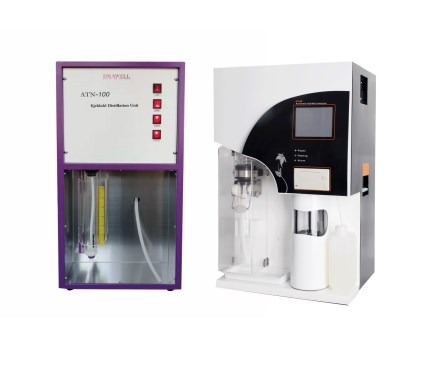
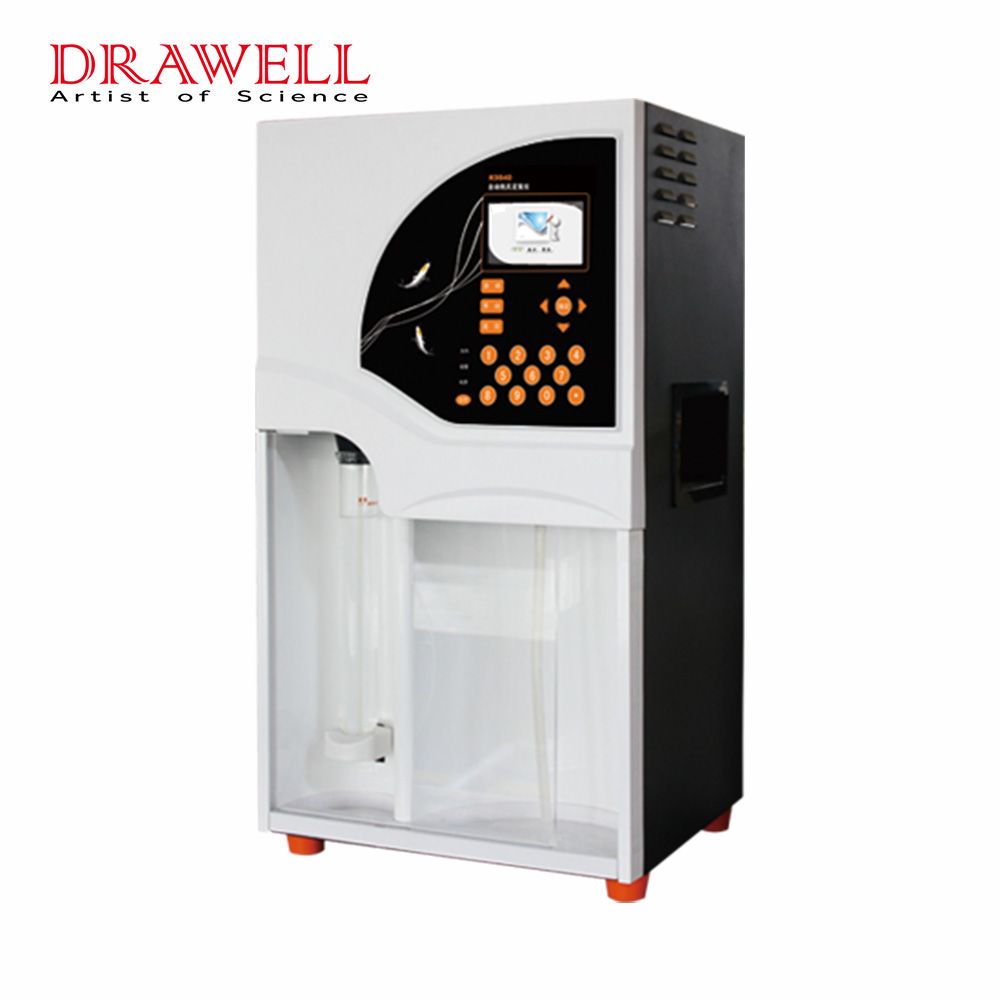
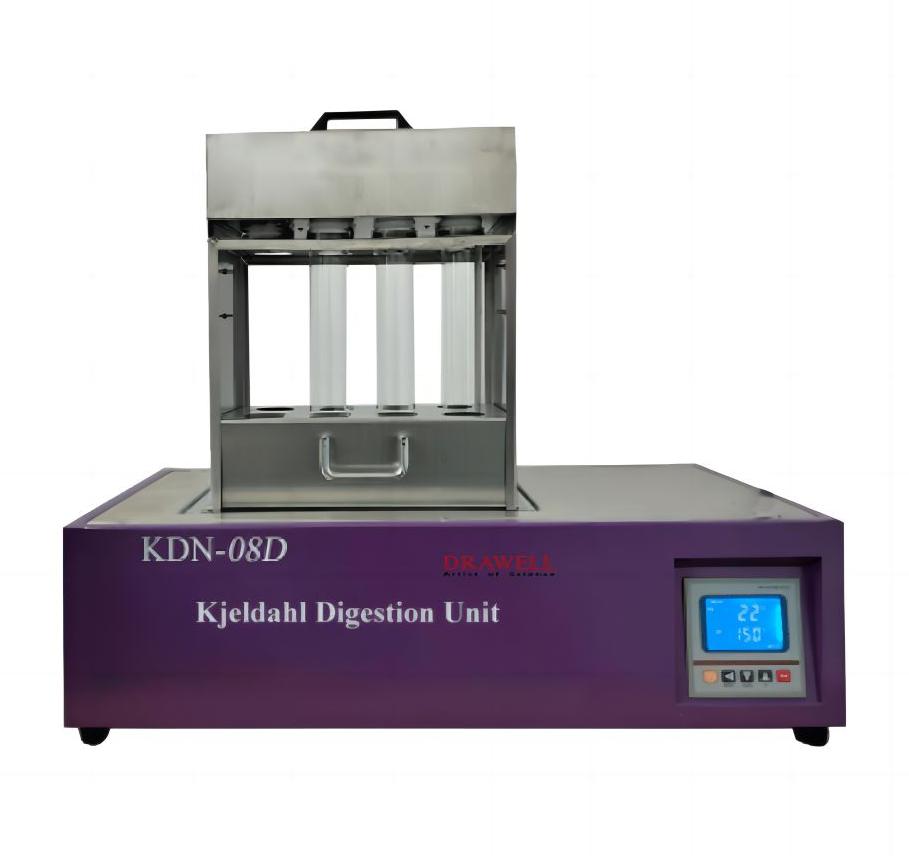
Kjeldahl nitrogen analyzers are instrument designed to automate the Kjeldahl Method which is a traditional analytical method that Johan Kjeldahl developed in 1883. The method determines total organic nitrogen by converting it into ammonia through chemical digestion for subsequent measurement.

The process of Kjeldahl nitrogen analyzers, typically involves three main steps:
- Digestion: The sample is heated with concentrated sulfuric acid, converting organic nitrogen into ammonium sulfate.
- Distillation: The digested sample is made alkaline, releasing ammonia gas.
- Titration: The released ammonia is captured and quantified to calculate nitrogen content.
Modern automatic Kjeldahl analyzers improve precision and reducing manual intervention.
Advantages
- High Accuracy and Reliability:The automatic Kjeldahl analyzer is known to be the benchmark in many regulatory environments, particularly in food and feed protein determinations. Thanks to its long use, reliable and reproducible results are obtained.
- Broad Acceptance and Standardization: Referring to the Kjeldahl analysis while including some more countries and organization’s space testing in official methods for AOAC International and ISO render this laboratory endeavour is certifiable.
- Effective for Organic Nitrogen: In analysis of organic nitrogen, this methodology is really practical since the nitrogenous compounds in many organic matrices are correlated with protein.
- Cost-Effective Equipment: The Kjeldahl analyzer relatively cheap equipment cost compared to the advanced combustion analysers cost. Perhaps many laboratory institutions could get access to it as a result.
- Compatibility with Automation: Kjeldahl nitrogen analyzers of today are equipped with digestion, distillation, and titration parts, decreasing manual labor and increased throughput over traditional methods.

Limitation
- Time-Consuming Process: The automation notwithstanding, working with digestion, distillation, and titration in series basically elongates the working time compared to new techniques like how the combustion method is done.
- Use of Hazardous Chemicals:The method includes the use of concentrated sulfuric acid and catalysts for nitrogen concentration that results in a potential hazard that requires prudent handling, safe handling, exhaust, and waste management.
- Limited Nitrogen Detection Scope: The Kjeldahl method targets organic nitrogen and ammonium nitrogen. It is not sensitive toward some chemistry forms such as nitrates and nitrites without added modifications.
- Environmental Impact: Increased chemical consumption and waste generation further increase the environmental footprint, especially for high-throughput labs.
- Operator Dependency (in Partial Automation): While there also are semi-automated Kjeldahl analyzers, some activities still require human assistance. This can introduce variability if not handled in an appropriate manner.
Dumas Combustion Method: Principles, Process, and Advantages
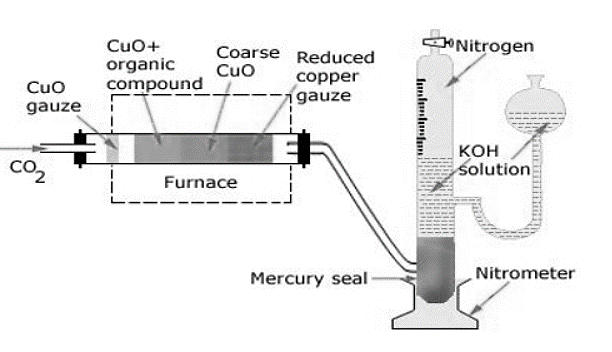
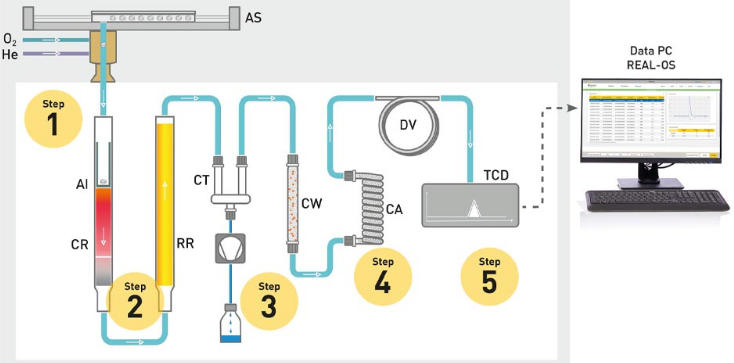
The Dumas combustion method is based on the Dumas Method, first introduced by Jean-Baptiste Dumas. It determines total nitrogen by combusting a sample at high temperatures (typically 800–1000°C) in the presence of oxygen.
In this process, nitrogen compounds are reduced to molecular nitrogen (N2) in any form of chemical or natural form of association. In several instances, gas filtration becomes essential to remove such substances like water, carbon dioxide, and other products. The nitrogen content is then measured using a detector, mainly thermal conductivity. The entire process is clean since all operations are automated in a pressurized and sealed system.
Advantages
- Speed: One significant advantage with the Dumas method is rapid analysis. Under typical circumstances, a single analysis is carried out within several minutes, thus making the Dumas method best for high sample throughput labs.
- Full Automation of Operation: It means that most processes can be automated and executed without any complications. At present, in Dumas’s system, the combustion, the clean-up of gas, and the detection systems were incorporated into one automated assembly. This allowed manual handling to be reduced, eliminated human errors, and streamlined overall processing.
- No Hazardous Chemicals: The Dumas method, in contrast to the standard wet-chemistry methods, does not require strong reagents such as the use of sulfuric acid. This means the practice tends to fill laboratory safety gaping holes.
- Comprehensive Nitrogen Detection: Total nitrogen, both organic and inorganic forms, is measured here. This yields more complete analyses, in comparison with some older methods.
- Environmentally Friendly: Dumas’ benefit by contributing to an agreeable environment, with less chemical waste and lower reagent use in the laboratory.
Limitations
- High Initial Cost: The Dumas system allocates for the most advantageous points, but it requires a rather heavy initial allocation in terms of investment laid out relative to traditional methods currently being employed in this business. This is very undesirable for smaller laboratory outlets.
- Requires High-purity Gases: The technique depends on gases such as oxygen and carrier gases, such as helium or nitrogen, which add to operational costs and require proper supply chain management.
- Sensitivity to Sample Type: Certain water-rich samples or samples already in a highly complex matrix form require pretreatment or careful calibration to ensure accurate results.
- Protein Conversion Factor Variability: Nitrogen values must be converted when working on protein determination according to a factor, such as 6.25, which is subjected to variation based on the sample type and may have implications on the accuracy if not properly selected.
- Instrument Maintenance: High-temperature combustion systems require continuous maintenance, cleaning, combustion tubes, and catalysts.
Key Differences Between Kjeldahl Nitrogen Analyzer and Dumas Combustion Method
| Comparison Aspect | Kjeldahl Nitrogen Analyzer | Dumas Combustion Method |
| Analytical Principle | Based on Kjeldahl Method converting nitrogen into ammonia through digestion, distillation, and titration | Based on Dumas Method converting nitrogen into N₂ gas via high-temperature combustion |
| Type of Nitrogen Measured | Primarily organic nitrogen and ammonium nitrogen | Total nitrogen (organic + inorganic, including nitrates and nitrites) |
| Analysis Time | Relatively slow (typically 1–2 hours per sample) | Very fast (usually a few minutes per sample) |
| Automation Level | Semi-automated to fully automated (multi-step process) | Fully automated, integrated system |
| Chemical Usage | Requires hazardous chemicals (e.g., sulfuric acid, catalysts) | No corrosive chemicals required |
| Safety | Higher risk due to chemical handling and high-temperature digestion | Safer operation with enclosed high-temperature system |
| Environmental Impact | Generates chemical waste requiring disposal | Minimal waste, more environmentally friendly |
| Initial Equipment Cost | Lower upfront investment | Higher initial cost |
| Operating Cost | Ongoing costs for reagents, disposal, and labor | Costs mainly from gases and maintenance |
| Accuracy and Reproducibility | Highly accurate and standardized; widely used as reference method | Highly precise with excellent reproducibility due to automation |
| Regulatory Acceptance | Strong global acceptance (e.g., AOAC International, International Organization for Standardization) | Increasing acceptance, widely used but sometimes secondary to Kjeldahl in regulations |
| Sample Throughput | Lower throughput due to longer processing time | High throughput, ideal for large sample volumes |
| Maintenance Requirements | Moderate (glassware cleaning, reagent handling) | Higher technical maintenance (combustion tubes, catalysts) |
| Typical Applications | Food protein analysis, agriculture, environmental testing | Food/feed analysis, research labs, high-throughput industrial testing |
How to Choose Between Kjeldahl and Dumas: 7 Key Factors to Consider
- What type of nitrogen do you need to measure? (Organic vs. Total)
One of the most important things to consider is the type of nitrogen that one intends to quantify. Kjeldahl methodology is primarily aimed at organic nitrogen and ammonium forms; therefore, the procedure is particularly good for protein content determination in food and feed. Alternatively, Dumas methodology enables the determination of all nitrogen components in the given sample, which also includes inorganic forms like nitrates and nitrites.
For use cases demanding a complete nitrogen profile, the Dumas process offers a most comprehensive solution. If one is working towards established protein determination standards and other aligned methods are based, the Kjeldahl is often preferred.
- Does your method need to follow a specific standard (AOAC, ISO)?
Adherence to, or acceptance by, regulations always reflects preferred methods. As many standards throughout the world are ultimately derived from the Kjeldahl method, particularly from organizations such as AOAC International and the International Office of Standards, it inherently holds one of the default positions in those industries which deal primarily with accreditation and certification.
Although the Dumas combustion method is getting due recognition and it is included in many of the modern standards, it will not be positioned as a direct replacement in certain regulatory frameworks. This was with a view to allowing the laboratories to decide if the testing portfolio was actually calling for strict adherence to Kjeldahl-based methods.
- How fast do you need results? (Speed & throughput)
Laboratories that usually run a high volume of samples shall decide by looking at analysis speed and workflow efficiency. Dumas method is a rapid method that gives us results very quickly, usually in few minutes and is completely automated. This certainly has escalated the throughput and decreased labor requirements.
In contrast, the Kjeldahl method, with digestion, distillation, and titration, takes a long time for completion, even with automation, which may thus not match the speed of combustion systems. The Dumas method exerts a better advantage where turnaround time is of prime importance.
- Which method is safer and greener? (Chemicals vs. combustion)
The management of security, health, and process wastes is another huge consideration when deciding which methods to employ. The Kjeldahl method requires the use of sulfuric acid/nitric acid mixture reagents and some other chemicals. It is hazardous to the workers due to the use of these chemicals and through improper waste management.
The Dumas method has a great merit centring on elimination of these chemicals. Instead, it employs combustion at very high temperatures in a completely closed system, a feature that can help avoid exposure to the hazardous ingredients while significantly reducing waste production. The Dumas method is honored in some circles for its cleanliness, with others to consider global sustainability and workplace safety.
- What’s the real cost? (Initial purchase vs. long-term operation)
Cost, heavily influenced by the initial investment and operational costs, is another important consideration, natürlich. Kjeldahl analyzers are usually less expensive to acquire in the beginning; hence, they are preferred by crisis-stricken small laboratories. Instead, the working costs for reagents, waste disposal, and labor may individually strike high points over long periods of time.
Dumas analyzers usually demand high expenses from initial investment, but actual operation costs may be reduced because of their operating space reduction. In the long term, especially under high-throughput conditions, the Dumas technique proves to be the best for cost efficiency although the purchasing cost is higher.
- What kind of samples do you run? (Organic, mixed, or high-sensitivity)
The nature of the samples being analyzed also influences the choice of method. The Kjeldahl method provides high effectiveness for some organic materials and is much pronounced in the applications of food protein analysis and agricultural testing.
On the other hand, the Dumas method is more flexible in handling a wide range of sample types. Gram scales are typically used for samples with a large mass, high thermal sensitivity, mixed, or complicated in nitrogen compositions. This method may find wider applications, particularly if researchers are interested in the study of advanced materials.
- How much hands-on time and maintenance can you handle?
These aspects include that the operational efficiency and ease of use are starting to be addressed. As these systems have to physically handle these chemicals, autoclave the glassware, and manipulate various steps, the workloads and variabilities can rise.
With an automatic design increased grave temperatures and regular maintenance of combustion tubes, catalysts, and gas supply systems for these systems, along with such requirements, and the laboratory is expected to be capable and ready for the backup of producing high-value goods specifically to maintain them.
Quick Summary
- The Kjeldahl nitrogen analyzer is still a trusted and standardized method, especially where regulatory compliance and protein determination are key issues.
- The Dumas combustion method is quite fast, automated, and environmentally friendly, in agreement with modern laboratory requirements.

Final Thoughts
Both Kjeldahl nitrogen analyzer and Dumas combustion method are invaluable tools for nitrogen determinations with inherent powers and weaknesses. The choice depends on factors such as accuracy requirements, type of sample, throughput needs, health and safety concerns, cost issues, etc. As laboratory techniques are constantly updating, the trend towards automated and sustainable solutions, positioning the Dumas method curly competing against the traditional Kjeldahl method.
Related Products Recommendation
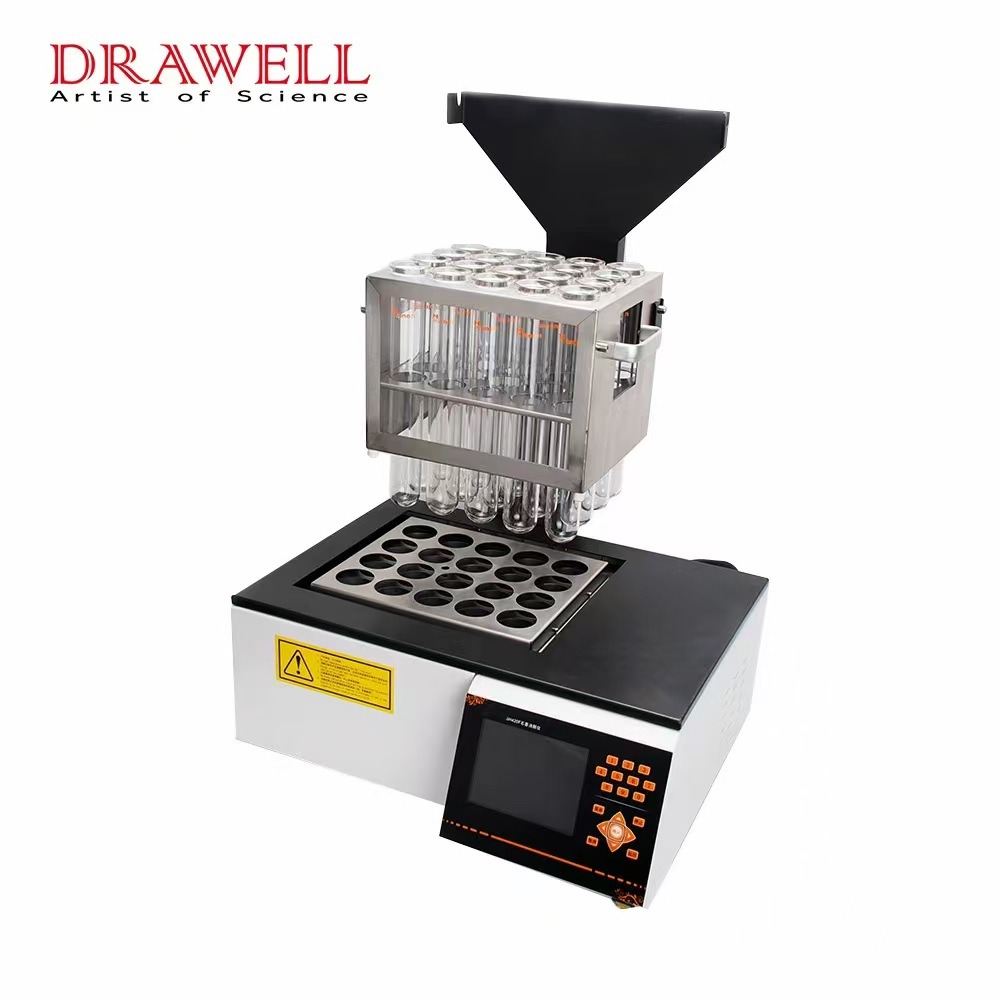
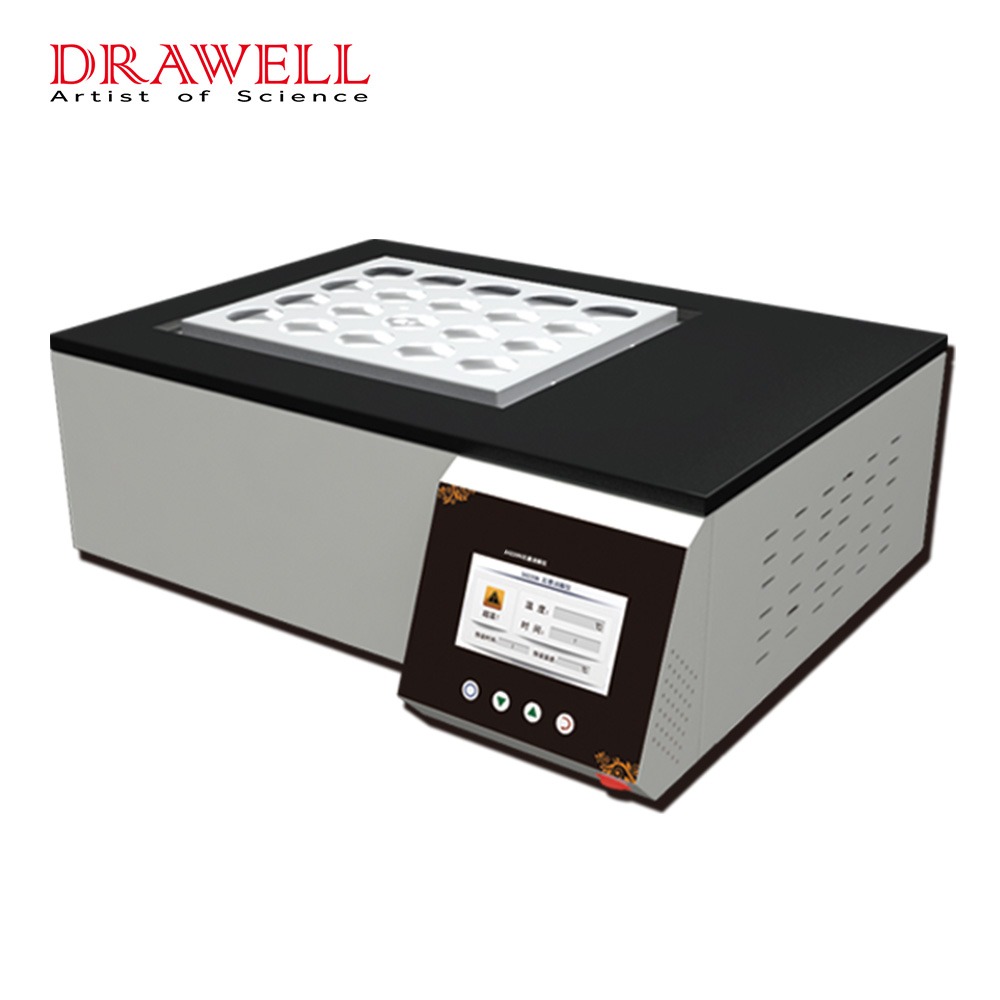
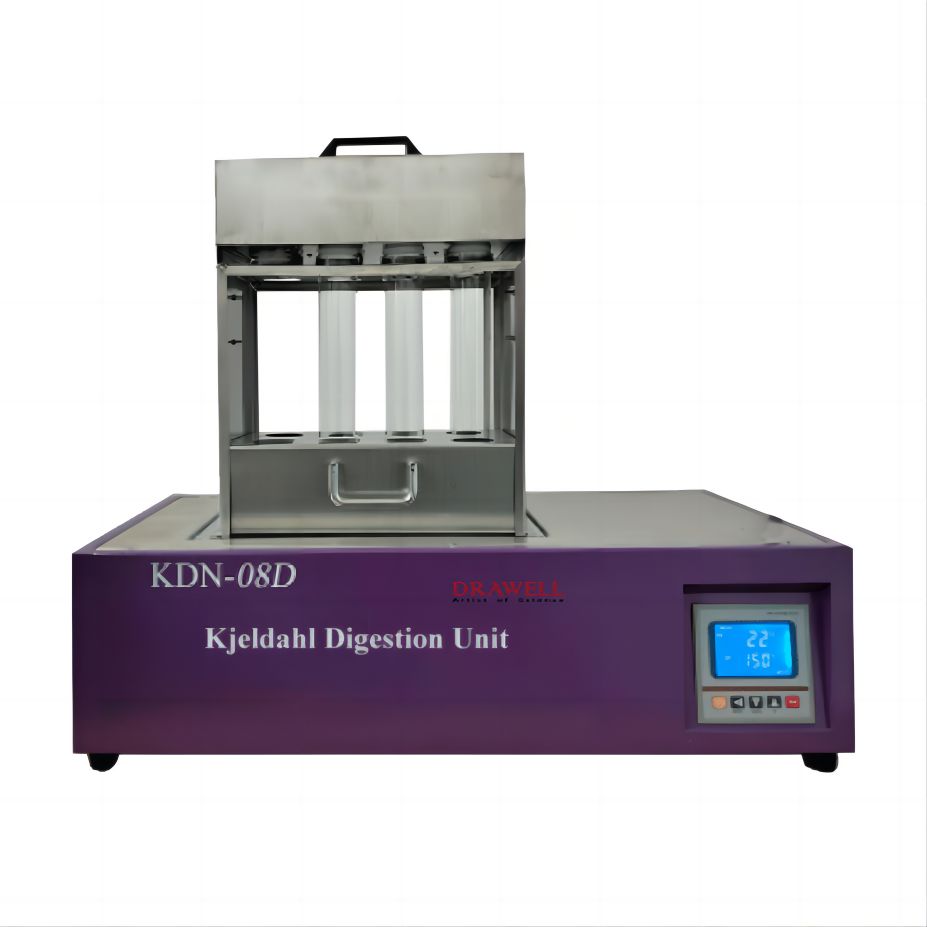
Get Quote Here!
Latest Posts

What Next?
For more information, or to arrange an equipment demonstration, please visit our dedicated Product Homepage or contact one of our Product Managers.


