


Does a piece of steak contain clenbuterol? Does a box of milk meet protein content standards? Does a bag of rice have pesticide residues? The answers to these questions all lie within food analysis instruments.
In the modern food industry, behind every bite of food is the protection of precise scientific instruments. From raw material acceptance, production processes to finished product shipment, food analysis instruments serve as “eagle eyes,” constantly monitoring food quality and safety.
Faced with a dazzling array of analytical instruments on the market, how to choose the most suitable tools? This article will provide an in-depth understanding of three major categories of food analysis instruments: Macro Component Analysis, Micro Components and Contaminants Analysis, and Rapid Screening and Quality Control, offering scientific reference for your decision-making.

Macro Analysis Instruments: Ensuring Food “Nutrition Gate”
Macro analysis instruments mainly detect major components in food such as moisture, protein, fat, carbohydrates, and ash, ensuring products meet nutrition labeling requirements and maintain quality stability. These instruments need to provide not only accurate results but also meet the needs of rapid testing in production environments.
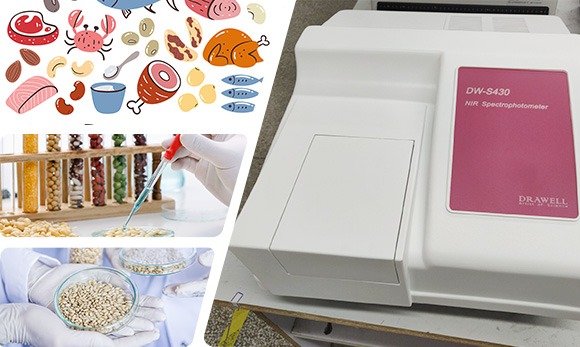
NIR Food Analyzer is the star product in this field. Using near-infrared spectroscopy technology, this instrument can non-destructively detect multiple components in samples within 30-60 seconds. Taking Drawell’s DW-NIR series NIR analyzer as an example, it uses high-performance detectors and high-stability optical systems, with a wavelength range covering 1100-1800nm, capable of simultaneously analyzing multiple indicators including moisture, protein, fat, and cellulose. Its measurement accuracy approaches standard chemical methods, but with speeds dozens of times faster.
FTIR Milk Analyzer is specifically developed for the dairy industry. These instruments can complete detection of indicators such as fat, protein, lactose, and total solids in milk within 45 seconds, with accuracy meeting or exceeding international standard methods. Drawell’s DW-FTIR series dairy analyzer uses all-solid-state constant temperature interferometers and DLATGS detectors to ensure long-term stability, while equipped with automatic sampling systems that can continuously analyze multiple samples, greatly improving quality inspection efficiency for dairy enterprises.
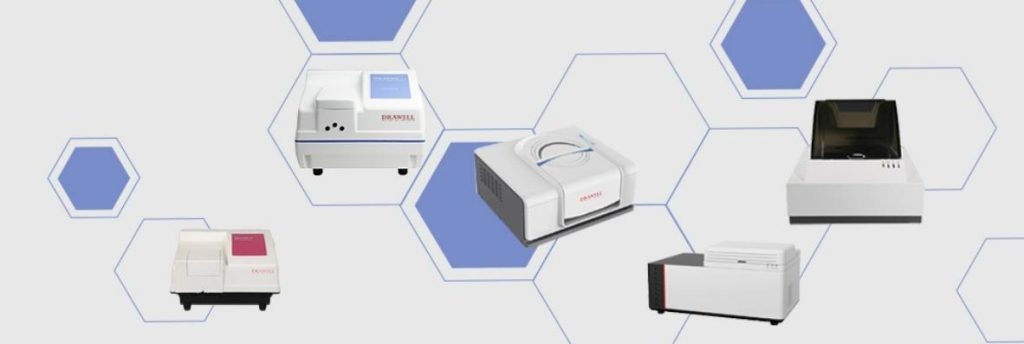
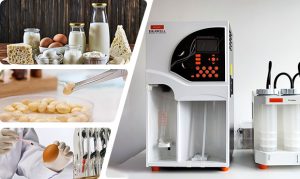
Automatic Protein Analyzer automates the entire process of sample digestion, distillation, and titration based on the classic Kjeldahl principle. Drawell’s Kjeldahl nitrogen analyzer series fully automatic nitrogen analyzer uses intelligent endpoint judgment systems, reducing human error, with recovery rates reaching over 99.5%, especially suitable for protein content detection in industries such as grain and oil, feed, and meat products.

Other commonly used macro component analysis instruments include:
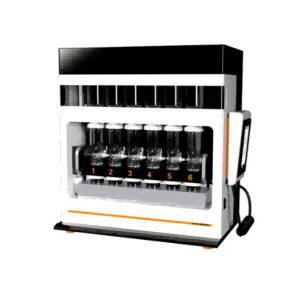
- Fat Determination Systems: Using Soxhlet extraction principle to accurately determine crude fat content in food, standard method for grain/oil and meat product industries.
- Fiber Analyzers: Determining crude fiber, acid detergent fiber and neutral detergent fiber content in food through acid-base digestion methods.
- Brix Meters: Using refraction principle to rapidly determine soluble solid content in liquid foods, widely used in beverage and juice industries.
- Density Meters: Precisely determining liquid density and concentration through oscillating tube principle, widely used in alcoholic beverages and dairy industries.

Macro Component Analysis Types and Common Detection Instruments
| Analysis Type | Detection Indicators | Common Instruments | Detection Principle | Features and Applications |
| Moisture Analysis | Moisture Content | Halogen Moisture Analyzer | Thermal Gravimetric Principle | Fast, accurate, suitable for granular, powder samples |
| Karl Fischer Moisture Titrator | Electrochemical Titration | High precision, suitable for trace moisture detection | ||
| Protein Analysis | Protein Content | Kjeldahl Nitrogen Analyzer | Acid Digestion-Distillation Titration | International standard method, accurate and reliable results |
| Dumas Nitrogen Analyzer | High Temperature Combustion-Chromatographic Separation | Fast, environmentally friendly, suitable for large sample volumes | ||
| Fat Analysis | Crude Fat Content | Soxhlet Extraction System | Solvent Reflux Extraction | Classical method, authoritative results |
| Automatic Fat Analyzer | Solvent Extraction-Gravimetric Method | High automation, reduces manual operation | ||
| Carbohydrates | Brix | Digital Refractometer | Refraction Principle | Fast, non-destructive, suitable for field detection |
| Fiber Content | Fiber Analyzer | Acid-Base Digestion-Gravimetric Method | Accurate determination of dietary fiber content | |
| Mineral Elements | Ash Content | Muffle Furnace | High Temperature Incineration | Determines inorganic content in food |
| Physical Properties | Density Concentration | Digital Density Meter | U-tube Oscillation Principle | Precisely measures liquid density and concentration |

Micro Components and Contaminants Analysis: Guarding Food “Safety Line”
Micro components and contaminants analysis instruments specifically detect trace substances in food such as additives, pesticide residues, heavy metals, and toxins, serving as key technical means for ensuring food safety.
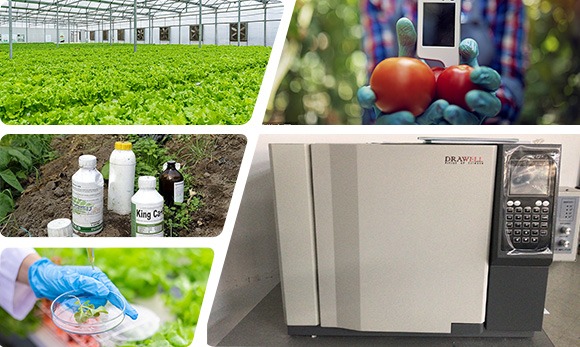
GC-MS in food analysis is the gold standard for detecting volatile organic compounds. This instrument combines the high separation capability of gas chromatography with the high sensitivity identification capability of mass spectrometry, enabling accurate detection of trace substances such as pesticide residues, aroma components, and solvent residues in food. Drawell’s GCMS series products use patented heating systems and high-efficiency ion sources, high stability and reliability.
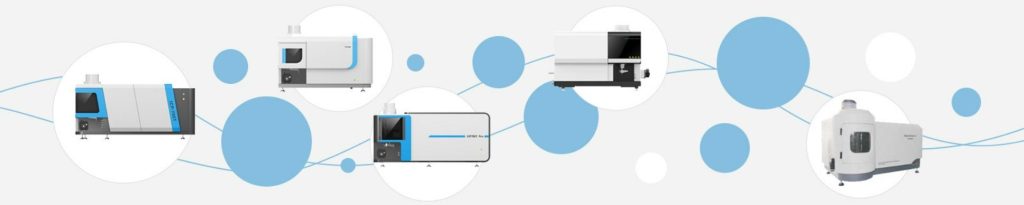
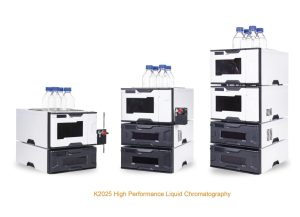
HPLC in food analysis is particularly suitable for analyzing strongly polar, thermally unstable compounds. This technology excels in detecting antibiotic residues, illegal additives, biological toxins, and more. Taking Drawell’s LCMS series as an example, this instrument is equipped with ultra-high performance liquid chromatography systems and triple quadrupole mass spectrometers, with analysis speeds 3-5 times faster than traditional methods while maintaining extremely high sensitivity and stability.
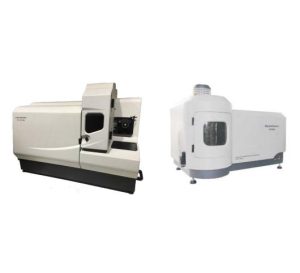
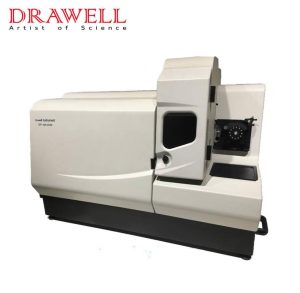
ICP-MS food analysis is a powerful tool for trace element analysis. This instrument can simultaneously detect multiple heavy metal elements, with sensitivity several orders of magnitude higher than atomic absorption spectroscopy. Drawell’s ICPMS series uses shielded torch technology and quadrupole mass analyzers to effectively eliminate interference, enabling accurate determination of harmful elements such as lead, cadmium, mercury, and arsenic, with low detection limits.
Contaminant Types and Applicable Detection Technologies
| Contaminant Type | Typical Representatives | Main Detection Technologies | Detection Limit Requirements |
| Pesticide Residues | Organophosphorus, Pyrethroids | GC-MS/MS, LC-MS/MS | ppb level |
| Heavy Metals | Lead, Cadmium, Mercury, Arsenic | ICP-MS, AAS | ppb-ppt level |
| Biological Toxins | Aflatoxin, Vomitoxin | HPLC-FLD, LC-MS/MS | ppb level |
| Illegal Additives | Melamine, Sudan Red | LC-MS/MS, HPLC | ppb level |
Rapid Screening and Quality Control: “Light Cavalry” for Field Detection
Rapid screening and quality control instruments can perform quick detection in non-laboratory environments such as production sites, warehouses, and supermarkets, greatly expanding the coverage and efficiency of food safety monitoring.
Portable NIR Food Analyzers bring laboratory-level analytical capabilities to the field. These instruments are compact, simple to operate, require no sample preparation, and can provide results within 30 seconds. Drawell’s Portable NIR analyzer weighs less than 4.4 lbs (2kg) yet delivers analytical performance comparable to benchtop instruments, making it particularly suitable for scenarios such as raw material acceptance and production process control.
Food Safety Rapid Testers based on principles such as enzyme inhibition and immunochromatography can quickly screen for pesticide residues, veterinary drug residues, microbial contamination, and other issues. These instruments are simple to operate, allowing non-professionals to operate independently after short-term training, significantly lowering the barrier to food safety testing.
Choosing the Right Food Analysis Instruments
Selecting the right equipment is a strategic decision. Please consider the following aspects:
- Application: What are you analyzing? Are you testing solid grains, liquid food analyzers for beverages, or complex samples like sauces? The nature of the sample will dictate the most suitable instrument.
- Required Sensitivity: Does your analysis require trace-level detection (e.g., ICP-MS for heavy metals) or are you simply measuring major components (e.g., a moisture analyzer)?
- Throughput: How many samples do you process daily? For high-volume labs, automated, rapid instruments like an NIR food analyzer or FTIR milk analyzer are more efficient than slower, more labor-intensive methods.
- Budget: Consider both the initial purchase price and long-term operational costs, including maintenance, consumables, and calibration.
A clear understanding of these factors will help you narrow down your choices and invest in the most effective and efficient technology for your lab.
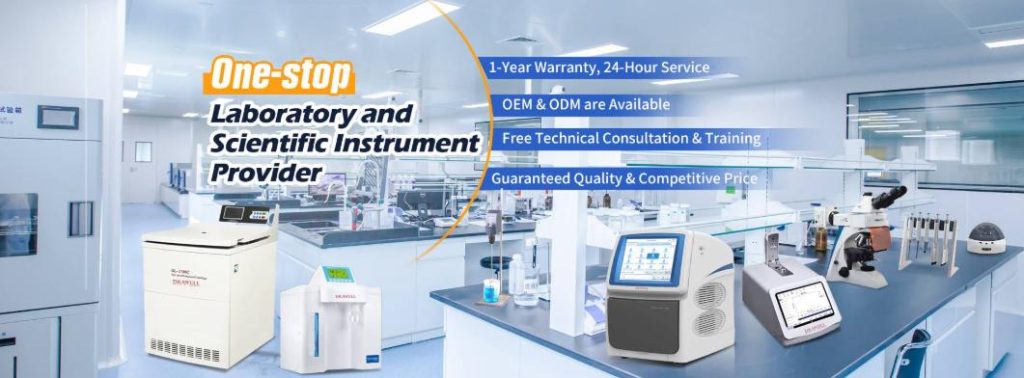
Selecting Reliable Suppliers and Partners
Your choice of supplier is just as important as your choice of equipment. A good supplier provides more than just a product—they offer a partnership.
- Technical Support and Service: Look for a supplier that offers comprehensive post-sale support, including installation, training, and prompt technical assistance. A reliable service team ensures minimal downtime and a smooth workflow.
- Reputation and Experience: Partner with a company with a proven track record in the field of analytical instruments for food analysis. This ensures the quality and reliability of the equipment.
- Comprehensive Solutions: Consider suppliers who can provide a range of instruments that meet all your needs. For instance, companies like Drawell offer a wide portfolio of lab equipment, from spectrophotometers and HPLC to moisture analyzers, providing a one-stop solution for setting up a full-scale food analysis laboratory.
By carefully evaluating your needs and partnering with a reputable supplier like Drawell, you can build a highly efficient and reliable food analysis operation that ensures the quality and safety of your products for years to come..
Related Products Recommendation


Get Quote Here!
Latest Posts
What Next?
For more information, or to arrange an equipment demonstration, please visit our dedicated Product Homepage or contact one of our Product Managers.


