


Spectrometers
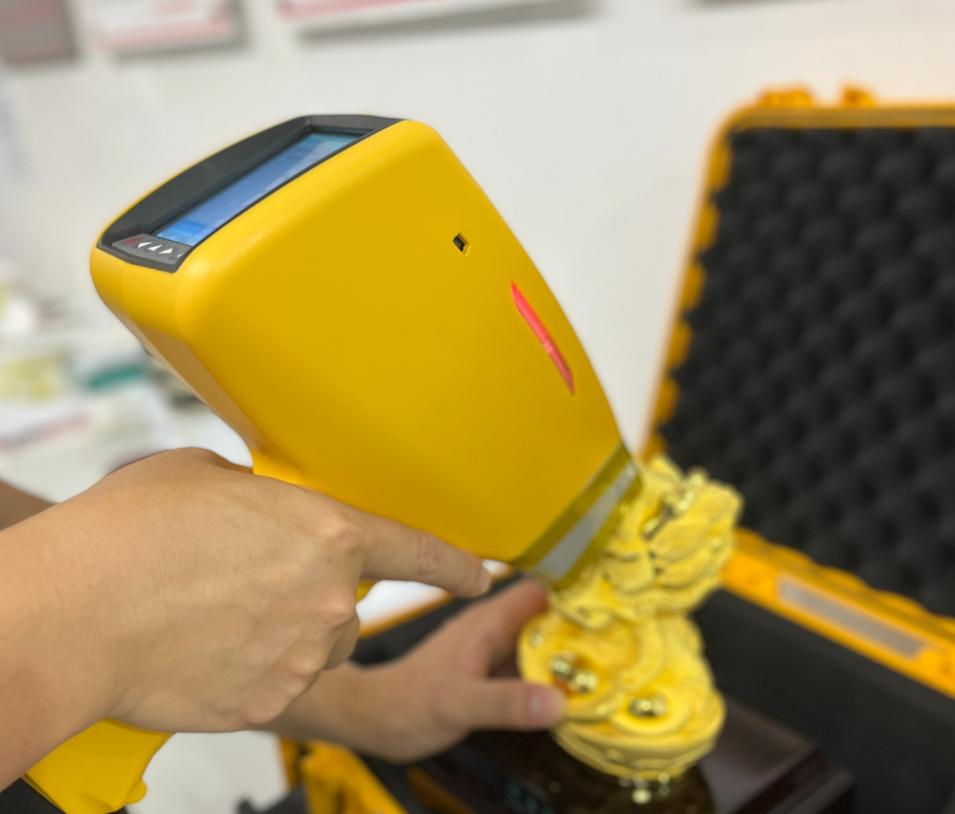
Is X-Ray Fluorescence Reliable For Gold Purity Analysis?
If you are running a pawn shop, managing a jewelry refinery, or handling precious metal recycling, one question keeps you up at night: Is this gold piece actually real, and exactly how pure is it? Making a mistake by even half a karat can drain your profits instantly. The use of portable X-ray fluorescence across…
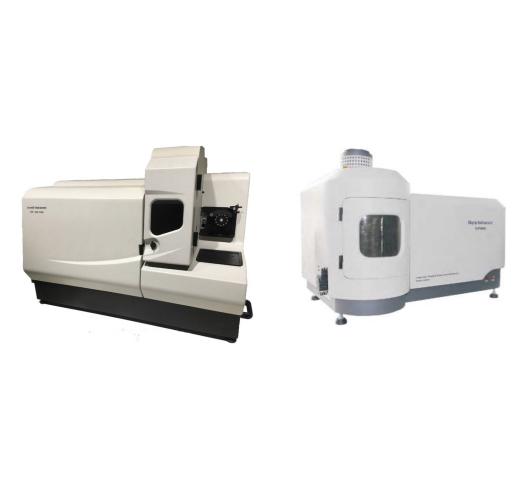
ICP-OES VS ICP-MS:7 Key Differences Analysis
If you are stepping into elemental analysis, you have likely run into a classic laboratory dilemma: ICP-OES vs. ICP-MS. Both are heavyweights in modern analytical chemistry, offering incredible insight into sample composition. However, picking the wrong technique can lead to a massive waste of laboratory budget, high operational downtime, or inadequate detection limits. In this…

Sample Preparation for AAS Analysis: Sample Types and How to Prepare
Ever wondered why your Atomic Absorption Spectroscopy (AAS) results occasionally drift, even when your instrument calibration is spot on? The truth is, your data is only as good as what you feed into the machine. As a widely used analytical technique for the quantitative determination of elements, AAS offers high sensitivity and precision in determining…
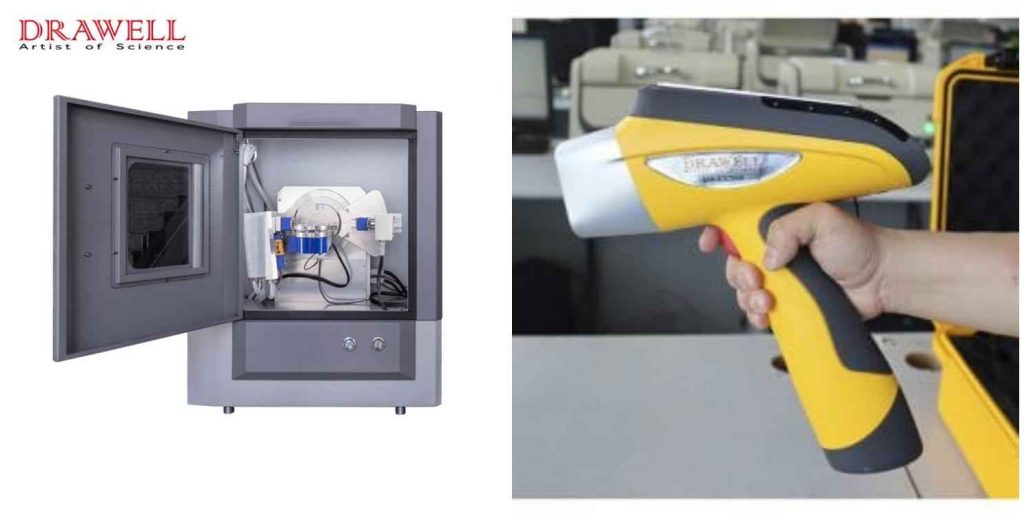
XRD vs. XRF: How to Choose the Right Method
In materials analysis, X-ray based approaches are kinda invaluable for trying to get a grip on composition, structure, and properties, overall. Two of the most used options are X-ray Diffraction (XRD) and X-ray Fluorescence (XRF). Even though both of XRD and XRF depend on X-rays, the basic idea behind them, their actual use cases, and…

How Does an Atomic Absorption Spectrophotometer Work: A Detailed Step-by-Step Process
Atomic Absorption Spectrophotometry (AAS) is one of the most used analytical methods, for working out the concentration of metallic elements in different sample types. People tend to like it because it is considered accurate, very sensitive, and also dependable across many areas. You can find it in environmental monitoring, pharmaceuticals, food safety, mining, and chemical…

UV-Visible Spectrophotometry: Principles, Functions and Applications
UV-Visible spectrophotometry, is a kind of basic analytical method that is used all over scientific research, in industrial labs, for environmental monitoring, and also for quality control. It works by looking at how a substance absorbs ultraviolet (UV) and visible (Vis) light, and from that, you can get useful clues about the chemical makeup, the…

Fake 304 Stainless Steel? How Spectrometers Reveal the Truth
A polished stainless steel surface can look convincing at first glance. But in real manufacturing and metal trading, appearance alone does not guarantee the material is genuine 304 stainless steel. In recent years, cases of lower-grade stainless steel being sold as 304 have become more common across global supply chains. Sometimes the substitution is intentional…
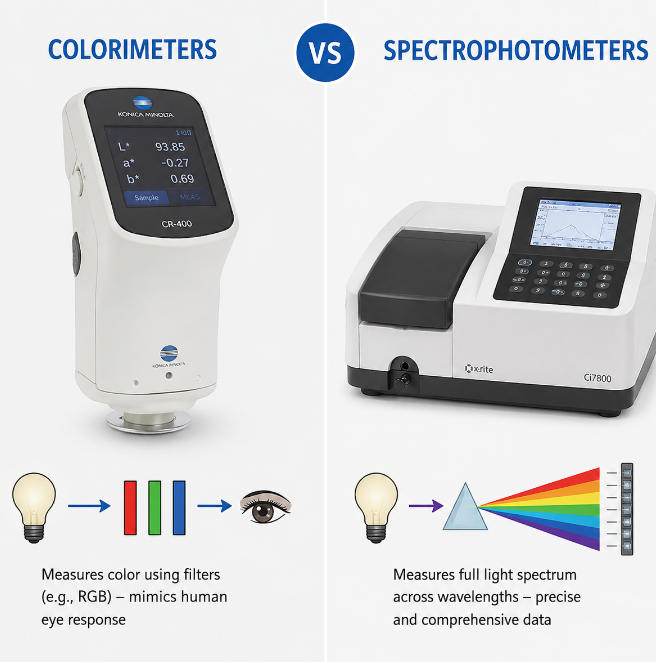
Colorimeters vs. Spectrophotometers: How to Make a Suitable Choice
Getting accurate color measurement is honestly critical for quality control, keeping product consistency steady, and making sure consumers are satisfied. Two of the instruments people use most often to figure out color are colorimeters and spectrophotometers. They both are meant to quantify color, but they work in different ways and each one has its own…
Single Beam vs. Double Beam Spectrophotometers: How to Make a Choice
A spectrophotometer is one of the most essential instruments in modern analytical chemistry. It is widely used to find out how much a chemical substance absorbs or transmits light at certain wavelengths. In this area, two primary optical designs are often mentioned, single beam and double beam spectrophotometers. Even if they both do the same…
How to Choose the Right High-precision Instrument for Analytical Chemistry Labs
Choosing high-precision instruments really is like a foundational call in modern labs. In analytical chemistry labs, the end quality of results comes down a lot to whether the equipment fits the analytical aims, the kinds of samples, and the regulatory expectations. If you go in with a good selection process, accuracy tends to climb, the…
Browse by category:


