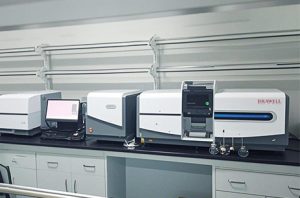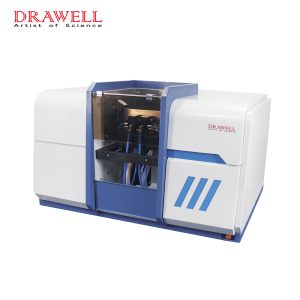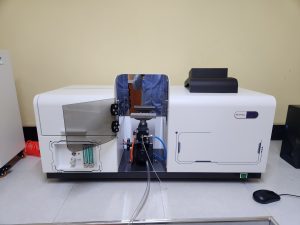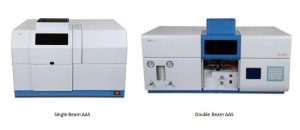


The Flame Atomic Absorption Spectrophotometer (FAAS) has established itself as a fundamental instrument used in analytical chemistry to perform fast and accurate trace metal analysis across different sample types. FAAS operates by measuring how free gas phase atoms absorb light through its detection system. The introduction of a sample solution into a flame results in the flame energy transforming the sample into free atoms which proceed to absorb light at specific wavelengths that correspond to different elements. The analytical performance of FAAS studies requires researchers to comprehend different flame types together with their corresponding usage in experiments.
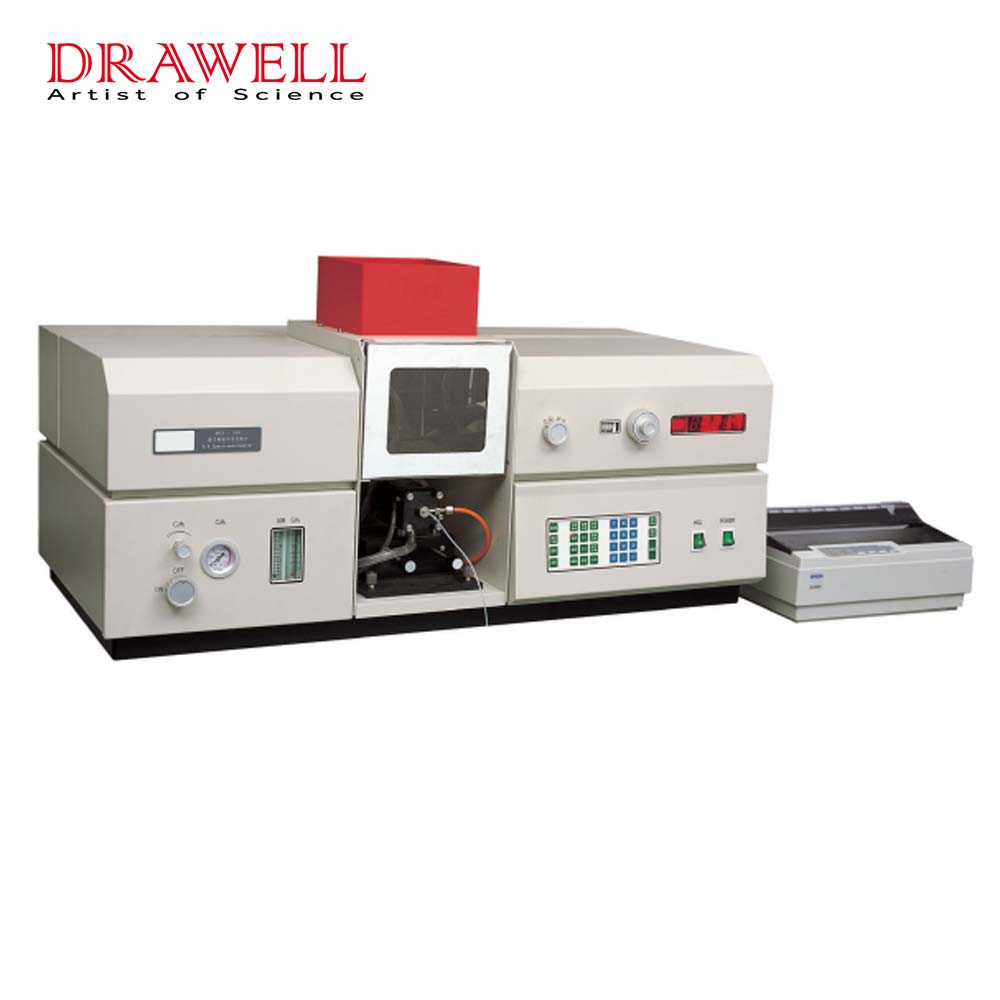
Types of Flames Used in FAAS
| Flame Type | Temperature (°C) | Typical Applications | Advantages | Notes |
| Air-Acetylene Flame | 2300–2700 | Routine analysis of metals like Ca, Cu, Fe, Zn | Moderate temperature, good sensitivity, cost-effective | Most widely used flame; suitable for common metals |
| Nitrous Oxide-Acetylene Flame | 2700–3000 | Refractory elements like Al, Cr, Ti | Higher temperature, efficient atomization of high-boiling-point elements | Ideal for elements difficult to atomize in lower-temperature flames |
| Air-Propane Flame | 2000–2200 | Volatile metals, delicate samples | Softer flame, minimizes sample decomposition | Less common; used for specific applications requiring low flame energy |
Key Factors to Consider for Choosing the Right Flame Types in FAAS
Choosing the appropriate flame type in Flame Atomic Absorption Spectrophotometry (FAAS) is crucial to achieving accurate, reliable, and sensitive measurements.
1. Element Boiling Point and Refractiveness
High boiling point elements or elements that are relatively refractory, such as aluminum, titanium, and chromium, require a flame of higher temperature, e.g. nitrous oxide/acetylene, in order to provide complete ashing. Low boiling point elements, mid boiling point elements, starting with calcium and copper and going down to about zinc, can be totalized quite efficiently in an air flame.
2. Sample Matrix Composition
The flame of choice may be affected by the sample’s chemical environment. Complex matrices with organic components or volatile species may require a milder flame, such as air/propane, in order to minimize unwanted decomposition or chemical reactions that could encroach on accuracy in quantitation.
3. Sensitivity and Detection Limit Requirements
When it comes to analysis at trace levels, the proper selection of a flame that will give optimal atomization efficiency is particularly imperative so that the very low concentrations can be detected. For refractory or high-boiling elements, nitrous oxide acetylene flames are often more sensitive, while for routine and moderate-sensitivity analyses, an air-acetylene flame would suffice.
4. Safety and Operational Considerations
High-temperature flames are risky and might necessitate specialized equipment or playing extra caution. In choosing flames, laboratories weigh analytical performance against safety standards, ease of operation, and cost-effectiveness.
5. Analytical Throughput and Sample Volume
Some of the flames allow for rapid sample introduction and processing due to better atomization efficiency; this can improve the analytical output. Due to its very wide application and easy handling, many believe that air-acetylene flames are perfect for routine high-volume analysis.
6. Interferences and Background Correction Needs
Spectral or chemical interferences of flame atomization are dependent upon the type of flame used. Whenever the flame minimizes background absorption or any matrix effect, the results will be more accurate and reliable.
Applications of FAAS
1. Environmental Analysis
For public health and regulatory compliance monitoring, heavy metals in environmental samples are vitally important. Such systems have been successfully employed for the detection of metals such as lead, cadmium, chromium, and arsenic in water, soil, and air. This technique is also valuable in determining accurate traces in samples and alerting adverse sources of pollution, the potential risks of contamination, and the noncompliance with environmental regulations.
2. Food and Beverage Testing
Another application of flame spectrophotometry is the guarantee of food safety and the value of nutritionals. Both essential metals such as calcium, iron, magnesium, zinc as well as toxic ones (e.g., mercury and lead) can be quantified accurately. FAAS is good for the routine screening of dairy products, beverages, seafood, and processed foods that provide support to the quality control plans and the compliance with regulations.
3. Pharmaceutical and Clinical Analysis
In pharmaceutical production and clinical laboratories, FAAS plays a significant role in detecting trace elements that can alter drug safety or patient health. It is used to measure metal impurity count in raw materials and finished drug products, as well as to analyze bodily fluids such as blood and urine. Minimizing error detection and supporting safety of drug consumption, such studies can heighten awareness of trace metal deficiency or toxicity in individuals.
4. Industrial Applications
Industries such as metallurgy, electronics, and chemical manufacturing use FAAS for purposes of quality control. By gauging the metal levels in raw materials, alloys, or products, FAAS ensures consistency in the final product, obviates contamination, and leads to adherence to technical specifications. Precision ability is particularly valued when the process requires strict control of its compositional part.
5. Agricultural Applications
FAAS is widely used, among others, in terms of agriculture, to check soil and plant nutrient status. With the help of measuring some of the macro elements like potassium, magnesium, and zinc, the farmer and agronomists would gracefully make up their mind on fertilization and crop managements, to bring about advanced plant growth and yield, and sustain a great agricultural practice.
6. Research and Academic Applications
While researching, FAAS is used to manage the behavior of trace metals and observations on bioavailability and environmental interactions. Since it provides accurate and repeatable data, it has become a tool to be used in wet chemistry research, biology, and environmental sciences. The FAAS has become the backbone of the researchers for their detailed publications on metals speciation to environmental surveys.
Summary
Flame Atomic Absorption Spectrophotometry has emerged as a pivotal tool among the classical analytical techniques due to its precise nature, versatile applications, and capacity to work on a variety of samples. The flame type, either air-acetylene, nitrous oxide-acetylene, or air-propane, plays an enormously important role in achieving superior atomization and an overall perfect detection. Ranging from environmental monitoring, food safety, pharmaceuticals, and industrial quality control, until many others, FAAS has commanded reliability as the method of choice for trace metal analysis in various scientific and industrial disciplines.