


When a laboratory needs cleaner water, simply starting with tap water is rarely enough. The right purification process depends on the quality of the incoming water and what the water will be used for.
Deionized water, or DI water, is produced mainly by removing dissolved ions through ion exchange. In a laboratory, however, the complete process may also include pretreatment, reverse osmosis (RO), final polishing, and water-quality monitoring.
This guide explains how to make deionized water in lab, what equipment is needed, how each purification step works, and how to check whether the resulting water is suitable for your application.
What Is Deionized Water?
Deionized water is water that has had most of its dissolved ions removed. These ions include positively charged cations such as calcium, sodium, and magnesium and negatively charged anions such as chloride, sulfate, and carbonate.
The main process used to remove these ions is ion exchange. Water passes through ion-exchange resin, which exchanges unwanted ions in the water with hydrogen (H⁺) and hydroxide (OH⁻) ions. The hydrogen and hydroxide ions then combine to form water.
The result is water with a much lower ionic content and, therefore, much lower electrical conductivity than untreated water.
How Does Deionization Remove Ions?
A typical deionization system uses two types of ion-exchange resin:
- Cation-exchange resin removes positively charged ions such as Ca²⁺, Mg²⁺, and Na⁺.
- Anion-exchange resin removes negatively charged ions such as Cl⁻, SO₄²⁻, and HCO₃⁻.
The resins exchange these ions for H⁺ and OH⁻. The H⁺ and OH⁻ then combine:
H⁺ + OH⁻ → H₂O
This is why ion exchange is effective at reducing the dissolved ionic content of water.
What Does Deionization Remove?
DI water should not be understood as water with every possible contaminant removed. Ion exchange is mainly designed to remove dissolved ions.
| Contaminant | Is DI effective? | Main reason |
| Calcium and magnesium | Yes | Removed by cation exchange |
| Sodium and potassium | Yes | Removed by cation exchange |
| Chloride and sulfate | Yes | Removed by anion exchange |
| Other dissolved ions | Yes | Ion exchange targets ionic contaminants |
| Particles and sediment | Not primarily | Requires filtration |
| Many organic contaminants | Not reliably | May require carbon, RO, UV, or other treatment |
| Microorganisms | Not reliably | Requires appropriate microbial control |
| Endotoxins | Not reliably | Requires additional treatment and monitoring |
This distinction matters when choosing a laboratory water purification system. DI removes ions, but it does not automatically make water suitable for every high-purity application.
Key Benefits of Using DI Water in Labs
DI water is widely used in laboratories because unwanted ions can interfere with chemical reactions, analytical measurements, sample preparation, and final rinsing.
Common uses include:
- Preparation of reagents and solutions
- General laboratory cleaning and rinsing
- Analytical sample preparation
- Instrument rinsing
- Preparation of some culture media and laboratory solutions
- Feed water for further purification when higher-purity water is required
For many routine laboratory tasks, DI water provides a practical way to reduce ionic contamination. However, the required water quality should always be based on the application or analytical method rather than on the term “DI water” alone.
Making Deionized Water: A Step-by-Step Guide
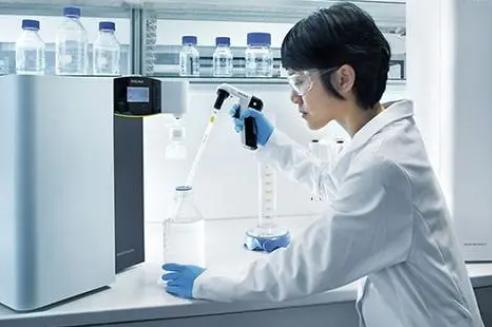
The basic process for how to prepare deionized water is straightforward, but the actual purification train can vary from one laboratory to another.
A common setup looks like this:
Feed Water → Pretreatment → RO → DI → Final Polishing, if required → Water Quality Monitoring → Point of Use or Storage
Not every system needs every stage. The best configuration depends on feed-water quality, water consumption, and the quality required for the final application.
Step 1: Preparation and Setup
Before you start making deionized water, prepare the purification equipment and check the incoming water.
Equipment Needed
Depending on the system and the required water quality, the setup may include:
- Deionization unit: Contains ion-exchange resin for removing dissolved ions.
- Reverse osmosis (RO) system: Often used before DI to reduce the contaminant load entering the ion-exchange stage.
- Sediment filter: Removes suspended particles such as dirt and rust.
- Activated carbon filter: Helps reduce chlorine and some organic contaminants.
- Water softener: May be useful when hard feed water could cause scaling in downstream equipment.
- Conductivity or resistivity meter: Used to monitor ionic purity.
- Storage tank or suitable point-of-use container: Holds purified water when immediate use is not possible.
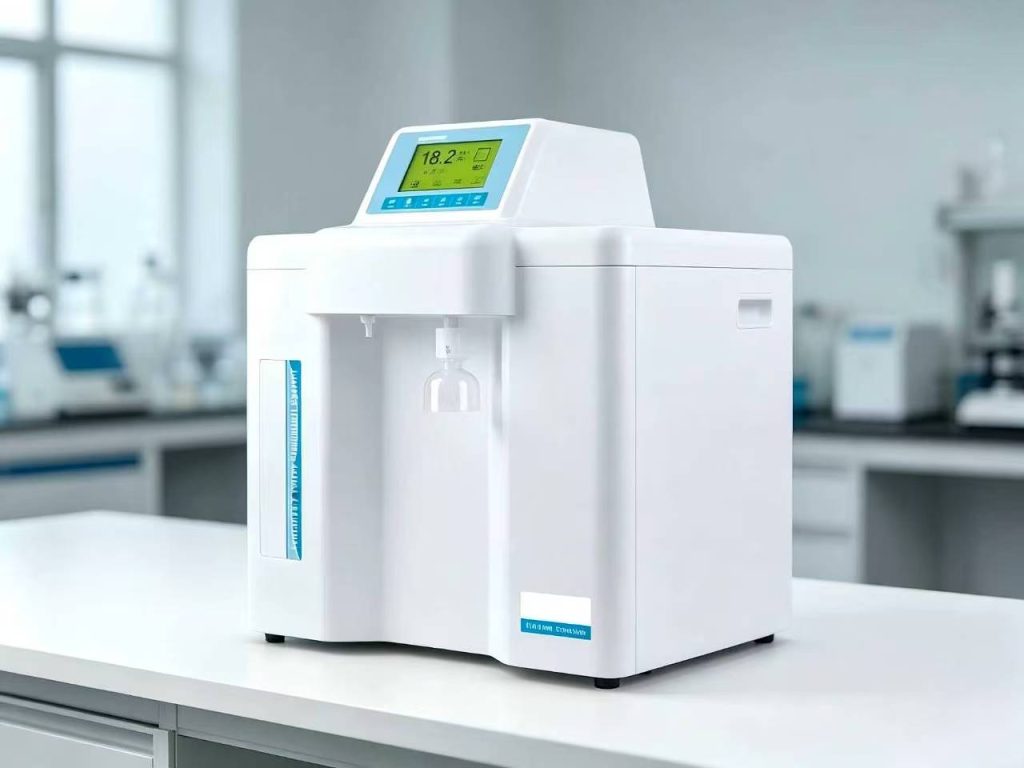
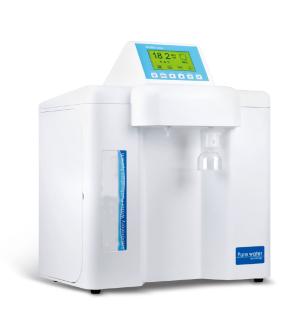
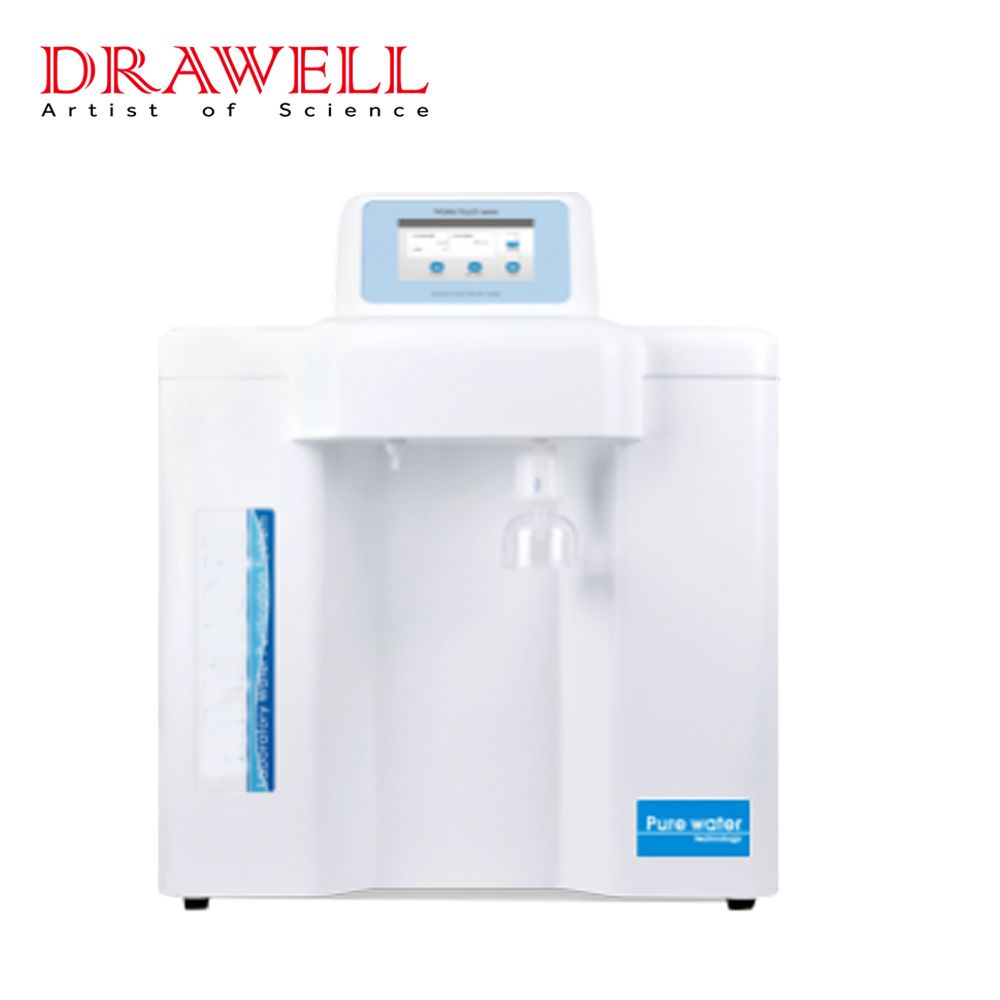
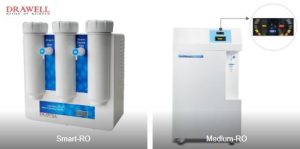
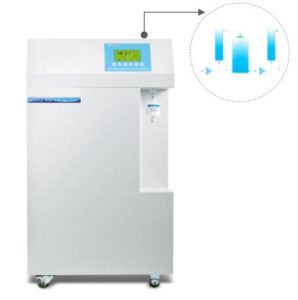
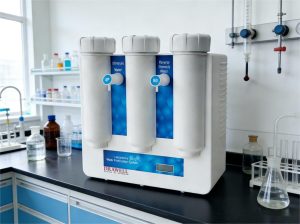
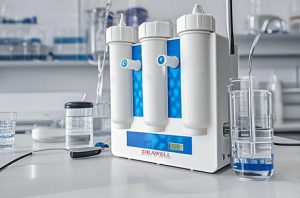
Drawell offers laboratory water purification systems in different configurations, including DI water systems, RO water systems, and ultrapure water systems. The appropriate configuration depends on the required water grade, source-water quality, and daily water demand.


Start With Feed-Water Quality
Before deciding how to make deionized water, check the water going into the system.
Important information can include:
- Conductivity or TDS
- Hardness
- Chlorine level
- Suspended solids
- Source-water characteristics
- Daily water consumption
This step is easy to overlook, but it can make a big difference. Water with high dissolved solids or hardness may place a much heavier load on the purification system than relatively clean feed water.
Drawell also recommends considering source-water quality, final water demand, and water consumption when selecting a laboratory water purification system.
Preparation Checklist
Before operation:
- Make sure the sediment and carbon filters are installed correctly.
- Check that the DI cartridge or resin bed is ready for use.
- Confirm that the water supply is connected correctly.
- Check the system for leaks.
- Make sure the conductivity or resistivity meter is working correctly.
- Follow the equipment manufacturer’s startup and flushing instructions.
Step 2: Pre-filtration
Before water reaches the DI stage, pretreatment can remove particles and other contaminants that would otherwise increase the load on the purification system.
- Sediment Filtration
A sediment filter removes suspended particles such as dirt, rust, sand, and silt.
This protects downstream components from unnecessary clogging and helps the purification system operate more consistently.
- Activated Carbon Filtration
Activated carbon is commonly used to reduce chlorine and certain organic compounds.
This stage is particularly useful when the incoming water contains chlorine that could affect downstream purification components.
Why Is Pretreatment Important Before DI?
Pretreatment is not simply an extra step. It helps reduce the contaminant load entering the DI stage.
When feed water contains a high concentration of dissolved ions, hardness, chlorine, or suspended material, the DI resin can be consumed more quickly. A suitable pretreatment system can therefore help improve the overall performance and service life of the purification system.
The exact pretreatment configuration should be based on the actual feed-water quality, rather than assuming that every laboratory needs the same filter combination.
Step 3: Optional Reverse Osmosis (RO) Stage
If the purification system includes RO, the pretreated water passes through a semipermeable membrane.
RO does not replace DI. Instead, it can act as an important pretreatment stage before deionization.
The RO membrane significantly reduces dissolved salts and many other contaminants before the water reaches the DI resin. This lowers the ionic load on the DI stage and can help the resin last longer.
When Should RO Be Used Before DI?
RO is particularly useful when the feed water has relatively high TDS, hardness, or other dissolved contaminants.
For example, a laboratory may use:
Tap Water → Pretreatment → RO → DI
rather than sending untreated tap water directly into the DI unit.
The right choice depends on the feed-water quality and the required water quality.
Drawell’s laboratory water purification range includes RO systems designed for applications such as laboratory primary pure water, cleaning glassware, water baths, autoclaves, environmental culturing, and feed water for ultrapure water systems.
Practical tip: If DI cartridges seem to be exhausted unusually quickly, check the quality of the water entering the DI stage before simply replacing the resin.
Step 4: Deionization Process
This is the core stage when you make deionized water.
The pretreated water enters a DI unit containing ion-exchange resin. The resin removes dissolved cations and anions from the water through ion exchange.
Ion Exchange
Cation-exchange resin exchanges positively charged ions such as calcium and magnesium for H⁺.
Anion-exchange resin exchanges negatively charged ions such as chloride and sulfate for OH⁻.
The H⁺ and OH⁻ combine to form H₂O, leaving water with a much lower concentration of dissolved ions.
Mixed-Bed Resin for Higher Ionic Purity
Some systems use a mixed-bed resin, where cation- and anion-exchange resins are combined in the same bed.
A mixed-bed stage can provide additional ionic polishing after other purification steps. It is useful when a lower ionic concentration is required.
However, mixed-bed DI water should not automatically be described as ultrapure water. Ultrapure water requirements can involve additional parameters beyond ionic purity, depending on the application.
ASTM D1193-24 is a useful reference here because it defines different reagent-water types and evaluates water using several characteristics, including conductivity/resistivity, TOC, sodium, chloride, silica, microbiological contamination, and endotoxins.
Step 5: Monitor Water Purity
Producing DI water is only half the job. You also need to know whether the water coming out of the system meets the required specification.
Conductivity and Resistivity
Conductivity is commonly used to monitor the ionic content of purified water.
Lower conductivity generally indicates fewer dissolved ions.
Resistivity is the inverse way of looking at the same electrical property:
Higher resistivity generally indicates lower ionic conductivity.
For very high-purity water, resistivity can approach 18.2 MΩ·cm at 25 °C, but this should not be treated as a universal target for all laboratory water. The required value depends on the application and applicable specification.
USP also notes that conductivity is affected by factors such as temperature and dissolved CO₂, which is one reason measurements need to be interpreted under controlled conditions.
Do You Need to Monitor More Than Conductivity?
Sometimes, yes.
Conductivity mainly tells you about the ionic character of the water. It does not by itself confirm that the water is free of organic contaminants, microorganisms, endotoxins, or other contaminants relevant to a particular application.
| Parameter | What it helps evaluate |
| Conductivity | Ionic purity |
| Resistivity | Ionic purity at very low conductivity |
| TOC | Organic carbon contamination |
| Microbial testing | Microbiological quality |
| Endotoxin testing | Endotoxin contamination |
ASTM D1193-24 includes several of these parameters in its reagent-water specifications, which is why water quality should be judged against the intended application rather than conductivity alone.
For applications that need continuous monitoring, Drawell’s laboratory water purification systems include models with online water-quality monitoring features. Some systems monitor resistivity and other water-quality parameters directly from the control system.
For laboratories that only need periodic manual checks, a benchtop conductivity meter can be a practical option for checking the water at the outlet.
Step 6: Collection and Storage
Once the water meets the required quality, it can be collected for use or storage.
Collection
Use a clean container or a properly designed storage tank that is suitable for purified water.
The container should be kept clean and protected from dust, particles, and other sources of contamination.
Storage Conditions
Storage is not completely neutral to water quality.
Purified water can be exposed to contaminants from the container, air, tubing, or other parts of the distribution system. Dissolved CO₂ can also affect conductivity measurements.
For this reason, laboratories requiring high-purity water often prefer to produce and use the water close to the point of use instead of storing it for long periods.
How Long Can Deionized Water Be Stored?
There is no single storage time that applies to every type of DI water.
The appropriate storage period depends on:
- Required water quality
- Container material and cleanliness
- Storage temperature
- Exposure to air
- Risk of microbial contamination
- Intended laboratory application
If the application is sensitive to contamination, freshly produced water or a properly designed point-of-use purification system may be a better choice than long-term storage.
Step 7: System Maintenance and Finishing
Regular maintenance is essential if you want consistent water quality rather than a system that works well for a few weeks and then slowly loses performance.
Resin Replacement or Regeneration
Ion-exchange resin gradually loses capacity as it captures ions from the feed water.
Depending on the system design, exhausted resin may be:
- Replaced as a cartridge
- Sent for regeneration
- Regenerated within a dedicated system
For laboratory users, the safest approach is to follow the manufacturer’s maintenance instructions rather than handling strong acids or bases for resin regeneration without the appropriate equipment and procedures.
Filter Replacement
Sediment and carbon filters should be replaced according to the manufacturer’s instructions and the actual feed-water conditions.
A fixed calendar schedule is useful as a starting point, but water consumption and feed-water quality can change how quickly filters become exhausted.
System Cleaning
Regular cleaning of the system, storage tank, tubing, and other components helps reduce contamination risks.
The cleaning or sanitization procedure should follow the purification system manufacturer’s instructions, especially for systems used for high-purity laboratory applications.
How Do You Know When DI Resin Needs to Be Replaced?
A sustained increase in outlet conductivity or a decrease in resistivity is one of the most useful signs that the DI stage is losing performance.
Other signs may include:
- Cartridge-life alarm
- Reduced purification capacity
- Increasing ionic leakage
- Changes in water quality after the DI stage
Drawell’s laboratory water purification systems include models with water-quality monitoring and cartridge replacement alerts, which can make routine operation easier by giving users an indication when maintenance is needed.
How to Choose the Right Water Purification Process for Your Laboratory
Not every laboratory needs the same type of purified water.
The best way to choose a system is to start with three questions:
- What is the quality of the source water?
- How much water does the laboratory use?
- What water quality does the application require?
A simple starting point is:
| Laboratory Use | Typical Purification Approach |
| General glassware rinsing | RO or purified water, depending on requirements |
| Routine reagent preparation | DI or other specified purified water |
| General analytical work | RO + DI or a suitable laboratory purification system |
| HPLC and other sensitive analytical work | Higher-purity water with appropriate monitoring |
| ICP-MS and trace analysis | Ultrapure water may be required |
| Molecular biology | Water quality should follow the specific method and application |
These are general examples, not universal specifications. The final choice should follow the analytical method, instrument manufacturer’s requirements, or applicable water-quality standard.
ASTM D1193-24 specifically states that the selected reagent-water type should be appropriate for its intended use.
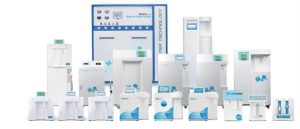
Drawell’s product range follows the same basic selection logic: its systems are divided into DI water, RO water, and ultrapure water systems, with different models covering different output rates and applications.
For example, Drawell lists its DI water systems for applications such as routine chemical reagent preparation, microbial culture media preparation, clinical biochemical analysis, and other laboratory uses, while its ultrapure systems are positioned for applications including HPLC, LC-MS, ICP-MS, PCR, electrophoresis, and sequencing.
Common Problems When Making Deionized Water
Even when the purification process looks correct, water quality can still change during daily operation.
Why Is DI Water Conductivity Increasing?
If the conductivity of the water leaving the DI stage starts to rise, possible causes include:
- DI resin is approaching exhaustion
- Feed-water conductivity has increased
- Pretreatment is not working properly
- Water is passing through the system too quickly
- The resin bed is not operating correctly
- Contamination has entered the system after purification
Start by checking the feed-water quality and the DI cartridge condition instead of immediately replacing every filter.
Why Is DI Resin Used Up Quickly?
DI resin capacity is closely related to the amount of ionic contamination entering the resin.
If the incoming water has high TDS or hardness, the DI stage may have to remove a much larger ionic load.
A useful troubleshooting sequence is:
Check feed water → Check pretreatment → Check RO performance → Check DI cartridge → Check water consumption
If RO is used as a pretreatment stage, poor RO performance can also increase the load placed on the DI resin.
Why Does Water Quality Decline During Storage?
If the water meets the required conductivity immediately after purification but performs differently after storage, look at the storage and distribution system.
Possible causes include:
- Dirty storage containers
- Air exposure
- CO₂ absorption
- Contaminated tubing
- Long storage periods
- Microbial contamination
In other words, the purification system may not be the only place where contamination can happen.
Why Use RO Before DI?
The main reason is simple: RO reduces much of the contaminant load before the DI stage.
That can reduce the amount of work required from the ion-exchange resin and may extend resin capacity.
For laboratories with relatively clean feed water and low water consumption, a simpler DI setup may be sufficient. For laboratories with higher TDS or greater water demand, RO + DI can be a more practical configuration.
DI Water vs Distilled Water vs Ultrapure Water
These terms are often used interchangeably in casual conversation, but they describe different purification approaches or water-quality levels.
| Water Type | Main Purification Approach | Main Purpose |
| Distilled water | Distillation | Separates many contaminants through vaporization and condensation |
| DI water | Ion exchange | Mainly removes dissolved ions |
| RO water | Reverse osmosis | Reduces dissolved salts and many other contaminants |
| Ultrapure water | Multiple purification and polishing stages | Designed for very low levels of specific contaminants |
The important point is that water purity should be matched to the application.
A laboratory should not assume that distilled water, DI water, RO water, and ultrapure water can be substituted for one another in every method.
Frequently Asked Questions
Q1: Can You Make DI Water Without an RO System?
Yes. A DI unit can remove dissolved ions without an RO stage.
However, whether DI alone is a good choice depends on the quality of the feed water, water consumption, resin capacity, and required final water quality.
Q2: Is DI Water the Same as Distilled Water?
No.
DI water is primarily produced through ion exchange, while distilled water is produced through distillation. They may be suitable for some of the same general laboratory tasks, but they are not automatically equivalent for every application.
Q3: Is DI Water Suitable for HPLC?
Not necessarily.
HPLC methods can require water with controlled ionic and organic contamination. The appropriate water specification should come from the method, instrument requirements, or applicable standard rather than from the label “DI water” alone.
Q4: How Do I Know When DI Resin Is Exhausted?
Monitor the outlet conductivity or resistivity. A sustained increase in conductivity or decrease in resistivity usually indicates that the DI stage is losing its ability to remove ions.
If the purification system has a cartridge-life or water-quality alarm, use that information together with the actual water-quality reading.
Q5: Can DI Water Be Stored?
Yes, but storage conditions matter.
Use a clean, suitable container and minimize unnecessary exposure to air and contamination. For applications requiring very high purity, producing water close to the point of use is often preferable to long-term storage.
Q6: What Conductivity Should DI Water Have?
There is no single conductivity value that is correct for every laboratory application.
The required value depends on the intended use and applicable specification. ASTM D1193-24, for example, defines different reagent-water types with different requirements.
Conclusion
Knowing how to make deionized water is not just about passing tap water through a DI cartridge. The feed-water quality, pretreatment, RO stage, ion exchange, monitoring, storage, and maintenance all affect the final result.
For routine laboratory work, a straightforward DI system may be enough. If you need more consistent water quality or water for sensitive analytical applications, a properly configured laboratory water purification system can combine RO, DI, final polishing, and real-time monitoring in one system.
If you’re comparing options for your laboratory, start with your source-water quality, daily water demand, and required water grade. Drawell can help match those requirements with a suitable DI, RO, or ultrapure water purification system rather than simply recommending the largest system available.
Get Quote Here!
Latest Posts
What Next?
For more information, or to arrange an equipment demonstration, please visit our dedicated Product Homepage or contact one of our Product Managers.


