


In many laboratories, a reverse osmosis (RO) water system is seen as a “safe choice” for producing purified water. It is widely discussed, frequently specified in procurement lists, and often assumed to be sufficient for most laboratory needs. However, this familiarity sometimes leads to oversimplified expectations.
A common misunderstanding is to treat a lab RO water system as a complete solution for all laboratory applications. Some users expect RO water to be “pure enough” for analytical instruments, while others assume laboratory RO systems work in the same way as household or industrial RO units. In practice, both assumptions can result in improper system selection and unnecessary operating costs.
From a supplier’s perspective, these misunderstandings are not caused by a lack of interest, but by a lack of clear information. A laboratory reverse osmosis system plays a very specific role in laboratory water purification. Understanding what it can do well—and where its limitations begin—is the key to designing a reliable and cost-effective lab water purification system. Let’s take a closer look together.
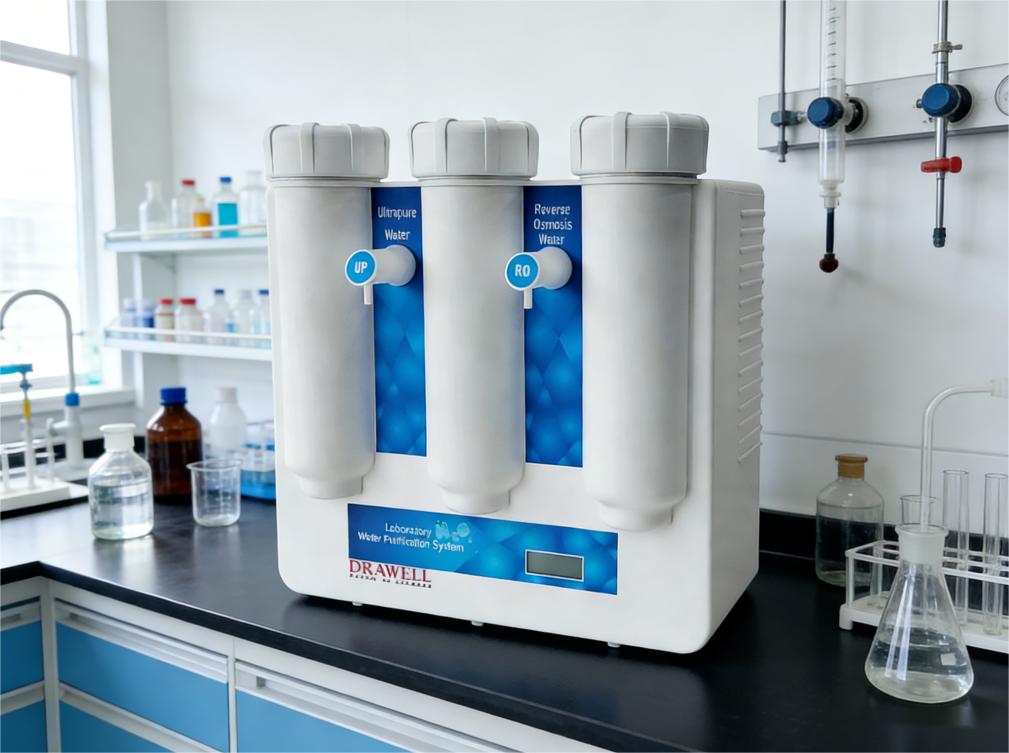
What is a Lab RO Water System?
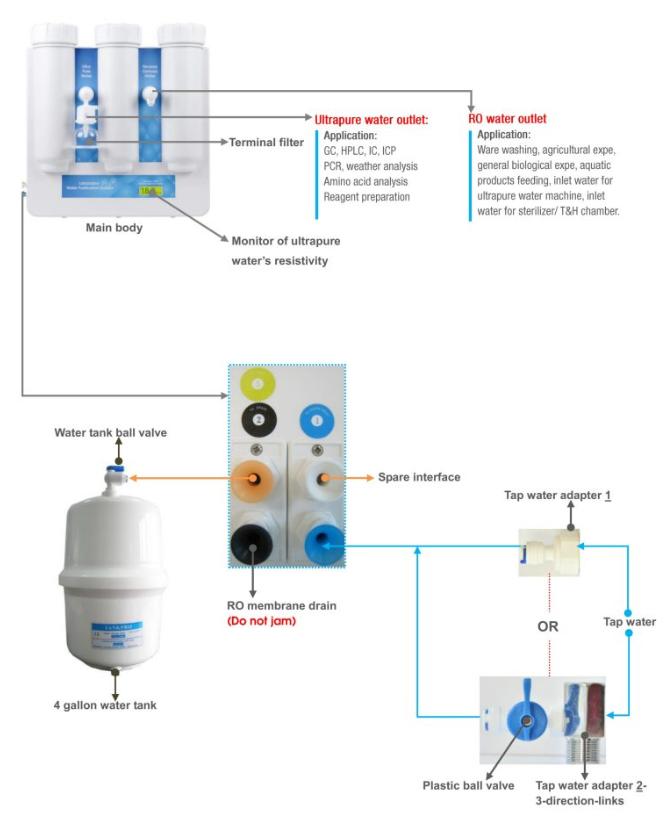
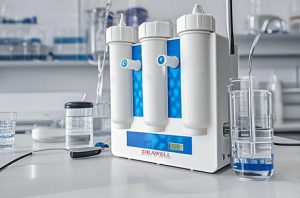
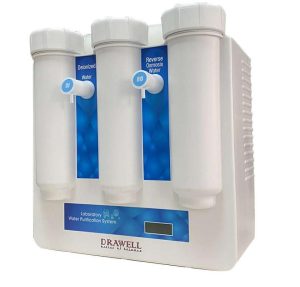
A complete laboratory reverse osmosis (RO) water purification system is an integrated unit where multiple modules work in synergy. It typically consists of a pretreatment system, the RO host unit (membrane assembly), a post-treatment/polishing system, and an intelligent control unit.
The pretreatment stage is crucial and usually involves multi-media filtration and activated carbon adsorption. Its primary role is to remove large particulate matter, residual chlorine, and other potential foulants from the feed water (typically tap water). This step is essential for protecting the delicate RO membranes from premature scaling, fouling, or oxidative damage, thereby ensuring optimal performance and longevity.
The heart of the system is the RO host unit, where pressurized feed water is forced through the semi-permeable RO membranes. This process achieves a high level of purification. For instance, it can remove 95% to 99% of total dissolved solids (TDS) and over 99% of heavy metal ions (such as lead, mercury, and cadmium), along with a vast majority of organic contaminants, colloids, bacteria, and viruses.
The product water from the RO unit is of high-purity “pure water” grade. For applications in medical, biological, or analytical laboratories that demand the utmost purity, this RO water serves as the perfect feed for the post-treatment polishing stage. Here, technologies like ion exchange (IX) or electrodeionization (EDI) further purify the water to produce Type I ultrapure water, characterized by a resistivity of 18.2 MΩ·cm. This ultrapure water meets the stringent requirements for critical applications such as cell culture, high-performance liquid chromatography (HPLC), mass spectrometry, and molecular biology experiments.
What a Laboratory RO System Can Do Well — and What It Cannot?
Understanding RO performance is easier when viewed from two angles: core purification capability and real laboratory applications.
Core Capabilities: What RO Can and Cannot Do
The table below summarizes the typical strengths and limitations across key operational dimensions of a laboratory RO water system:
| Capability Dimension | What It Can Do Effectively | What It Cannot Do or Its Limitations |
| Pollutant Removal | Remove dissolved salts (97%-98% rejection rate), heavy metals (≥99% removal), bacteria/viruses, organic matter, colloids, pesticide residues, etc. | Cannot selectively retain beneficial mineral ions like calcium, magnesium, potassium; removes them indiscriminately. |
| Water Quality Output | Produce purified water with low conductivity (can be <1 μS/cm); serves as an essential feed stage for producing ultrapure water. | A stand-alone RO process cannot directly produce ultrapure water (e.g., 18.2 MΩ·cm) required for the most critical applications; a post-treatment polishing module (DI/EDI) is mandatory. |
| Operational Characteristics | Operates without the need for chemical regeneration (acid/base), making it safer and more environmentally friendly; capable of continuous, stable operation. | Generates a concentrate stream (“reject water”); requires electrical power to drive the high-pressure pump. |
| Maintenance & Adaptability | Can handle various tap water sources when equipped with proper and robust pre-treatment. | Performance and membrane lifespan are highly dependent on strict pre-treatment, regular maintenance (membrane cleaning/replacement), and professional operation. RO membranes are prone to fouling and oxidative damage without proper care. |
| Economic & Practicality | Can be more cost-effective in the long run compared to consistently purchasing bottled/barreled purified water. | Requires dedicated lab space (often under-counter) and a drainage point; involves a relatively high initial capital investment. |
So you can see, an RO system is a highly effective core purification technology but not a universal, maintenance-free solution. Its performance is a direct function of system design, feed water quality, and disciplined operation. It excels as the foundational workhorse for bulk purification, while its limitations highlight why it is typically integrated as the central stage within a more complete, multi-technology water purification system.
Where an RO System Is Enough — and Where It Is Not?
When applied correctly, a lab RO water system can fully meet the requirements of many routine laboratory tasks.
Typical applications where RO water is sufficient:
- Glassware washing and rinsing
- Autoclave and sterilizer feed water
- General chemical preparation
- As feed water for DI or ultrapure systems
In these scenarios, RO helps reduce operating costs and protects downstream equipment from scaling and contamination.
However, there are also applications where RO should not be used as a standalone solution.
Applications where RO alone is not recommended:
- HPLC and UPLC analysis
- ICP, ICP-MS, or trace element analysis
- Cell culture and molecular biology
- Any application requiring Type I ultrapure water
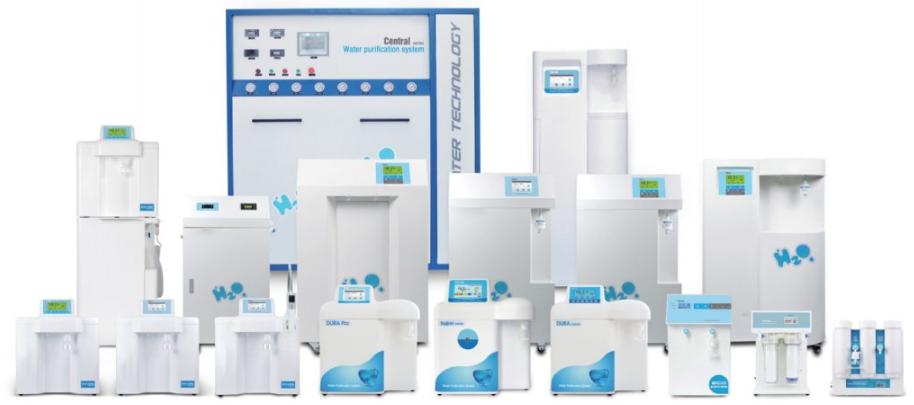
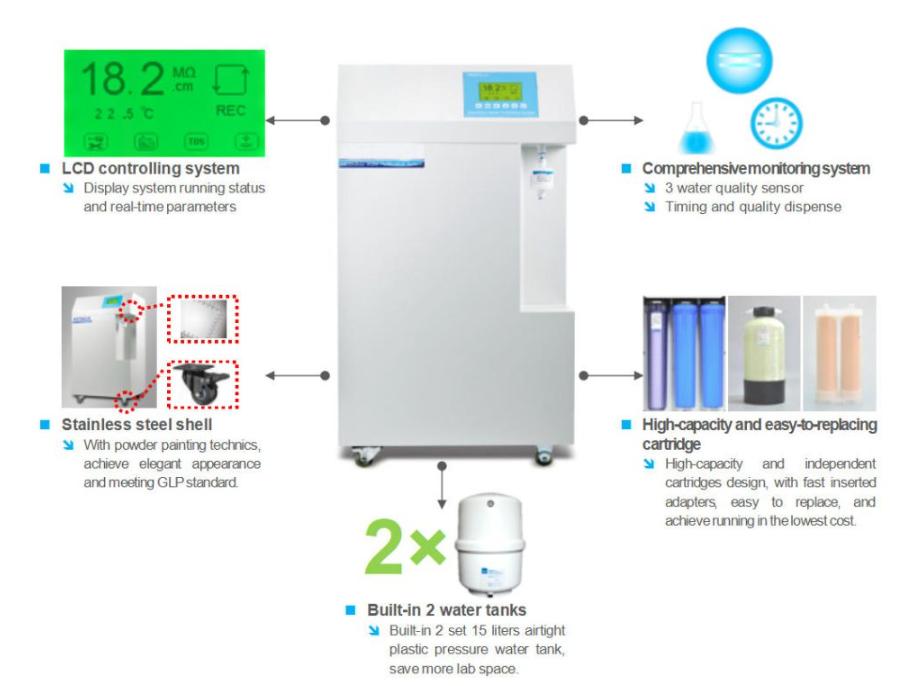
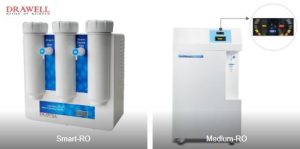
In these cases, RO should be combined with DI, UV, or ultrafiltration to meet laboratory water quality standards. Such as our Medium RQ Series Double-Stage RO + DI System is suitable when RO should be combined with DI.
Common Misconceptions About Laboratory RO Systems
There are some common misconceptions about reverse osmosis purified water.
Misconception 1: Why Laboratory RO Systems Are Different from Household or Industrial RO
One frequent question is why laboratory RO systems appear more complex or costly than household or industrial units. The answer lies in design priorities.
Laboratory RO systems focus on:
- Water quality stability rather than maximum throughput
- Compatibility with downstream purification modules
- Materials suitable for laboratory environments
- Easier maintenance and validation
Household RO systems are optimized for drinking water, while industrial RO systems prioritize volume and efficiency. A laboratory RO system sits between these two worlds, balancing performance and control.
Misconception 2: Why RO Water Is Still Not “Ultrapure”
Another common misconception is that low conductivity automatically means ultrapure water. While RO significantly reduces ionic content, it does not fully address:
- Trace organic compounds
- Dissolved gases
- Endotoxins and nucleases
This is why ultrapure laboratory water systems always include additional purification stages beyond RO.
Misconception 3: Does an RO System Produce “Wastewater”?
Yes, reverse osmosis inherently produces concentrate water. This is not a design flaw but a physical requirement of the separation process. In laboratory systems, recovery ratios are carefully managed to balance water efficiency and membrane lifespan.
Modern laboratory RO systems are designed to:
- Optimize recovery without compromising membrane performance
- Maintain consistent output quality
- Reduce unnecessary water loss through proper system sizing
How to Choose the Right Laboratory RO System (Supplier Perspective)?
From Drawell’s experience working with laboratories worldwide, selecting the right RO system starts with application-driven planning, not equipment comparison.
Key factors to consider include:
- Daily and peak water consumption
- Feed water quality and variability
- Required water type (Type III, II, or as pretreatment for Type I)
- Future expansion or system upgrades
A well-matched laboratory RO system should integrate smoothly into a complete lab water purification system, rather than operate in isolation.

Choosing a laboratory RO water system is not about selecting the most powerful membrane or the highest rejection rate. It is about understanding where RO fits into your laboratory workflow and how it supports reliable, long-term water quality. When used as part of a properly designed laboratory water purification system, RO remains one of the most valuable and dependable technologies available to modern laboratories.
For any laboratory water purification system needs, please feel free to contact us.
Related Products Recommendation


Get Quote Here!
Latest Posts
What Next?
For more information, or to arrange an equipment demonstration, please visit our dedicated Product Homepage or contact one of our Product Managers.


