




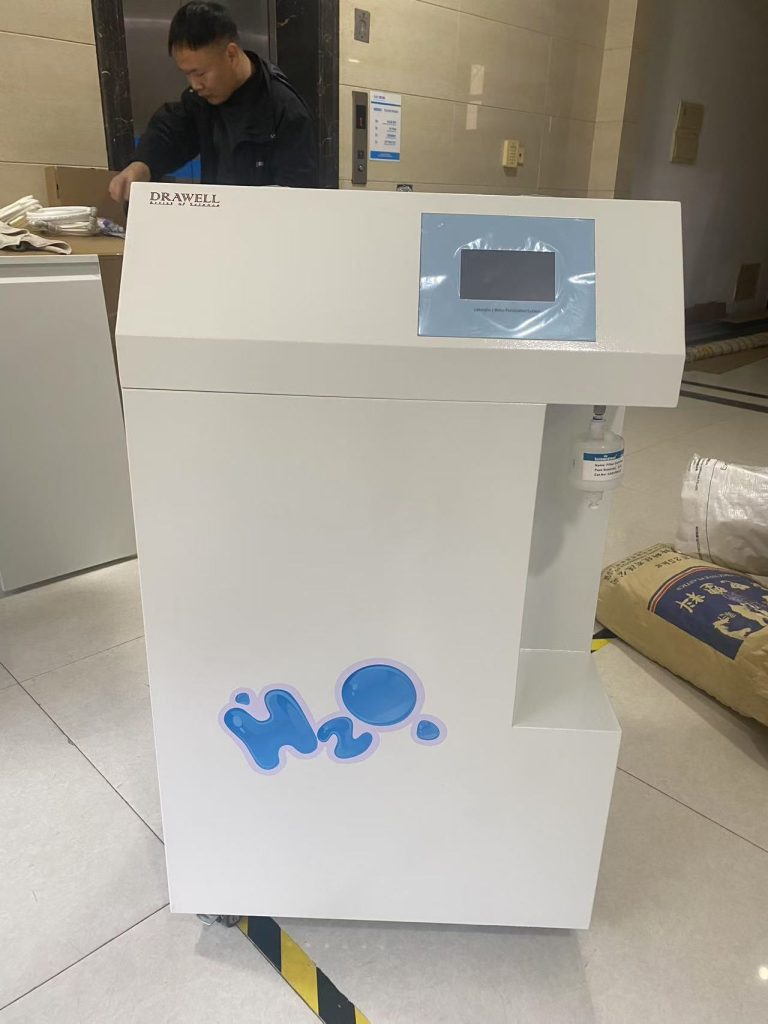
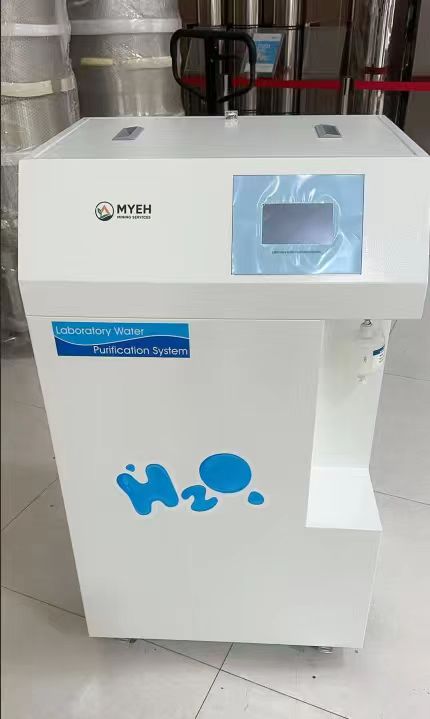
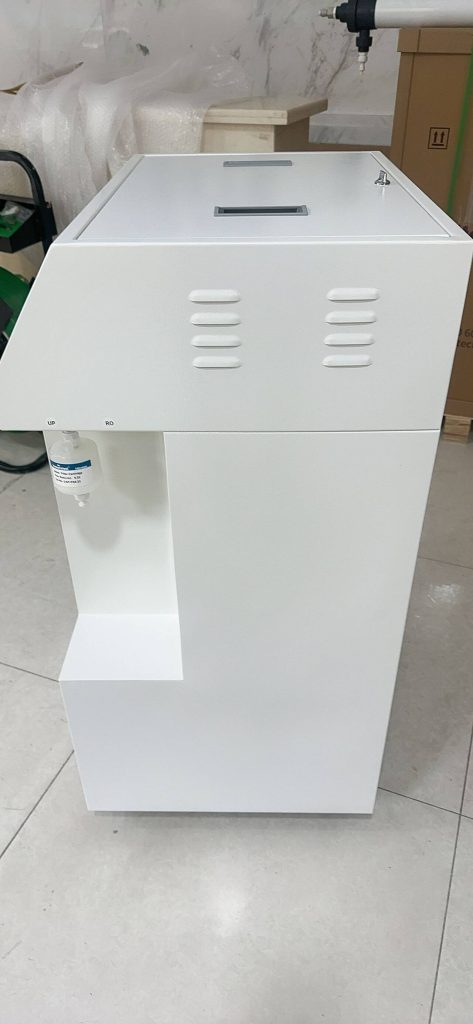
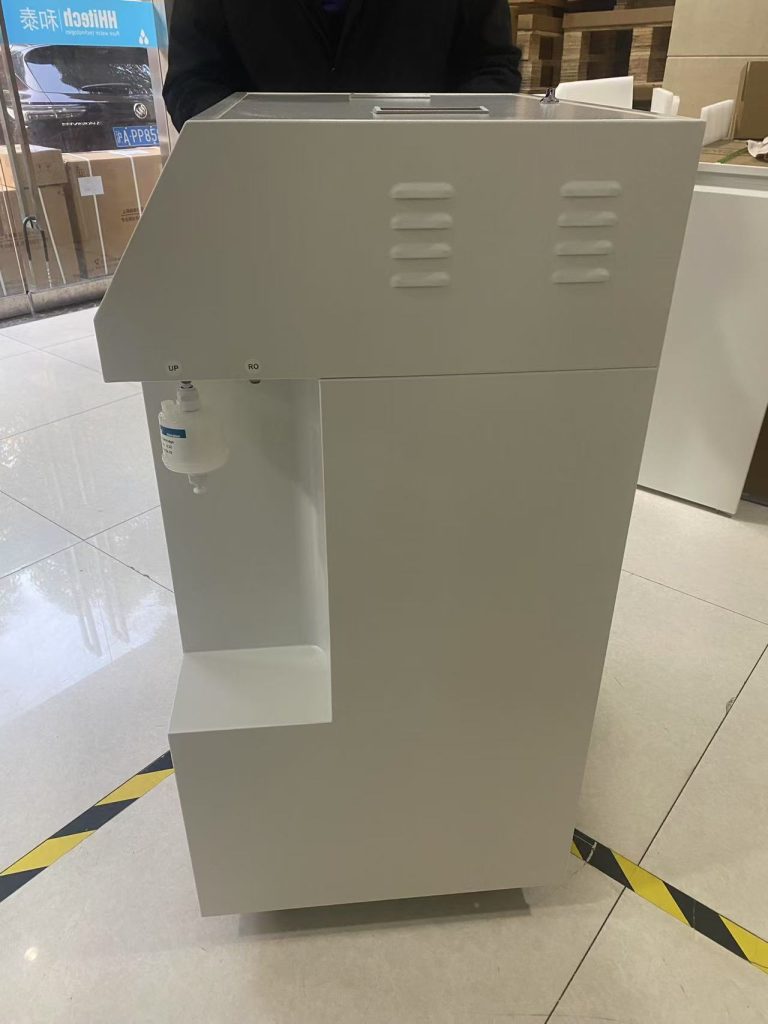
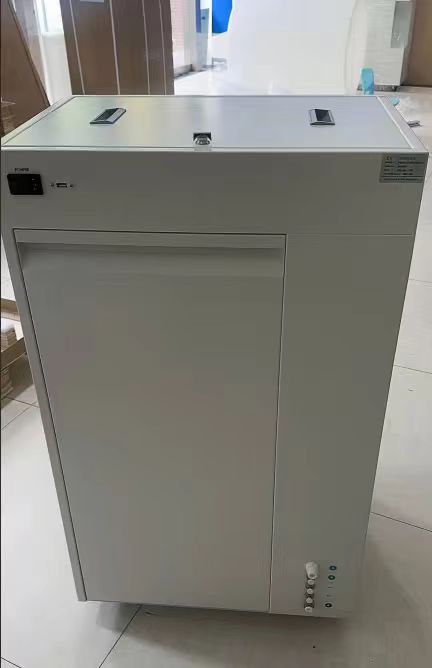
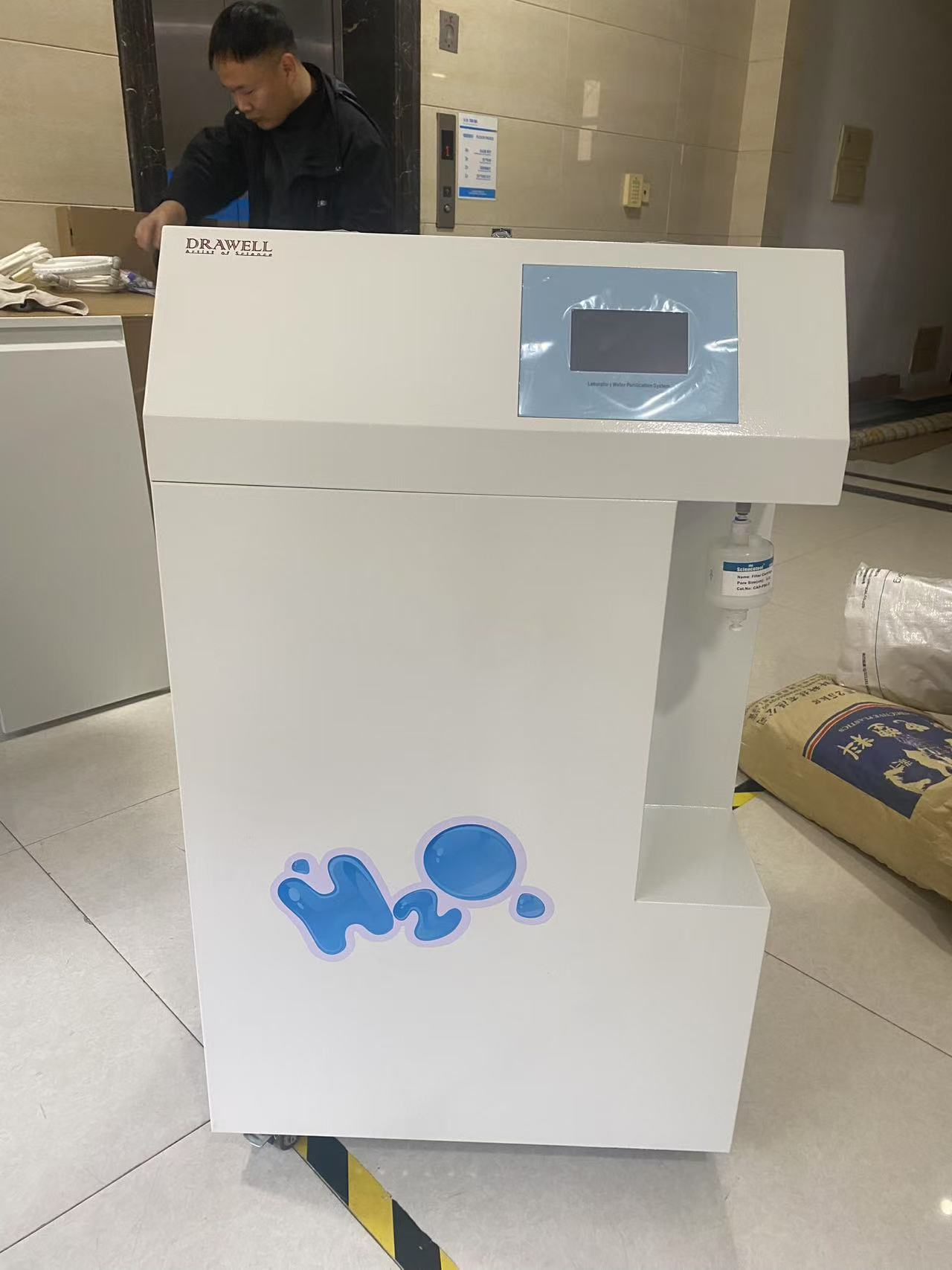
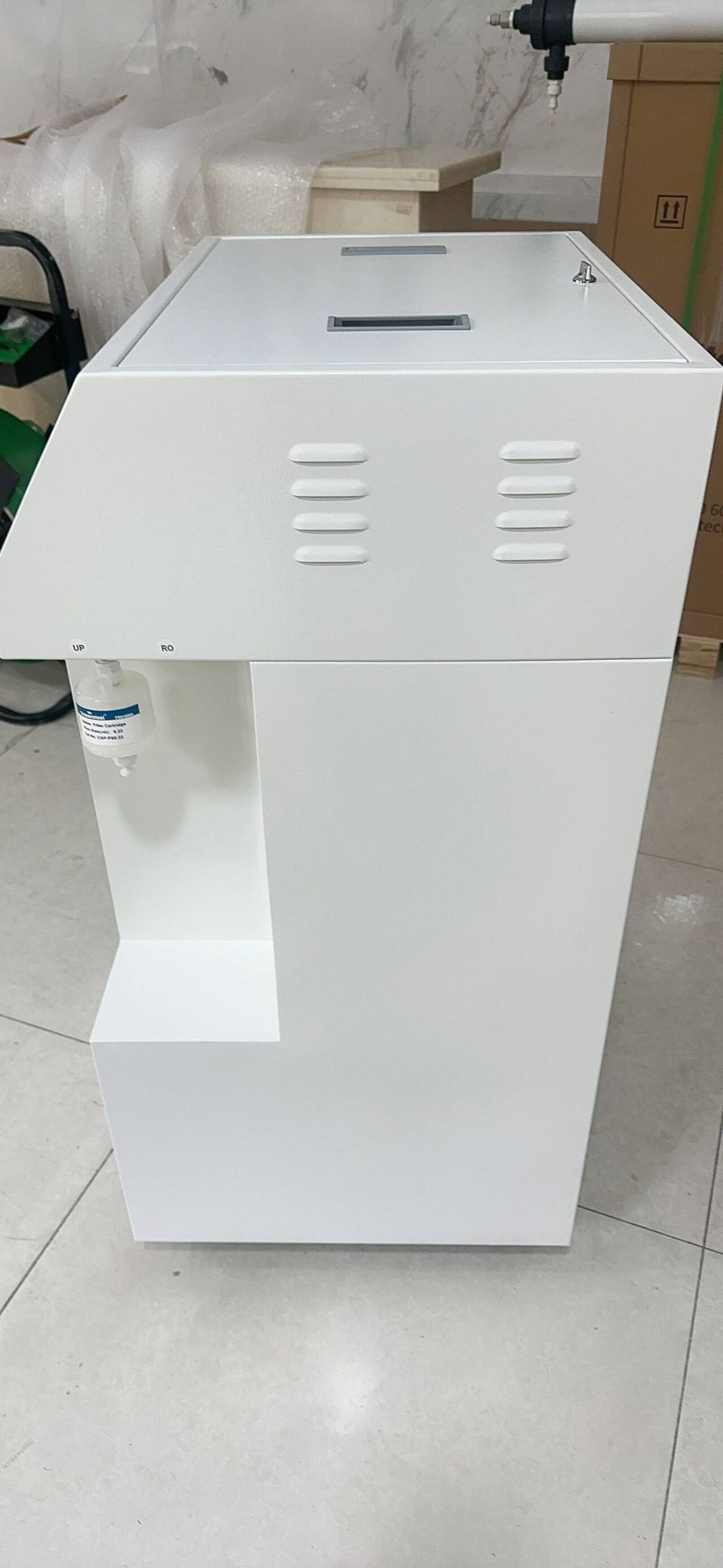
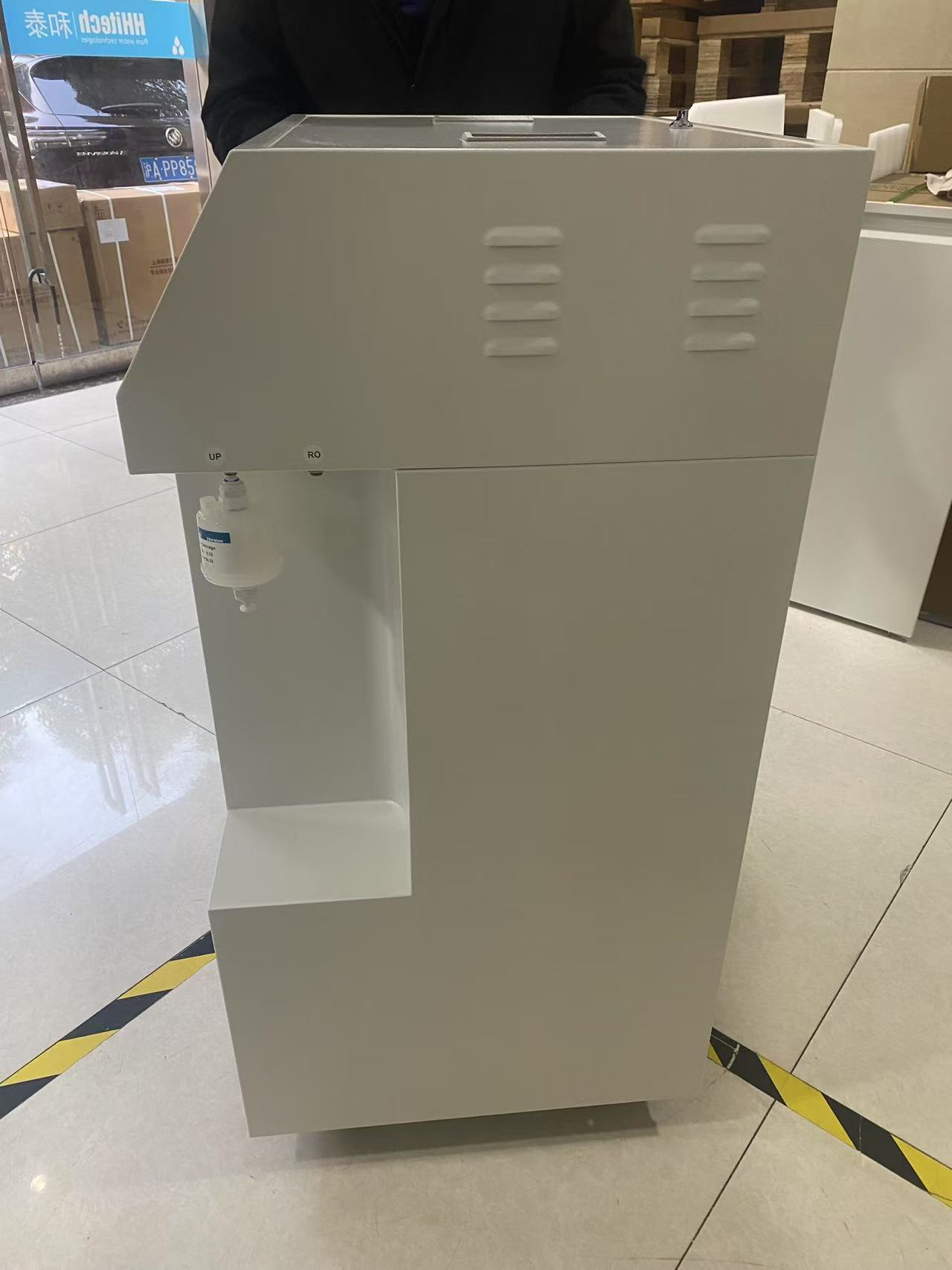
Medium-S Series Ultrapure Water System (Tap water inlet)
With LCD controlling system, 3 way water quality sensor, timing and quality dispensing, stainless steel shell, built-in 2 set pressure tanks, single stage RO system and 1 pump, Medium-S series ultrapure water system is superior choice of ultrapure water’s mass usage for high grade experiments.
With tap water inlet, its output ranges from 45 to 125 liters/hour. It can produce single stage RO water and ultrapure water. The single stage RO water’s ion rejection rate is more than 96%, and the ultrapure water’s resistivity absolutely reaches to 18.2MΩ.cm. It completely meets the highest grade I standard of ASTM, CAP, CLSI, EP and USP.
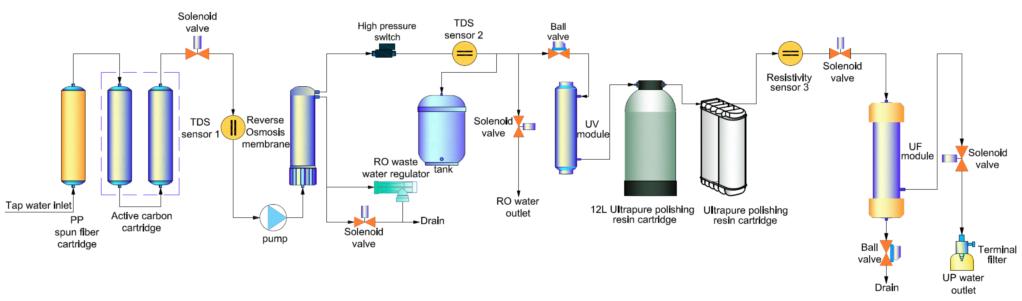
Flow Schematic
Specifications
| Model | Standard | Eliminating endotoxin | Low TOC | Synthesizing |
| Medium-S300/400/600/800 | Medium-S300/400/600/800UF | Medium-S300/400/600/800UV | Medium-S300/400/600/800UVF | |
| Output(25℃)* | 300 series:45 liters/hour, 400 series:63 liters/hour,600 series:94 liters/hour, 800 series:125 liters/hour | |||
| Pure water outlet | 2: reverse osmosis water, ultrapure water | |||
| Ultrapure water quality | ||||
| Resistivity(25℃) | 18.2MΩ.cm | |||
| TOC* | <10ppb | <10ppb | <3ppb | <3ppb |
| Bacteria | <0.1cfu/ml | |||
| Particle(>0.2μm) | <1/ml | |||
| Endotoxin | N/A | <0.001Eu/ml | N/A | <0.001Eu/ml |
| RNases | N/A | <0.01ng/ml | N/A | <0.01ng/ml |
| DNases | N/A | <4pg/μl | N/A | <4pg/μl |
| RO water quality | ||||
| Ion rejection rate | 96%-99% (new RO membrane) | |||
| Organic rejection rate | >99%, when MW>200 Dalton | |||
| Particles and bacteria rejection rate | >99% | |||
| Feed water requirements | Tap water, temperature:5-45℃,pressure:1.0-4.0Kgf/cm2 | |||
| Dimension and weight | Length×Width×Height:640×540×1110mm / Weight: about 70Kg | |||
| Electrical requirements | AC110-240V, 50/60Hz | |||
| Power | 300/400 series:120W, 600/800 series: 240W, | |||
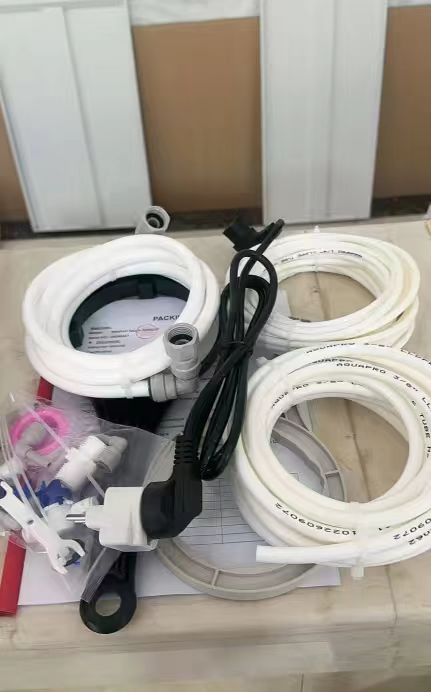
| Standard configuration | Main body (Including 1 set of cartridge) +2 set built-in 15 liters pressure tank | |||
Remarks:
*The value will be influenced by temperature and feed water’s quality.


