


Water is often treated as a basic utility in laboratory work, but moreover, it is a critical reagent. Water quality, in general, has a major influence throughout the experimental process all the way from sample preparation to running the instrument, and ultimately it is the main factor for the accuracy of the experiment, instrument performance, and maintenance costs.
There is a common mistake made by most laboratories: when choosing a water purification system, they rely solely on the water grade labels like Type I, Type II, or Type III. Whereas, the ideal laboratory water purification system will be determined by factors such as the type of laboratory, application requirements, and patterns of usage much more.
At Drawell, we have been collaborating with research, clinical, industrial, and pharmaceutical laboratories around the world. Our experience tells us that if a system is selected based on the type of laboratory, it not only guarantees accurate results but also brings down the cost and makes the daily operation easier. Now we will illustrate how to identify the best water purification system for laboratory use according to different laboratory applications.
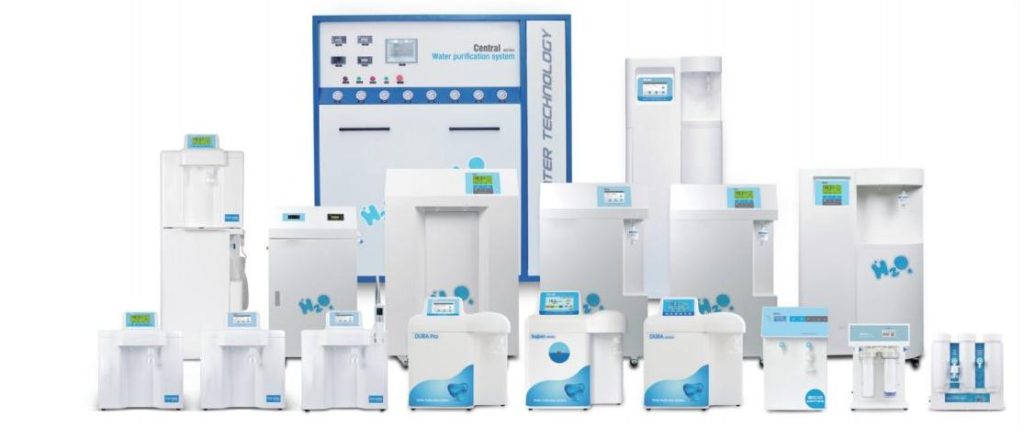
Key Factors That Define Laboratory Water Requirements
Before comparing different laboratory types, it is important to understand the main factors that determine water quality requirements. These elements form the foundation for selecting any laboratory water purification system.
Water Quality Grades: Type I, Type II, and Type III
Laboratory water is typically classified into three main grades:
- Type I (Ultrapure Water): Used for highly sensitive applications such as HPLC, LC-MS, PCR, and cell culture
- Type II (Pure Water): Commonly used for buffer preparation, media preparation, and feeding ultrapure systems
- Type III (RO or DI Water): Suitable for glassware washing, autoclaves, and general laboratory use
Rather than selecting the highest grade by default, laboratories should match the water grade to actual application needs.
Critical Water Quality Parameters
Different laboratories focus on different quality indicators, including:
- Resistivity or conductivity
- Total Organic Carbon (TOC)
- Microbial and endotoxin levels
- Particles and ions
For example, a water purification chemistry lab may prioritize ionic purity, while a life science lab will be more concerned with biological contaminants.
Daily Water Consumption and Usage Patterns
Usage volume also plays a major role:
- Low-volume, intermittent use may suit point-of-use systems
- High-volume or multi-user labs often benefit from centralized or laboratory RO water systems
Understanding these basics makes it much easier to choose the right lab water purification equipment for each laboratory type.

Laboratory Water Purification Needs by Lab Type
Below, we outline typical water requirements and system configurations for different laboratory environments.
Analytical and Instrumentation Laboratories
Analytical laboratories using instruments such as HPLC, LC-MS, GC, ICP, and UV-Vis require extremely consistent water quality.
Typical water needs include:
- Type 1 ultrapure water purification system
- Very low TOC to reduce baseline noise
- Stable resistivity for reproducible results
A common and efficient setup is a Type II laboratory DI water system feeding a point-of-use ultrapure water unit. This approach balances performance and operating cost while ensuring reliable results for sensitive instruments.
Life Science and Molecular Biology Laboratories
Life science laboratories place high demands on biological purity rather than just ionic purity.
Key considerations include:
- Removal of nucleases, bacteria, and endotoxins
- Stable water quality for PCR, sequencing, and cell culture
- Optional UV and ultrafiltration modules
In many cases, a laboratory ultrapure water system designed specifically for biological applications is recommended. Drawell systems can be configured to meet different life science workflows without unnecessary complexity.
Pharmaceutical R&D and Quality Control Laboratories
Pharmaceutical laboratories operate under strict regulatory requirements, making system reliability and documentation essential.
Water purification requirements typically include:
- Compliance with GLP and GMP guidelines
- Consistent monitoring and data recording
- System validation support
For these environments, laboratory water purification systems are often designed with multi-stage purification, online monitoring, and controlled distribution to ensure both water quality and regulatory compliance.
Clinical and Diagnostic Laboratories
Clinical and diagnostic labs depend on continuous system availability and stable water supply.
Common needs include:
- Reliable operation with minimal downtime
- Support for multiple analyzers
- Easy maintenance to reduce operator workload
Here, durability and simplicity are just as important as water purity. Many labs benefit from centralized laboratory water filtration systems combined with point-of-use polishing.
Industrial, Environmental, and Food Testing Laboratories
These laboratories often handle diverse testing tasks, resulting in varied water requirements.
Typical challenges include:
- Simultaneous demand for different water grades
- Higher daily consumption
- Cost-sensitive operation
A combination of laboratory RO water systems and DI polishing units is often the most practical solution, delivering flexibility while keeping operating costs under control.
Academic and Teaching Laboratories
University and teaching labs must balance performance, budget, and ease of use.
Key priorities include:
- Versatility for multiple experiments
- Straightforward maintenance
- Reasonable long-term operating cost
For these labs, modular laboratory water purification systems allow future upgrades as research needs evolve.
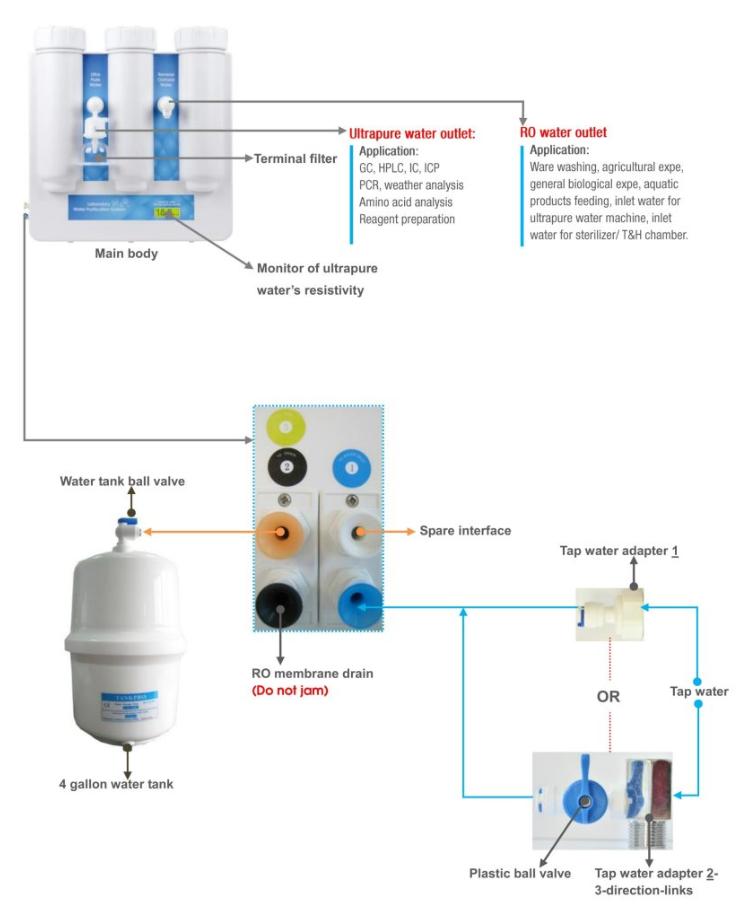
Centralized vs Point-of-Use Systems: Which Fits Your Lab?
One important decision is whether to use centralized water systems or individual point-of-use units.
| System Type | Best Suited For | Key Advantages |
| Centralized System | Large or multi-user labs | High capacity, consistent supply |
| Point-of-Use System | Individual workstations | Flexible, targeted purity |
In many laboratories, a hybrid approach works best—central RO or DI water feeding localized ultrapure units. This structure provides flexibility while maintaining cost efficiency.
Common Mistakes When Selecting Laboratory Water Purification Systems
Even experienced labs can make avoidable mistakes, such as:
- Selecting Type I water for all applications regardless of need
- Ignoring long-term consumable and maintenance costs
- Overlooking future expansion plans
- Underestimating actual daily water usage
Avoiding these issues helps ensure that your water purification system for laboratory use remains effective and economical over time.
How to Match Laboratory Water Purification Equipment to Your Application
A simple decision framework can help guide selection:
- Identify your primary laboratory applications
- Define required water grade and key quality parameters
- Estimate daily consumption
- Choose centralized, point-of-use, or combined systems
With a broad portfolio of laboratory ultrapure water systems, laboratory DI water systems, and laboratory RO water systems, Drawell helps laboratories worldwide build dependable water solutions tailored to their specific needs.
If you are planning to upgrade or design a new laboratory water system, selecting a solution based on laboratory type is the smartest place to start. Feel free to contact Drawell, our team will be pleasure to support you.
Related Products Recommendation


Get Quote Here!
Latest Posts
What Next?
For more information, or to arrange an equipment demonstration, please visit our dedicated Product Homepage or contact one of our Product Managers.


