


Many labs treat their water system like a kitchen appliance—install it and forget it. The common misconception is that if it’s still producing water, it’s still doing its job. The reality? Water system degradation is a slow, silent process.
It won’t necessarily stop working one day. Instead, it will gradually allow contaminants to slip through. You might not notice until critical experiments start failing, or your HPLC columns clog for no apparent reason. By then, the damage to your research—and your budget—is already done. Understanding that all systems have a finite, predictable lifespan is the first step toward protecting your lab.

Typical Lifespan of Laboratory Water Systems
How long should a good system last? It depends on the component. Here’s a realistic breakdown of what you can expect before performance starts to decline:
| Component | Typical Lifespan | The Catch |
| Pre-filters & Cartridges | 3 – 6 months | These are routine consumables; their cost is expected. |
| RO Membrane | 2 – 5 years | Efficiency drops with age. Scale or fouling is permanent damage. |
| UV Lamps | 1 – 2 years | They still emit light, but lose germicidal power after the rated hours. |
| Storage Tank & Internal Tubing | 5 – 10 years | The biggest wildcard. Biofilm can form here, making it impossible to get truly pure water again without replacement. |
| Entire System (Complete Unit) | 7 – 10 years | After this point, technology is outdated, and the risk of major component failure rises sharply. |
5 Signs Your Lab Water System Should Be Replaced
Knowing the average lifespan is helpful, but your system will tell you when it’s time to go. Watch for these five specific signs.
1. Water Quality Is Frequently Out of Spec
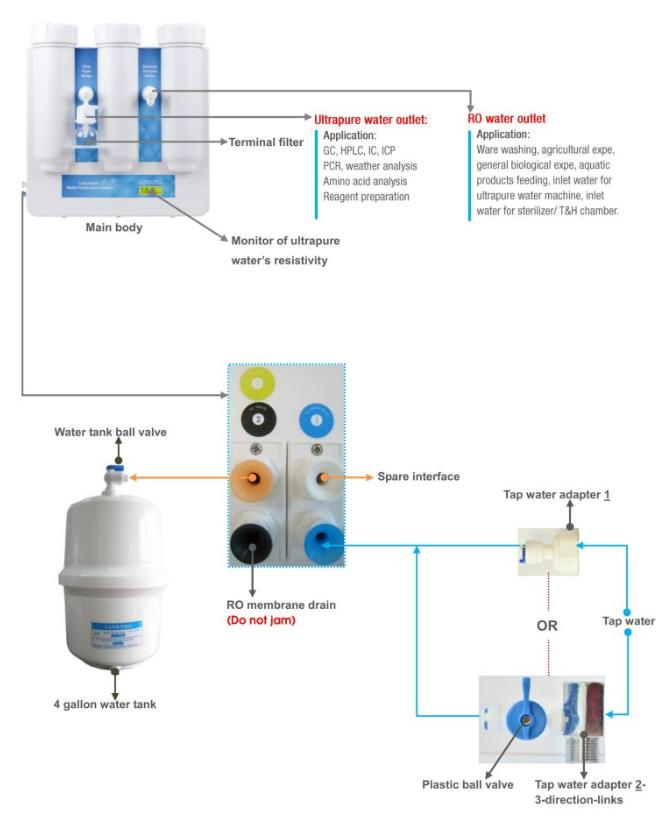
You’ve replaced the RO membrane. You’ve changed the UV lamp. Yet, your resistivity readings are unstable, or your TOC levels are creeping up. If new consumables can’t fix the problem, the issue is likely deeper—like biofilm in the tank or aged internal seals. At this point, you’re no longer maintaining the system; you’re fighting a losing battle against its fundamental deterioration.
2. Water Production Efficiency Drops
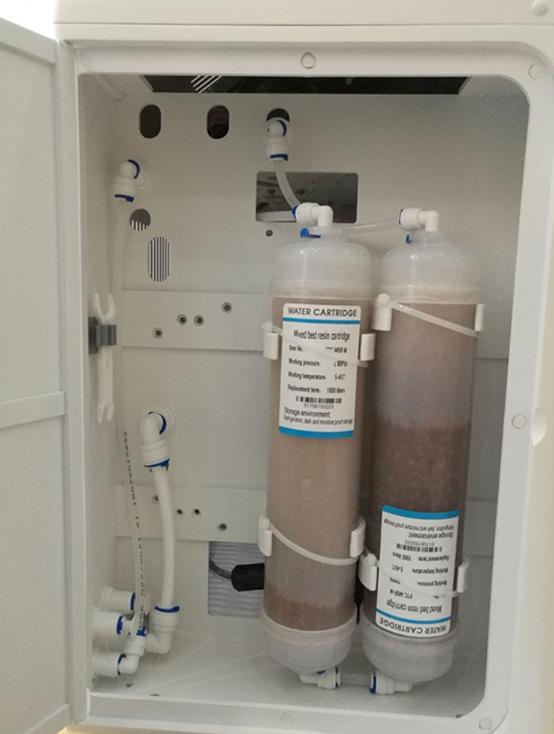
Is it taking noticeably longer to fill a 10-liter container? Is the system cycling on and off constantly, even when no one is using water? This usually means a failing RO membrane or a worn-out pump. A direct consequence is wasted water. If your system’s reject ratio has gone from 1:3 to 1:5, that increased water bill is a tangible cost you’re paying every month just to keep an old machine running.
3. It Can’t Keep Up with Modern Regulations
For labs in regulated industries, data is everything. If your system can’t provide an electronic audit trail or if the data logger has failed, you have a compliance risk. An old system with a dead printer port or a non-functional SD card slot won’t pass a strict audit. Replacing it isn’t just about convenience; it’s about protecting your lab’s accreditation and avoiding regulatory findings.
4. Repair Frequency and Consumable Costs Are Rising
Take a moment to review your service records from the past two years. Have you had more than two emergency call-outs? Are you struggling to find parts for a discontinued model? When the annual cost of repairs and consumables starts to approach 25-30% of the price of a new lab water system, the economic argument for keeping the old one collapses. You are essentially paying a premium to hold onto a depreciated asset.
5. Your Lab’s New Demands Outweigh Its Capacity
Your lab isn’t static. Maybe you’ve added an LC-MS instrument that requires rock-solid TOC levels. Perhaps you’ve started doing cell culture and now need water that’s free of endotoxins. If your current system can’t meet these new specifications, or if you find yourself needing to replace RO filters constantly to keep up with higher volume, it’s a clear signal that your infrastructure is holding your science back. A modern laboratory water purifier is designed to adapt to these growing demands.
Repair vs. Replacement: A Cost Comparison
This is where the decision moves from feelings to facts. Let’s compare the true financial sheet.
| Cost Factor | The “Repair” Path (Keep Old System) | The “Replace” Path (New Drawell System) |
| Visible Costs | • Expensive, hard-to-find spare parts.• Frequent emergency service fees.• Higher water/electricity bills due to inefficiency. | • Predictable annual maintenance contract.• Lower, standard-cost consumables.• Energy and water savings from new tech.• Full warranty coverage. |
| Invisible Costs | • Failed Experiments: Bad water wastes reagents and samples.• Downtime: Each breakdown halts productivity.• Compliance Risk: Missing data logs can lead to audit failures.• Staff Frustration: Time wasted troubleshooting. | • Reproducibility: Consistent water quality ensures reliable results.• Efficiency: Reliable operation keeps workflows moving.• Peace of Mind: Full data compliance and audit readiness. |
The “Value” of the Old System and the “Advantages” of the New
It’s easy to look at an old, paid-off system and see “value” because there’s no upfront cost. But value isn’t just about purchase price; it’s about performance.
The Old System’s “Residual Value”:
It’s familiar. You know its quirks. But that’s also its liability. Its residual value is essentially zero in terms of improving your science or reducing risk. It’s a sunk cost.
The New System’s “Dividends”:
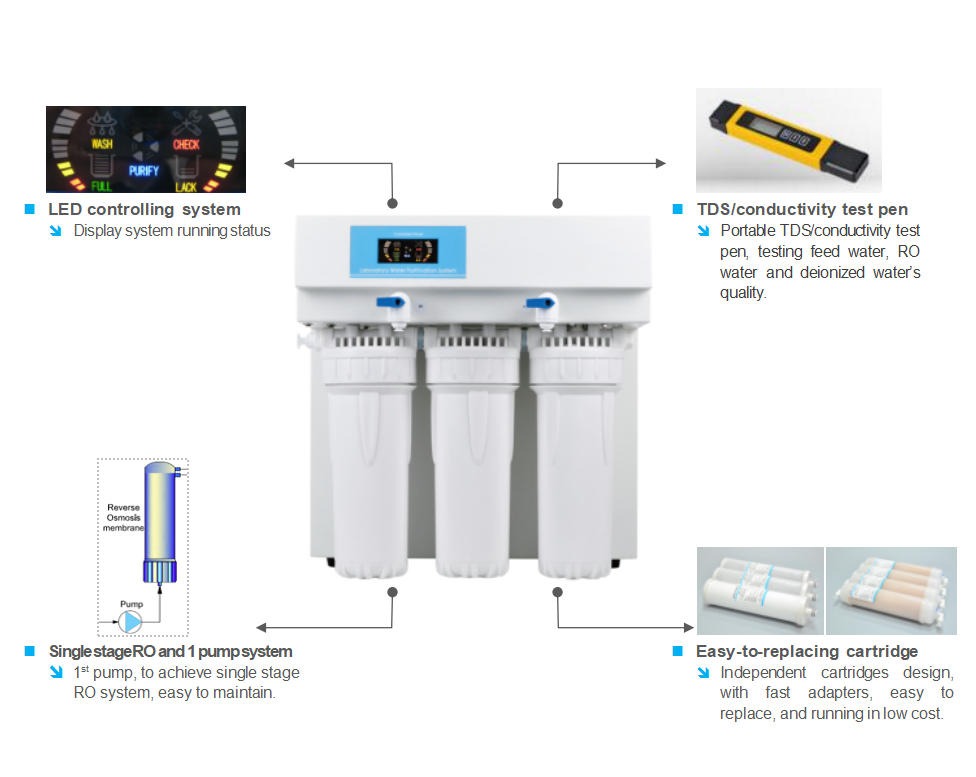
- Smart Monitoring: Check water quality from your phone with remote monitoring.
- Sustainability: Newer systems from a leading ro water system manufacturer are designed to minimize water waste.
- User Experience: Touchscreen controls and faster flow rates make lab life easier.
How to Decide: Replace Now, or Wait?
If you’re still on the fence, use this simple guide to make the call.
- Replace Now if: Water quality is impacting your results; annual repair costs exceed 25% of a new system’s price; or you have a major audit coming and lack data traceability.
- Plan to Replace (within 6-12 months) if: Costs are creeping up, the system shows minor errors, but still meets basic needs. This gives you time to budget for a water system upgrade.
- Wait if: The system runs perfectly, meets all specs, parts are available, and your lab’s needs haven’t changed.
Ready to stop gambling with your water quality? Drawell specializes in providing reliable, high-performance water purification solutions for laboratories of all sizes. Whether you need a compact benchtop unit or a large-scale centralized system, our team can help you find the right fit for your needs and budget.
→Contact us today to discuss your requirements or browse our range of lab water systems. Let’s find the perfect solution for your science.
Related Products Recommendation


Get Quote Here!
Latest Posts
What Next?
For more information, or to arrange an equipment demonstration, please visit our dedicated Product Homepage or contact one of our Product Managers.


