


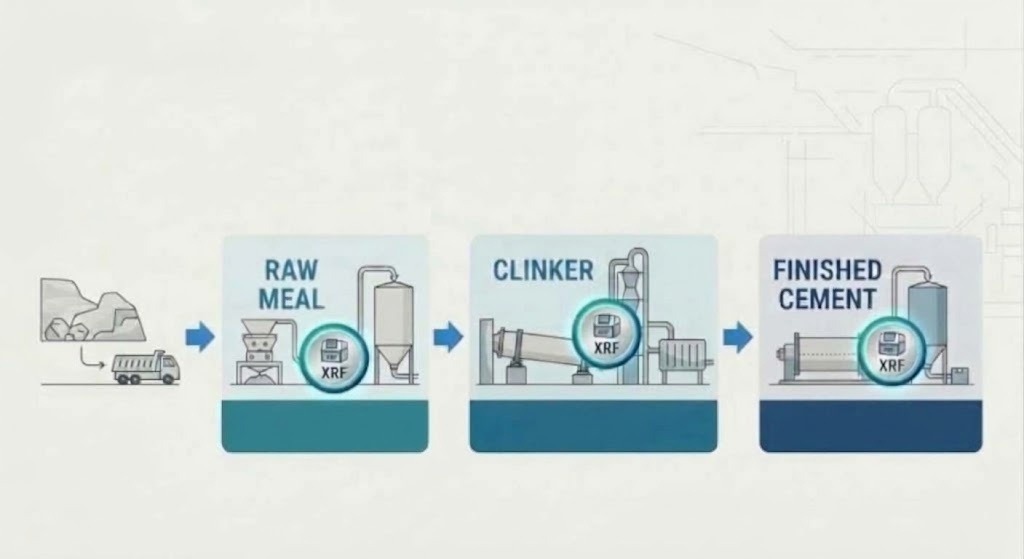
Chemical composition analysis is an important tool for monitoring raw material quantities, clinker composition, and end product uniformity in cement manufacture and quality control. XRF analysis of cement is used to identify the elemental composition by measuring the characteristic X-ray signals produced by the sample. The common oxide amounts are reported according to acceptable calibration procedures. This technique is applicable to the routine chemical analysis of raw meal, clinker and finished cement, although results still require interpretation in relation to sample preparation, calibration procedures and special quality standards.
Here we look at the use of XRF in the different stages of cement production, the selection of sample preparation, methods to improve the reliability of results and the main issues that laboratories need to verify when choosing instruments and scrutinizing data.
What Does XRF Analysis Measure in Cement?
In cement xrf analysis often focuses on the principal oxides and identified quality control goals rather than the raw reporting of all trace elements that can be detected. The table below outlines the major constituents and major problems in ordinary cement analysis:
| Component | Key Focus |
| CaO | Control of the chemical composition of cement raw materials and clinker |
| SiO₂ | Control of siliceous components and raw meal mix |
| Al₂O₃、Fe₂O₃ | Control of chemical composition and components related to aluminum and iron |
| MgO、SO₃ | Control of the type and quality control requirements of the cement |
| Na₂O、K₂O、Cl | Taking into account the formula, process and specific detection targets for analysis |
The oxide data are often assessed along with blending data, process control indications and pertinent quality standards. For example, changes in CaO and SiO 2 in raw materials can help to identify oscillations in raw material composition, but whether cement is qualified cannot be evaluated by the value of a single oxide alone. The real judgment also includes the whole chemical composition, the analytical method utilized and the relevant product standards.
XRF measures the characteristic X-ray signals emitted by elements, and the oxide amounts in the report are acquired by calibration models and calculating procedures. Thus, the examination of elemental composition cannot be directly compared with the analysis of mineral phases.
What Is XRF Used For In Cement Production?
Raw Materials and Raw Meal Analysis
In the initial stage of cement manufacture, the chemical composition of limestone, clay, siliceous materials and mixed raw meal is important. The raw material variation may be successfully evaluated by analyzing the main contents of oxides in these materials, and the blending adjustment can be led, thereby achieving the preliminary quality control in the raw meal production stage.
Monitoring of Clinker Composition
The chemical composition of the material after firing can be checked by major oxide analysis of clinker and in combination with raw meal analysis and process control indicators can be used to evaluate composition variations during production. As the XRF oxide results do not correspond to the clinker mineral phase contents, the use of appropriate phase analysis methods should be performed for certain mineral phases.
Finished Cement Quality Control
XRF analysis of finished cement is used to check variations in chemical composition across batches and provides data for quality control. The chemical composition is only part of the quality evaluation, and the product requirements should still be appraised according to the applicable standards, stated test methods and corresponding performance indicators.
For example, in hydraulic cement testing, the method used depends on the type of sample and reporting requirements. For chemical analysis of hydraulic cement, relevant methodologies and performance factors may refer to ASTM C114. Note that not all XRF tests will automatically meet this standard and the specific method still needs to be validated in conjunction with the real application.
How to Prepare Cement Samples for XRF Analysis
Sample preparation can have a major effect on the repeatability and quantitative outcomes of XRF analysis, especially if there are inconsistencies in powder particle size, homogeneity, pellet condition or fusion circumstances. Both pressed pellet method and fused bead method have their applicable scenes. The laboratories can make their choice using the following table:
| Decision Factor | Pressed Pellet | Fused Bead |
| Sample preparation procedure | Press powder in a pellet, grind and homogenize it | Combine sample with an appropriate flux, fuse, then cool to make a glass bead |
| Key factors | Particle size, homogeneity, pellet quality and contamination during preparation | Fusion circumstances, dilution effects, volatilization and contamination risk, flux ratio |
| Method selection | Validate particle size, mineralogical effects, and calibration model impacts on results. | Minimize particle/mineral variances; confirm preparation conditions and calibration. |
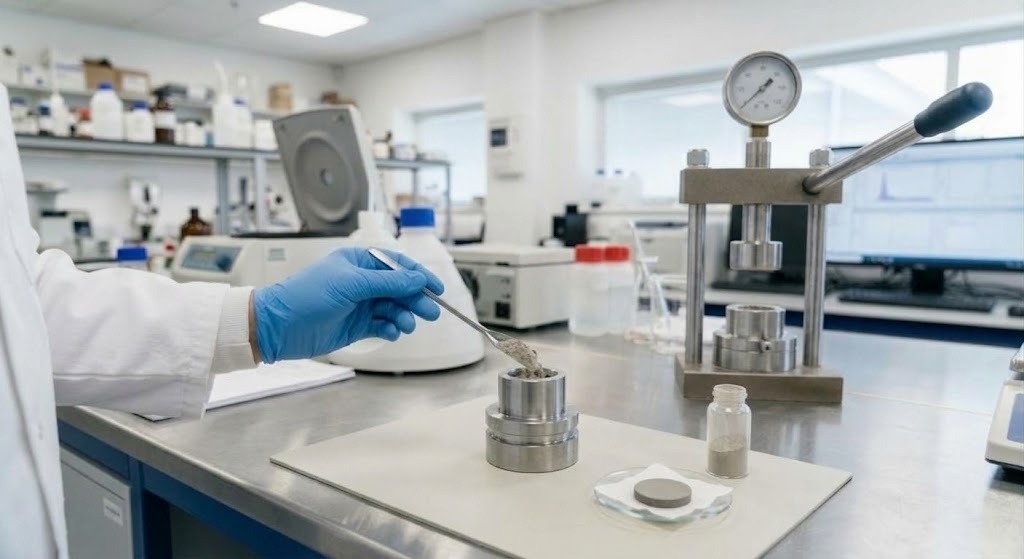
Sample preparation using fused beads usually minimizes impacts of particle size and mineralogical variances. Applicability of the approach is dependent on the elements to be tested, flux composition, fusion circumstances and proven calibration processes. Laboratories should verify that the sample preparation process is adequate for the specified measurement objectives.
The pressed pellet and fused bead procedures yield various sample shapes. Laboratories should utilize and confirm calibration methods that are appropriate for the actual sample preparation process. The calibration model developed for one sample preparation method cannot be immediately transferred to another method without validation. The selection of certain cement and clinker samples should be based on the target components, desired analytical performance, available sample preparation equipment and normal testing workflows.
Except for the pressed pellet and fused bead procedures, the general sample preparation methods presented in XRF sample preparation methods can be consulted for the sample preparation methods depending on the material type. Also, the specific application performance of pressed pellet methods can be found in Rigaku’s application note on pressed-powder XRF analysis of cement for practical experience.
How to Improve the Reliability of XRF Cement Analysis
Use Correct Calibration Standards
Calibration models should be appropriate for the composition range, sample matrix and sample preparation procedure of the samples to be analyzed. Laboratories should validate quantitative results with suitable reference materials or reference samples and verify routinely that quality control data meets predetermined acceptance criteria. For raw materials, raw meal, clinker and finished cement with very varied ranges of composition, the existing calibration methods should first be validated to be valid, and the assumption should not be made that the same calibration curve may be used for all samples.
Matrix Effects and Spectral Interferences Must Be Considered
The quantitative results of the XRF can be altered by the sample matrix through absorption and enhancement effects and by factors such as spectrum overlap. These effects can lead to variances of the measurement findings, the magnitude of which varies on the target element, the composition of the sample, the instrument design and the calibration procedure applied.
For some analytical targets such as chlorine and sulfur, the laboratories should check the analytical capabilities based on the results of method validation, not just assume detection limits or quantitative performance based on the instrument’s broad application range. For the analytical problems of these two elements in cement see XRF analysis of chlorine and sulfur in cement.
Unexpected Results Troubleshooting
In the event of abnormal test findings, laboratories are suggested to troubleshoot in the following order:
- First of all verify that the sampling, grinding, homogenization and sample preparation techniques are in accordance with the stated guidelines.
- Re-measure suitable quality control samples and confirm that findings are still within the pre-defined acceptable range of the laboratory.
- Evaluate whether the existing calibration method is adequate for this type of sample and its sample preparation process.
- If the divergence persists check for matrix effects, spectrum interferences, instrument condition and other analytical circumstances.
- A single anomalous measurement result should not be the only basis for a process change decision until the cause is determined.
How to Assess XRF Measurement Results
In evaluating the results of XRF measurements, laboratories should not rely on a single precision indicator, but should consider, together with reference values, repeat measurement results and technique validation, whether the data are fit for the intended use:
Reference Value vs. Average Result. The measurement bias can be evaluated by comparing the average of repeated measurements with a suitable reference value (e.g., a certified value or reference value). In the whole interpretation the source, extent of application and uncertainty of the reference value must be considered.
Standard Deviation: The standard deviation indicates the extent of dispersion of a collection of measurement findings. It is usable for the purpose of evaluating the repeatability of measurement when the measurement conditions and data processing procedures are the same but is not usable for the purpose of proving the accuracy of measurement results.
Relative Standard Deviation (RSD): RSD is the standard deviation divided by the mean, and it is used to compare variability in measurements of different magnitudes. But if the average value is close to zero or the findings are at a very low concentration level, RSD may not be adequate as a single evaluation indication.
Repeatability versus accuracy Good repeatability means that the dispersion of the findings obtained under specified measurement conditions is limited, but it does not prove by itself that the measurement results are free from systematic bias. Labs still need to examine the accuracy of results together with the relevant reference materials, technique validation and quality control records.
The indications should be reviewed in connection with specific analytical purposes and the laboratory’s pre-established acceptance standards, and a universal cut-off should not be applied to evaluate all cement samples or all target components.
Where example measurement data published by manufacturers are referenced, it should be clear that it is only an example of instrument performance and not directly equated with independently validated actual measurement data obtained by the laboratory under its own specific test conditions.
XRF vs XRD for Cement Analysis
The distinction between XRF and XRD is the different information that they give: XRF is used for elemental composition analysis and the results are generally reported as oxide forms. XRD can be used to identify and analyze crystal structures and mineral phases.
The two answer separate quality control questions and are not interchangable. Laboratories can get more information about the difference between XRD and XRF when they have to select the suitable approach based on analytical objectives.
Selecting an XRF Analyzer for Cement Testing
When purchasing an XRF instrument for cement testing, it is necessary to not only compare parameter tables, but also to verify the following basic conditions together with actual application scenarios:
Types of sample to be examined (raw meal, clinker, finished cement or a combination of several samples);
Target elements and oxide ranges, including low-concentration components;
Workflows for sample throughput, routine calibration, sample preparation equipment and data reporting;
Whether the analytical performance of the instrument and the functionality of the software have been validated.
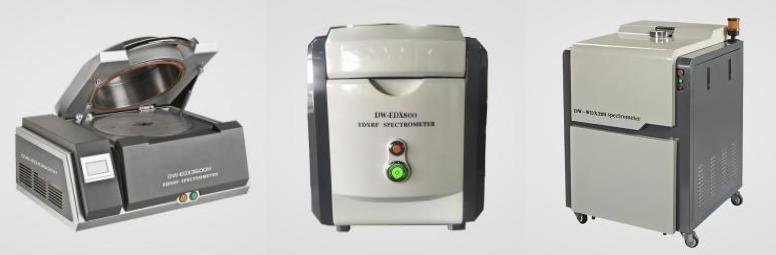
For laboratories seeking an efficient elemental analysis solution for cement, the DW-WDX200 wavelength-dispersive XRF spectrometer is an ideal model to evaluate. When making a selection, compare the published analytical configuration, and examples of cement measurements, with the target elements, calibration requirements, sample preparation workflow and actual testing throughput of the laboratory rather than simply making a decision about whether the equipment meets all testing requirements based on application range descriptions.
Summary
The reliability of XRF examination of cement is not only a function of the equipment. Reliable results are obtained for raw materials, clinker and finished cement by consistent sample preparation, adequate calibration and understanding of matrix effects. Laboratories should also differentiate between data on elemental composition and data on mineral phases and should validate the analytical procedures for the intended purpose.
The choice of an XRF analyzer for cement testing should be based on the types of samples to be analyzed, the oxides of interest, the analytical performance required and the typical workflows in a laboratory. The following criteria can be used to assess systems such as the DW-WDX200 wavelength dispersive XRF spectrometer, together with their proven analytical performance and application applicability.
Get Quote Here!
Latest Posts





What Next?
For more information, or to arrange an equipment demonstration, please visit our dedicated Product Homepage or contact one of our Product Managers.


