


Put 304 next to 316 stainless steel and you would have a hard time telling them apart. The finish, the color and the general appearance are similar. The issue arises when you have to quickly check materials that are either incoming or finished parts, or when your stock gets mixed up.
This is where XRF stainless steel analysis comes in handy. XRF analyzers can typically differentiate 304 from 316 based on the measurement of their elemental composition. The main indication is molybdenum, however a reliable grade check should look at the whole result rather than a single number.
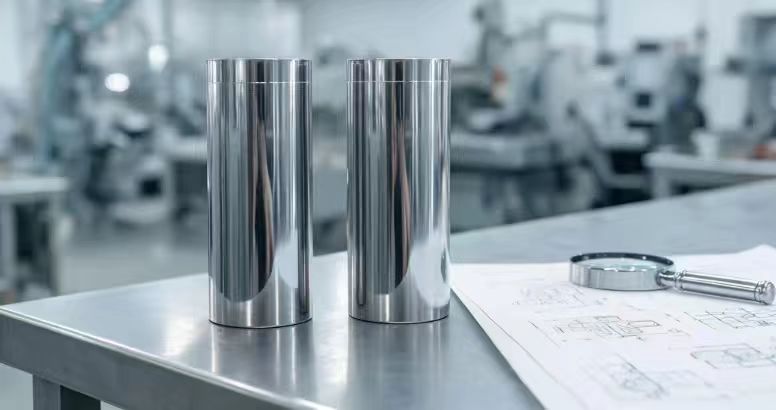
Why 304 and 316 Stainless Steel Can Be Hard to Tell Apart
Both 304 and 316 are members of the austenitic stainless steel family. They are based on iron and the primary alloying elements are chromium and nickel. Their makeup is comparable and that is one of the reasons that visual inspection is not a good approach to detect the grade.
The useful difference for XRF testing is Molybdenum, which is generally written as Mo. A key difference you will often notice between them is molybdenum. Grade 316 typically contains around 2–3% Mo, while 304 normally has no specified molybdenum addition. So if you are wondering about the main difference between 304 and 316, the presence of molybdenum is one of the most obvious.
A simple comparison shows what matters during stainless steel grade identification:
| Feature | 304 Stainless Steel | 316 Stainless Steel | What XRF Shows |
| Chromium (Cr) | Present | Present | Useful as part of the overall composition |
| Nickel (Ni) | Present | Present | Helps confirm the alloy type |
| Molybdenum (Mo) | Normally not a specified addition | Typically around 2–3% | A key difference between the two grades |
| Appearance | Very similar | Very similar | Visual inspection alone is unreliable |
How XRF Identifies 304 and 316 Stainless Steel
XRF stands for X-ray fluorescence. In XRF measurements, the instrument sends X-rays to the sample. The atoms in the material generate characteristic fluorescence X-rays which allow the analyzer to determine what elements are present and to estimate their concentration.
For 304 and 316 stainless steel, the result is usually quite straightforward, provided the material is clean and within the normal grade criteria.
- Look at molybdenum first. If you get a clear Mo measurement in the usual 316 range it is significantly more likely to be 316 and not 304.
- Check chromium and nickel as well. Mo should not be seen as a single value. We also check other components like Cr, Ni, Fe etc. All these together give us a check on whether the overall chemistry is matching the grade we expect.
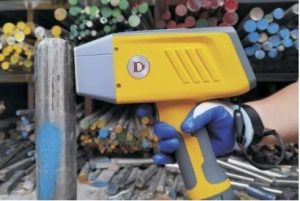
Many handheld instruments also contain alloy grade libraries. They match the measured chemistry against the saved grade limits. Then they point to the closest alloy. Because of that, XRF checks on stainless steel can work well for positive material ID, for incoming checks, and for sorting material by type.
However, we do suggest checking both the measured elements levels and the grade designation indicated on the screen. The automatic match is good, but the chemistry offers you additional info when a sample is near a grade limit.
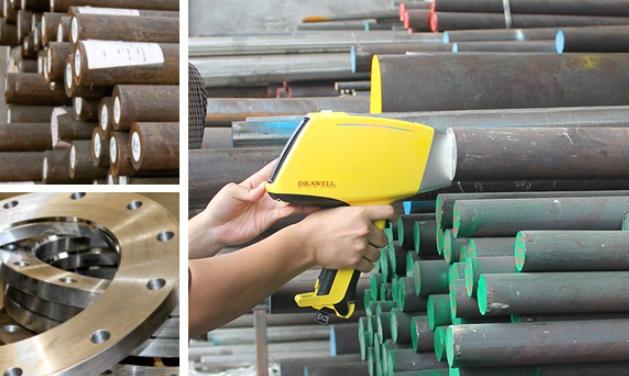
When an XRF Result Needs a Closer Look
XRF is valuable, but the sample’s condition still matters.
- Surface condition: If there is paint, plating, corrosion, scale or significant pollution present, the analyzer will read the surface rather than the underlying metal. The test area has to be representative of the parent material.
- Small or thin samples: Very small components, thin material, curved surfaces and an incomplete test area can affect the measurement quality. Good contact and proper placement is important.
- Unexpected chemistry: If findings are near a grade limit, retest at another facility. A second read is usually better than taking a Grade 1 match at face value.
These are especially critical inspections to determine if the material verification affects the quality or traceability of the manufacturing process.
Can XRF Tell 304 from 304L or 316 from 316L
This is where the limitations of hand-held XRF become more relevant.
The main practical difference between 304 and 304L, or 316 and 316L is the maximum carbon content. The British Stainless Steel Association quotes a maximum carbon level of 0.08% for ordinary 304 and 316, and 0.030% for the L-grade variations.
Handheld XRF cannot measure light elements like C directly. This is a large constraint when considering stainless steel grades when the only difference is the carbon content.
This means that XRF will reliably identify the alloy family, but should not be used to differentiate between 304 and 304L or 316 and 316L based on carbon content alone. If low carbon grade verification is required, another technique capable of measuring carbon such as optical emission spectroscopy is more appropriate.

What to Check Before Accepting an XRF Grade Result
If you are using XRF to identify 304 and 316 stainless steel, there are a few checks you can do to make the result more reliable:
- Check the Mo result: The best indicator of 316 is a clear reading of molybdenum in the predicted range.
- Review the full chemistry: Cr and Ni should also make sense for the reported grade.
- Test a suitable surface: Avoid coatings, corrosion and visible contamination if possible.
- Repeat doubtful readings: If chemistry seems strange or is close to a spec limit, sample a different location.
- Know what XRF cannot confirm: Don’t solely depend on the technology to discriminate between low-carbon L grades.
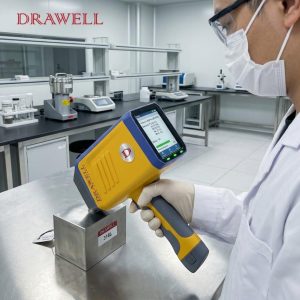
Handheld XRF is an easy, non-destructive way to verify 304 and 316 for everyday stainless steel grade identification, without cutting the object or shipping every sample to the lab. The crucial thing is to utilize the elemental outcome, not simply the grade name on the display. Drawell handheld XRF analyzers can be used for this type of alloy analysis where rapid on-site material verification is required.
Get Quote Here!
Latest Posts

What Next?
For more information, or to arrange an equipment demonstration, please visit our dedicated Product Homepage or contact one of our Product Managers.


