


lThe main difference between flame AAS vs graphite furnace AAS is driven by a practical balance. Speed, sensitivity, sample size, workload. Those four factors set the choice.
Flame AAS, or FAAS, favors speed and sample throughput. Routine element analysis, samples at relatively higher concentrations, that is where FAAS fits. Graphite Furnace AAS, or GFAAS, offers higher sensitivity. Lower detection limits, too. Low-concentration trace analysis. Limited sample volume. Those tasks suit GFAAS.
Now, a system that supports both atomization modes lets a lab pick the right mode for each sample and testing need. Choosing flame AAS vs graphite furnace AAS is not about which one is absolutely better. It is about matching detection limits. Sample volume. Analysis speed. Workload. That is what your lab actually needs.
What Is the Difference Between Flame AAS and Graphite Furnace AAS?
Same basic principle for both techniques. Atomic absorption spectrophotometry. They measure how gaseous free atoms absorb optical radiation. The core operational difference comes from how the sample is atomized.
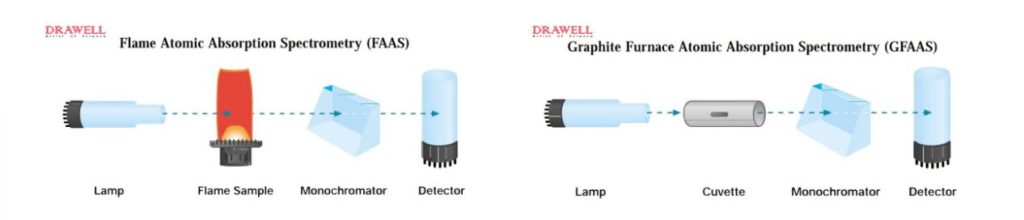
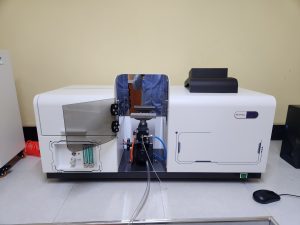
Alt: Drawell Flame AAS vs Graphite Furnace AAS working principle
How Flame AAS Works
In flame AAS, liquid sample moves in continuously through a nebulizer. Fuel gas and oxidant gas mix with it. Air-acetylene or nitrous oxide-acetylene, for example. That mixture enters a high-temperature flame. Heat evaporates the solvent. Vaporizes particles. Atomizes the target element. Sample introduction is continuous, so FAAS usually gives a stable absorbance signal. That steady signal makes FAAS good for fast processing of larger batches of routine samples.
How Graphite Furnace AAS Works
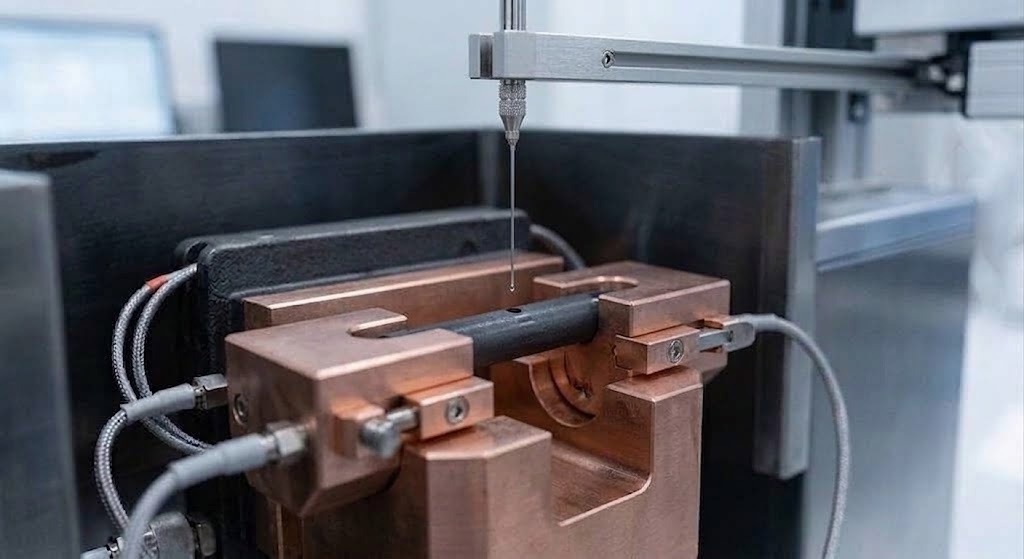
Graphite furnace AAS relies on electrical heating inside a closed graphite tube. A small, discrete volume of liquid sample is injected directly into the graphite furnace. Then the system runs a precisely controlled temperature program with several clear stages:
Drying: remove solvent without sample splashing.
Ashing / Pyrolysis: drive off organics and volatile matrix components while keeping the target analyte.
Atomization: quickly raise temperature and turn the remaining analyte into a dense cloud of free atoms.
Clean-out: burn off residual material at high temperature to prevent memory effects.
Unlike the continuous signal from FAAS, GFAAS produces a short peak absorbance signal. The graphite furnace concentrates a small sample in a small atomization space. That lets more analyte atoms take part in the light absorption measurement. So GFAAS usually reaches lower detection limits than flame AAS.
Flame AAS vs Graphite Furnace AAS: 7 Key Differences
All the operational differences between these two methods come from continuous flame nebulization versus pulsed electrical heating inside a sealed graphite tube.
1. Sensitivity and Detection Limit
In FAAS, sample is continuously nebulized and atomized in the flame. Atoms stay in the light path for a limited time. In GFAAS, a small sample is temperature-programmed and atomized inside the graphite tube. That lets more analyte atoms participate in absorption measurement. As a result, GFAAS usually gives lower detection limits.
When the task needs lower detection limits, or when the target element is at low concentration in the sample, GFAAS often has the edge. You can further optimize instrument settings to improve performance. Exploring factors that affect detection limits of atomic absorption spectrophotometry helps you understand how to get the most from both platforms.
2. Sample Volume
Sample consumption is very different between the two techniques.
Flame AAS depends on continuous sample introduction. So it usually needs relatively more sample. Graphite furnace AAS uses small, discrete injections. So it fits testing tasks where sample amount is limited.
When sample volume is limited, or the sample itself is hard to get in large amounts, GFAAS is a better fit. That covers some clinical, forensic, or research samples, where restricted sample tasks are common.
3. Analysis Speed and Sample Throughput
For labs evaluating daily run capacity, analysis time is a key decision point. Flame AAS often gives stable absorbance readings quickly. That leads to high sample throughput and suits busy industrial testing environments.
Graphite furnace AAS needs a multi-stage temperature program for every injection. So a single sample run is usually more complex and slower than flame AAS. GFAAS prioritizes sensitivity and low detection limits, not analysis speed.
4. Precision, Interference, and Method Development
For FAAS, sample matrix, flame conditions, and sample introduction state can all affect results. So you need good control of interferences in FAAS measurements. For GFAAS, sensitivity is higher, but it is more sensitive to sample matrix and the heating program. That usually means more careful optimization of drying, ashing, atomization, and background correction conditions.
For complex samples, both techniques need suitable sample preparation and interference control based on the specific matrix. That helps ensure accurate data reporting across different sample types.
5. Cost and Consumables
Total cost of ownership, or TCO, is not just the initial instrument purchase price.
Flame AAS consumables: mainly continuously consumed fuel gas and oxidant gas, such as acetylene, nitrous oxide, and compressed air. Plus routine replacement parts like nebulizer components, burner heads, and tubing.
Graphite furnace AAS consumables: high-purity inert shielding gas, usually argon, and special graphite tubes. These parts wear down after many high-temperature heating cycles.
When judging long-term operating cost, match it to your expected analysis workload. Weigh gas consumption costs against the cost of dedicated graphite furnace consumables.
6. Typical Applications
Rather than locking an industry into one instrument, choose by target concentration requirements and sample availability.
Flame AAS application scenarios: routine environmental monitoring, mining and metallurgy analysis, agricultural fertilizer analysis, industrial quality control (QC), and higher-concentration element analysis.
Graphite furnace AAS application scenarios: environmental element analysis with high detection limit demands, trace element testing in food and drugs, and clinical, forensic, or research samples with limited sample volume.
7. Which One Is Better for Your Sample?
A simple decision framework can help you choose the right setup.
Need high sample throughput and routine element testing? Then Flame AAS.
Need higher sensitivity and lower detection limits? Then Graphite Furnace AAS.
Sample volume limited or hard to get in large amounts? Then Graphite Furnace AAS.
Testing range covers both routine analysis and trace detection? Then a Dual-Atomizer System.
How to Choose the Right AAS for Your Laboratory
Before finalizing the instrument configuration, evaluate these core operating parameters.
Target element and concentration range: know the rough concentration range of the target analyte. Decide whether it is routine analysis or needs lower detection limits.
Required detection limit: compare with your specific industry standards, such as EPA, USP, ISO, and others, to judge the sensitivity you need.
Sample amount and daily throughput: consider both the average available sample volume and the daily sample processing capacity. For different sample types, good sample preparation for AAS analysis is also part of choosing the method.
Running cost and technical threshold: balance long-term consumable costs, gas versus graphite parts, with method development difficulty and operator experience.
Which Drawell AAS Fits Your Testing Needs?
Drawell offers atomic absorption spectrophotometer platforms designed for different operational goals.
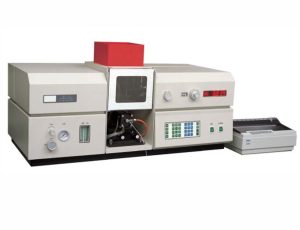
DW-220B for Routine Flame AAS: DW-220B supports flame AAS. It fits labs that mainly perform routine flame element analysis and do not need graphite furnace function.
DW-220A for Flame and Graphite Furnace AAS: DW-220A supports both flame AAS and graphite furnace AAS. It fits labs that need routine flame analysis and higher-sensitivity trace analysis on the same platform. You can choose flame or graphite furnace mode based on different samples and testing requirements.
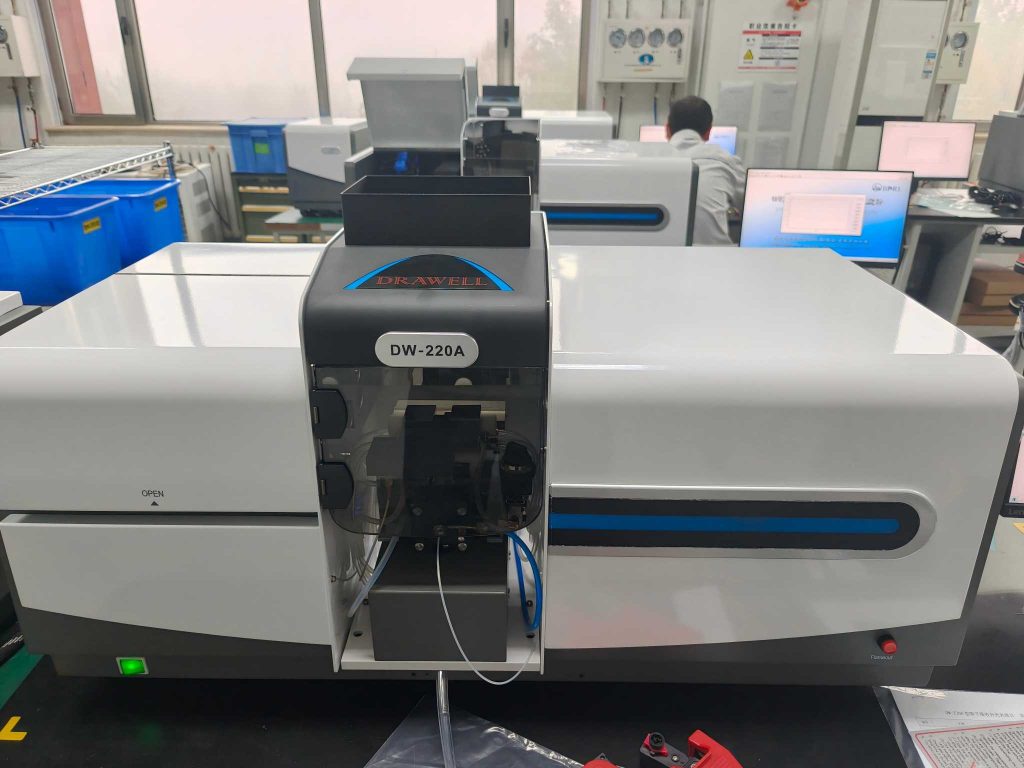
For labs that need both analysis modes, you can learn more about the specific configuration of the DW-220A/B atomic absorption spectrophotometer.
Flame AAS is better for labs that emphasize analysis speed, sample throughput, and routine element quantification. Graphite furnace AAS is better for analysis tasks with higher demands on detection limits and sample volume. When evaluating flame AAS vs graphite furnace AAS, match the atomization mode to your target element, detection limit, sample volume, and daily workload.
Get Quote Here!
Latest Posts
What Next?
For more information, or to arrange an equipment demonstration, please visit our dedicated Product Homepage or contact one of our Product Managers.


