


You set the vacuum and start the flask whirling and all is well for the first few minutes. Then the gauge begins to drift, the evaporation slows or the liquid suddenly bumps and you wonder what went wrong.
The most typical vacuum issue with a rotating evaporator is a fluctuating vacuum. This can lead to longer runs, sample loss and irreproducible findings. In this guide, we’ll examine why pressure fluctuates, what to check first, and when it makes sense to add a vacuum controller.

What Causes Vacuum Pressure to Change
A pressure readout informs you how much gas and vapour is left in the system. The lower the pressure in rotary evaporation, the lower the solvent boiling point. So pressure and bath temperature must be addressed jointly. The vacuum system lowers the pressure in the evaporator significantly and this is what makes it possible to remove the solvent gently.
A slight drift is normal as evaporating solvent adds vapour to the system. A steady rise is different from an abrupt swing. These changes may indicate a real change in system pressure, so watch the flask and the condenser as well as the display.
Why Vacuum Pressure Fluctuates
1. Air Leaks Around Seals and Connections
The most common cause for a rotating evaporator vacuum not holding is a leak. Begin at these locations:
- Worn seals: Rubber and PTFE seals harden with age and no longer seal properly
- Loose joints: The clamp might not be centred and air might go in.
- Damaged tubing: Small cracks or old, soft tubing may leak or collapse under vacuum.
- Dirty ground glass: Residue on a joint keeps it from seating properly.
2. The Vacuum Pump Is Not Keeping Up
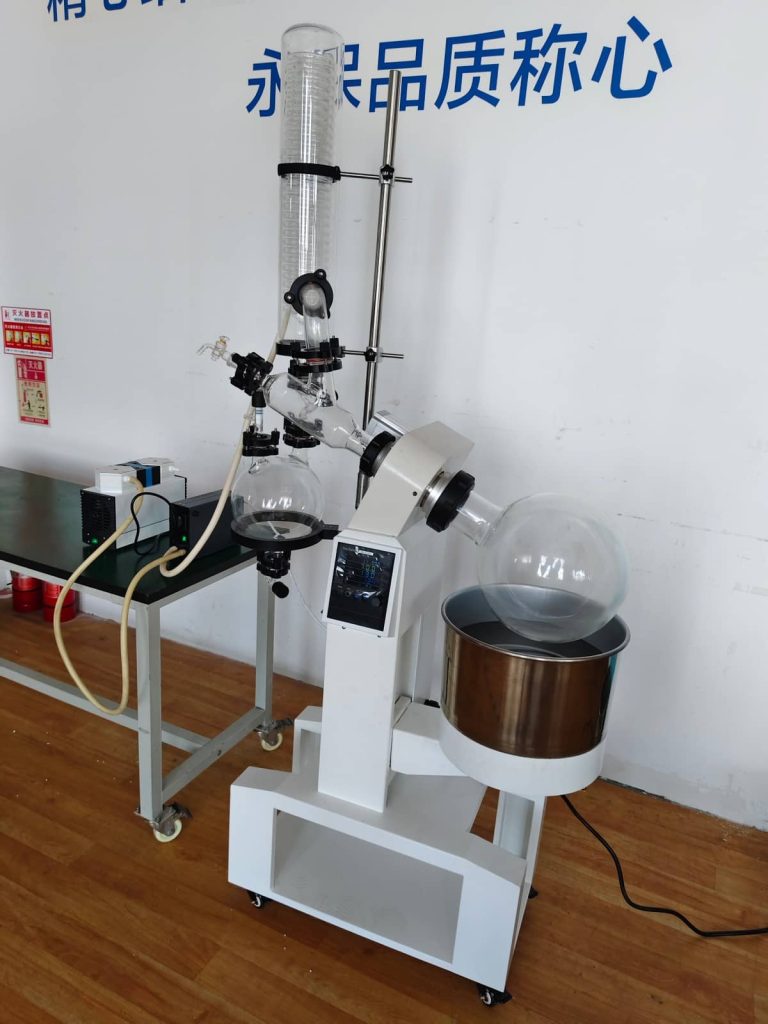
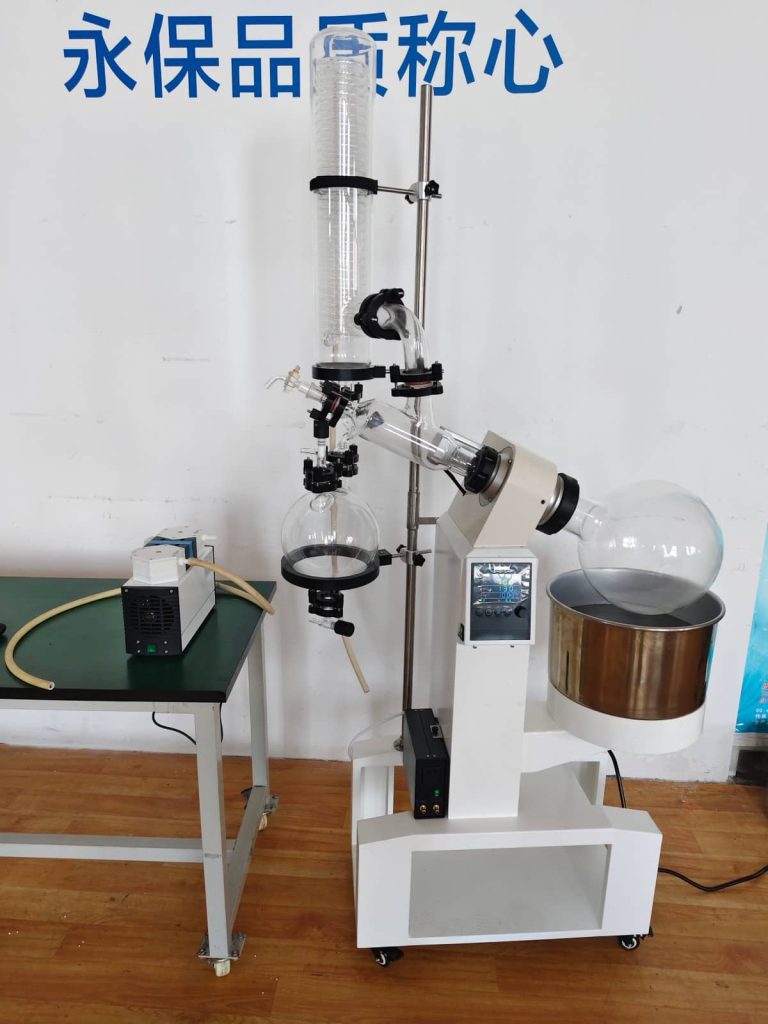
Even a well sealed system will have problems if the pump can’t remove the vapour fast enough. A damaged diaphragm, contaminated oil in an oil-sealed pump, or a pump that is too small for the solvent load might cause pressure to build up. The problem tends to get worse, because the pump can also be damaged over time by solvent vapour that reaches the pump.
3. Solvent Evaporation Changes the Pressure
Sometimes the equipment is fine and the sample is the cause. When a solution starts to boil, a large amount of vapour can enter the system quickly, causing pressure to rise. Low-boiling solvents and samples containing dissolved gases may be more prone to this behaviour. In worse cases the liquid can bump, a sudden burst of boiling. Lowering the heat or easing the vacuum usually settles it.
4. Cooling Problems or Inaccurate Pressure Readings
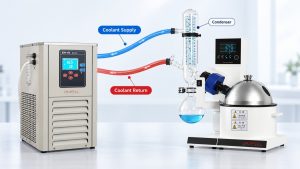
If the condenser is too hot, the vapour may not condense properly and can pass into the pump, increasing the vapour load on the vacuum system. Weak coolant flow during long runs is a common culprit. The gauge can also be wrong. A loose sensor connection or a drifting sensor may show changes that are not real.
Common Pressure Changes and What to Check
The same few patterns occur again and again in the everyday lab activity. Rotary evaporator vacuum troubleshooting is quicker when you have a probable reason and a logical first step with each one in the table below.
| Observed symptom | Possible cause | First check |
| Pressure rises even when evaporation is not underway | Air leak or pump issue | Inspect seals and test the pump |
| Pressure fluctuates when boiling starts | Rapid vapor generation or unstable boiling | Reduce heat input and review the vacuum adjustment |
| Pressure becomes unstable during longer runs | Cooling limitations or changing process load | Check coolant temperature and flow |
| Displayed pressure changes unexpectedly without obvious process changes | Sensor or connection issue | Inspect the sensor and verify the reading |
Note: These symptoms are starting points for diagnosis, not confirmation of a specific problem.
How to Troubleshoot Vacuum Pressure Fluctuations
You can start with the simplest checks and move on to the more involved ones:
1. Check the pressure reading. If you have another gauge, compare the readout and mark the exact change point.
2. Inspect the vacuum path. Check the seals, couplings, clamps and tubing. Reconnect each joint and replace any broken or flattened joints.
3. Test the pump. Hook the pump up straight to a gauge and see how much hoover it can pull. If it can not reach the appropriate level the pump may have to be serviced.
4. Review operating conditions. Check bath temperature, speed of rotation, level of flask fill and solvent. The most common cause of unstable boiling is excess heat for a given pressure.
5. Check the cooling system. On longer runs, keep the coolant temperature and flow steady.
Change one item at a time. Otherwise it is difficult to say what exactly solved the situation.
When Is a Vacuum Controller Worth Using
For a simple regular job many experienced operators manage pressure by hand, and it works great. The downside is you have to be close to the instrument and the outcomes could differ from one individual to another.
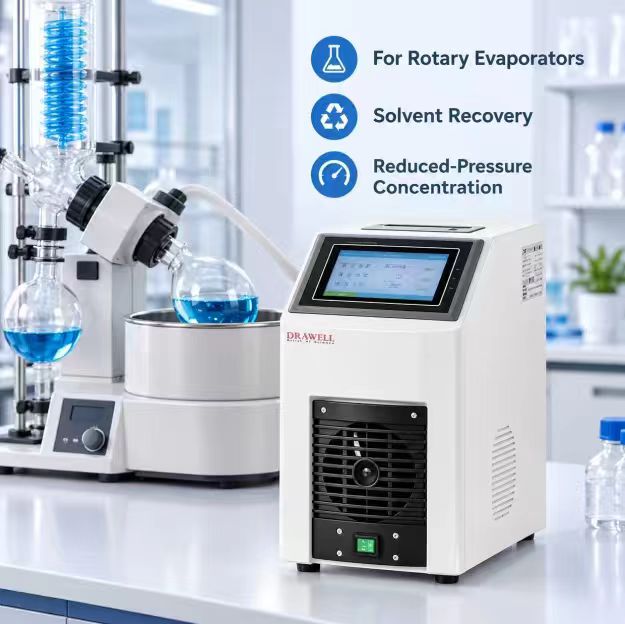
Depending on the model, a vacuum controller can hold a predetermined pressure or follow a programmed profile, which helps to manage fluctuations caused by changes in the evaporation load. Most effective for repeated procedures, combinations of solvents, and parts of a run you cannot closely observe. It won’t cure a leak or a weak pump so fix those problems first.
| Aspect | Manual adjustment | Vacuum Controller |
| Pressure adjustment | Depends on operator input | Can adjust pressure automatically, depending on the model |
| Response to changing evaporation load | Requires manual intervention | Can respond to pressure changes within its control capability |
| Best consideration | Simpler setups and experienced operation | Processes requiring more consistent pressure control |
Keep Your Next Rotary Evaporation Run on Track
Pressure swings are often the result of a small number of causes such as leaks, bad pump capacity, vapour release or cooling and sensor problems. Most problems can be diagnosed quickly with a few tests.
Looking for reliable rotary evaporators or a vacuum controller to go with them? Drawell offers lab equipment and technical support to help you find the ideal solution. Contact us to discuss your project.
Get Quote Here!
Latest Posts

What Next?
For more information, or to arrange an equipment demonstration, please visit our dedicated Product Homepage or contact one of our Product Managers.


