


You start a rotary evaporation run but the receiving flask fills up slowly or solvent vapour goes past the condenser without completely condensing. These indicators could mean the cooling system isn’t removing heat as well as it should.
Poor condenser performance can reduce solvent recovery and allow more solvent vapor to reach the vacuum pump. Lab air can smell like solvent. With a rotary evaporator the condenser is the weak link that re-condenses the evaporated solvent, therefore any weakness here is seen in the full run.
This guide will assist you to diagnose rotary evaporator cooling problems, the most typical reasons, and if your existing cooling arrangement is enough.
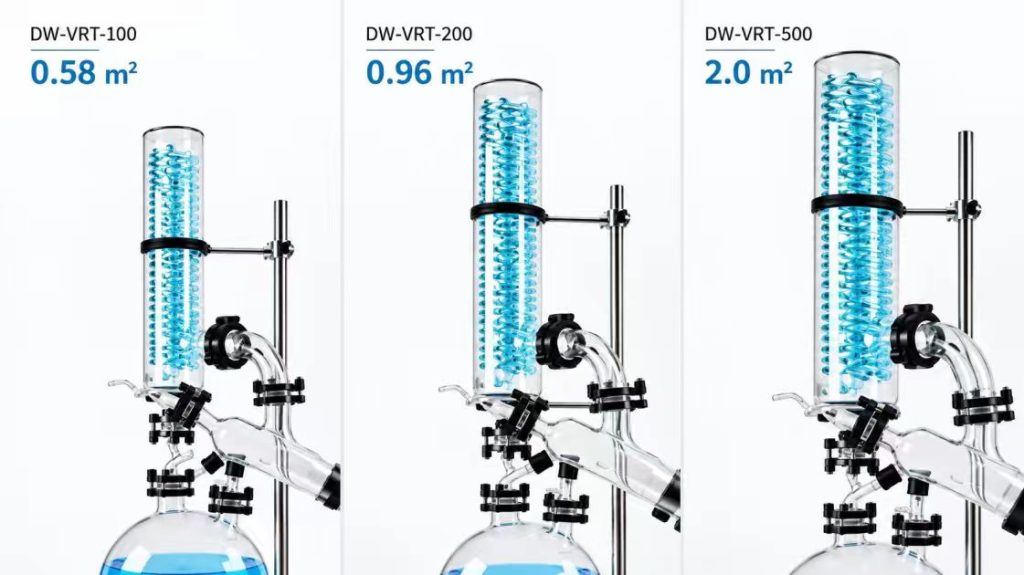
How to Tell If Your Condenser Is Not Cooling Well
If you know where to look for these signs, they are usually easy to spot.
- Insufficient cooling: The temperature of the coolant is higher than specified or solvent vapour is passing through the condenser without being completely condensed.
- Slow collection: Solvent is collected in the receiving flask at a pace far less than expected from the rate of evaporation.
- Vapor escaping: You notice vapor escaping from the condenser, or smell solvent near the vacuum pump exhaust.
- Pressure that will not hold: The vacuum level varies due to uncondensed vapour entering the pump line.
If you see two or more at the same time, the cooling system is a good location to start looking.
5 Common Reasons of Poor Condenser Cooling
In most cases, a rotary evaporator condenser underperforms for a handful of simple reasons. Many of them can be checked in a few minutes without any tools. The reasons below are listed roughly in the order we would check them.
The table explains each cause with what to check and what to do.
| Possible cause | What to check | What to do |
| Cooling temperature is too high | Actual coolant temperature | Adjust the setpoint within the equipment’s operating range |
| Insufficient coolant circulation | Flow rate, tubing, and connections | Check for blocked lines, kinks, or loose connections |
| Cooling unit lacks sufficient capacity | Coolant temperature and cooling capacity under load | Check cooling capacity against the heat load |
| Condenser is dirty or partially blocked | Deposits or restricted passages | Clean according to the manufacturer’s instructions |
| Evaporation rate is too high | Vapor load and solvent recovery rate | Reduce heating or vapor generation and reassess the settings |
One suggestion from experience: don’t believe the setpoint on the display. If you can measure coolant temp at the condenser intake. A unit set to a low temperature may still deliver warmer coolant once long tubing and a busy run are involved.
Also keep in mind that these causes often stack. A slightly warm coolant plus a slightly kinked hose plus an aggressive bath setting can add up to a problem that none of them would cause alone.
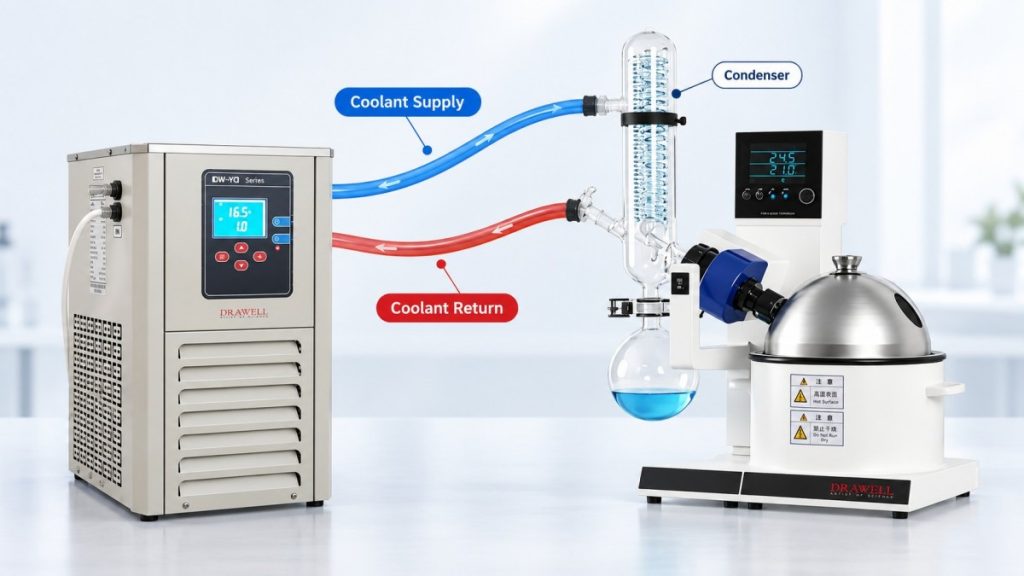
Does Your Cooling Unit Meet Your Evaporation Needs
A cooling unit may perform well under specific situations, but it may still be undersized for your evaporation demands. The heat burden of the vapour has to be removed by the condenser. The load increases with bath temperature, vacuum and solvent boil-off rate.
An easy way to tell is to watch the coolant temperature during a real run, not just idling. If the coolant temperature is rising during the evaporation process, the cooling unit might be unable to handle the heat load. Before deciding if a larger unit is required, check the coolant flow and cooling capacity of the unit at actual working conditions.
Solvent type matters too. At high evaporation rates, low boiling solvents like diethyl ether and dichloromethane may require a cooler coolant to ensure successful condensation. Running them at a fast rate with a basic rotary evaporator cooling system is a common reason for poor recovery.
When Should You Use a Low Temperature Cooling Circulator
If tap water or a simple chiller is not adequate to keep the condenser cold enough then a low temperature cooling circulator is worth investigating. Here’s where we usually see it make a real difference:
- Volatile solvents: Low boiling solvents require colder coolant to condense properly.
- Frequent or long runs: Continuous use heats up a small chiller faster than expected.
- Stable results: Controlled coolant temperature keeps recovery consistent from one run to the next.
- Water savings: No running tap water for hours in a closed loop.
If you are only evaporating higher boiling liquids from time to time your current setup may be good enough. If you’re keeping it maintained properly and still have cooling issues, it might be time to re-evaluate your cooling arrangement.
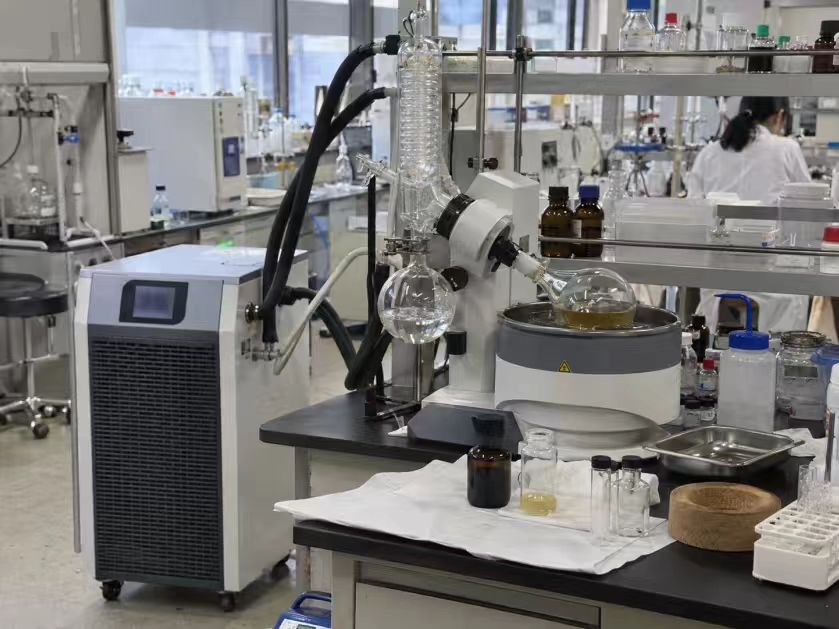
What to Check Before Starting Your Next Run
A short routine before each run catches most issues early. Go through it in this order:
- Check the actual coolant temperature.
- Confirm adequate coolant circulation.
- Inspect the condenser and tubing.
- Check whether the vapor load is within the system’s capacity.
It simply takes a few minutes and it’s a lot easier than trying to troubleshoot in the middle of production.
Most reasons a rotary evaporator won’t cool involve coolant temperature, flow, cleanliness, or a load that is too large for the unit. Usually working through these in order finds the cause fast.
If you are looking for a reliable cooling solution to pair with your rotary evaporator, Drawell offers a range of low temperature cooling circulators for laboratory use. Contact our team to find the right match for your solvents and workload.
Get Quote Here!
Latest Posts
What Next?
For more information, or to arrange an equipment demonstration, please visit our dedicated Product Homepage or contact one of our Product Managers.


