


You set everything up exactly as usual, but an hour later the flask is still half full. If this rings a bell, you’re not the only one. Slow evaporation is one of the most common problems that a lab user faces with a rotary evaporator. The frustrating part is that it is seldom triggered by one specific factor.
Here are five of the most common reasons a rotary evaporator slows down, along with a practical checklist to help you identify and solve the problem step by step.
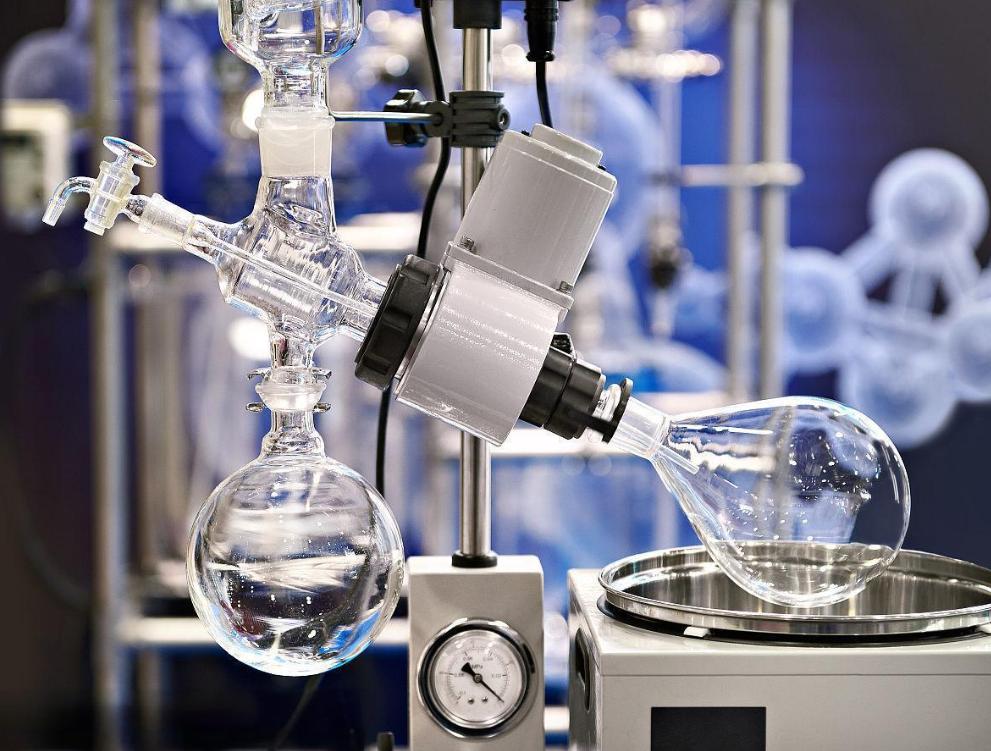
How to Tell If Your Rotary Evaporator Is Running Slower
Before leaping to conclusions it helps to verify if performance has actually fallen and not only seem that way. Here are some clear symptoms to watch for:
Same solvent, longer time. A process that used to take 30 minutes now takes over an hour.
Vacuum won’t reach previous levels. The gauge reads lower than you’re used to seeing for the same set-up.
Weaker condensation. Drops on the condenser are forming more slowly than before, or barely at all.
Bath is at temperature, flask is not evaporating. The water bath reads correctly, but output remains minimal.
A rotary evaporator must produce consistent and repeatable evaporation performance when operated under the same conditions. If that is moving a lot then something in the system has moved. It can be expensive and often pointless to jump in and replace parts without understanding the fundamental cause of an issue. Always work through the possible causes one by one.
Cause 1: Your Vacuum System Isn’t Working Efficiently
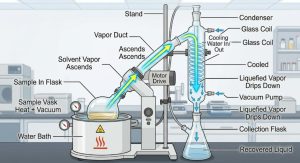
The vacuum performance is the single significant factor impacting the rate of evaporation. A rotary evaporator lowers the internal pressure, allowing solvents to boil at lower temperatures. When the vacuum level drops evaporation is slowed down a lot.
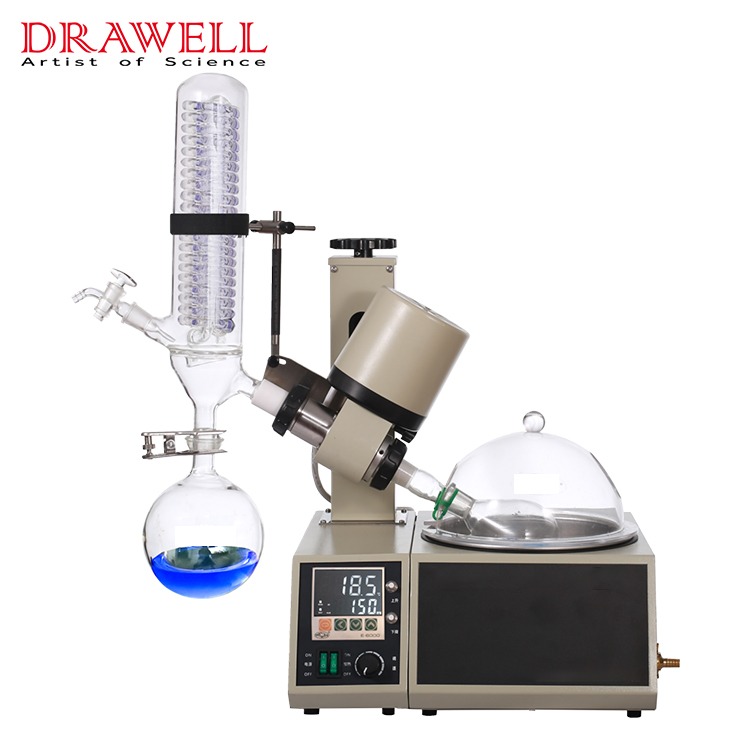
There are two main areas to check here.
Check the Vacuum Pump
- Reduced pump efficiency: Gradual performance loss is common in older units, especially without regular servicing.
- Pump oil contamination: In oil-sealed pumps, dirty or degraded oil significantly reduces suction capacity.
- Missed maintenance intervals: Skipping scheduled servicing allows small issues to compound over time.
Look for Vacuum Leaks
- Worn seals: Seals around the rotary joint and flask connections are common failure points.
- Loose tubing connections: Even a slightly loose fitting can allow enough air in to prevent the system from reaching target pressure.
- Aging gaskets: Gaskets harden and crack over time and may no longer seat properly.
Maintaining a stable vacuum is essential for efficient solvent removal. A minor and hard to see leak can substantially increase the processing time.
Cause 2: Your Cooling System Can’t Condense Vapor Efficiently
Evaporation and condensation are two sides of a coin. If the condenser can’t cope with the vapour being generated then evaporation effectively stops since there is nowhere for the vapour to go.
Several cooling-related issues can reduce evaporation efficiency:
- Coolant temperature is too high.
- Coolant flow through the condenser is insufficient.
- The condenser is partially blocked by residue or mineral deposits.
- High ambient temperatures reduce the condenser’s cooling capacity.
These difficulties are especially pronounced when evaporating low boiling solvents like ethanol or acetone, for which efficient condensation is required for steady operation.
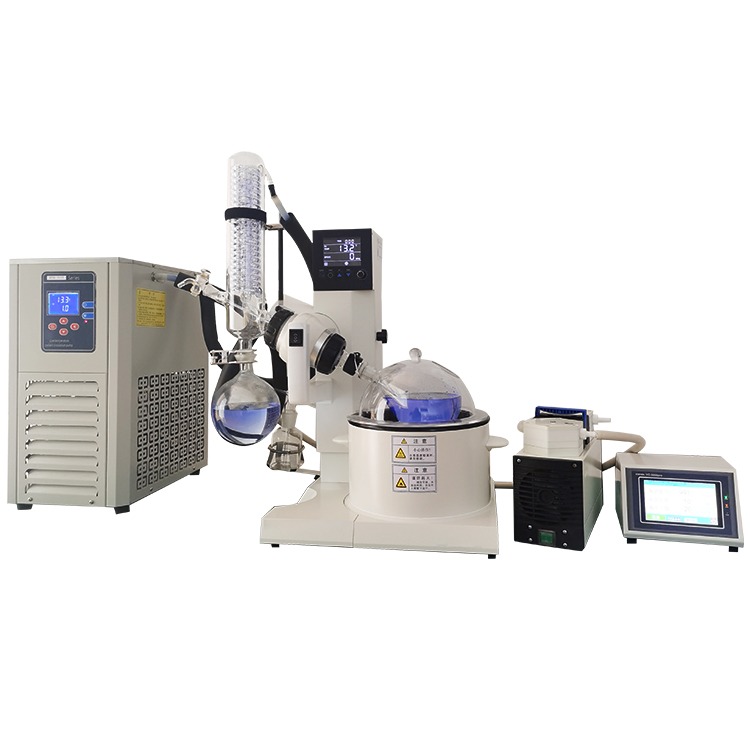
Cause 3: Your Operating Settings Need Adjustment
A well-maintained machine can nonetheless under-perform if the settings are not matched to the solvent and sample being processed. Even with a well-maintained system, incorrect operating settings are a common cause of slow evaporation.
- Water bath temperature: If the temperature is too low, the evaporation will be slowed down. However, merely raising the temperature without considering the qualities of the solvent may damage the heat sensitive samples. Matching the temperature to the specific solvent is the right approach.
- Flask rotation speed: Proper rotation creates a thin liquid film across the inside of the flask, which increases the evaporation surface area. That said, running at excessively high speed does not always improve results and can cause splashing, which may contaminate the condensate.
- Vacuum level: Various solvents need different vacuum settings to evaporate efficiently. A common mistake is to use a single set vacuum level for all applications leading to either slow evaporation or bumping.
With the right parameters in place, performance often improves without any hardware changes at all.
| Parameter | Too Low | Too High | Recommended Approach |
| Water bath temperature | Slow evaporation | Risk of sample degradation | Match to solvent characteristics |
| Rotation speed | Small evaporation area | Splashing possible | Moderate, stable rotation |
| Vacuum level | Poor evaporation | Bumping risk | Adjust according to solvent |
Cause 4: Routine Maintenance Has Been Overlooked
A rotary evaporator is one of those things that is easy to run and not pay much attention to, especially when it is working well enough. But deferred maintenance adds up quietly over time.
Dirty condenser: The coil inside collects residue, which reduces heat transfer efficiency and slows down condensation.
Glassware contamination: Evaporation flask residuals raise surface tension and inhibit formation of a thin coating.
Mineral deposits in the water bath or cooling system: Scale accumulation limits water flow and decreases temperature uniformity.
Cleaning intervals: The condenser and glassware should be cleaned regularly after a number of uses – a fundamental but often skipped procedure.
Preventive maintenance: Periodic check of the seals, gaskets and condition of the pump will prevent small problems from becoming big.
Regular maintenance of a rotary evaporator is one of the best ways to restore performance without replacing any key components. A good cleaning session can get back a lot of the speed that has been slowly lost over months of use.
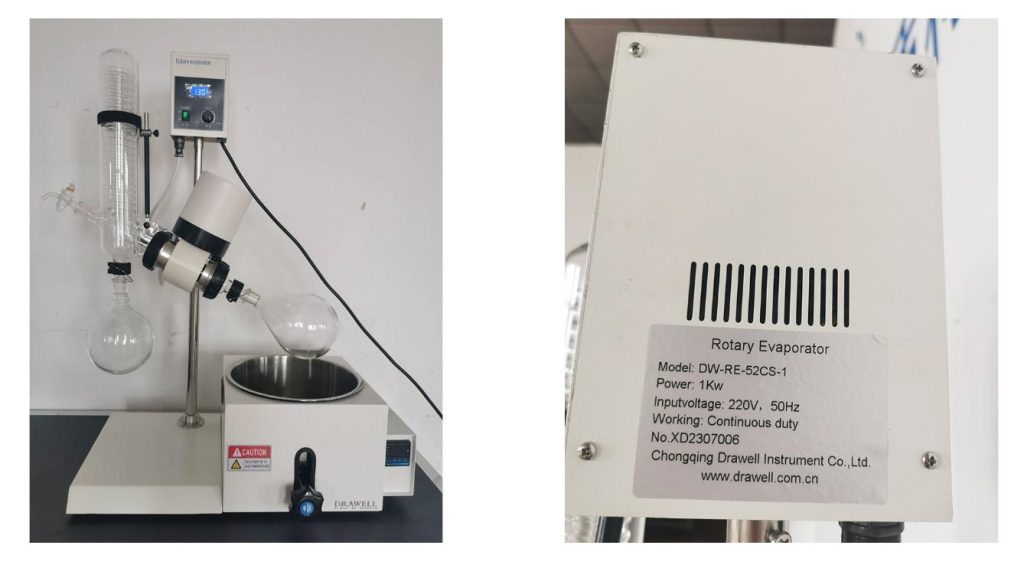
Cause 5: Your Samples or Solvents Have Changed
Sometimes the device is working perfectly, but the experiment itself has altered. Even if all operational parameters are kept constant, the evaporation behaviour can be strongly affected by the changes of the solvent composition or the sample concentration.
Solvents with higher boiling points naturally take longer to process. A larger batch volume requires more time even under optimal conditions. Higher sample viscosity decreases the effectiveness of thin-film production and slows down the overall evaporation.
If you’re troubleshooting slow evaporation, first compare your current solvent and sample with previous runs before assuming there’s a problem with the instrument.
A Simple Troubleshooting Checklist Before Calling for Service
Before contacting technical support or ordering replacement parts, work through this sequence:
Check the vacuum level against expected values for your solvent
Inspect all tubing connections and seals for leaks or wear
Verify cooling water temperature and flow rate
Confirm water bath temperature is appropriate for the solvent
Review rotation speed settings
Compare solvent and sample properties with previous runs
Clean the condenser, glassware, and water bath thoroughly
Most rotary evaporator running slow issues can be resolved by working carefully through these steps before assuming a hardware failure.
Final Thoughts
A slow evaporation on your rotary evaporator does not normally signal it is time to replace your rotary evaporator. The problem is usually related to hoover performance, cooling efficiency, operational parameters or normal maintenance. The more intelligent and economical method is to always find the root problem before acting.
If you are seeking for reliable rotary evaporators which give reliable performance and are easy to maintain, Drawell offers a range of models to suit different lab requirements. Feel free to reach out to our team for guidance on selecting or optimizing the right unit for your application.
Get Quote Here!
Latest Posts

What Next?
For more information, or to arrange an equipment demonstration, please visit our dedicated Product Homepage or contact one of our Product Managers.


