


You load up a rack of media bottles, start the cycle and return to find liquid on the bottom of the chamber and bottles that are significantly less full. This is a common lab problem and our initial instinct is generally to blame the bottles or the machine.
Most of the time it is a few configuration choices that cause the problem. The cycle, the fill level, the caps and the layout of the load. Lost media is a loss of time and materials, and spilt hot liquid can also be a burn hazard.
Why do liquids boil over during liquid sterilization in an autoclave? What commonly causes bottles to overflow and how to avoid it? This guide answers these questions.
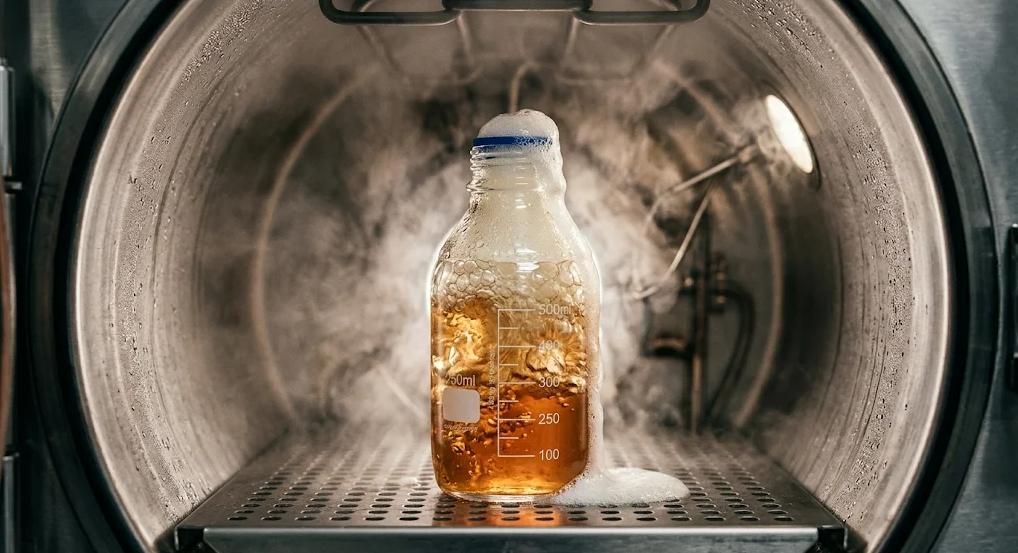
What Happens to Hot Liquids as Pressure Drops?
When steam goes inside the sealed chamber, the pressure increases. This enables liquid water at a certain temperature to be superheated and stay liquid. Once the cycle finishes and the chamber pressure drops, the boiling point of the liquid also decreases. If the liquid is still hotter than its new boiling point, it can start boiling rapidly, even after heating has stopped.
That is a boil-over. The faster the pressure drops, the more violent the boiling can become. This happens because vapour bubbles form and expand rapidly, pushing liquid up through the bottle neck and potentially out of the container. Also, when the gauge reads zero, liquid can stay superheated for some time, which is why moving or jarring a container can trigger sudden boiling.
Why Liquid Cycles Need a Slower Exhaust
The liquid cycle gradually reduces the chamber pressure, giving the liquid more time to cool as the pressure drops. This helps prevent the liquid from boiling too quickly or flashing into vapour. Stanford’s safety advice emphasizes that liquid cycles have longer depressurization times to avoid “boil-over”. Most university lab safety guides are cut from the same cloth.
- Dry or solid cycle: Uses rapid exhaust and is suitable for dry loads assigned to this cycle by the autoclave manufacturer. It is not suitable for liquid loads that require slow exhaust.
- Liquid cycle: Uses a slow exhaust. Suitable for media, buffers and water.
Expect the full liquid cycle to take longer than the set sterilization time. The University of Florida says it can add 10 to 15 minutes because of the slow charge and exhaust steps
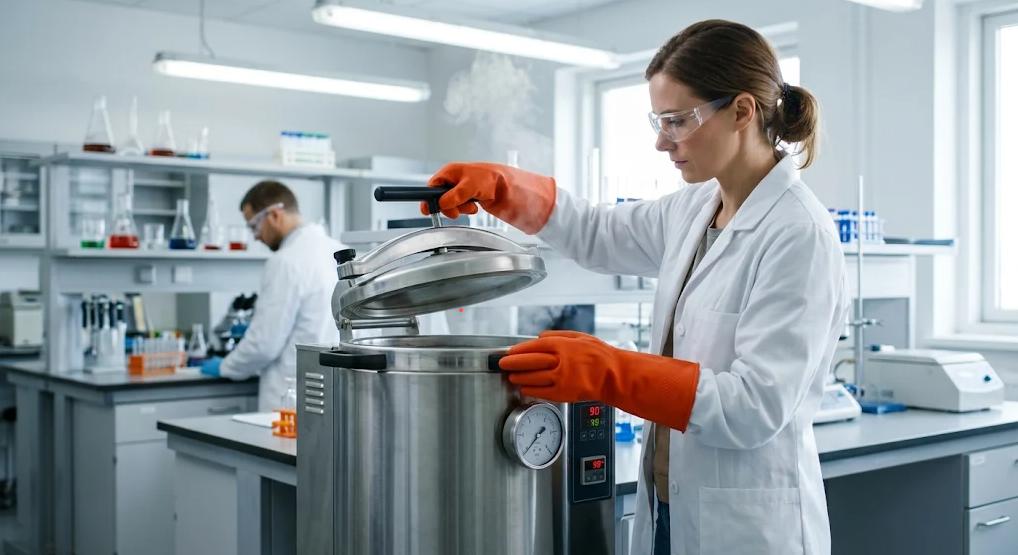
Common Reasons Bottles Overflow in an Autoclave
1. Using the Wrong Cycle or Exhaust Setting
This is the most common cause. When run on a dry cycle with fast exhaust the pressure lowers too fast and the liquid will boil over. Purdue’s guideline is straightforward: liquids go on the slow exhaust cycle, solids on rapid exhaust.
2. Filling Bottles Too Close to the Top
Enough headspace is needed to allow the liquid to bubble and foam without reaching the bottle opening. A bottle filled to the neck leaves little room for expansion and foaming. It is especially common in bottles with a narrow neck.
3. Tightening Bottle Caps Too Much
A tightly sealed cap prevents pressure from equalizing between the bottle and the chamber. The resulting pressure difference can force the cap off or damage the bottle during heating or exhaust. Sealed containers should never be autoclaved with liquids inside.
4. Overloading or Crowding the Chamber
Bottles may heat and cool unevenly. Some bottles boil over and some are fine. Crowding also hinders steam circulation.
Here’s an easy approach to match what you observe with the likely cause:
| What You Notice | Likely Cause | What to Check |
| Liquid spills during exhaust | Exhaust is too fast | Selected cycle and exhaust settings |
| Liquid reaches the bottle opening | Container is overfilled | Liquid volume and remaining headspace |
| Cap pops off or bottle becomes damaged | Cap is tightly sealed | Cap position and container suitability |
| Some bottles lose more liquid than others | Differences in fill volume, container size, or bottle position within the load | Fill levels, container sizes, exhaust settings, bottle positions, and spacing |
How to Prevent Boil-Over During Liquid Sterilization
- Choose the right liquid cycle: For liquid loads, the liquid or slow exhaust program should still be used. Do not attempt to bypass or rush the cycle.
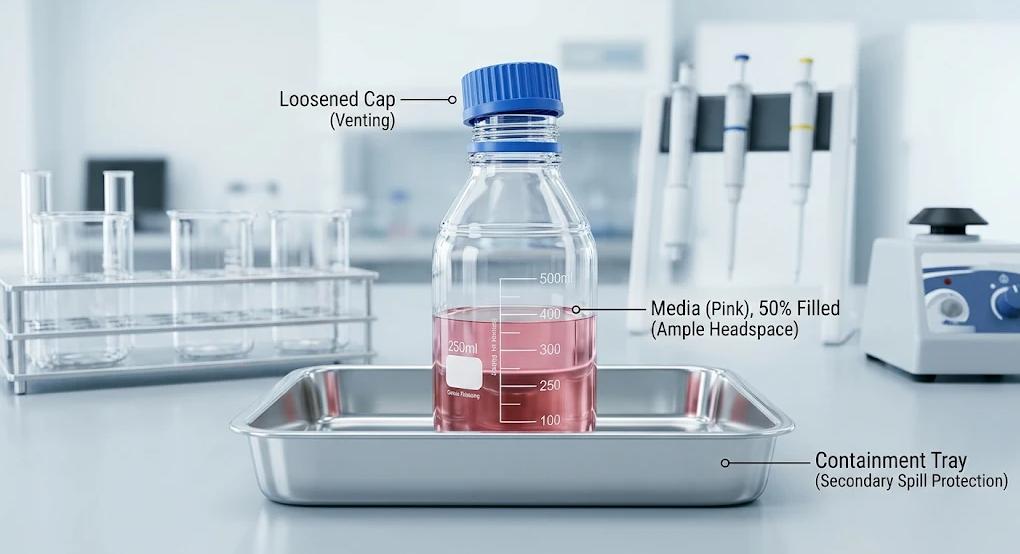
- Leave enough room in each bottle: The university manuals recommend leaving the bottle only half to two-thirds full. Bigger bottles and narrow bottlenecks will require more room.
- Check the caps and containers before loading: All screw caps must be loosened or the containers should be used with vented closures. Containers must be borosilicate glass or autoclave-safe plastics. Bottles should not be autoclaved if they are damaged in any way, including cracks or chips.
- Arrange the load properly: All of the bottles should be placed into an autoclave-safe tray that contains all potential leaks with a solid bottom and elevated sides. It is also recommended to maintain 1 to 2 inches between each container so steam may circulate through the autoclave properly.
When Is It Safe to Open the Autoclave?
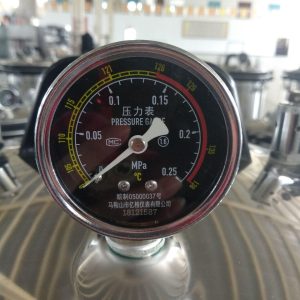
Even if you’re busy, it’s not a good idea to open the autoclave too soon. The autoclave can cause a lot of damage if opened before it is safe. Don’t open it in the middle of a slow exhaust cycle. The door must remain closed until the cycle finishes and the pressure gauge hits 0.
- Open slowly: Once the cycle is complete and the pressure gauge reads zero, open the lid slightly as directed by the manufacturer. Allow any remaining steam to escape before reaching inside.
- Let liquids settle: Allow bottles to cool before handling. Avoid shaking or moving hot containers, as this may trigger sudden boiling. Larger volumes need more cooling time.
- Wear protection: Wear heat resistant gloves, eye protection and a lab coat.
Usually, a boil-over does not indicate that anything is wrong with your autoclave. It is often related to the exhaust rate, fill level, cap position or load arrangement. Most issues are resolved by the right cycle, proper fill amounts, loose caps, a neat load and a calm cool-down.
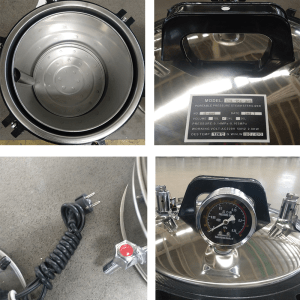
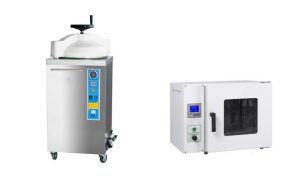
Drawell has a variety of vertical autoclave models for labs and our team is ready to help you select the right one for your liquid sterilization needs.
Get Quote Here!
Latest Posts
What Next?
For more information, or to arrange an equipment demonstration, please visit our dedicated Product Homepage or contact one of our Product Managers.


