


Blood separation in a lab is often done to collect serum, plasma, or other parts of blood for tests. It is used in clinical work, research, and diagnosis. Choosing the right centrifuge matters. The settings used during spinning can change how clean the separation is. They can also affect sample quality, how fast the work goes, and lab safety.
The right centrifuge is not one size fits all. Sample type plays a role. So do tube capacity, the centrifugal force you need, the rotor design, and whether you must control temperature. Understanding these factors can help laboratories select equipment that matches their workflow without unnecessarily increasing operating costs.

The Role of Centrifuge in Blood Separation
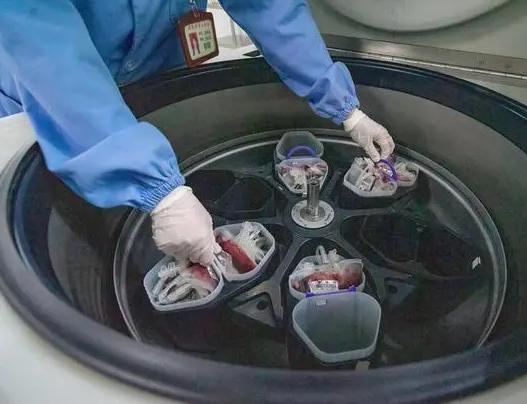
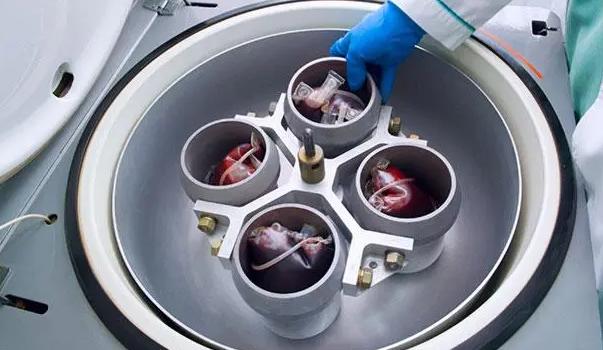
A blood separation centrifuge is designed to split blood parts by density. When the tubes sit in a rotor and the unit runs at high speed, centrifugal force acts on the sample. Heavier cells move toward the lower part of the tube. Lighter fluid layers, like plasma or serum, tend to stay nearer the top.
With this approach, labs can collect the exact blood fraction they need. That supports work such as routine clinical testing, disease checks, drug related research, and other biological studies.
Main Types of Centrifuges for Blood Separation
The following chart provides different types of centrifuges which are used for blood separation
| Type of Blood Separation Centrifuge | Main Features | Common Applications |
| Benchtop Centrifuge | Compact laboratory centrifuge designed for routine sample processing; usually supports small to medium tube capacities | Clinics, hospitals, diagnostic laboratories, research laboratories |
| Refrigerated Centrifuge | Equipped with cooling systems to maintain controlled temperatures during centrifugation | Clinical testing, biotechnology research, molecular diagnostics |
| High-Speed Centrifuge | Provides high rotational speed and strong centrifugal force for rapid separation | Research laboratories, advanced biological studies |
| High-Capacity Centrifuge | Designed with larger rotors and multiple tube positions for processing many samples at once | Large hospitals, central laboratories, high-volume testing facilities |
| Microcentrifuge | Small centrifuge designed for microtubes and very small sample volumes | Molecular biology, small-scale blood research, specialized testing |
| Clinical Centrifuge | Specifically designed for medical laboratories with simple controls and standard blood tube compatibility | Hospitals, medical laboratories, diagnostic centers |
| Floor-Standing Centrifuge | Large-capacity centrifuge installed on the laboratory floor, supporting high-volume rotors | Large medical centers, blood banks, industrial laboratories |
| Automatic Centrifuge | Includes automated loading, balancing, programming, or workflow integration features | Automated laboratories, high-throughput diagnostic facilities |
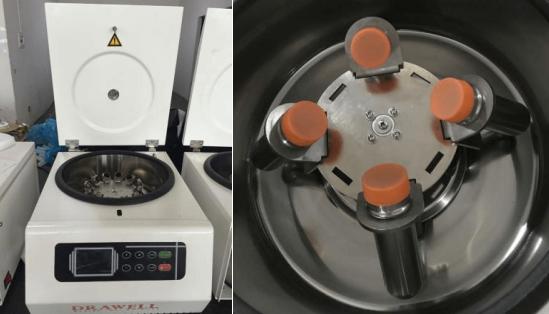
| Swing-Out Rotor Centrifuge | Uses buckets that move to a horizontal position during rotation | Serum preparation, plasma separation, routine clinical applications |
| Fixed-Angle Rotor Centrifuge | Holds sample tubes at a fixed angle during centrifugation | Cell separation, research applications, specialized blood processing |

Key Steps of Choosing the Right Centrifuge for Blood Separation
1. Understand the Blood Separation Application
Start by deciding which blood fraction you want to isolate. Many uses call for different centrifuge settings.
For instance, serum work usually follows a clotting step before spinning. Plasma work typically starts with blood that has anticoagulant added. Some workflows also process whole blood for certain research or diagnostic uses.
Before you choose a centrifuge, look at the sample type, tube details, how much you process at once, and what tests come next. These items define what the equipment must do.
2. Consider Centrifugal Force
Relative centrifugal force (RCF), commonly expressed as ×g, is one of the most important specifications when selecting a centrifuge for blood separation. RCF describes the force applied to samples during centrifugation.
Different blood separation protocols may require different RCF values. A centrifuge should therefore provide an adjustable speed range capable of producing the required centrifugal force. It is important not to select equipment based only on maximum RPM. Rotor radius affects the actual centrifugal force, so RCF should be considered alongside rotational speed when comparing centrifuges.
3. Select the Appropriate Rotor
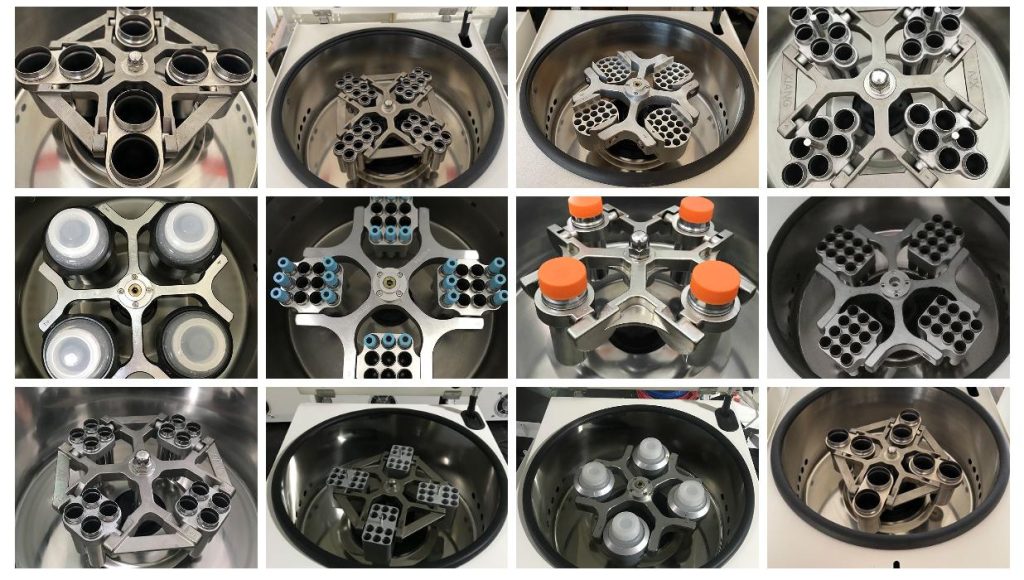
The rotor affects how the samples settle during spinning. It also changes how well separation works. Choosing the right centrifuge rotor is a key step for consistent blood work. Some blood workflows call for different rotor types. This can depend on whether you want serum, plasma, isolated cells, or faster batch processing.
The following chart provides key factors for selecting a blood separation rotor.
| Selection Factor | What to Consider | Recommended Rotor Choice |
| Blood component being separated | Serum, plasma, cells, or research samples | Swing-out rotor for serum/plasma; fixed-angle rotor for cell separation |
| Sample volume | Number and size of blood tubes per run | High-capacity bucket rotor for large batches; microtube rotor for small samples |
| Required separation quality | Need for clear liquid layers or compact sediment | Swing-out rotor provides clearer interfaces; fixed-angle rotor provides stronger sedimentation |
| Processing speed requirement | Required RCF and centrifugation time | Fixed-angle rotor for higher force; swing-out rotor for balanced separation |
| Tube compatibility | Tube dimensions, adapters, and materials | Select rotor matching tube specifications |
| Laboratory workload | Daily sample volume and frequency | High-capacity rotor for high-throughput laboratories |
| Sample sensitivity | Temperature and mechanical stress requirements | Refrigerated centrifuge with suitable rotor for sensitive samples |
| Ease of handling | Loading, unloading, and cleaning requirements | Swing-out rotor offers convenient sample access |
Selecting the right rotor for blood separation requires balancing separation performance, sample volume, processing speed, and laboratory workflow.
4. Check Tube and Container Compatibility
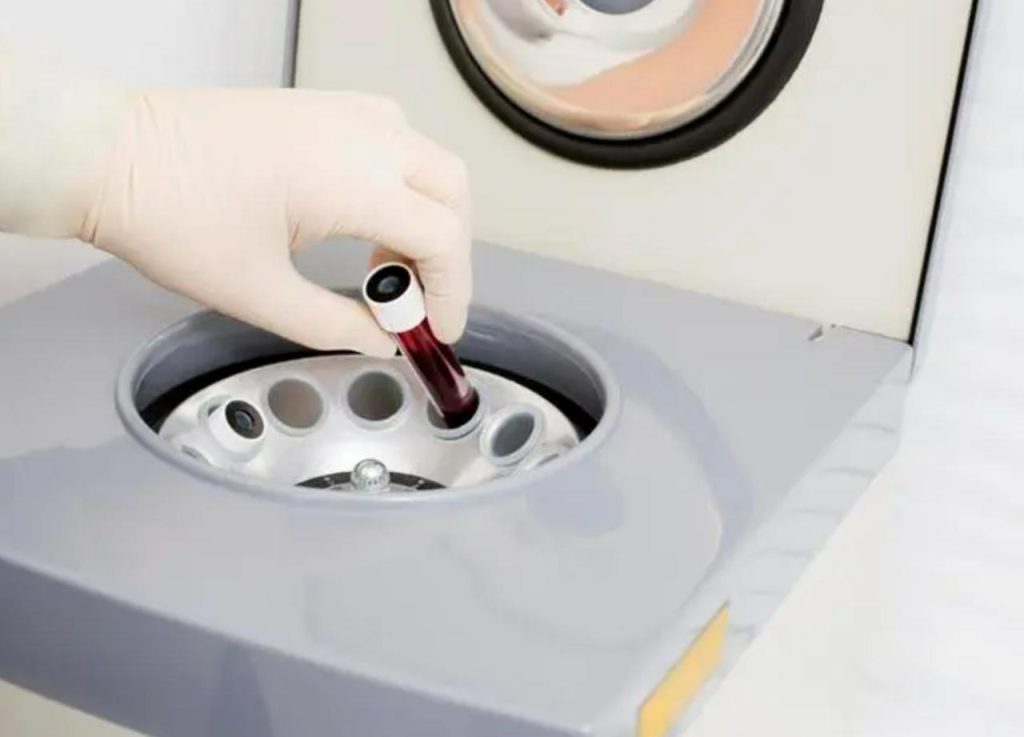
Blood draw tubes vary by size, material, and layout. Your centrifuge must match what the lab uses. Pay attention to tube volume, tube diameter, tube length, adapter needs, and rotor fit. The right adapters help keep tubes held securely while the run is in progress.
Labs should also think about whether they must handle more than one tube style. A unit with swap rotors or extra adapters can make it easier to work with multiple blood collection systems.
5. Determine Whether Refrigeration Is Required
Temperature matters for blood separation in some cases. This is true when samples are sensitive to heat or when the protocol calls for a refrigerated spin. A refrigerated centrifuge keeps the chamber at a set temperature during operation. That can support temperature-sensitive steps.
If your routine work does not require tight temperature control, a basic benchtop centrifuge may be enough. Only adding refrigeration when it is truly needed can help limit extra cost and power use.
6. Evaluate Capacity and Throughput
Your daily workload should guide the capacity choice. Think about how many tubes you run per batch. Also consider how often you spin during the day. A smaller unit can suit low-volume labs, clinics, and some research uses. Medium and high-capacity centrifuges often fit labs that handle many blood samples each day.
Throughput depends on more than rotor size. Spin up and spin down, total cycle time, how well you load, and how the workflow fits the lab schedule all matter too.
7. Look at Speed Control and Programmability
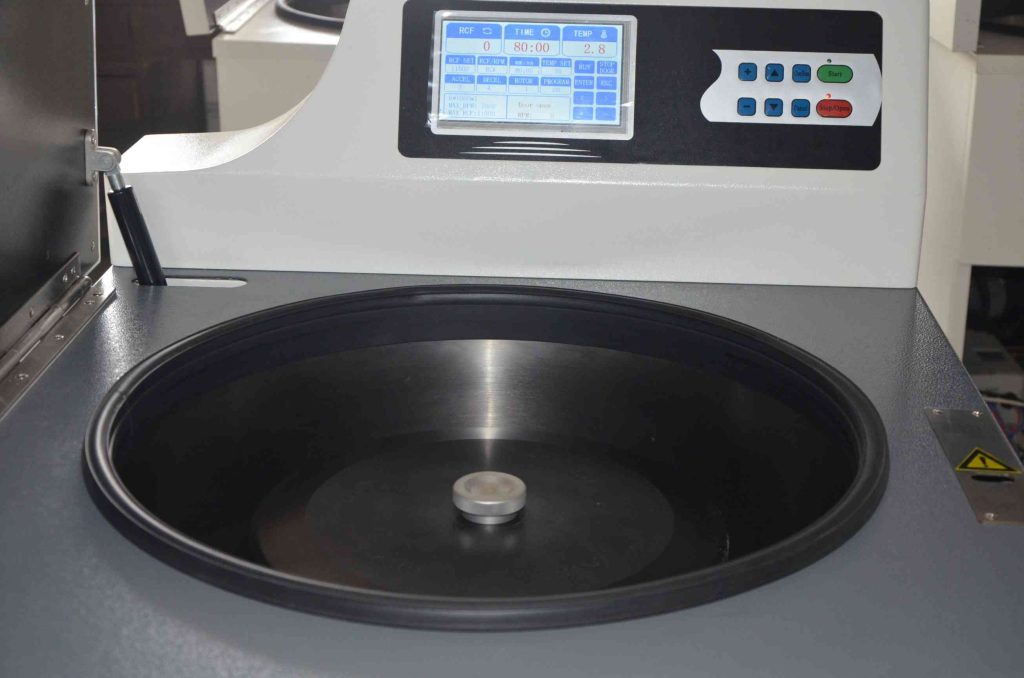
Modern centrifuges let you set speed and RCF, plus time. Some also allow control of acceleration and deceleration, and in some models, temperature. With set programs, teams can keep blood separation steps consistent. After the lab validates the parameters, operators can repeat the same run conditions. This can cut batch-to-batch differences.
A clear digital readout and simple controls can also reduce user mistakes. That is especially helpful when the lab is busy.
8. Consider Safety Features
Safety matters when you pick a centrifuge. Blood can carry material that is not safe to handle, so the machine has to limit the chance of accidental contact.
Look for safety controls such as a locked lid, imbalance monitoring, overspeed shutoff, rotor identification, and an emergency way to release the lid.
A good centrifuge should run steady and stay smooth, with low shaking. Even if imbalance sensing is built in, you still need to balance loads each time.
9. Examine Ease of Cleaning and Maintenance
Blood work can create leaks, splashes, or other contamination. Because of that, cleaning needs to be simple and fast. The chamber, rotor, buckets, and adapters should be easy to reach for routine washing and disinfection.
Cleaning chemicals in your lab matter. The surfaces and parts should match the agents you plan to use. If parts can come out, service becomes easier and it helps keep hygiene practices consistent.
You also need to check rotors and related parts on a regular basis. Long use can lead to wear and corrosion.
10. Consider Noise and Laboratory Space
Many benchtop models are used in clinics and research rooms. Space can be tight there. Before you buy, confirm the unit size, its weight, what kind of ventilation it needs, and the setup limits in your location.
Noise and vibration count too. A centrifuge that stays stable and controls shake may feel easier to work around when staff are close for long periods.
11. Compare Automation and Workflow Requirements
Laboratories with high sample volumes may benefit from centrifuges offering automation-related When labs process many samples, automation options can help. Options like set programs, barcode support, automated handling, or links to lab automation can speed up work, if that setup fits your needs.
Smaller labs might not require many of those options. A simpler centrifuge can still do routine blood separation, and it can lower purchase and upkeep costs.
12. Assess Compliance and Quality Requirements
Make sure the centrifuge fits the safety rules, quality expectations, and regulatory requirements for your setting. Review vendor papers, proof of certification, the user manual, rotor details, and the planned maintenance steps before final purchase.
For clinical labs, the choice should match the lab’s own verified methods and any quality system rules that apply.
13. Balance Performance With Total Cost
The purchase price is only part of what you will spend. You also need to estimate the full cost during the life of the centrifuge.
This total can include:
- Initial equipment cost
- Rotor and adapter costs
- Installation
- Routine maintenance
- Calibration or checks
- Replacement parts
- Energy use
- Help for services and technicians
A centrifuge that costs less at the start might still cost more over time. Looking at the full lifecycle helps the comparison make sense.
Summary
| Laboratory Requirement | Recommended Centrifuge Type |
| Routine serum and plasma separation | Clinical centrifuge or benchtop centrifuge |
| Temperature-sensitive blood samples | Refrigerated centrifuge |
| Large numbers of samples | High-capacity or floor-standing centrifuge |
| Small-volume blood testing | Microcentrifuge |
| High-speed separation requirements | High-speed centrifuge |
| Automated laboratory workflow | Automatic centrifuge |
| Clear plasma/serum separation | Swing-out rotor centrifuge |
| Cell concentration and sedimentation | Fixed-angle rotor centrifuge |
Final Thoughts
Selecting a centrifuge for blood separation is more than comparing maximum speed or purchase price. First, the lab should list what it needs to do with blood. Then it can line up the needed centrifugal force, rotor design, capacity, temperature control, tube fit, safety controls, and the way the workflow runs.
When you review both the specs and everyday laboratory requirements, you are more likely to choose a centrifuge that gives steady blood separation. It also needs to support work that stays efficient, safe and reliable.
Get Quote Here!
Latest Posts



What Next?
For more information, or to arrange an equipment demonstration, please visit our dedicated Product Homepage or contact one of our Product Managers.


