


How accurate is XRF analysis? XRF analysis can provide reliable results for many elemental analysis tasks, but there is no fixed accuracy value that applies to all samples and all applications. Actual accuracy is affected by factors such as sample type, element concentration, matrix effects, sample preparation, calibration method, instrument configuration, and measurement conditions.
Therefore, when judging XRF accuracy, you cannot only ask “Is XRF accurate or not?” You also need to look at three questions: what is being measured, what the sample is, and what analytical requirements you need to meet.
Quick answer: XRF accuracy is application-specific. It depends on the sample, target elements, matrix, preparation, calibration, instrument setup, and measurement conditions.
How Accurate Is XRF Analysis?
The accuracy of XRF analysis depends on the specific analytical task, not a universal percentage that applies to all scenarios.
For samples that are relatively homogeneous, properly prepared, and suitably calibrated, XRF can provide reliable elemental composition results. For complex matrices, low-concentration elements, or inhomogeneous samples, the results may be affected by more factors.
To judge whether XRF is “accurate enough,” you can first look at three aspects:
- Sample type: whether the sample is homogeneous and whether the matrix is complex
- Target elements: whether the element type and concentration are within the suitable range of the method
- Analytical purpose: whether it is rapid screening, material identification, or strict quantitative results
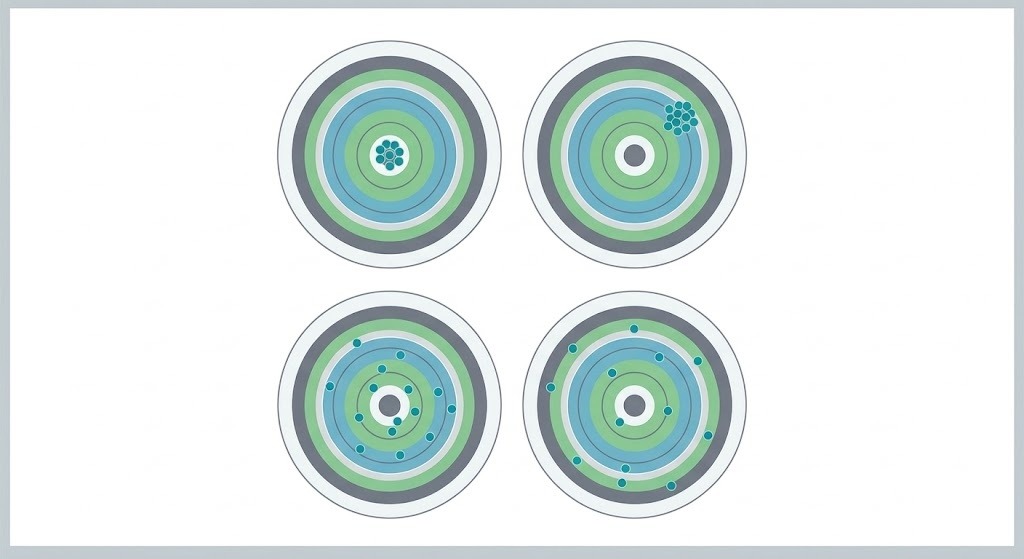
A distinction is also needed here between accuracy and precision. Accuracy focuses on how close the measurement result is to the true value, while precision focuses on whether repeated measurement results are consistent.
For example, if a sample is measured continuously and gives 8.1%8.1%, 8.2%8.2%, and 8.1%8.1%, the results are relatively concentrated. But if the true content of the sample is 10%10%, then although precision is good, accuracy is not high.
So, stable repeated measurement results do not necessarily mean the results are accurate. XRF analysis requires attention to both measurement consistency and controlling error through suitable calibration, reference standards, and sample handling.
What Affects XRF Accuracy?
Sample Type and Matrix
First is the sample itself.
Different elements, concentrations, and sample matrices present different levels of challenge to XRF analysis. For samples with relatively simple composition, interactions between elements may be easier to control. For multi-component materials such as ores, soil, or complex alloys, different elements may absorb or enhance the X-ray signals produced by other elements, thereby affecting the final result.
This effect is usually called the matrix effect.
Simply put, even if two samples contain the same concentration of the target element, if their overall matrices are different, the signal received by the instrument may also be different. Therefore, whether the matrix is matched is one of the important factors in judging the reliability of XRF quantitative results.
In addition, the concentration of the target element is also important. High-concentration elements usually produce a more obvious analytical signal, while when the target element is at a lower concentration, background signal, spectral overlap, and statistical fluctuations may have a more obvious impact on the result.
In practical applications, EDXRF and WDXRF also differ in signal separation methods and analytical capabilities, so the instrument configuration needs to match the target elements and sample matrix. When making a specific choice, you can further compare the characteristics of EDXRF and WDXRF.
Video:https://www.youtube.com/watch?v=93bTw8Xcc8M
Sample Preparation
XRF sample preparation also directly affects the final result.
If the sample has large differences in particle size or is not fully mixed, the measurement area may not represent the entire sample.
This means that sample preparation is not just about “making the sample easier to test.” It directly relates to whether the small portion of sample measured can represent the whole sample.
Therefore, for non-homogeneous samples such as powders and minerals, special attention should be paid to:
- Whether the sample is homogeneous
- Whether the measurement surface is flat and clean
- Whether the sample particles are suitable
- Whether the measurement area is representative
Good sample preparation cannot compensate for incorrect calibration, but poor sample preparation can cause a well-performing XRF instrument to produce unreliable results.

Alt
Calibration and Instrument Configuration
Calibration determines how the instrument converts detected X-ray signals into element concentrations, so it is also a core part of XRF accuracy.
Ideally, the standard samples used for calibration should have a matrix as close as possible to the actual sample being tested and cover the actual concentration range of the target elements. If the standard samples differ too much from the unknown sample, even if the calibration curve itself looks good, it may not accurately reflect the actual composition of the unknown sample.
Therefore, whether the calibration is suitable for the current sample is more important than simply looking at whether the calibration curve is “beautiful.”
Instrument configuration is equally important. Among these, XRF detector types affect the instrument’s ability to receive and distinguish different X-ray signals, especially when element spectral lines are relatively close.
Therefore, when judging XRF accuracy, you cannot look at only one instrument parameter. You need to comprehensively consider the detector, analysis mode, calibration method, and specific application.
Measurement Conditions
Finally, there are the actual measurement conditions.
Measurement time affects the X-ray counts collected by XRF. When other conditions are basically the same, appropriately extending measurement time usually helps reduce some statistical fluctuations, especially in low-concentration element analysis.
But measurement time cannot solve all accuracy problems.
If sample preparation is insufficient, the calibration method is unsuitable, or matrix effects are not controlled, simply increasing measurement time cannot eliminate these systematic errors.
Sample position, measurement area, surface state, and measurement geometry also need to remain stable. For important samples, repeated measurements can also be used to check whether the results have good consistency.
In other words, measurement time mainly helps control random fluctuations, but it cannot replace correct sample preparation and calibration.
How Accurate Is XRF for Different Applications?
Different materials do not have exactly the same requirements for XRF, so the same standard cannot be used to judge accuracy in all applications.
Metal and Alloy Analysis
In metal and alloy analysis, XRF is often used for material identification, alloy composition testing, and quality control. For metal samples with relatively uniform composition and good surface condition, XRF can quickly obtain composition information on major elements.
In this type of application, attention usually needs to be focused on the alloy matrix, target element range, sample surface, and analytical purpose. If it is only material identification and composition screening, XRF can provide rapid analytical results. If stricter low-concentration quantification is involved, detection capability, calibration, and other analytical methods need to be further considered.
Therefore, when making an OES vs XRF comparison, what really needs attention is the element range, target concentration, detection limits, and specific analytical purpose, rather than simply comparing which method is “more accurate.”
Gold and Precious Metals
For gold and other precious metals, XRF can quickly analyze the elemental composition of materials and be used to judge purity and alloy composition.
However, if the sample has plating, surface treatment, or internal composition inhomogeneity, the test results may be affected by measurement depth and surface state. Therefore, precious metal analysis cannot simply treat XRF as a “purity detector” that is unaffected by sample state.
When using an XRF gold analyzer, special attention should be paid to whether the sample has surface plating, whether the test position is representative, and whether the calibration method is suitable for the current material.
Minerals and Geological Samples
Mineral and geological samples usually have more complex matrices, and the composition between different particles may differ significantly.
Therefore, this type of sample especially requires attention to homogenization and sample preparation. If the sample is not fully mixed, the result obtained from one measurement may represent only a local area, not the average composition of the entire sample.
For practical applications of XRF mineral analyzer, it is also necessary to select a suitable calibration method according to sample type, target elements, and concentration range.
How to Improve XRF Accuracy
To improve XRF accuracy, the focus is not simply pursuing longer measurement time or higher instrument parameters, but making the sample, calibration, instrument, and test conditions match each other.
- Use representative samples. Ensure the sample is as homogeneous as possible, the surface is clean, and the measurement area can represent the overall material.
- Use suitable calibration and reference standards. Calibration standards should cover the actual analytical range and match the sample matrix as closely as possible.
- Keep measurement conditions consistent. Try to keep sample position, measurement area, and measurement method consistent, and select appropriate measurement time according to the target elements.
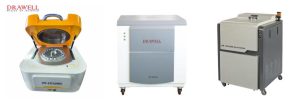
- Choose the instrument according to the analytical task. Field rapid screening, metal alloy testing, and laboratory quantitative analysis have different requirements for instruments. Therefore, when selecting an XRF spectrometer, it should be judged in combination with sample type, target elements, detection limits, and working environment.
How to Know if an XRF Result Is Reliable
To judge whether a set of XRF data is reliable, you can first check several basic questions:
- Do repeated measurement results maintain good consistency?
- Is the current calibration suitable for this type of sample?
- Have suitable reference standards been used?
- Is the sample homogeneous and representative?
- Is the concentration of the target element close to the detection capability range of the method?
- Do the measurement results match the expected composition of the sample?
If the results show obvious abnormalities, do not attribute the problem to the instrument first. Sample surface, sample homogeneity, calibration method, and measurement position may all cause deviations.
Also remember: stable results do not necessarily equal accurate results. Precision can help judge whether measurements are repeatably stable, while accuracy also needs to be confirmed through suitable standards and verification methods.
Common mistake: Treating stable repeat measurements as proof of accuracy without verifying calibration and reference standards.
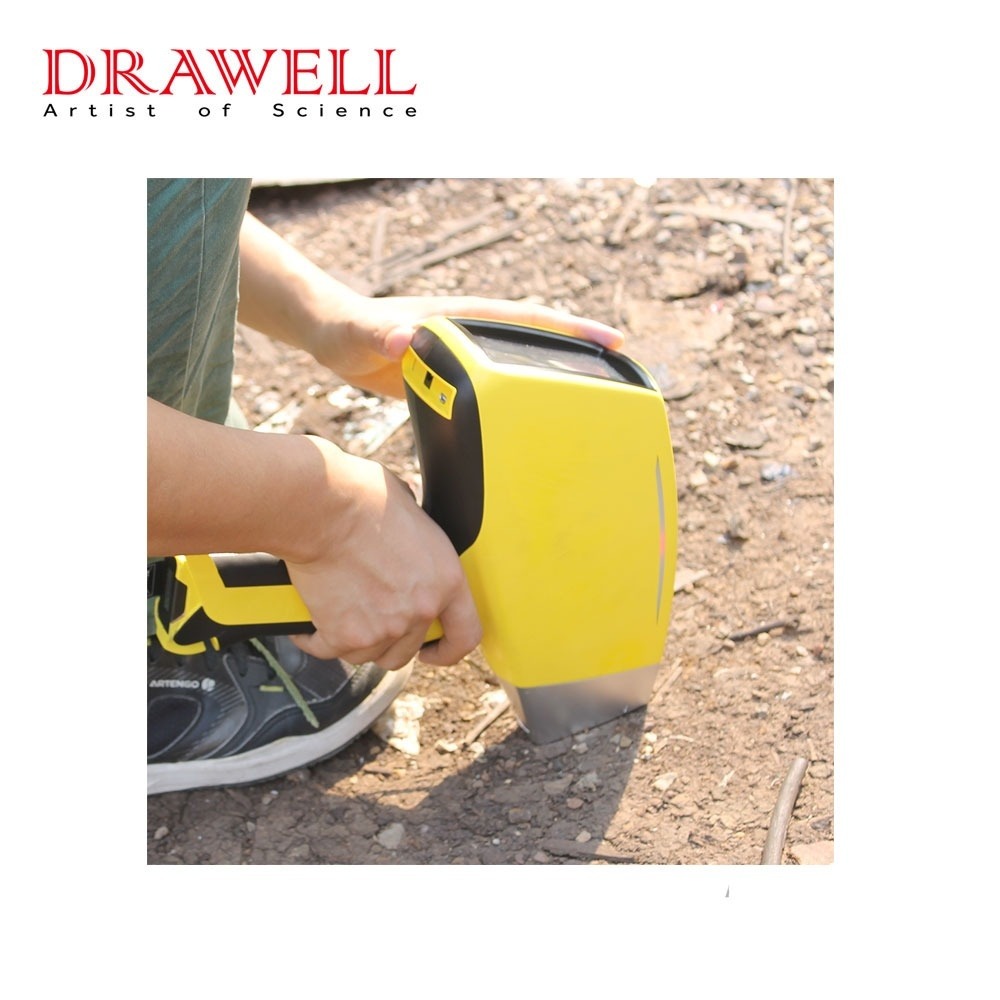
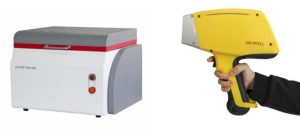
For applications requiring rapid field screening, a handheld XRF spectrometer can provide a more flexible testing method. For controlled-condition analysis in the laboratory, the corresponding XRF configuration can be selected according to the detection target.
Final Thoughts
How accurate is XRF analysis? XRF can provide reliable results for many elemental analysis tasks, but there is no fixed accuracy value that applies to all samples and all applications.
What truly affects XRF accuracy is whether sample type, matrix, sample preparation, calibration, instrument configuration, and measurement conditions match each other. For different materials such as metals, precious metals, and minerals, suitable testing methods also need to be selected according to specific analytical goals.
So, rather than simply asking “Is XRF accurate?” it is better to ask further: Is this XRF method suitable for my sample, target elements, and analytical requirements? This is the key to judging whether XRF analysis results are reliable.
Get Quote Here!
Latest Posts


What Next?
For more information, or to arrange an equipment demonstration, please visit our dedicated Product Homepage or contact one of our Product Managers.


