


Metal quality directly influences safety, performance, and durability. With stricter standards in industries such as automotive, aerospace, energy, and precision manufacturing, the ability to accurately determine metal chemistry has become a must-have rather than a luxury.
Modern applications require:
- Fast material verification (PMI)
- High precision chemical analysis
- Trace element detection (C, P, S, N, B)
- Alloy grade identification
- Compliance with ASTM, ISO, and EN standards
Choosing between an optical emission spectrometer for metal analysis or an XRF analyzer depends on how deeply you need to analyze the material and what elements matter most for your product.
As a professional analytical instrument supplier, Drawell provides both optical emission spectrometers (like direct reading spectrometers) and XRF analyzers. Here, we will help you understand how each technology works, how they compare, and help you find the most suitable analytical solution for your business.

Understanding the Two Methods: What Is OES and What Is XRF?
What Is an Optical Emission Spectrometer (OES)?
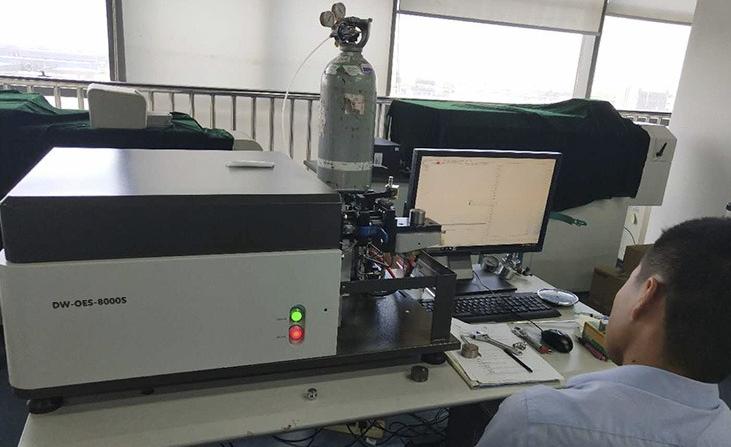
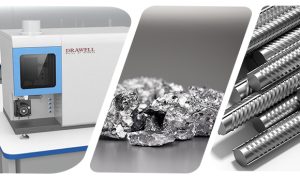
An Optical Emission Spectrometer for metal analysis, often referred to as a direct reading spectrometer, is the gold standard for elemental composition analysis in metal production environments.
Working Principle: OES works by applying a high-energy electrical spark (Arc/Spark OES) to the sample surface. This spark vaporizes and excites the atoms within a small area, causing them to emit light at specific wavelengths characteristic of each element. The spectrometer measures the intensity of this emitted light to determine the precise concentration of each element present.
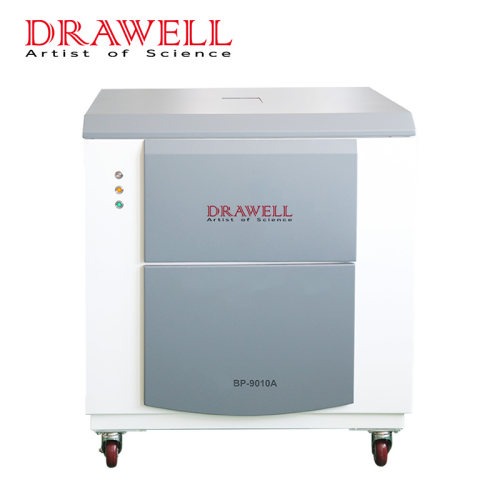
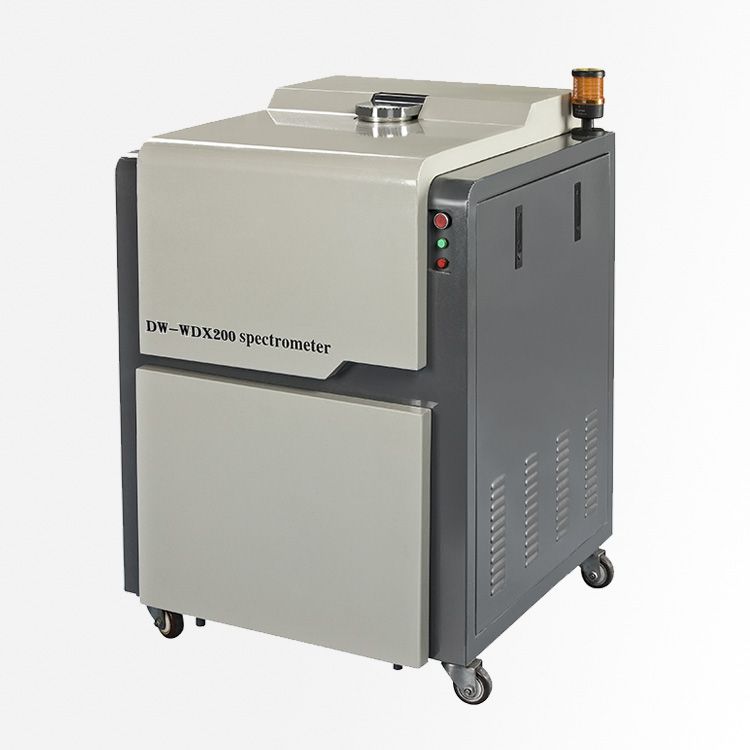
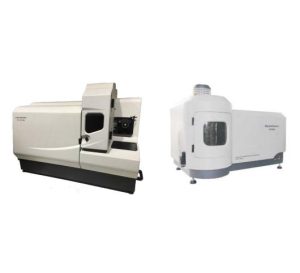
Equipment Type: OES systems (such as Drawell’s DW-W4 series and Full-Spectrum Direct Reading Spectrometer models) are typically large, stationary, benchtop, or floor-standing units.
Main Features of OES:
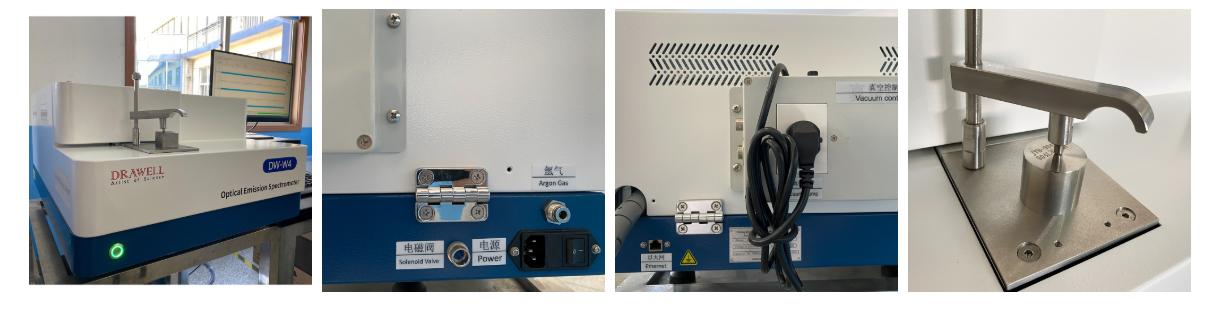
- They require a controlled environment and utilize high-purity argon gas to create a stable atmosphere for accurate excitation and light transmission.
- Exceptional accuracy for light elements like C, P, S, B, N, which XRF cannot measure.
- Suitable for ferrous and non-ferrous metals.
- Ideal for high precision alloy production and quality assurance.

What Is XRF (X-ray Fluorescence Spectrometer)?
XRF is an analytical technique used for elemental analysis and chemical analysis, primarily used for quick identification and screening.
Working Principle: XRF analysis involves subjecting the sample to primary X-rays. These X-rays knock out electrons from the inner shell of the sample’s atoms, making the atoms unstable. When electrons from outer shells drop into the vacated inner shells, they emit secondary, characteristic X-rays (fluorescence). The energy and intensity of these fluorescent X-rays identify the element and determine its concentration.
Equipment Type: XRF instruments come in two main types:
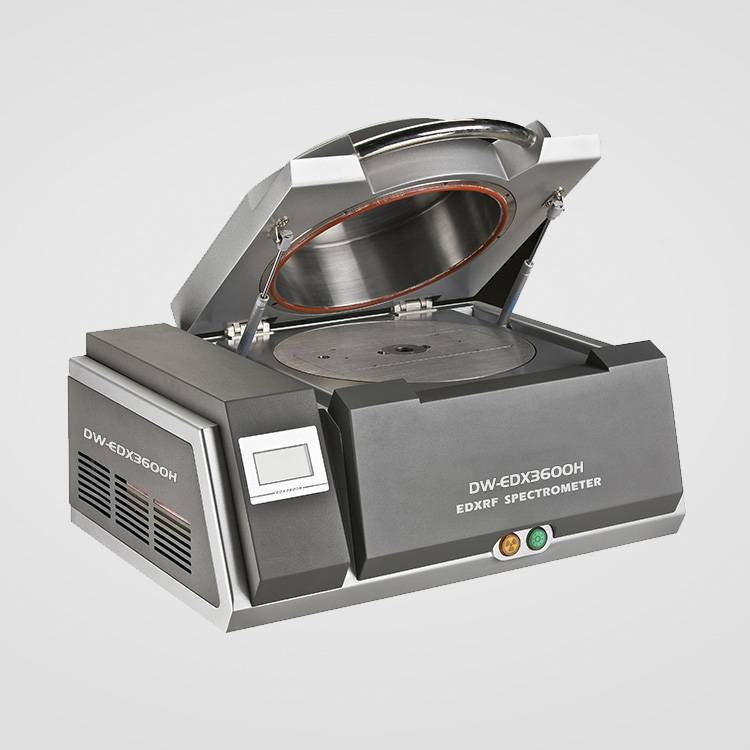
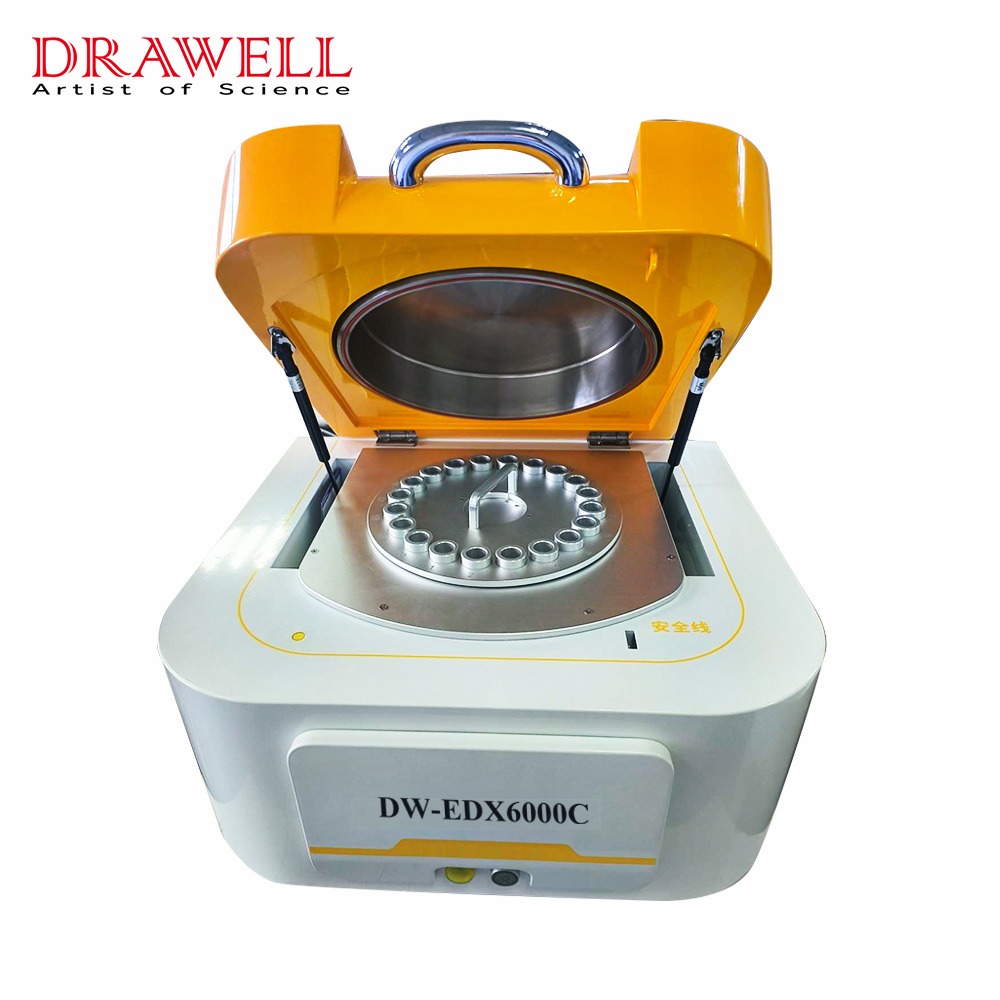
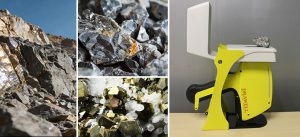
- Benchtop/Desktop XRF: Used in a lab setting for more precise measurements.
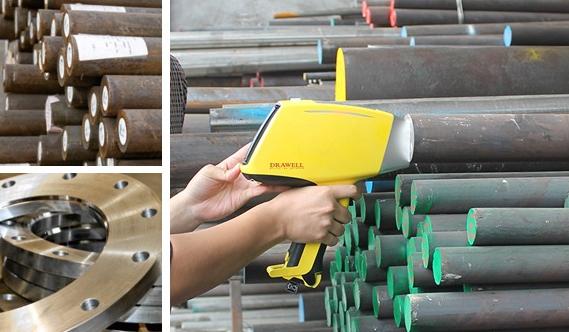
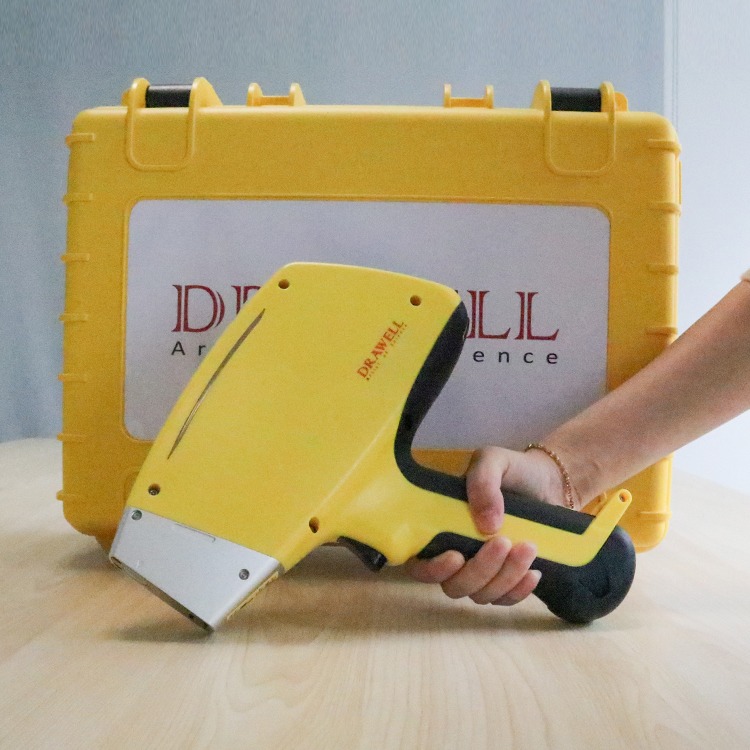
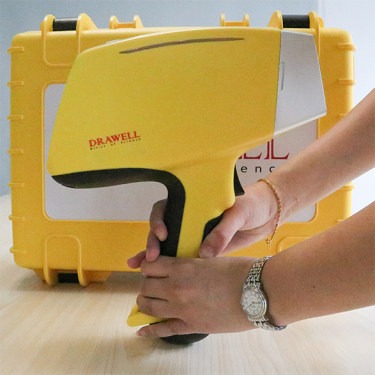
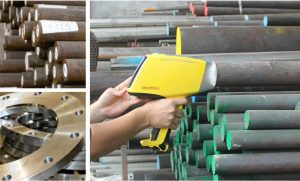
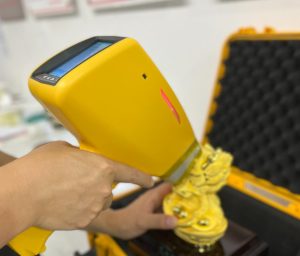
- Handheld/Portable XRF: The most popular form, known for its mobility (e.g., Drawell’s Handheld X-ray Fluorescence Spectrometer). XRF is inherently non-destructive and requires minimal or no sample preparation.
Main Features of XRF:
- Cannot detect key light elements like carbon, nitrogen, sulfur, boron, which limits its use in steelmaking
- Non-destructive and requires minimal or no sample preparation.
- Ideal for quick alloy grade identification
- Portable options available

OES vs XRF: Performance and Application Comparison
To provide a clear overview of the fundamental differences between Optical Emission Spectrometer (OES) and X-ray Fluorescence Spectrometer (XRF), the following table compares their key characteristics across critical performance and operational dimensions.
| Comparison Dimension | OES | XRF |
| Detection Range & Accuracy | Excellent. Superior for a wide range of elements, with high precision and very low detection limits. Its key strength is the accurate detection of light elements like Carbon (C), Phosphorus (P), and Sulfur (S). | Good. Effective for mid-to-high atomic number elements. However, it has a major limitation: it cannot reliably detect light elements like Carbon (C). |
| Sample Type | Primarily limited to solid, electrically conductive metals. | Very versatile; can analyze solids, powders, and liquids. |
| Detection Process | Micro-destructive. The spark excitation leaves a tiny burn mark on the sample surface, requiring sample preparation (e.g., grinding). | Essentially non-destructive. No visible damage is caused to the sample, making it ideal for finished goods. |
| Analysis Speed & Portability | Fast analysis (approx. 10-30 seconds). Equipment is typically bulky, requires an argon supply, and has poor portability (best for lab/fixed locations). | Extremely fast (seconds to tens of seconds). Handheld XRF analyzers offer excellent portability for instant, on-site screening. |
| Operation & Maintenance | Requires a high-purity argon environment and a skilled operator. Maintenance is relatively complex. | Simple to operate; many handheld models are virtually “point-and-shoot.” Maintenance requirements are relatively low. |
| Equipment Cost | The initial acquisition cost is typically higher than for XRF systems of a comparable level. | A wide range of options from handheld to benchtop; the total cost of ownership can be more advantageous. |
| Typical Application Scenarios | Precise composition control and grade identification for steel, aluminum, and copper alloys; scrap metal sorting for recycling; stringent material certification. | Rapid alloy grade sorting, scrap metal recycling, incoming material inspection, and non-destructive PMI (Positive Material Identification). |
How to Choose the Right Metal Analyzer for Your Business?
Selecting between OES and XRF is not simply about deciding which technology is “better.” Instead, the choice depends entirely on your core testing requirements. At Drawell Analytical, we recommend evaluating from the following three perspectives:
1. Consider Your Testing Requirements: Carbon Is the Key Decision Point
If your work requires precise analysis of light elements such as carbon (C), phosphorus (P), sulfur (S), nitrogen (N), or boron (B)—for example, controlling carbon content in steelmaking or distinguishing between 304L and 304 stainless steel—then OES is the only method capable of delivering the required accuracy. XRF technology cannot detect these elements at meaningful levels.
If your primary goal is quick alloy grade identification (such as differentiating between 300 and 400 series stainless steels) or analyzing mid-to-heavy elements like Ni, Cr, Mo, Cu, and carbon is not a determining factor, then XRF can fully meet your needs with much greater efficiency.
2. Consider the Application Scenario: Laboratory or Production Site?
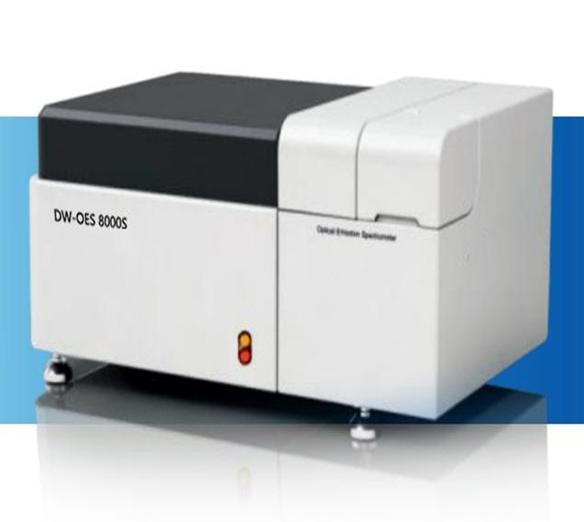
For fixed laboratory environments or production lines requiring strict quantitative analysis, a benchtop OES is the ideal solution. It provides laboratory-grade precision essential for process control.
For rapid on-site screening, nondestructive testing, or large-area material sorting—such as in scrapyards, plant sites, or outdoor operations—a handheld XRF analyzer delivers unmatched convenience.
If your inspection tasks include hard-to-reach areas (e.g., elevated platforms, pipeline trenches), the portability of handheld XRF becomes even more valuable.
3. Consider Budget and Long-Term Maintenance Costs
Initial investment: OES instruments typically have a higher purchase cost than XRF analyzers.
Operational costs: OES systems require ongoing consumables such as argon gas and may demand more skilled operators.
In contrast, XRF analyzers—especially handheld models—often offer lower total cost of ownership and simpler operation.
Drawell Analytical: Your Professional Metal Analysis Partner
As a leading supplier of analytical instruments, Drawell Analytical understands that different industries have different priorities. Beyond providing a complete technical comparison, we focus on recommending the most suitable OES or XRF solution based on your application scenario, budget, and business goals.
Our product portfolio includes high-performance OES spectrometers and portable, efficient XRF analyzers, ensuring you receive the most cost-effective and reliable solution for your metal analysis needs.
Frequently Asked Questions (FAQ)
Q1: How should I choose based on key elements, especially carbon?
A: This is the most critical decision point. If you need accurate analysis of light elements such as carbon (C), phosphorus (P), sulfur (S), nitrogen (N), or boron (B), then OES is the mandatory choice. For example, distinguishing between 304 and 304L stainless steel or precisely controlling carbon content in steel requires OES.
XRF technology cannot reliably detect these light elements.
Q2: Is “nondestructive” testing absolutely necessary?
A: If your samples are finished components, valuable artifacts, thin-walled parts, or any items where surface damage is unacceptable, then XRF’s true nondestructive nature is a decisive advantage.
OES, on the other hand, leaves a small burn mark during analysis and is therefore not suitable in such cases.
If the material is raw stock, cast ingots, or semifinished products where minor surface marks are acceptable, then both OES and XRF may be considered.

Q3: Is there an instrument that combines OES-level accuracy with XRF-level portability?
A: Technology is evolving quickly. Handheld OES analyzers offer a compromise—portable yet capable of analyzing light elements on-site, making them powerful tools for field-grade carbon sorting.
Another option is handheld LIBS (Laser-Induced Breakdown Spectroscopy), which can detect carbon in a portable format. LIBS offers portability closer to XRF but with carbon-detection capability unavailable in XRF.
However, for the highest accuracy and long-term stability, bench-top OES remains the gold standard for advanced quantitative applications.
Q4: Can XRF detect carbon, sulfur, or phosphorus in metals?
A: No, or only with extremely limited and unreliable sensitivity.
XRF has poor detection capability for very light elements below magnesium (Mg), especially C, S, and P, making it unsuitable for precise quantitative analysis. This limitation is inherent to XRF’s physical principles.
Q5: Does my metal processing plant need both OES and XRF?
A: It depends on your scale and quality requirements. Many large manufacturers or quality-critical industries use both:
- Handheld XRF for rapid screening, incoming material inspection, and nondestructive PMI
- Laboratory OES for final confirmation, furnace control, and certification reporting
This combination ensures both efficiency and precision across different workflows.
Q6: Is OES suitable for on-site or field testing?
A: Traditional benchtop OES systems are not very mobile—they typically require trolley transport and external argon cylinders, making them suitable for fixed labs or stationary testing points.
Newer handheld OES and portable LIBS instruments, however, are specifically designed for field use. They are lightweight, battery-powered, and equipped with small argon cartridges, significantly improving on-site carbon analysis capability.
Q7: How much maintenance does OES require each year?
A: OES instruments require more maintenance than XRF. Besides routine tasks such as replacing electrodes and cleaning the spark stand, they also need a continuous supply of high-purity argon.
Maintenance frequency and cost depend on usage intensity, and regular professional calibration and servicing are essential to maintain long-term accuracy.
Q8: Which instrument has a better long-term cost-performance ratio?
A: It depends on what “value” means for your business:
- If your value comes from tightly controlling carbon and other light elements, leading to improved product quality, then the higher investment in OES yields a better long-term ROI.
- If your value lies in fast grade identification, nondestructive testing, and operational efficiency, then XRF provides superior cost-effectiveness.
Think in terms of return on investment (ROI) rather than just the upfront equipment cost.
Final Words
Choosing between OES vs XRF is not about which technology is “better”—it’s about what suits your production needs.
- If your business requires high accuracy, light element detection, and strict quality control, then a direct reading optical emission spectrometer is the clear choice.
- If your priority is fast, non-destructive, on-site material identification, a Drawell XRF analyzer delivers unmatched convenience and speed.
By understanding your workflow, Drawell helps you select the most suitable solution for your factory—ensuring reliability, compliance, and long-term value in every analysis. Contact the Drawell team today at here for a tailored consultation.
Related Products Recommendation

Get Quote Here!
Latest Posts
What Next?
For more information, or to arrange an equipment demonstration, please visit our dedicated Product Homepage or contact one of our Product Managers.


