


Inductively Coupled Plasma Optical Emission Spectrometry, often shortened as ICP-OES, has kind of become one of the more essential analytical technologies in industrial labs that need rapid results, good accuracy, and multi-element coverage. As manufacturing steps get more involved, and as quality expectations keep getting tighter, sectors like metals, mining, petrochemicals, environmental testing, pharmaceuticals, food production and semiconductor manufacturing are leaning more and more on ICP-OES systems for high-throughput elemental analysis.
Compared with other traditional analytical methods, which sometimes force labs to do separate readings for each element, ICP-OES makes things easier because it can detect dozens of elements at the same time, from a single sample. That simultaneous detection helps push laboratory productivity forward, cuts ongoing operating expenses, and also enables near real-time choices in industry situations where big batches of samples need to be handled efficiently.
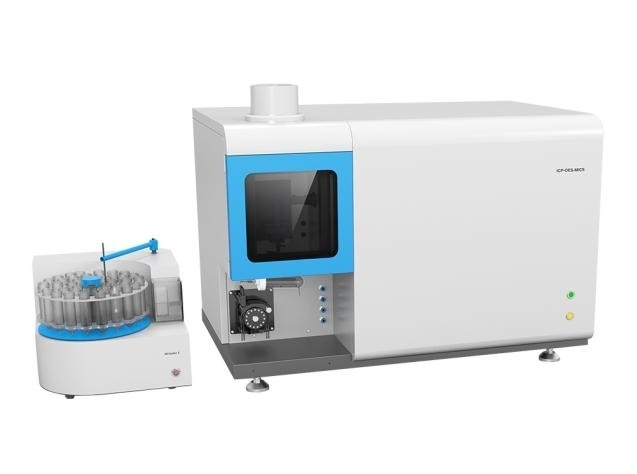
Working Principle of ICP-OES Analysis
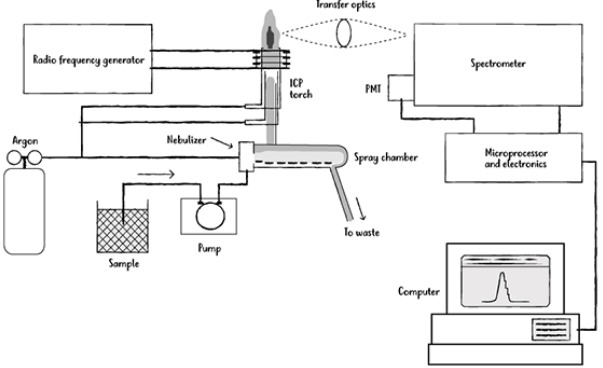
ICP-OES, basically works by running an inductively coupled plasma, made mostly from argon gas. It needs to get to really high temperatures, like about 6,000 to 10000 K. After the sample is brought into the torch, often as a fine aerosol, the intense energy field pushes atoms and ions into excited states, and yes, that part matters a lot.
Then, when those excited species relax back down to lower energy levels, they release light. That emitted radiation shows up at specific wavelengths, and every element gives its own emission pattern, so the system can pin down which elements are present, and also estimate how much there is. In practice, multiple elements can be read at the same time, which helps a lot when production labs need fast turnarounds.
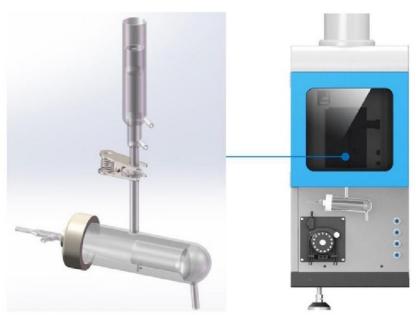
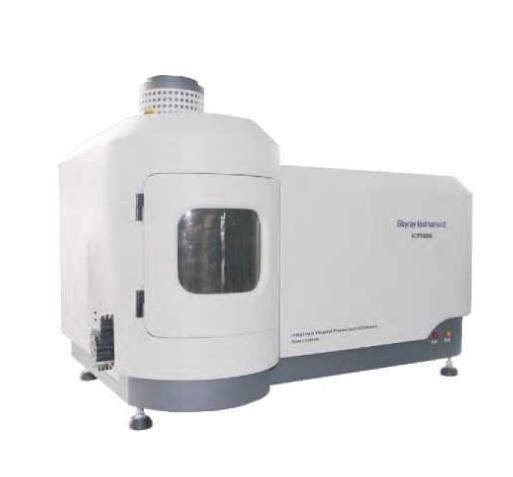
The whole system has a few important pieces, like the sample preparation system, the plasma torch, an optical section, the detector, and a software platform that keeps everything organized. With all of that working together, the method delivers high sensitivity, a broad analytical window, and steady measurement results for industrial use.
The Role of ICP-OES in High-throughput Industrial Analysis
High-throughput analysis refers to a laboratory system being able to process a high quantity of samples within a brief time span while still keeping accuracy and repeatability in place. ICP-OES spectrometer is especially fitting for that goal because it handles many elements at once, supports automation options, and gives quick measurement results, it works fast.
In industrial labs, there may be hundreds or even thousands of samples that must be assessed every day. For instance, metal producers need to keep an eye on alloy composition continuously, mining operations require rapid checking of mineral material, and environmental units must examine lots of water and soil, all of it. ICP-OES allows a lab to carry out these demanding tasks with less friction and more consistency.
Contemporary ICP-OES spectrometer can also connect to automated sample changers, laboratory information management systems (LIMS) and advanced software tools. Together, these help lessen manual involvement, strengthen workflow efficiency, and lower the chances of human mistakes occurring.
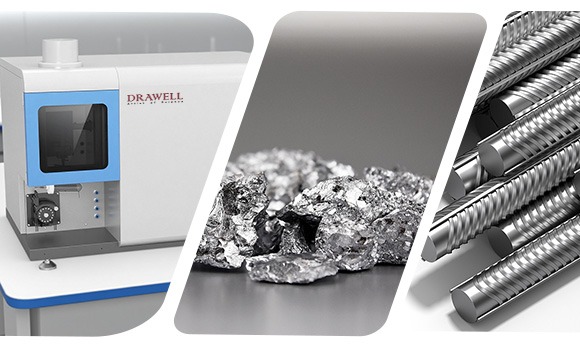
Key Advantages of Using ICP-OES for High-throughput Analysis in Industrial Laboratories
With ICP-OES equipment, labs can examine various elements at once using the same sample, so companies tend to tighten quality control, fine-tune their production flow, and also cut down on day to day operating costs.
1. Rapid Multi-element Analysis
A major benefit of ICP-OES is that it can quantify multiple elements at the same time. In contrast, older or more classic analytical approaches may demand distinct tests for each element, and that adds time and extra strain on the lab team. ICP-OES can, instead, identify dozens of elements from a single measurement cycle.
In industrial settings where labs process hundreds or even thousands of samples, that ability really multiplies productivity. For instance, a metal manufacturing lab can assess alloy makeup that includes iron, chromium, nickel, copper, manganese, plus other elements in one run, rather than doing separate determinations one by one.
This faster workflow lets labs wrap up more samples within shorter periods while still keeping analytical performance consistent.
2. High Sample Throughput
Industrial laboratories often work under tight production schedules where rapid testing is essential. ICP-OES systems are designed to support high-throughput workflows by using automation, for example automatic sample changers, robotic sample preparation systems, plus intelligent software control.
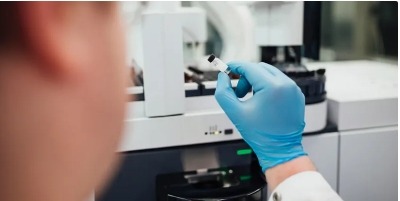
Automated sample handling cuts down on manual work and allows continuous analysis of large sample batches. In practice, laboratory technicians prepare the samples , load them into the system and then the instrument runs several measurements with minimal oversight.
Automation increases testing capacity, and it also strengthens repeatability by lowering variations that come from hands-on operation.

3. Excellent Accuracy and Precision
Accurate elemental measurement is critical in industrial uses where the material makeup directly affects product performance, and yes, even small changes matter. With ICP-OES you get strong precision and dependable repeatability, so it works well for demanding quality control needs.
The high-temperature plasma source very efficiently excites atoms and ions, then it gives off intense, fairly stable emission signals. The optical components, plus the detectors, capture those signals with high sensitivity, which supports accurate results for both the primary constituents and tiny trace-level impurities.
That matters a lot in industries like aerospace, automotive, and electronics manufacturing, because this analytical accuracy helps confirm materials meet the defined specs and expected performance targets.
4. Reduced Sample Analysis Time and Improved Workflow Efficiency
Time efficiency is a big deal in high-throughput labs. ICP-OES reduces the time spent per run, because it pairs fast measurement with simultaneous detection of elements, so the workflow feels smoother in daily use.
When compared to approaches that need separate testing routines for each element, ICP-OES reduces prep steps and cuts down on how much instrument time is used. With faster analysis, firms get quality results earlier, which helps with more rapid production choices and it also reduces the lag that often shows up during manufacturing.
In sectors that need near instant process monitoring, this quick response improves operational control and helps limit material waste.
5. Lower Operating Costs
Even though ICP-OES asks for an upfront investment, in the long run it can lead to real savings. Because it can measure multiple elements within one run, the method lowers labor demands, reduces chemical consumption, and shortens instrument usage time.
High-throughput operation also supports better laboratory resource planning. With fewer analytical actions, the expenses tied to sample preparation, upkeep, and repeated testing can be kept lower.
For large industrial facilities, these efficiency improvements can lead to substantial long-term savings, while still keeping the analytical results at a high quality level. In practice, it helps a lot later on
6. Enhanced Data Management and Digital Integration
Modern ICP-OES systems are being equipped more and more with advanced software platforms, which help with automated data processing, reporting, and laboratory connectivity.
Integration with Laboratory Information Management Systems LIMS allows automatic transfer of analytical results, which improves data traceability and reduces paperwork. Generally speaking, it makes the workflow calmer.
Digital tools also enable laboratories to track instrument performance manage analytical methods and maintain compliance with quality standards properly
All of that supports the shift toward smart laboratories and Industry 4.0 environments, where decisions are driven by data and it matters daily.
7. Reliable Performance for Complex Industrial Samples
Industrial samples often come as complex mixtures of materials that can stress analytical tools in a real-world way. ICP-OES gives strong interference management, plus flexible operating settings that help deal with different sample matrices, even when things are not straightforward.
Whether the goal is metals, chemicals, wastewater, minerals, or biological materials, ICP-OES can deliver steady performance as long as you use suitable calibration and spend time on method optimization. This reliability tends to make it a good fit for tough industrial settings, where analytical accuracy has to stay consistent across various kinds of samples.
8. Supports Environmental Compliance and Safety Monitoring
Environmental rules push industries to watch, and also control, the release of harmful elements. ICP-OES plays an important part in finding metals like lead, cadmium, chromium, arsenic, and other contaminants.
By enabling fast analysis across a large stack of environmental samples, ICP-OES helps companies keep regulatory compliance in check and roll out more effective pollution control tactics.
The high throughput capability is really helpful, especially for environmental laboratories, monitoring industrial wastewater, addressing soil contamination, and handling emissions-related samples at scale.
ICP-OES can measure elements present at high concentrations and trace elements at very low levels.
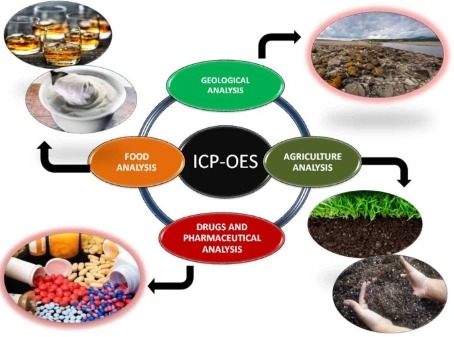
This flexibility allows ICP-OES instrument to support various Industria laboratory tasks, including:
| Industrial Application | Main Purpose | Commonly Analyzed Elements | Benefits for Industry |
| Metals and Metallurgy Industry | Analyze alloy composition, raw materials, and finished metal products to ensure material quality and performance | Iron (Fe), Chromium (Cr), Nickel (Ni), Copper (Cu), Aluminum (Al), Manganese (Mn), Titanium (Ti), Molybdenum (Mo) | Ensures accurate alloy formulation, improves quality control, and supports compliance with material standards |
| Mining and Geological Analysis | Determine mineral composition, evaluate ores, and support exploration and resource assessment | Gold-related elements, Copper (Cu), Iron (Fe), Lithium (Li), Cobalt (Co), Nickel (Ni), Rare Earth Elements | Enables rapid evaluation of large numbers of geological samples and improves mining efficiency |
| Environmental Testing | Monitor pollutants and assess environmental safety in water, soil, and industrial waste samples | Lead (Pb), Cadmium (Cd), Chromium (Cr), Arsenic (As), Mercury (Hg), Copper (Cu), Zinc (Zn) | Supports environmental compliance, pollution control, and regulatory monitoring |
| Petrochemical Industry | Detect metal contaminants in crude oil, fuels, lubricants, and chemical products | Nickel (Ni), Vanadium (V), Iron (Fe), Sodium (Na), Calcium (Ca), Magnesium (Mg) | Helps optimize refining processes, protect equipment, and improve product quality |
| Chemical Manufacturing | Monitor raw materials, catalysts, and chemical products for elemental composition and impurities | Sulfur (S), Phosphorus (P), Sodium (Na), Potassium (K), Metals and trace impurities | Improves process control, reduces contamination risks, and ensures product consistency |
| Pharmaceutical Industry | Measure elemental impurities and verify raw materials and finished products | Lead (Pb), Arsenic (As), Cadmium (Cd), Mercury (Hg), Iron (Fe), Zinc (Zn) | Ensures product safety and compliance with strict pharmaceutical standards |
| Food and Beverage Industry | Analyze nutritional minerals and detect harmful elemental contaminants | Calcium (Ca), Magnesium (Mg), Sodium (Na), Potassium (K), Iron (Fe), Heavy Metals | Supports food safety testing, quality assurance, and regulatory compliance |
| Semiconductor and Electronics Industry | Detect ultra-trace metallic contamination in high-purity materials and components | Copper (Cu), Iron (Fe), Nickel (Ni), Sodium (Na), Potassium (K), Chromium (Cr) | Maintains high material purity and improves electronic product reliability |
| Battery Manufacturing | Analyze battery materials and monitor elemental composition during production | Lithium (Li), Nickel (Ni), Cobalt (Co), Manganese (Mn), Iron (Fe), Aluminum (Al) | Supports battery performance optimization and quality control |
| Automotive Industry | Test metals, coatings, lubricants, and manufacturing materials | Chromium (Cr), Nickel (Ni), Zinc (Zn), Iron (Fe), Copper (Cu), Aluminum (Al) | Ensures component durability, corrosion resistance, and production consistency |
| Aerospace Industry | Verify high-performance alloys and advanced materials used in aircraft components | Titanium (Ti), Aluminum (Al), Nickel (Ni), Chromium (Cr), Cobalt (Co) | Provides precise material verification for safety-critical applications |
| Cement and Construction Materials | Analyze raw materials and finished products for elemental composition | Calcium (Ca), Silicon (Si), Aluminum (Al), Iron (Fe), Magnesium (Mg), Sulfur (S) | Improves material quality, production control, and product performance |
Key Factors to Consider for Implementing High-throughput ICP-OES Workflows in Industrial Laboratories
Industrial laboratories must consider several factors when implementing high-throughput workflows.
| Key Factor | Considerations for Implementation | Impact on High-throughput ICP-OES Performance |
| Sample Preparation Efficiency | Develop standardized digestion, dilution, and preparation procedures suitable for different sample types; consider automated sample preparation systems | Reduces preparation time, improves consistency, and prevents workflow bottlenecks |
| Instrument Selection and Configuration | Choose ICP-OES systems with appropriate sensitivity, plasma performance, detector technology, and automation capabilities | Ensures reliable analysis speed, accuracy, and compatibility with high sample volumes |
| Automation and Autosampling Capability | Integrate automatic sample changers, robotic handling systems, and automated calibration functions | Increases sample processing capacity and reduces manual operation requirements |
| Analytical Method Optimization | Establish optimized wavelengths, calibration methods, interference correction strategies, and operating parameters for specific samples | Improves analytical accuracy, reduces repeat analysis, and enhances throughput |
| Sample Throughput Requirements | Evaluate daily sample numbers, analysis frequency, and turnaround time requirements before system implementation | Helps determine the appropriate instrument capacity and workflow design |
| Quality Control Procedures | Implement quality control samples, calibration verification, reference materials, and performance monitoring protocols | Maintains result reliability during continuous high-volume operation |
| Data Management and LIMS Integration | Connect ICP-OES software with Laboratory Information Management Systems (LIMS) for automated data transfer and reporting | Improves data traceability, reduces manual errors, and accelerates reporting |
| Operator Training and Laboratory Skills | Provide training on instrument operation, maintenance, troubleshooting, and analytical methods | Ensures efficient operation and minimizes downtime caused by user errors |
| Instrument Maintenance Planning | Establish regular cleaning schedules, component replacement plans, and performance checks | Maintains stable analytical performance and extends instrument service life |
| Consumable Management | Ensure sufficient supply of argon gas, sample introduction components, reagents, and replacement parts | Prevents workflow interruptions caused by material shortages |
| Laboratory Layout and Workflow Design | Optimize instrument placement, sample movement paths, and integration with other laboratory equipment | Improves operational efficiency and reduces unnecessary handling time |
| Method Compatibility with Sample Types | Evaluate whether the ICP-OES method can handle metals, minerals, chemicals, environmental samples, or other industrial materials | Ensures consistent performance across diverse industrial applications |
| Data Analysis and Software Features | Select systems with automated spectral analysis, interference correction, reporting tools, and remote monitoring capabilities | Enhances productivity and supports intelligent laboratory management |
| Scalability and Future Expansion | Choose workflows that can accommodate increased sample volumes, additional applications, and future automation upgrades | Protects investment and supports long-term laboratory development |
Final Thoughts
ICP-OES is now kind of a go-to analytical solution for industrial labs that need rapid, precise, and efficient elemental analysis, more or less. The fact that it can do simultaneous multi-element detection, manage high sample volumes, and fit well with modern automation systems makes it very apt for those tough industrial systems. It’s one of those methods that just keeps up when the workload is high.
Get Quote Here!
Latest Posts


What Next?
For more information, or to arrange an equipment demonstration, please visit our dedicated Product Homepage or contact one of our Product Managers.


