


You run a sample on the rotary evaporator, it seems dry, and there is far less solvent in the receiving flask than you thought. This is a common problem for many lab users. The first guess is usually a bad condenser.
Often the problem is subtle. If you aren’t collecting all your solvent, it could be for many reasons, maybe the solvent evaporated at an uncontrolled time, or it condensed, or a combination of many small errors. This guide covers what a poor solvent recovery rate means, what can cause solvent loss during vacuum evaporation, what to check first and why additional recovery equipment is worth it.
What Does a Low Solvent Recovery Rate Mean
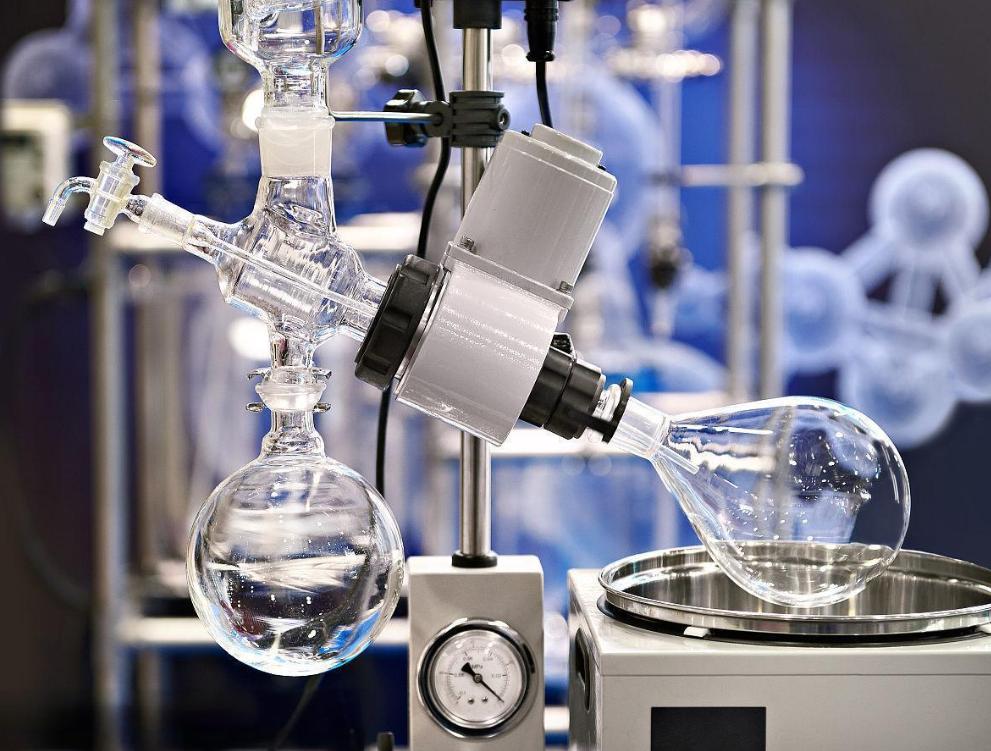
The effectiveness of solvent recovery is usually expressed in terms of the amount of solvent collected in the receiving flask compared to the amount of solvent used initially. However, a low recovery rate is not always an indication that the condenser has failed. There may be some solvent remaining in the sample or the evaporation flask, which has not yet reached the vapour stream.
That is why a low number can signal to two separate problems:
- Solvent is not completely removed. The solvent is still in the sample or in the evaporation flask thus less is available to the condenser.
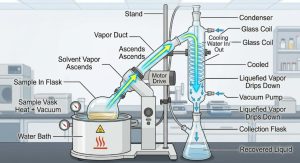
- Solvent evaporated but was not caught. The vapor flowed past the condenser and moved into the tube, or perhaps reached the pump exhaust.
A low solvent recovery rate is therefore not necessarily caused by the condenser. A first basic step is to check the evaporation flask. If there is liquid, begin with evaporation. If flask is dry check for condensation and vacuum line.
Why Does Solvent Get Lost During Vacuum Evaporation
Why can a rotary evaporator work at moderate temperatures ? The rotary evaporator evaporates solvent under lower pressure. We have found that rotary evaporator solvent recovery is commonly impaired for four key reasons.
1. The Condenser Cannot Capture All the Solvent Vapor
A condenser will only catch vapour that sticks to a cool surface long enough. If the vapour comes faster than the condenser can handle, part of it will get through.
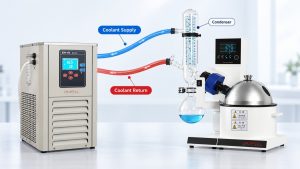
- Coolant temperature: If the coolant is excessively hot there is not much incentive for the vapour to re-condense.
- Coolant flow: If the flow is poor or uneven, one part of the condenser will be warmer than the others.
- Vapor load: Small condensers may not be able to cope with vapour load from low boiling solvents such as dichloromethane or diethyl ether.
If cooling is your main concern, our guide on why a rotary evaporator condenser is not cooling properly goes into more detail.
2. Vacuum Settings Are Not Well Matched to the Process
If you pull a strong hoover too fast you can have difficulties. The solvent may boil violently and bumping or foaming can propel liquid droplets into the vapour route. If the pressure is too low for the solvent and operating conditions the vapour load may surpass the capacity of the condenser. Usually the pressure can be released slowly enough to allow a more regulated rate of evaporation.
3. Air Leaks and Poor Connections Disrupt Vacuum Control
Air can enter the system through loose couplings, worn seals and damaged tubing. This increases the gas load on the pump, and makes it difficult to maintain a constant vacuum. If the hoover reading stays fluctuating then examine the connections before changing any other settings. These leaks are easy to detect as the gauge may still appear OK. If the hoover does not settle to a steady value check the connections before changing any settings.
4. Solvent Properties and Operating Conditions Are Overlooked
Each solution will react differently. Its boiling temperature and vapour pressure determine how fast it evaporates and how easily the vapour will travel. If the solvent has a high vapour pressure it will escape the flask quickly and will be harder to pull back again. There may be some high boiling solvent left which appears as lost recovery.
Mixed solvents provide another dimension. The more volatile element comes out first, therefore the composition in the flask is changing during the run. So the composition of the flask is changing during the run. Certain mixes also produce azeotropes, for example ethanol and water, which can boil at a fixed composition at a certain pressure. This causes variations in the volume and content of collected solvent even when the equipment is working properly.
Where to Start When Troubleshooting Solvent Recovery
Settings and maintenance can fix most recovery issues. Follow the sequence in the table below and check each point quickly. Change one factor at a time so that you can see what the effect was.
| What to Check | Possible Problem | What to Do |
| Condenser cooling | High coolant temperature or insufficient flow | Check coolant temperature and circulation |
| Vacuum control | Sudden pressure changes or unstable vacuum | Adjust the vacuum gradually |
| Seals and tubing | Loose connections or damaged seals | Inspect and replace worn components |
| Receiving flask | Poor connections or incomplete collection | Check installation and collected solvent |
| Exhaust line | Solvent vapor passes through the condenser | Check condenser cooling and consider adding a cold trap if needed |
| Heating conditions and sample load | Excessive heating or an overloaded evaporation flask produces vapor too quickly | Reduce the heating temperature or sample load and check the evaporation rate |
When Is It Worth Adding Solvent Recovery Equipment
If you have gone through the table and your recovery is still poor, the setup could be the limiting reason. Troubleshooting repairs flaws. Helpful extra equipment is included when the system is pushed to accomplish more than it was planned for. Typical symptoms are:
- High vapor load: Processing of large volumes of very volatile solvents for lengthy periods.
- Vapor still reaching the pump: You can smell solvent at the exhaust, or pump parts wear out quickly.
- Daily heavy use: Small losses accumulate in solvent cost and lab air quality.
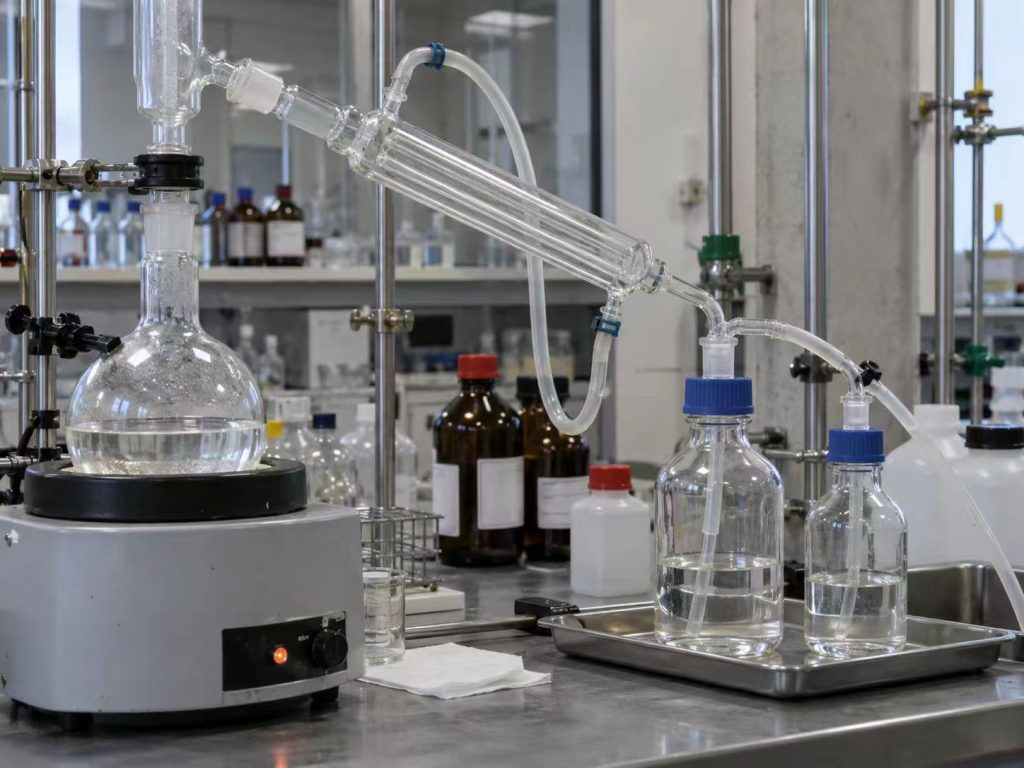
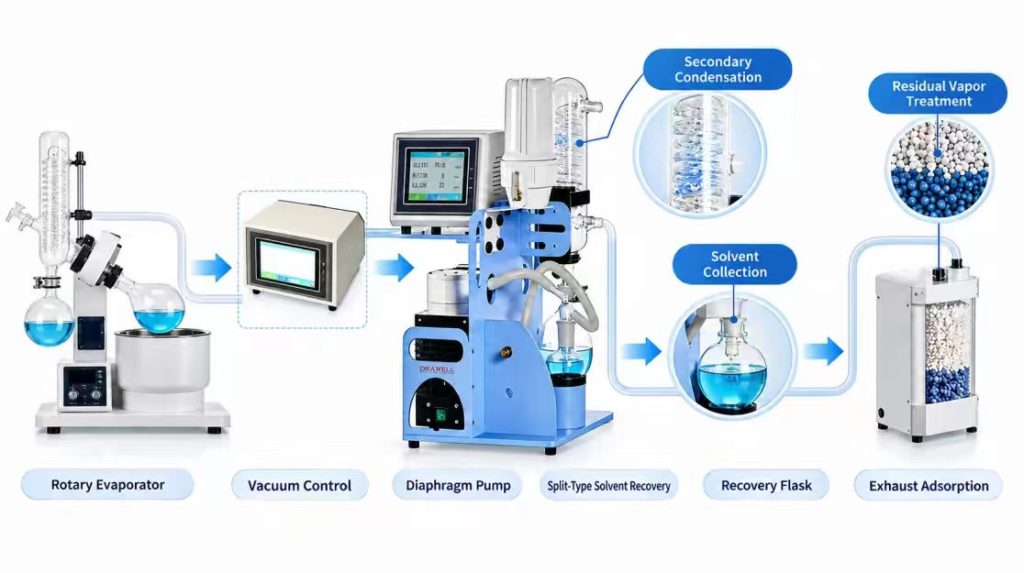
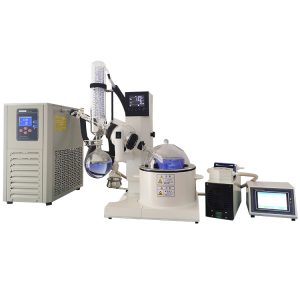
In such situations a cold trap or a specific recovery unit is employed as a second stage of capture. Drawell offers a solvent recovery device for this purpose, along with a low temperature cooling circulator for steadier condensation and a vacuum controller for smoother pressure management. These products can help improve solvent recovery and provide better control over the evaporation process.
When people ask why solvent recovery is poor, the explanation is rarely a single fault. See if the solvent never left the flask, or left and wasn’t trapped. Fix the basics, then add equipment only if the figures still don’t improve. The Drawell team is happy to discuss how to match a vacuum evaporation setup to your solvents. Contact us anytime.
Get Quote Here!
Latest Posts
What Next?
For more information, or to arrange an equipment demonstration, please visit our dedicated Product Homepage or contact one of our Product Managers.


