


Polymorphism, the capability for a compound to exist in various crystal forms, is critical in areas such as materials science, pharmaceuticals and chemistry. Different polymorphs exhibit t variations in stability, solubility, mechanical properties and bioavailability, which makes polymorph screening crucial in drug development. X-ray Diffraction (XRD) has become an effective technique for polymorph screening because of its accuracy, reliability and versatility, allowing precise identification and characterization of polymorphic forms.
Importance of Polymorph Screening
Impact on Drug Performance
Polymorphs may exhibit significant variations in dissolution and solubility that directly impact the bioavailability of drugs. The choice of the best crystal form will ensure that the drug works exactly as it is intended to do in the human body, delivering the same therapeutic benefits.
Influence on Stability and Shelf Life
Different polymorphic forms can differ in physical and chemical stability. Some are susceptible to degrade when exposed to heat, humidity and mechanical strain, but other forms maintain their properties as time passes. The identification of stable forms is vital to extend shelf life and making sure that the product is safe.
Role in Manufacturing and Formulation
Polymorphs can affect processing characteristics such as flowability, compressibility and crystallization characteristics. Screening for polymorphs enables companies to improve formulations and production processes, which reduces the possibility of failures and varying.
Regulatory and Patent Considerations
The regulatory agencies must ensure that they have a thorough identification of all polymorphic types in order to approve drug. In addition, identifying and securing new polymorphs is crucial to securing intellectual property rights as well as to avoid patent disputes.
Mitigation of Risks in Drug Development
Undiscovered polymorphic changes can result in lower efficiency, unanticipated negative side effects, or even manufacturing issues. The early screening of polymorphs reduces these risks, which can lead to more consistent development and product quality.

Why XRD is Essential for Polymorph Screening
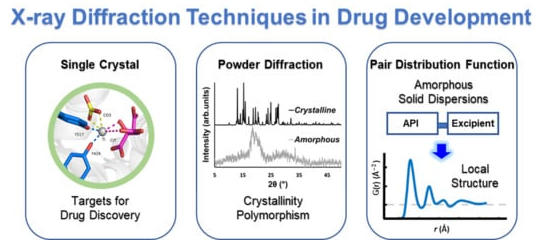
X-ray diffraction is now the primary method for polymorphs screening due to its capability to give an accurate trace of a material’s crystal structure. When X-rays interact with crystal, they create an X-ray diffraction pattern that is unique to the particular crystal arrangement. Researchers can use this technique to identify polymorphs that could look similar when using other analytical techniques, like the analysis of thermal energy or even spectroscopy.

- High Precision and Sensitivity
One of the primary reasons for XRD is important is its unparalleled precision. Even small changes in the crystal structure can be observed and analyzed, allowing you to spot subtle differences in polymorphism that can have a significant impact on the performance of drugs or their properties. The high sensitivity of the instrument ensures that even tiny amounts of different polymorphic forms are identified that is crucial for quality control and formulation development.
- Non-Destructive Analysis
Contrary to other analytical techniques which alter or consume the substance it is non-destructive. This allows researchers to study the same sample several times, or to combine XRD results with other methods for example, thermoanalysis, infrared spectroscopy or microscopy. Its non-destructive character XRD is particularly useful when working with scarce or expensive samples.
- Quantitative and Reproducible Data
Advanced XRD techniques are not only able to determine the prevalence of polymorphs, but additionally quantify the proportion of various forms within the mixture. This ability to quantify is a guarantee of the reproducibility of quality assurance and compliance with regulatory requirements making sure that your final item conforms to the specifications for performance.
- Integration into Modern Pharmaceutical Development
Due to the increasing complexity of developing drugs, XRD has become a common tool for preformulation studies for formulation optimization and regulatory submission. Automated XRD systems that have high-throughput capabilities allow for rapid screening of several samples under various conditions, speeding the development and discovery of the best polymorphic structures.
Comparative Advantages of XRD vs. Other Polymorphs Screening Techniques
This chart clearly provides the reason XRD is often preferred for accurate, sensitive, and quantitative polymorph screening compared to other analytical methods.
| Feature | X-Ray Diffraction (XRD) | Thermal Analysis (DSC/TGA) | Spectroscopy (Raman) | Microscopy (Optical/SEM) |
| Ability to Identify Polymorphs | High-quality, precise crystal structure fingerprint | Moderate-detects thermal changes | Moderate – detects molecular interactions | Low – morphology of the visual only |
| Sensitivity to Minor Forms | High – may detect tiny amounts | Low to moderate | Moderate | Low |
| Quantitative Capability | High – is able to quantify the percentages of polymorphs | Low generally qualitative | Low – qualitative/semi-quantitative | Low |
| Non-Destructive | Yes | Sometimes, the sample could be modified | Yes | Yes/No depending on sample preparation |
| High-Throughput Screening | High-end, automated systems are now available | Moderate | Moderate | Low |
| Complementary Data | Information on structural structures | Transitions and thermal stability | Molecular interactions | Surface Morphology |
| Regulatory Acceptance | High – widely used for polymorph analysis | Moderate | Moderate | Low |
| Ease of Use | Moderate – requires a specialized instrument | High | High | Moderate |
Growing Trends in XRD Use for Polymorph Screening
1. The Early Incorporation into Drug and Material Development
A major trend is the earliest introduction of XRD in the development process. In the pharmaceutical industry, XRD is now commonly used in preformulation studies to discover potential polymorphic versions of potential drug candidates. In detecting polymorphs in the early stages researchers can enhance formulation strategies, minimize the risk of downstream reactions, and increase the overall efficiency of development. In the field of the field of materials science the early XRD screening aids scientists and engineers design materials that have the desired thermal, mechanical and functional characteristics.
2. High-Throughput Screening and Automation
Technology advancements have allowed the utilization of high-throughput XRD for screening polymorphs. Automated XRD systems enable rapid analysis of several samples in a variety of conditions, speeding up the identification and analysis of polymorphs. This is especially useful for research in the field of pharmaceuticals, where the timely identification of bioavailable and stable polymorphs can drastically reduce development times. Automation can also minimize the risk for human error, and ensures consistency and reproducibility of results.
3. Integration with complementary analytical techniques
Another increasing trend is the combination of XRD and complementary techniques like thermoanalysis (DSC, TGA), infrared spectroscopy and microscopy. This multi-modal approach offers better understanding of the behavior of polymorphs that combines thermal, structural and molecular data. Through the use of multiple analytical tools in conjunction with XRD, researchers are able to better understand polymorphs and their effect on the performance of products.
4. Regulatory and Intellectual Property Drivers
The increased utilization of XRD is also influenced by intellectual property and regulatory concerns. Regulators require a thorough analysis of polymorphic forms to ensure approval of drugs, and identifying the most novel polymorphs is crucial to the protection of patents. In the end, XRD has become a vital tool, not only for understanding scientific research, but also for compliance and business goals.
Challenges and Solutions in Using XRD for Polymorph Screening
This chart outlines the the key challenges in XRD polymorph screening and practical solutions to guarantee accuracy and reliability.
| Challenge | Description | Solution |
| Poorly Crystalline or Amorphous Samples | Certain compounds are not able to form crystals with a clear shape, which leads to weak patterns of diffraction. | Make use of crystallization techniques to sample or use synchrotron XRD to achieve more sensitivities. |
| Complex Mixtures of Polymorphs | The overlapping peaks of diffraction can make it hard to distinguish distinct types. | Utilize advanced software to perform pattern deconvolution as well as qualitative phase analyses. |
| Small Sample Quantity | A lack of materials can limit the accuracy of analysis. | Utilize microvolume or capillary XRD techniques that need only quantities of samples. |
| Time-Consuming Analysis | Traditional XRD scans are slow when there are multiple samples. | Make use of high-throughput automated XRD equipment to speed up screening. |
| Instrument Calibration and Maintenance | Improper calibration could affect the reproducibility of results. | Maintain the instrument regularly as well as calibration routines and quality inspections to ensure quality. |
| Data Interpretation Complexity | Complex patterns of diffraction require skilled analysis. | Combine XRD and other methods (DSC, Raman, IR) and utilize the latest analysis programs. |
Future Directions of Using XRD in Polymorph Screening
The emerging new trends are influencing the future for XRD used in polymorph screening, bringing enhanced performance and accuracy.
Enhanced Instrumentation and Sensitivity
Technology advancements in detectors as well as X-ray sources and optics are increasing the precision and sensitivity of instruments for XRD. These advancements will permit the detection of minor polymorphic changes and trace forms of complex mix-ups. As instruments get more sensitive, scientists can collect high-quality structural data from smaller samples and speed up screening and broadening the use of XRD to precious or rare substances.
Data Analytics and Artificial Intelligence
The application in the field of artificial intelligence (AI) and machine learning for XRD analysis is a growing trend. AI helps with pattern identification, prescriptive modeling of polymorphic shapes, and in real-time analysis of diffraction patterns that are complex. AI tools can improve decision-making in screening, minimize the chance of human errors, as well as permit quicker identification of the most the most effective polymorphs to develop.
Miniaturization and In-Situ Analysis
The future XRD technology is likely to become smaller and able of in-situ analysis that allows researchers to track the process of crystallization and polymorphic transformations in real-time. This will give more insight into the way that polymorphs form alter, change and behave in various circumstances, and will allow to control and optimize drug and material development.
Regulatory and Industry Impact
As the expectations of regulators for solid-state characterization continue to rise, XRD will remain an vital tool for ensuring compliance. The combination of increased accuracy, automation, as well as AI-driven analysis will help to comply with the strict requirements of regulatory authorities and safeguard intellectual property by the detection and documentation of new polymorphs.
Summary
XRD has proven itself to be an essential tool for polymorph screening, proving precise, non-destructive and sensitive analysis of crystalline forms. The growing use of XRD reflects the increasing complexity of drug development and the need for precise characterization to ensure safety, efficacy, and regulatory compliance.
Related Products Recommendation
Get Quote Here!
Latest Posts


What Next?
For more information, or to arrange an equipment demonstration, please visit our dedicated Product Homepage or contact one of our Product Managers.


