


PRP therapy has become a popular treatment in aesthetic medicine for skin rejuvenation, hair regeneration and more. But there is one thing that a lot of clinics don’t know: treatment quality starts with consistent PRP preparation, and that’s very dependent on the centrifuge.
A lot of attention goes to picking the correct PRP kit or training the staff on the injection procedure, while the centrifuge itself is an afterthought. In practice, the incorrect machine can mean irregular platelet yields and wasted samples, as well as unpredictable outcomes from session to session. In this article you will learn how PRP centrifugation actually works, which features matter when buying, and how to match a centrifuge to the real demands of your clinic.
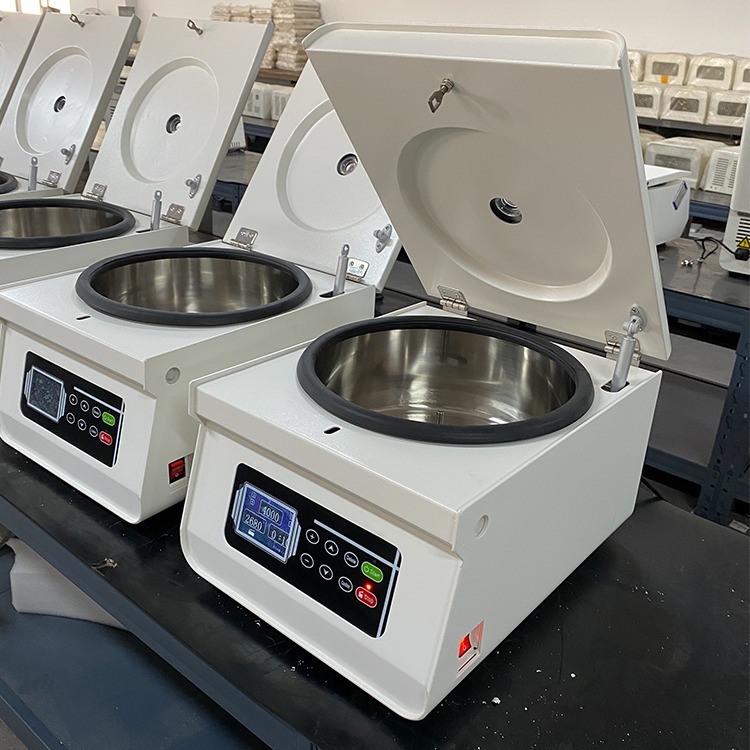
How PRP Centrifugation Works
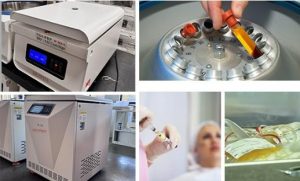
A centrifuge separates the whole blood into components. A centrifuge spins samples at a predetermined speed. This creates a force called the centrifugal force. This force forces denser components to settle outward.
Red blood cells settle at the bottom, plasma remains at the top, and platelet-rich plasma is collected according to the specific preparation protocol, often from the plasma layer above the buffy coat or together with part of the buffy coat, depending on the PRP system.
What is often missed is that good PRP preparation is not merely a matter of speed. It depends on the proper combination of relative centrifugal force (RCF), spinning time, and the precise centrifugation regimen you are following.
Two centrifuges running at the same RPM can generate drastically different results if the rotor radii are different, because it is RCF that physically acts on the blood, not RPM alone. That’s why there are several PRP kits with their own recommended protocols and why the centrifuge has to be able to perform those protocols precisely each and every time.
Why the Right PRP Centrifuge Matters
PRP quality directly affects treatment consistency. If the centrifuge cannot reliably reproduce the same conditions across runs, platelet concentration will vary, and so will what patients experience. This kind of variability is particularly damaging for clinics that have built their reputation on predictable outcomes.
The centrifuge has an impact on daily work as well as on sample quality. If the machine is difficult to use, tough to clean, or prone to errors, slowing down workflow. For clinics that regularly offer PRP, long term reliability is more important than peak performance requirements. A centrifuge that can be used hundreds of times with little maintenance is worth a lot more than one that looks good on paper but demands ongoing attention.
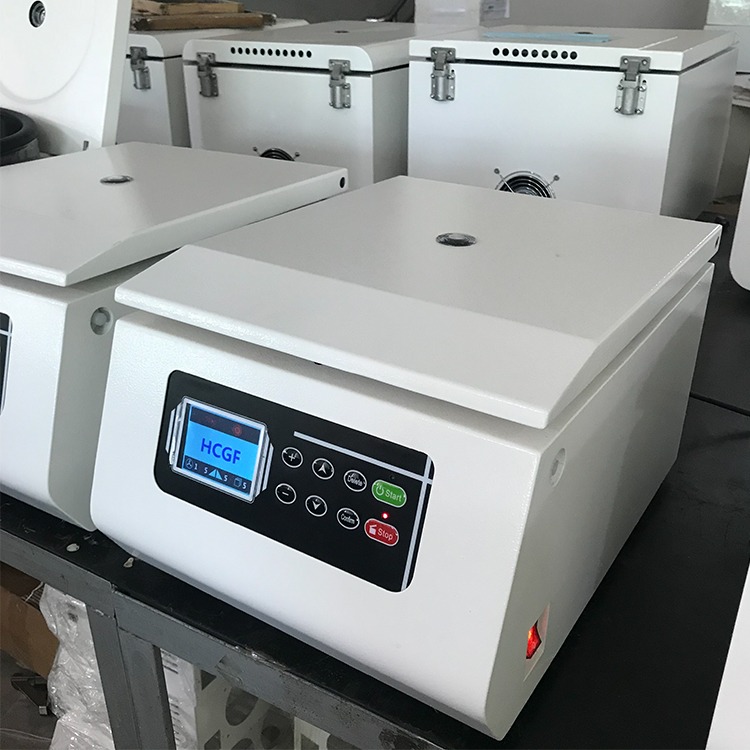
What to Look for When Buying a PRP Centrifuge
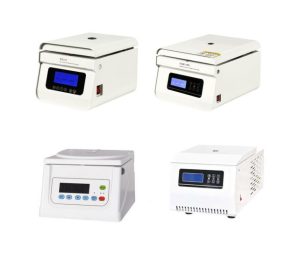
Instead of comparing raw specs, it is useful to compare a PRP centrifuge in a few practical criteria. Below are the important PRP centrifuge features to consider:
- Speed Control: Does it allow precise adjustment to meet the RCF required by your protocol? Different PRP preparation protocols call for different settings, so a fixed-speed machine limits your options. Full control over both speed and time is a basic requirement.
- Rotor Compatibility: Will it work with the PRP tubes you already use? Fixed-angle and swing-out rotors behave differently during separation, so confirm which type suits your protocol. Easy rotor swapping is worth considering if you handle multiple tube formats.
- Preset Programs: The ability to save often used PRP programs for one touch recall for routine sessions helps reduce operator error and ensures uniform outcomes across staff.
- Safety Features: Lid lock, automatic imbalance detection, and auto-stop are non-negotiable. These protect both the person operating the machine and the samples inside.
- Daily Ease of Use: Clear display, quiet motor and easy-to-clean surfaces may seem like a small detail. In a clinic, tiny irritations can accumulate quickly over time.
- Maintenance and Service: How easy is it to replace parts? Do you have local technical support? A centrifuge that is very difficult to service or repair will cost more than it seems to cost at the time of purchase.
With those points in mind, here is a quick summary:
| Feature | Why It Matters |
| Adjustable speed | Supports different PRP protocols |
| Adjustable time | Improves preparation consistency |
| Compatible rotor | Fits commonly used PRP tubes |
| Preset programs | Saves time and reduces errors |
| Safety protection | Protects users and samples |
| Low vibration | Improves stability |
| Easy maintenance | Reduces downtime |
Is a Higher PRP Centrifuge Speed Always Better
Not necessarily. This is one of the most common misconceptions in the purchase process of PRP centrifuges.
RPM informs you how fast the rotor is spinning, but it doesn’t tell you how much force is being applied to the sample. This is what RCF (relative centrifugal force, expressed in x g) is and this is the value that really determines blood separation. As explained by centrifuge physics, two machines running at the same RPM can provide different RCF values based on the rotor radius. A tiny rotor spinning at high RPM may generate less force than a large rotor spinning at lower RPM.
RCF, spin time and rotor type all contribute to the outcome of PRP preparation. Most PRP kit makers provide an RCF range not an RPM target and matching that range is what produces consistent results. A good centrifuge for clinical work is not just about the top speed it can go, it’s about the consistent performance you get session after session, when you follow the protocol.
Which PRP Centrifuge Fits Your Clinic
There is no specific PRP centrifuge machine that is the optimum one for all settings. The best decision relies on your frequency of PRP treatments, number of samples processed at one time and the amount of protocol variation your clinic has to support.
A helpful way to approach this is to think in terms of clinic type:
| Clinic Type | Suggested Features |
| New aesthetic clinic | Easy operation, preset programs |
| Growing clinic | Higher throughput, multiple tube capacity |
| Multi-treatment center | Flexible protocols and adjustable settings |
| High-volume clinic | Durable construction and continuous operation |
A smaller clinic doing a few PRP sessions a week has completely different priorities than a large multi-treatment center doing back-to-back appointments all day. It doesn’t matter if the spec sheet says it should; it’s about if the machine actually works with the way your team works.
Questions Worth Asking Before You Buy
Before finalizing a purchase, work through these questions:
- Does it support the PRP tubes your clinic already uses?
- Are both speed and time fully adjustable?
- Is routine maintenance something staff can handle in-house?
- What warranty and technical support come with the machine?
- Can it maintain consistent performance under frequent daily use?
If a supplier cannot answer these clearly and specifically, that is useful information in itself.
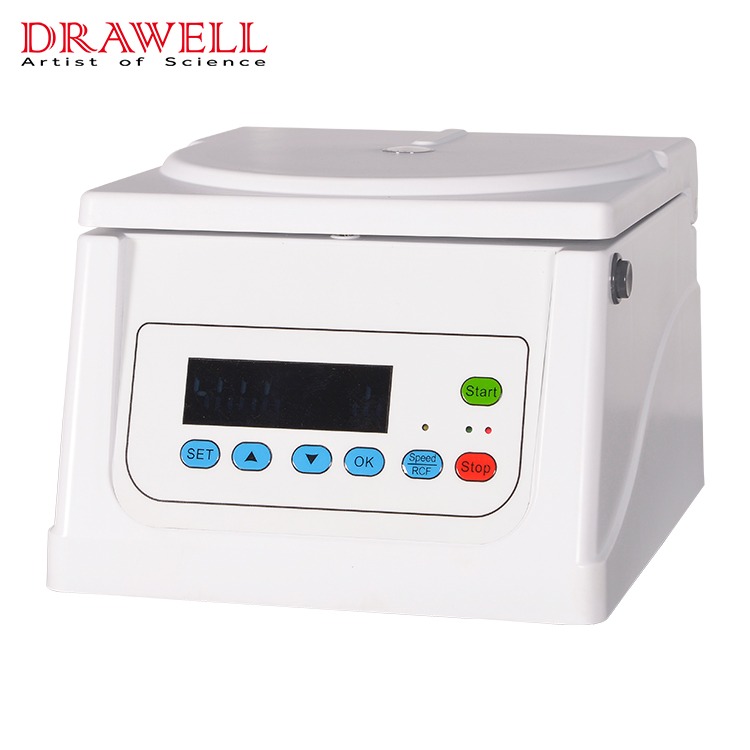
Choose Equipment That Supports Consistent Results
A good PRP centrifuge is not defined by a single specification. It is stable in performance, simple in operation and has the kind of reliability that lasts for years of clinical use. The right machine supports your workflow rather than complicating it.
At Drawell, we design centrifuge solutions for clinical and laboratory environments where consistency and durability are real requirements. If you are building or upgrading a PRP program, contact our team to find a solution that fits your actual treatment volume and workflow.
Get Quote Here!
Latest Posts


What Next?
For more information, or to arrange an equipment demonstration, please visit our dedicated Product Homepage or contact one of our Product Managers.


