


An asphalt viscosity test measures how resistant asphalt binder is to flow at certain conditions, which include temperatures. Because there are multiple ways of testing asphalt, results can differ significantly depending on the procedure. These results will include both apparent viscosity and kinematic viscosity. Therefore, any comparisons should not be made unless both ways of testing asphalt use the same procedures.
Usually, as the asphalt becomes hotter, the viscosity decreases. The testing can assist in construction related viscosity problems. Examples of these would be storage, pumping, transporting, mixing and laying asphalt.
This article explains the methods used to test the viscosity of asphalt, standards and the different types of testing, the processes used when testing with rotational viscometer and the criteria when choosing testing apparatus.
Why Is Asphalt Viscosity Testing Important?
Evaluating Asphalt Flow During Handling and Processing
Since different temperature environments alter the flow properties of asphalt, those who use the material on a daily basis (such as storage and transport) must understand its flow properties at different temperatures.
This material should be transported, placed, mixed, coated and then the final compacted temperature should be based on the viscosity of the asphalt. Although the material used should meet other specifications, its viscosity can’t alone determine the suitability of the asphalt.
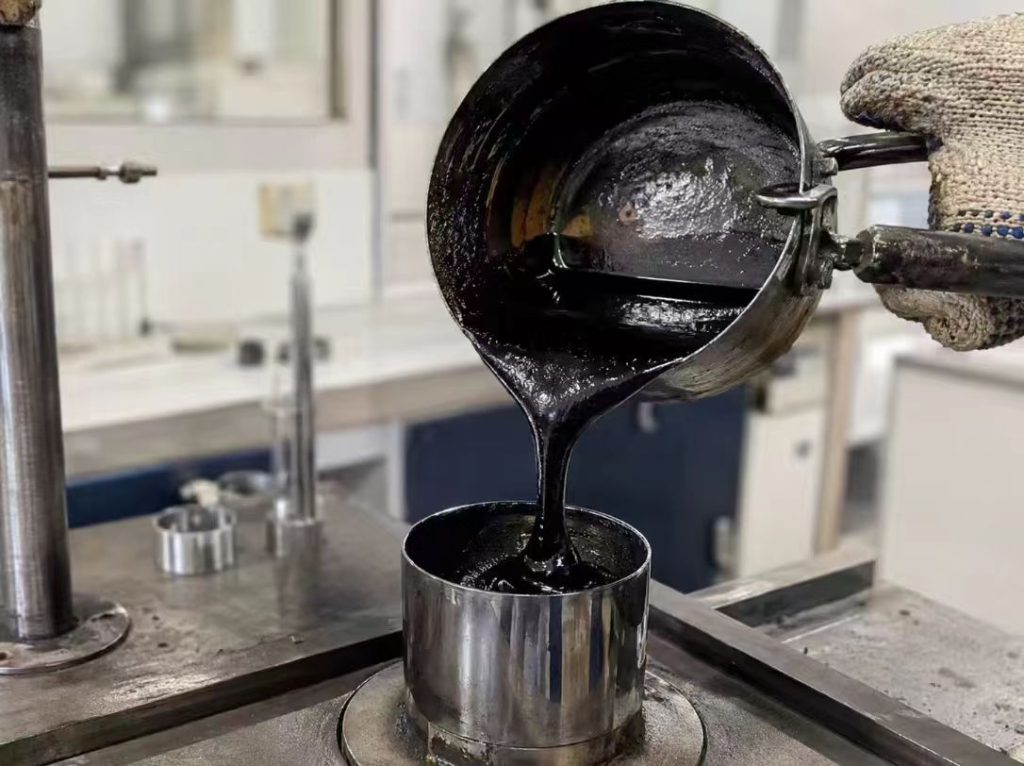
Understanding the Relationship Between Temperature and Viscosity
Viscosity of asphalt decreases as temperature increases. As viscosity of the material decreases, its flow increases. This makes control of asphalt temperature the most important aspect of viscosity measurement. Therefore, strict control of sample temperature is necessary to ensure comparability between different batches or samples.
Supporting Asphalt Binder Quality Control
Viscosity tests help laboratories with the evaluation of consistency from batch to batch. For laboratories conducting these tests, consistency from batch to batch can be achieved by applying the same conditions.
These tests can identify asphalt modification with additives. Asphalt can also have fluid-like characteristics. When evaluating additives in asphalt, these tests can be misleading because the actual conditions (shear, temperature, etc.) can greatly alter results.
What Are the Common Methods Used in Asphalt Viscosity Tests?
Asphalt viscosity tests are often categorized into different test methods, temperature conditions and measuring principles, the main categories being:
- Rotational Viscosity Tests
- Capillary Kinematic Viscosity Tests
- Vacuum Capillary Tests
Test methods will yield results based on the different measuring conditions and measuring principles, making direct comparison of different values difficult.
Rotational Viscosity Test (ASTM D4402)
ASTM D4402/D4402M test method determines asphalt viscosity, using a rotational viscometer, across a range of temperatures from 40 to 260 °C. The torque measurement is converted into an apparent viscosity based on the shear between the spindle and sample.
Different combinations of temperature, spindle speed, spindle size and test system, will affect the viscosity measurement. Comparison of modified asphalt measurements must be made at similar temperature, shear rate and shear history.
Kinematic Viscosity Test (ASTM D2170)
The ASTM D2170/D2170M standard specifies a method to measure the viscosity of liquid asphalts, road oils, and residues of distillation of liquid asphalts, by timing the flow of the asphalt through a capillary tube at 60 °C. For asphalt cements, the test is performed at 135 °C. The viscosity measured is the kinematic viscosity, and is reported in either mm²/s or cSt.
The apparent viscosity measurements using the rotational method are not the same as kinematic viscosity.
Vacuum Capillary Viscosity Test (ASTM D2171)
The ASTM D2171/D2171M standard specifies the method for testing the apparent viscosity of asphalt binders at 60 °C, using a vacuum capillary viscometer.
A majority of modified asphalt binder formulations used for testing are non-Newtonian in behavior at test conditions. Hence, apparent viscosity measurements on different materials are highly dependent on the shear rate. It is therefore crucial to consider material and test parameters for comparison.
Table 1 Comparison of the Various Asphalt Viscosity Methods
| Viscosity Test Method | Reference Standard | Equipment Required | Unit/Result |
| Rotational Viscosity Method | ASTM D4402 | Rotational Viscometer | Apparent Viscosity |
| Kinematic Viscosity Method | ASTM D2170 | Capillary Viscometer | Kinematic Viscosity |
| Vacuum Capillary Method | ASTM D2171 | Vacuum Capillary Viscometer | Apparent Viscosity |
Please Note: Direct comparisons and/or conversions between different test results should not be attempted as they represent different test methodologies.
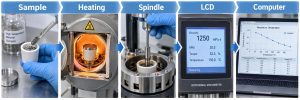
How to Perform an Asphalt Viscosity Test Using a Rotational Viscometer
This chapter outlines the basic concept behind rotational viscosity tests. For a specific testing procedure using the ASTM D4402 standard, refer to the actual standard document.
Prepare the Asphalt Binder Sample
Follow sample requirements. Be sure the sample is a good representation and avoids any clear flaws, bubbles, or contamination. To be able to perform the test, heat the sample so it flows.
Avoid reheating unless absolutely necessary, to avoid damage to the sample from excessive high temperatures.
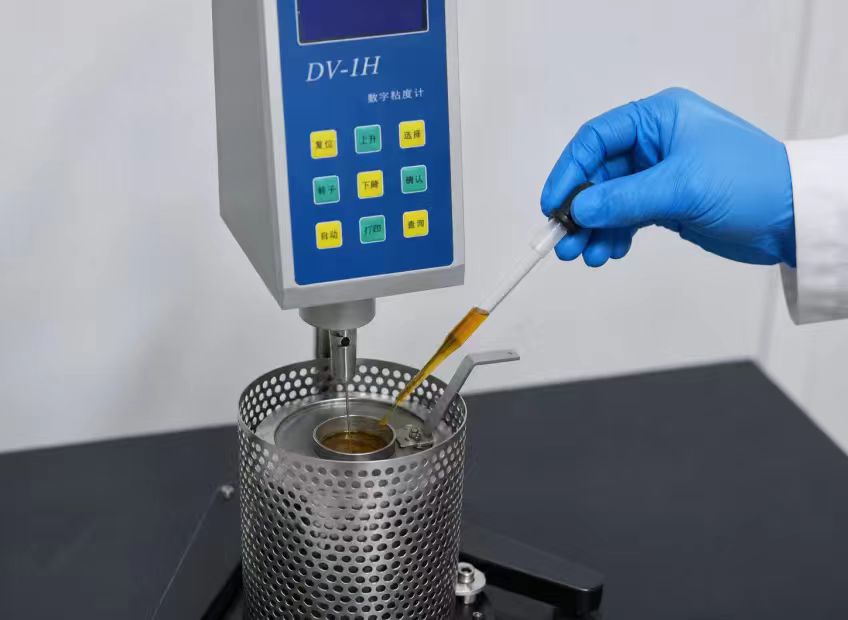
Set the Required Test Temperature
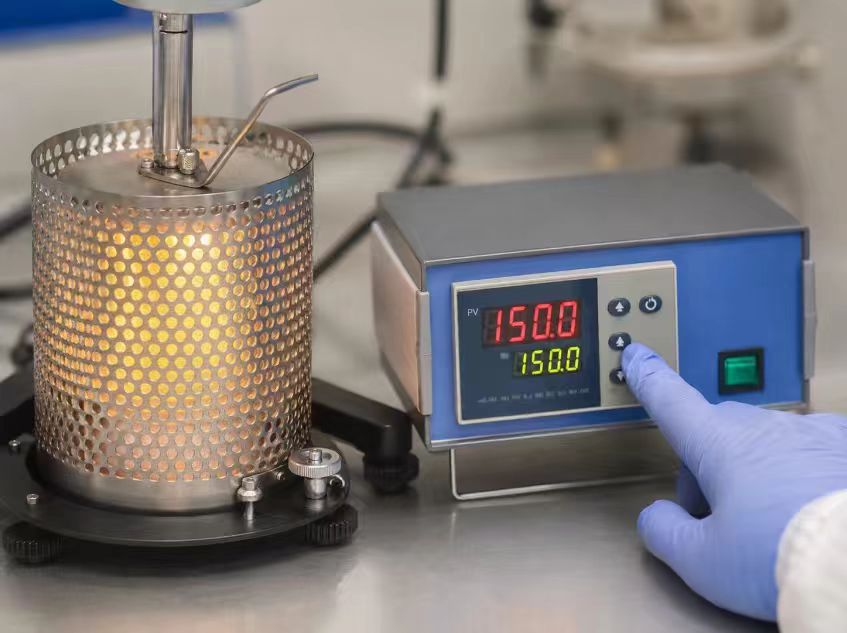
Depending on the chosen testing method, perform sample, spindle, and sample container preheating and temperature control to reach the target temperature.
Maintain sample temperature during measurement. Avoid temperature fluctuations.
Select the Spindle and Rotational Speed
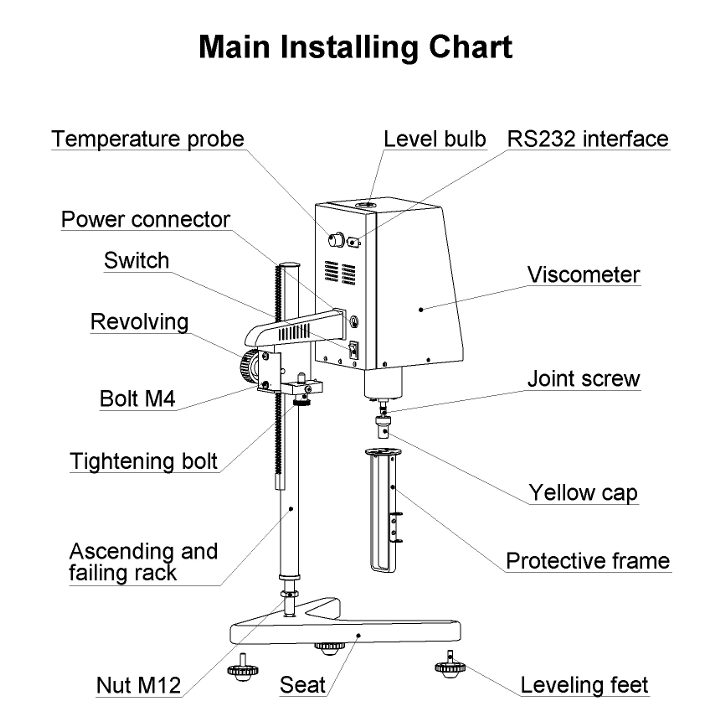
Spindle and rotational speed selection depends on sample viscosity range, equipment, and standard used. The spindle must be positioned correctly with proper depth of immersion.
Measure and Record the Apparent Viscosity
Be mindful of the meaning of the viscosity results. Do not compare the results from different tests unless similar temperature, speed, spindle, and shear history were used. When evaluating results for modified asphalts that demonstrate non-Newtonian behavior, consider the particular shear history.
Interpret the Test Results
It is essential to correctly interpret the physical meaning of the measured apparent viscosity. When comparing test results of different samples, conditions such as temperature, rotational speed, rotor configuration, and shear history should be kept as consistent or similar as possible. For modified asphalt exhibiting non-Newtonian behavior, the measurement results should also be interpreted in conjunction with specific shear conditions.
What Factors Affect Asphalt Viscosity Test Results?
Test Temperature
Asphalt has a very low tolerance for changes in temperature. Fluctuations in temperature lead to changes in flow resistance, and temperature instability during testing can cause measurement error.
Therefore, measurements should be compared at similar temperatures, and test temperatures should be logged.
Rotational Speed and Shear Conditions
Both the rotational speed and spindle structure affect the shear conditions the sample experiences. Modified asphalts, which have non-Newtonian flow properties, will exhibit variation in their measured apparent viscosities with different rotational speed and shear conditions.
Sample Preparation and Homogeneity
Reading fluctuations can often be attributed to improper sample preparation. A test’s repeatability and accuracy will be significantly reduced if there is visible inhomogeneity, small bubbles, or contaminants in the sample.
Instrument Condition and Measurement Consistency
The instrument status, the concentricity of rotor installation, and the consistency of the measurement system all affect the repeatability of the test results. Therefore, the instrument status should be checked regularly, and viscometer calibration should be performed to maintain the stability of the measurement system.
How to Choose a Viscometer for Asphalt Testing?
A purchasing plan for an asphalt viscosity tester should consider the intended method of use, test temperature and test sample viscosity requirements. It is best to purchase equipment with functionality that meets these requirements.
Choose the Instrument Based on the Required Test Method
It is essential to clarify the laboratory test requirements.
An example would be a need to perform ASTM D4402 testing. Rotational viscometers of this type should be used with a configuration suitable for temperature control. All of the features and equipment need to support the testing according to standard requirements.
If testing ASTM D2170/ASTM D2171, capillary or vacuum capillary viscometer systems should be used.
Note: a viscometer having high-temperature rotational heating capabilities does not mean that the viscometer is suitable for replacing a capillary type viscometer or satisfies ASTM D4402 testing requirements.
Match the Viscosity Range to the Asphalt Sample
Selecting a viscometer should be done according to the expected range of viscosity for most of the routine samples measured. Note also that measuring high viscosity may present different demands than low viscosity.
Checking the Temperature Control Capability
A system of high priority for viscometers is temperature control. It should have a display and should control temperature for any test as required.
Choose Digital Viscometers with High Temperature capabilities for Asphalt Applications
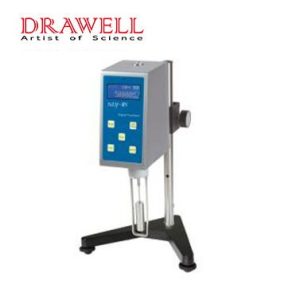
For laboratories needing to measure the viscosity of melted substances (including asphalt) at elevated temperatures, digital rotational viscometers capable of controlling the test temperature while performing rotational viscosity measurements would be suitable. Two models are offered by
Drawell : HBDV-2H and LVDV-2H.
The specifications for these two viscometer models can be seen in the following table and help you to quickly identify the range of viscosities each is capable of measuring, as well as the ranges of their temperature control.
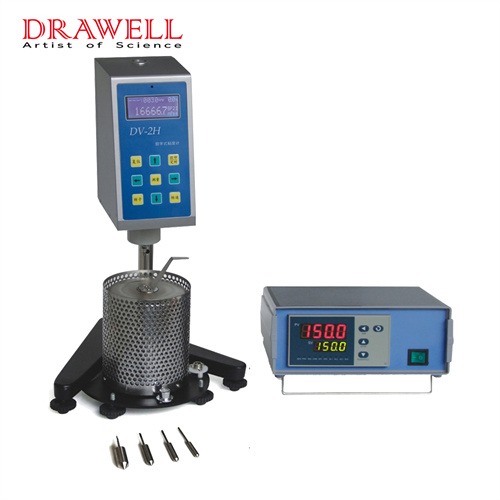
For more advanced features such as the use of various spindle attachments or particular testing methodologies, sample characteristics, etc., more advanced details can be reviewed on each individual viscometer specification page:
| Product Model | Viscosity Range | Temperature Range | Rotation Speed |
| HBDV-2H | 400 – 80,000,000 mPa.s | Room Temperature + 10°C – 300°C | 0.1 – 200 RPM |
| LVDV-2H | 5 – 1,000,000 mPa.s | Room Temperature + 10°C – 300°C | 0.1 – 200 RPM |
Remember, a system rated for the high temperature and viscosity doesn’t mean it will perform accurately according to the ASTM D4402 method. Even when utilizing the ASTM procedure, some flexibility is allowed, so we still need to verify the test equipment.
Conclusion
Asphalt must be tested and understood regarding its viscosity. This is helpful to both processing as well as quality control. To make meaningful measurements of viscosity, we need to know the three most common tests and measurements and how they are different from one another, and we must never combine different testing procedures and the different measurement results they provide.
A lab needs to test viscosity on its asphalt products with the appropriate viscosity measuring instrument. Some factors the lab needs to consider when selecting an instrument are the viscosity tests required of its asphalt products, sample viscosity, and temperature of the samples tested. These considerations will assist the lab in selecting an appropriate testing instrument to generate meaningful and consistent testing results.
Get Quote Here!
Latest Posts


What Next?
For more information, or to arrange an equipment demonstration, please visit our dedicated Product Homepage or contact one of our Product Managers.


