


When you need to know whether a liquid is too thin, too thick, or simply consistent from one batch to another, viscosity measurement gives you a practical way to find out.
A digital viscometer is an instrument used to measure the viscosity of a fluid. Viscosity describes a fluid’s resistance to flow. Water flows easily because it has relatively low viscosity, while materials such as honey, coatings, oils, and some adhesives flow more slowly because they offer greater resistance to movement.
Digital viscometers are widely used in laboratories and quality control because they can provide a direct viscosity reading under defined test conditions. Depending on the instrument, the reading can be affected by the selected spindle, rotational speed, temperature, and sample condition, so these factors need to be controlled when results are compared.
Viscosity is commonly reported as dynamic viscosity, using units such as mPa·s or cP. The two units are numerically equivalent: 1 mPa·s = 1 cP. The SI unit for dynamic viscosity is Pa·s.
A digital viscometer is useful for routine testing of materials such as oils, paints, coatings, adhesives, food products, cosmetics, pharmaceuticals, detergents, and other liquid or semi-fluid materials. Drawell’s current digital viscometer range covers different viscosity ranges, rotational speeds, spindle configurations, and high-temperature applications.
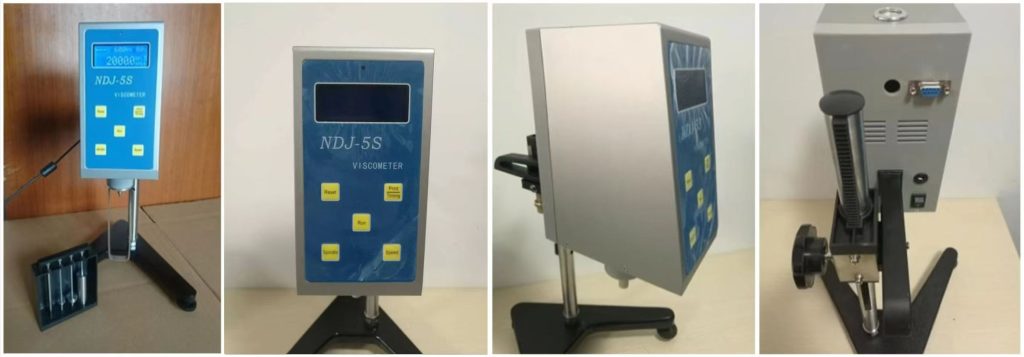
Working Principle of Digital Viscometer
A digital rotational viscometer measures viscosity by observing the resistance produced when a spindle rotates in a sample at a controlled speed.
The basic idea is simple: the harder it is to rotate the spindle, the greater the resistance produced by the fluid. The instrument detects this resistance as torque and converts the measurement into a viscosity reading based on the selected spindle and rotational speed.
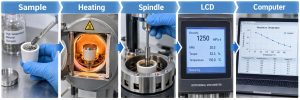
1. Zero Check
Before measurement, the instrument should be checked and set to zero according to the manufacturer’s operating procedure.
For a conventional rotational viscometer, this is normally done before the spindle is immersed in the sample.
2. Spindle Immersion
The appropriate spindle is installed and immersed in the sample to the specified level.
The spindle should be properly positioned because its geometry and immersion depth are part of the measurement conditions.
3. Controlled Rotation
The motor rotates the spindle at a selected speed.
Different spindle and speed combinations provide different measurement ranges. Therefore, the speed is not simply a setting that can be changed without considering the sample and the required test conditions.
4. Torque Measurement
As the spindle rotates, the sample resists its movement.
A higher-viscosity material generally produces greater resistance to rotation than a lower-viscosity material under comparable test conditions. The instrument detects this resistance as torque.
5. Viscosity Calculation and Display
The instrument uses the measured torque together with the selected spindle and rotational speed to calculate and display the viscosity.
Modern digital viscometers can also display other test information at the same time. For example, Drawell’s digital viscometers can display viscosity, rotational speed, spindle number, torque, and temperature depending on the model.
Important: A viscosity value should not be viewed as a standalone number. When comparing measurements, the test temperature, spindle, rotational speed, sample condition, and measurement procedure should also be considered.
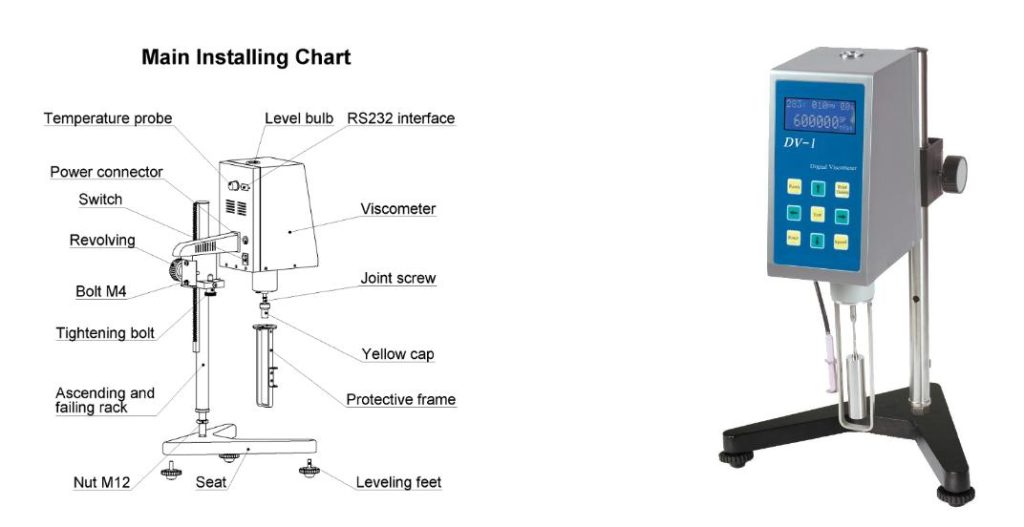
Components of a Digital Viscometer
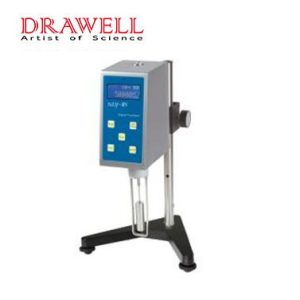
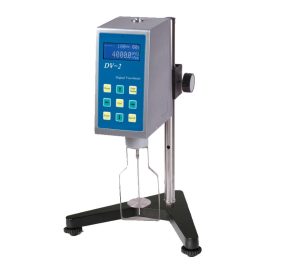
The exact design varies between models, but a typical digital rotational viscometer includes several key parts that work together to produce a viscosity reading.
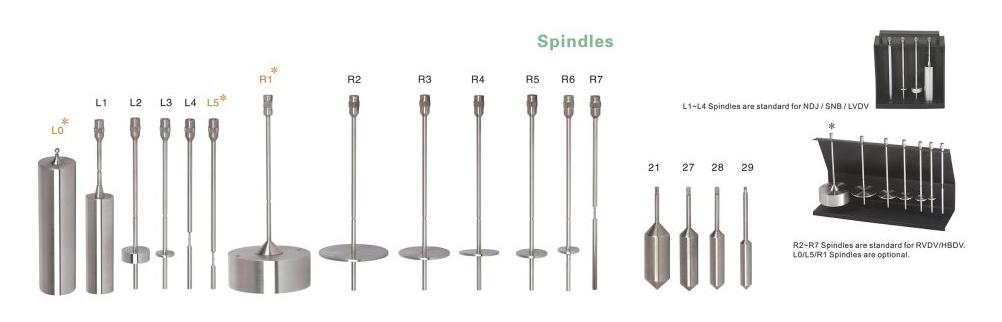
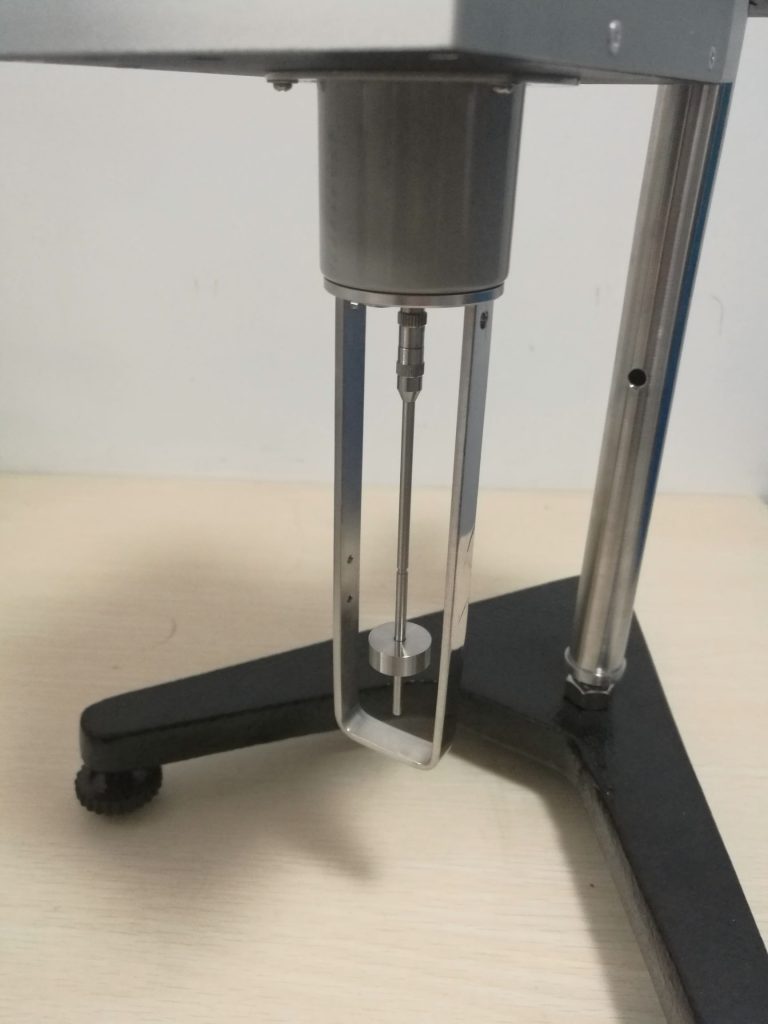
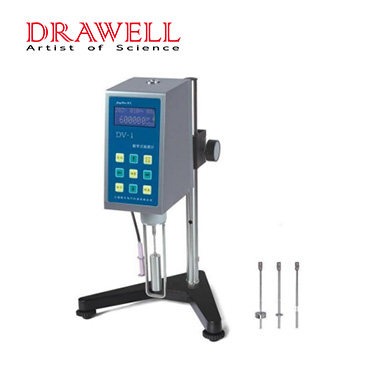
Spindle
The spindle is the part that rotates in the sample.
Different spindle geometries are used for different viscosity ranges. Choosing a suitable spindle is important because the spindle and rotational speed together determine the usable measurement range.
For example, Drawell’s NDJ-5S uses L1, L2, L3, and L4 standard spindles, while its RVDV and HBDV series use different spindle sets for higher-viscosity applications.
Motor and Drive System
The motor provides the controlled rotation required for the test.
A stable rotational speed is important because changing the speed can change the measurement conditions, especially when testing non-Newtonian materials.
Torque Measurement System
The torque measurement system detects the resistance produced by the sample as the spindle rotates.
This measurement is then used to determine the viscosity value displayed by the instrument.
Display and Control System
The digital display allows the operator to monitor the test without manually reading a mechanical dial.
Depending on the model, the display may show:
- Viscosity
- Rotational speed
- Spindle number
- Torque
- Temperature
- Maximum viscosity available at the selected spindle and speed
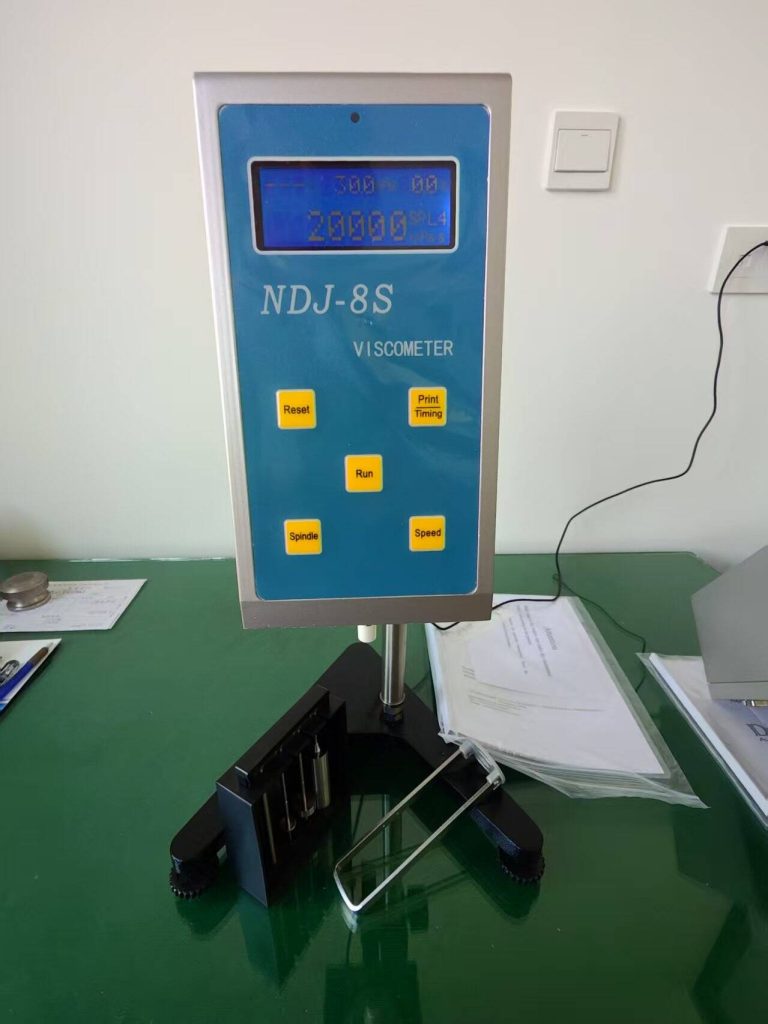
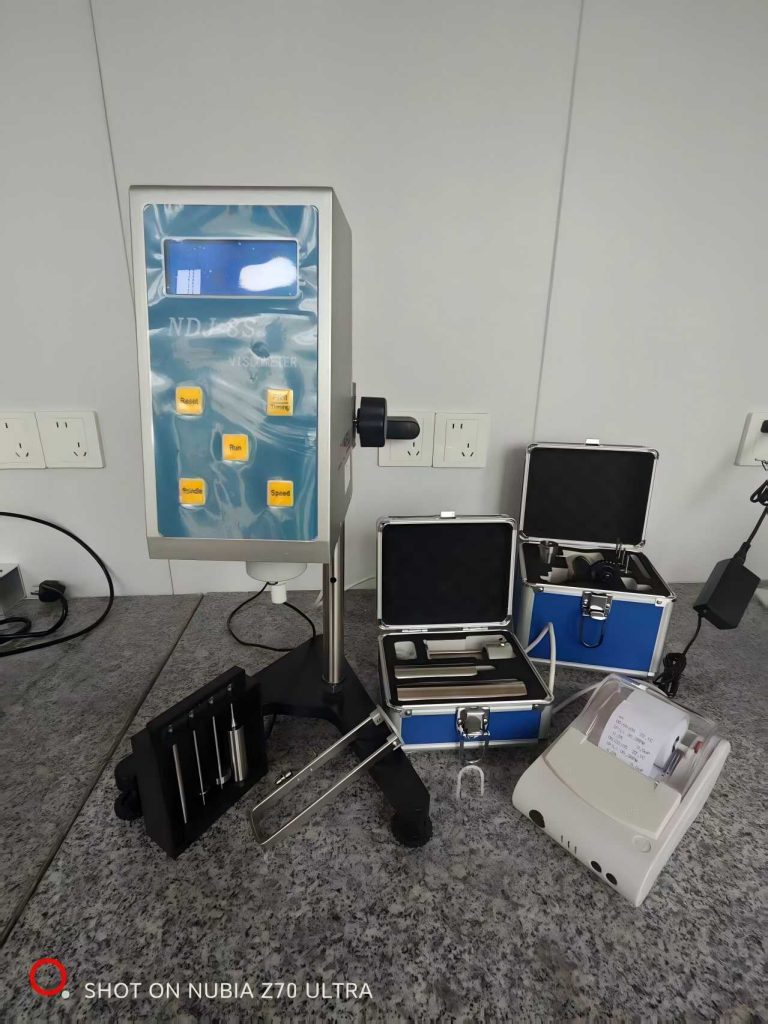
For example, the NDJ-5S display provides viscosity, speed, torque, spindle information, and the maximum viscosity that can be measured under the selected spindle and speed combination.
Stand and Leveling System
Many laboratory digital viscometers are mounted on a stand with leveling feet.
Keeping the instrument properly positioned helps maintain consistent test conditions.
Temperature Control and Accessories
Temperature control is not necessarily built into every digital viscometer, but it can be important when viscosity changes significantly with temperature.
Depending on the application, accessories may include:
- Temperature probes
- Temperature-controlled heaters
- Small sample adapters
- Low-viscosity adapters
- Printers
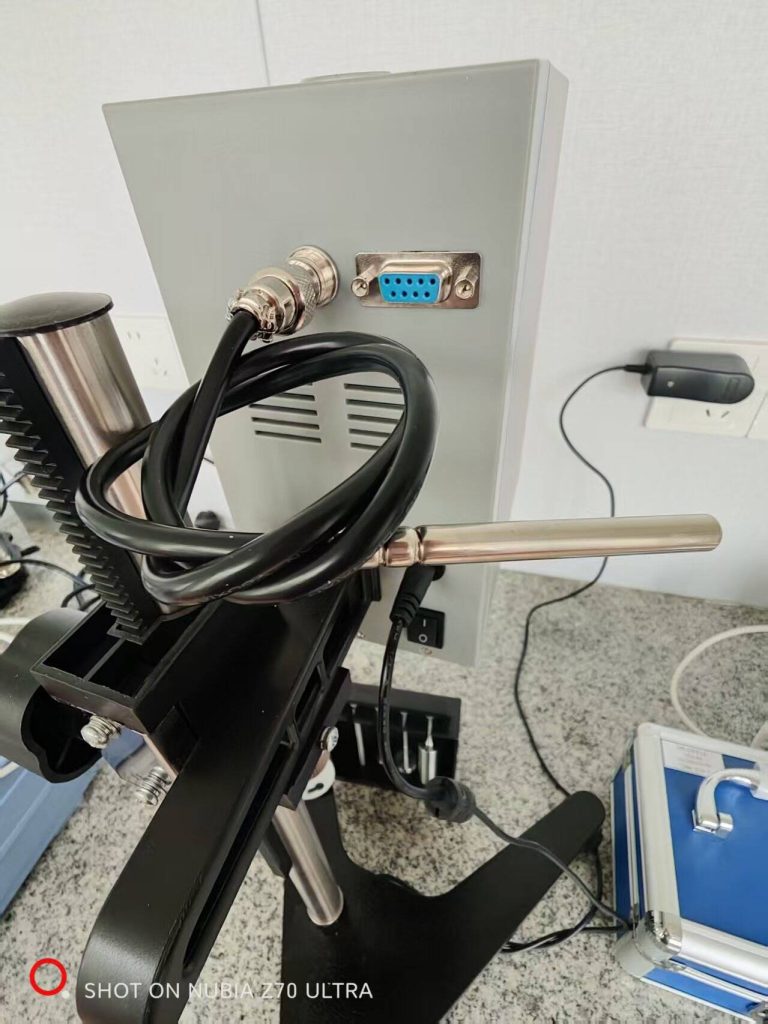
- Computer interfaces
- Data acquisition software
Drawell currently lists these types of accessories for its digital rotational viscometer range.
Digital Viscometer Technical Parameters
When comparing digital viscometers, looking only at the maximum viscosity range is not enough. The spindle, rotational speed, accuracy, temperature conditions, and sample requirements also affect whether an instrument is suitable for a particular application.
Measurement Range
The measurement range indicates the viscosity values that can be measured under the specified instrument, spindle, and speed conditions.
A wider nominal range does not automatically mean that one instrument is suitable for every sample. The actual usable range depends on the selected spindle and speed.
For example, Drawell’s current models cover different ranges:
| Model | Typical Position in Range | Measurement Range |
| NDJ-5S | Low to medium viscosity | 20–100,000 mPa·s |
| NDJ-8S | Low to medium viscosity | 20–2,000,000 mPa·s |
| LVDV-1 | Low viscosity | 12–6,000,000 mPa·s |
| LVDV-2 | Low viscosity | 6–6,000,000 mPa·s |
| RVDV-1 | Medium viscosity | 80–40,000,000 mPa·s |
| RVDV-2 | Medium viscosity | 40–40,000,000 mPa·s |
| HBDV-1 | High viscosity | 640–320,000,000 mPa·s* |
| HBDV-2 | High viscosity | 320–320,000,000 mPa·s |
*Check the exact model specification before using the value for procurement, as product pages may contain model-specific differences.
Drawell lists these models and their corresponding ranges, speeds, and spindle configurations on its digital viscometer product page.
Rotational Speed
Rotational speed determines how quickly the spindle moves through the sample.
For Newtonian liquids, viscosity can remain relatively stable under different shear conditions. For non-Newtonian materials, however, the measured apparent viscosity may change with rotational speed.
This is why the speed used for testing should be recorded when reporting or comparing viscosity data. ASTM D2196 specifically addresses apparent viscosity and the effect of rotational speed when testing non-Newtonian materials with rotational viscometers.
Spindle
The spindle is another key specification.
A spindle that is too large or too small for the sample may not produce a useful measurement. The goal is to select a spindle and speed combination that keeps the instrument operating within an appropriate torque range.
Brookfield, for example, recommends selecting combinations that produce readings within a defined torque range rather than simply choosing a spindle based on the sample’s viscosity alone.
Accuracy and Repeatability
Accuracy and repeatability describe different aspects of measurement performance.
- Accuracy indicates how close the measurement is to the expected or reference value.
- Repeatability indicates how consistently the instrument produces similar results under the same conditions.
For routine laboratory testing, both are important.
For example, Drawell specifies ±1% full-scale accuracy and ±0.5% full-scale repeatability for the NDJ-5S.
Temperature Range
Temperature can have a major effect on viscosity, so the test temperature should be controlled when the material is temperature-sensitive.
ASTM D7867, for example, specifically covers measuring the temperature dependence of the apparent viscosity of paints, inks, and related liquid materials using rotational viscometers.
For samples that must be measured at elevated temperatures, Drawell offers high-temperature digital viscometer models with operating temperatures up to 300°C, depending on the model.
Data Output
For routine quality control, recording the test result can be just as important as obtaining it.
Depending on the model, digital viscometers may support:
- RS232 communication
- Computer data collection
- Printing
- Data acquisition software
Drawell lists RS232 interfaces, printers, and data acquisition software among the available configurations and accessories for its digital viscometers.
Factors That Affect Digital Viscometer Measurements
A digital viscometer can provide repeatable measurements, but the instrument is only one part of the test. Sample preparation and test conditions matter just as much.
Temperature
Temperature is one of the most important factors.
Many liquids become less viscous as temperature increases, although the exact relationship depends on the material.
For this reason, two viscosity measurements taken at different temperatures should not be directly compared without considering the temperature difference. ASTM methods for paints and related materials specifically address viscosity as a function of temperature.
Spindle and Rotational Speed
The spindle and speed should be selected together.
A different combination can change the measurement range and, for non-Newtonian materials, can also change the apparent viscosity.
If a product specification requires a specific spindle and speed, the same conditions should be used consistently for quality control.
Sample Condition
The sample should be representative and reasonably uniform before testing.
Depending on the material, problems such as:
- air bubbles,
- settling,
- incomplete mixing,
- contamination,
- or separation
can affect the reading.
Sample Volume and Spindle Position
The sample needs to provide enough material for the spindle to operate under the specified conditions.
The spindle should also be immersed to the correct level and positioned properly in the sample container.
Measurement Time
Some materials change during testing.
For example, a sample may become thinner under continued shearing and then partially recover after the shear is removed. When testing such materials, the time between starting the spindle and recording the result should be kept consistent.
ASTM D2196 includes methods for evaluating shear-thinning and thixotropic behavior using rotational viscosity measurements.
Newtonian and Non-Newtonian Fluids
Not every liquid behaves in the same way during viscosity measurement.
Newtonian Fluids
For a Newtonian fluid, viscosity is generally not dependent on shear rate under the conditions being considered.
Water and some simple oils are common examples.
For these materials, a viscosity measurement at a defined temperature can often be used as a straightforward quality-control value.
Non-Newtonian Fluids
Non-Newtonian materials can show a change in apparent viscosity when the applied shear condition changes.
Common examples include many:
- paints and coatings
- adhesives
- creams and cosmetics
- polymer solutions
- slurries
- food products
For these materials, saying that a sample has a single “viscosity” without specifying the test conditions can be misleading.
Spindle, rotational speed, temperature, and test time should be recorded together with the result.
ASTM D2196 specifically covers rotational-viscometer testing of non-Newtonian materials and notes that measurements at two or more speeds can provide better characterization than a single viscosity measurement.
Applications of Digital Viscometers
Viscosity is closely related to how a material flows, spreads, pours, pumps, or is processed. That makes viscosity testing useful in both laboratory research and routine quality control.
Oils and Lubricants
Viscosity measurement is commonly used to check the consistency of oils and lubricating materials and to compare products under specified test conditions.
Paints, Coatings, and Inks
Viscosity affects how a coating flows and is applied.
Rotational viscosity testing can also be used to study how apparent viscosity changes with temperature or shear conditions. ASTM D7867 covers rotational viscosity measurements of paints, inks, and related liquid materials as a function of temperature.
Food and Beverages
Viscosity testing can help monitor the consistency of products such as:
- sauces
- syrups
- fruit juices
- dairy products
- cooking oils
Pharmaceuticals
Viscosity measurement can be used for liquid pharmaceutical formulations and other pharmaceutical research applications where flow behavior and batch consistency are important.
Cosmetics and Personal Care Products
Creams, lotions, gels, and other personal care products often need controlled consistency for processing and use.
Adhesives and Chemical Materials
Viscosity is also important when working with adhesives, polymer solutions, detergents, resins, and other chemical products.
Drawell’s digital viscometer range lists applications across chemical and coating products, food, pharmaceuticals, daily chemicals, oils, adhesives, cosmetics, detergents, and other laboratory and industrial materials.
How to Choose a Digital Viscometer
Choosing a digital viscometer starts with the sample, not the instrument.
Before comparing models, identify the expected viscosity range, test temperature, sample volume, and whether the material behaves as a Newtonian or non-Newtonian fluid.
1. Determine the Expected Viscosity Range
Estimate the normal viscosity range of the samples you need to test.
If the range is very wide, a single instrument may not be the most practical choice. Different spindle and speed combinations, or a different viscometer model, may be needed.
2. Check the Sample Type
Ask what you are actually measuring:
- thin liquids
- oils
- paints
- coatings
- creams
- adhesives
- slurries
- high-viscosity materials
The sample type helps determine the suitable spindle, speed, and accessories.
3. Consider Spindle and Speed
Do not choose a viscometer only because its maximum viscosity range looks high.
The spindle and speed combination needs to be suitable for the expected viscosity and torque range.
4. Consider Temperature
If the sample is temperature-sensitive, a temperature-controlled system or temperature probe may be necessary.
For high-temperature materials such as asphalt, hot-melt adhesives, or certain waxes, a dedicated high-temperature digital viscometer may be more suitable. Drawell’s H-series models are designed for selected applications up to 300°C.
5. Consider Sample Volume
If only a small amount of sample is available, a small-sample adapter can be useful.
This can be particularly important in research and development work where the available sample is limited.
6. Consider Data Recording
For routine quality control, a model with computer communication, printing, or data acquisition can make it easier to save and compare results.
If you are unsure which digital viscometer to choose, start with your sample viscosity, test temperature, and required sample volume. These three points usually narrow the options considerably.
For different applications, Drawell also offers different models for low-, medium-, high-, and high-temperature viscosity measurement.
Digital Viscometer Manufacturer and Price
The price of a digital viscometer can vary significantly depending on its measurement range, spindle system, rotational speed, accuracy, temperature control, accessories, and data functions.
For this reason, comparing instruments only by price can be misleading. A lower-cost model may be perfectly suitable for routine testing, while a more advanced model may be needed for high-viscosity, high-temperature, small-volume, or more demanding applications.
When comparing suppliers, it is also worth checking:
- Measurement range
- Spindle and speed options
- Accuracy and repeatability
- Temperature control
- Available accessories
- Calibration or verification support
- Operating instructions
- Technical support
- Warranty and after-sales service
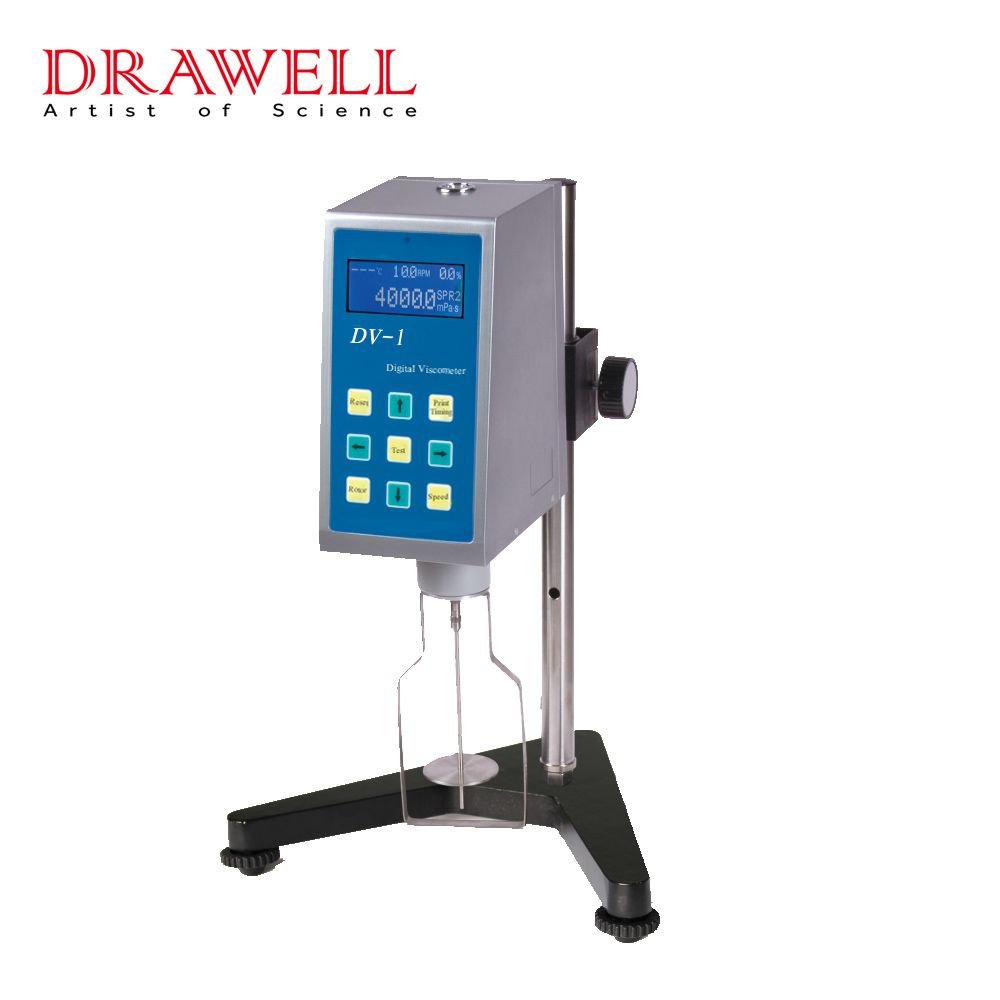
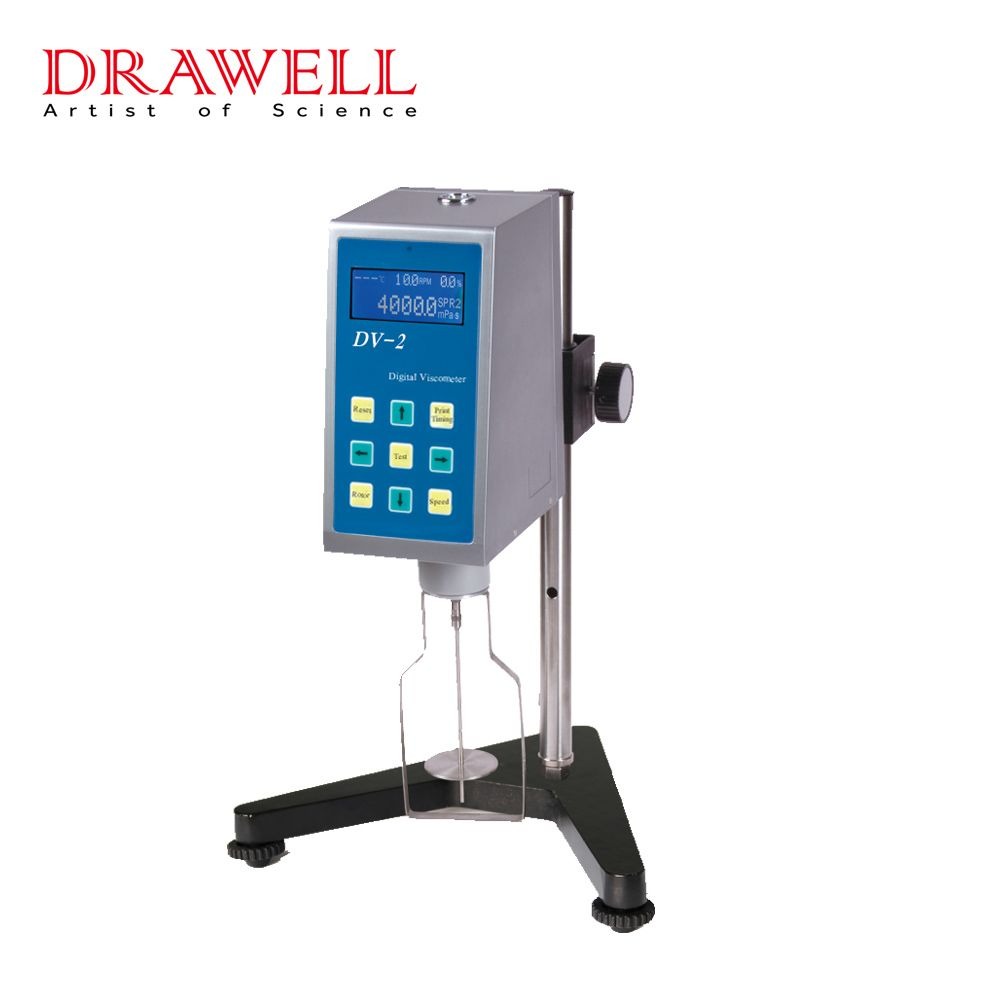
Drawell Digital Viscometer
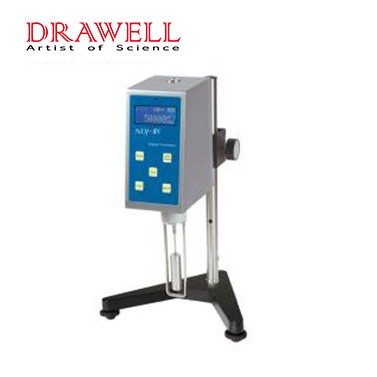
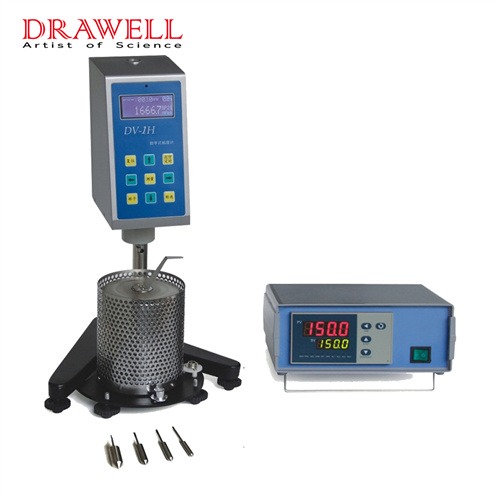
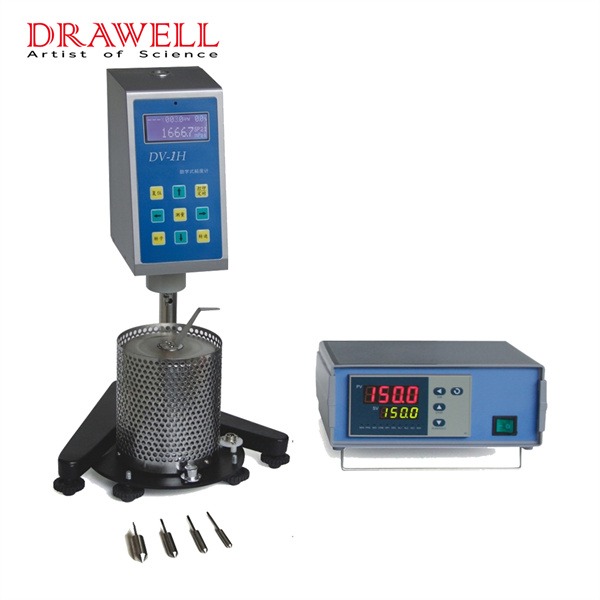
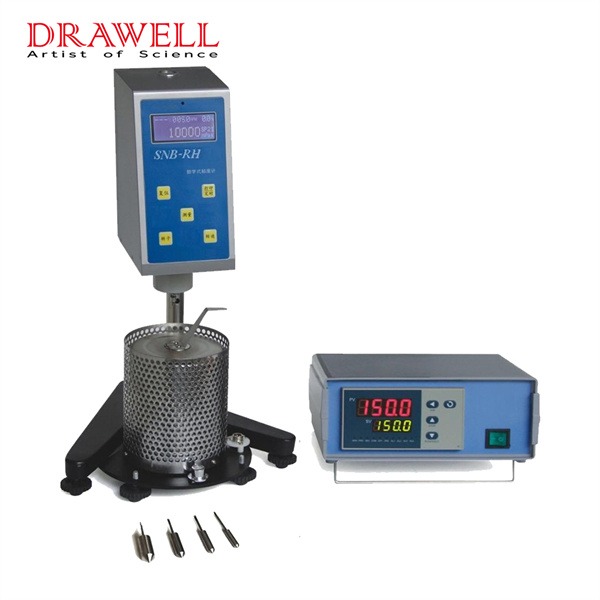
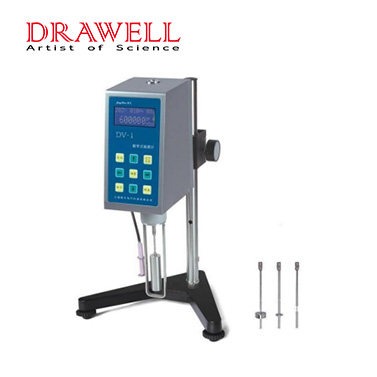
Drawell supplies digital rotational viscometers for laboratory and industrial viscosity testing. Its current product range includes NDJ, LVDV, RVDV, and HBDV series, as well as high-temperature models for applications requiring elevated test temperatures.
Drawell also provides related accessories such as temperature probes, small-sample adapters, printers, and data acquisition software. Its published service information includes installation guidance, technical support, and a standard one-year warranty.
→Explore Drawell Digital Viscometers
If you already know the approximate viscosity range, sample type, test temperature, and sample volume, you can provide those details when contacting the supplier. That makes it much easier to recommend a suitable spindle, speed, and model rather than simply choosing an instrument from its advertised maximum range.
How to Calibrate or Verify a Digital Viscometer
Calibration and verification are important when viscosity results are used for quality control, product specifications, or comparison between laboratories.
A rotational viscometer can be checked using suitable reference materials under controlled conditions. ASTM E2975, for example, covers calibration or calibration verification of constant-speed concentric-cylinder rotational viscometers and specifies using Newtonian reference materials under conditions close to those used for the actual measurements.
ASTM E3116 also provides a method for validating viscosity measurements from rotational viscometers, including evaluating repeatability and other performance characteristics.
In practical laboratory work, the important points include:
- Use an appropriate reference material.
- Control the test temperature.
- Use the specified spindle and speed.
- Follow the instrument manufacturer’s procedure.
- Compare the result with the expected reference value.
- Investigate the instrument if the result is outside the acceptable range.
Calibration should not simply mean repeatedly adjusting the instrument until a desired number appears. The reference material, temperature, spindle, speed, and test procedure all need to be controlled.
Digital Viscometer FAQ
- What does a digital viscometer measure?
A digital viscometer measures the viscosity of a fluid. Rotational models determine viscosity from the resistance or torque produced when a spindle rotates in the sample under defined conditions.
- What is the difference between a digital viscometer and a digital viscosity meter?
In most laboratory and industrial contexts, digital viscometer and digital viscosity meter refer to the same general type of instrument used to measure viscosity.
- What units are used for viscosity?
Dynamic viscosity is commonly expressed in mPa·s or cP. These units are numerically equivalent, with 1 mPa·s = 1 cP. The SI unit is Pa·s.
- How do I choose the right spindle?
Choose the spindle according to the expected viscosity, rotational speed, and required measurement range. The selected combination should provide a useful torque reading rather than operating too close to the lower or upper limit of the instrument.
- Can a digital viscometer measure non-Newtonian fluids?
Yes. A rotational viscometer can measure the apparent viscosity of non-Newtonian materials. However, the result depends on the test conditions, so spindle, speed, temperature, and measurement time should be recorded and kept consistent when results are compared.
- Does temperature affect viscosity measurement?
Yes. Many materials show significant changes in viscosity as temperature changes. For temperature-sensitive materials, the test temperature should be controlled and reported with the viscosity result.
- How accurate is a digital viscometer?
Accuracy depends on the instrument, measurement range, spindle, test conditions, and method used. For example, Drawell specifies ±1% full-scale accuracy and ±0.5% repeatability for the NDJ-5S. Always check the specifications of the particular model rather than assuming all digital viscometers have the same accuracy.
Final Thoughts
A digital viscometer is more than a device that displays a viscosity number. The spindle, rotational speed, temperature, sample condition, and measurement procedure all affect the result.
For routine testing, the right instrument is usually the one that matches your sample viscosity range and actual test conditions, not simply the model with the largest advertised range.
If you are selecting a digital viscometer and already know your sample type, approximate viscosity, temperature, and required sample volume, these details can help you narrow down the right model and spindle much faster.
Get Quote Here!
Latest Posts


What Next?
For more information, or to arrange an equipment demonstration, please visit our dedicated Product Homepage or contact one of our Product Managers.


