


You set your blank, run a few samples, and come back to re-zero, only to find the reading has already shifted. This is one of the more frustrating aspects of UV-Vis work and usually crops up at inconvenient moments.
A spectrophotometer blank serves as the baseline of everything else that follows; when it starts fluctuating unexpectedly, sample data becomes unreliable in ways that may not always be apparent. This guide details six reasons your UV-Vis spectrophotometer blank may be unstable and how to approach solving each of them gradually and when calling in a service call might be warranted.

How Do You Know If the Blank Is Unstable?
Not all blank instability is obvious. A few things to watch for:
The absorbance reading drifts after zeroing. You set the blank to zero, measure two or three samples, and the baseline has already moved when you go back to check.
Replicate measurements vary more than expected. The source of inconsistency lies outside your sample preparation; instead it lies within the reference itself that is shifting.
The display keeps fluctuating instead of settling. After zeroing, the instrument takes much longer to achieve stability than expected.
If any of these scenarios sound familiar, starting with the blank is likely your solution.
Common Reasons for an Unstable UV-Vis Blank
1. The Blank Solution Is Changing Over Time
A blank can become unstable if its composition changes after preparation. Reagents may react, solvents may evaporate, or temperature changes may affect the solution, causing its absorbance to shift after zeroing.
Prepare the blank shortly before measurement and keep it covered when not in use. If instability continues, prepare a fresh blank using the same solvent, buffer, and reagents as the sample and check whether the reading remains stable.
2. The Cuvette Is Dirty, Scratched, or Not in the Same Position
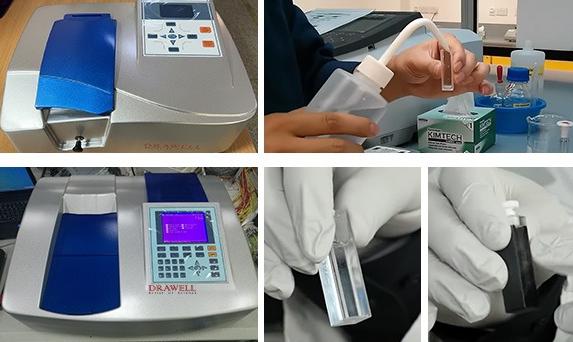
Cuvette quality has a real impact on blank stability. A fingerprint, residue from a previous sample, or a hairline scratch on the optical surface can all cause the reading to shift. It is also worth making sure the cuvette sits in the same orientation every time, even a small positional difference changes how the light path interacts with the cell.
As a general rule, always handle cuvettes by the top edges and rinse thoroughly between uses. According to Beer-Lambert law principles, any deviation in the light path length or transmittance reference directly affects the calculated absorbance.
3. Bubbles or Particles Are Getting in the Light Path
Small air bubbles or suspended particles can scatter light and cause the absorbance reading to fluctuate. This is particularly common when a cuvette has just been filled or a solution has been mixed. Allow bubbles to settle before measuring, and replace the blank if particles remain visible.
4. The Instrument Needs More Time to Stabilize
UV-Vis spectrophotometers generally require a warm-up period before their lamp output stabilizes, otherwise measurements will drift as the lamp settles in and drift back out again. Assuming 15 to 30 minutes for this warm-up time is appropriate depending on your model spectrophotometer, this may explain why blanks keep shifting right at the beginning of each day, making this one of the easiest solutions available to you.
5. Temperature Changes Are Affecting the Measurement
Temperature has an impactful impact on absorbance, particularly for temperature-sensitive solvents or samples. If an instrument sits near direct sunlight or air conditioning vents, its blank can shift as ambient conditions fluctuate during its run.
Even a few degrees of variation is enough to introduce noticeable error. We recommend positioning the instrument away from direct heat sources or strong airflow, and allowing both the instrument and the solutions to reach room temperature before starting.
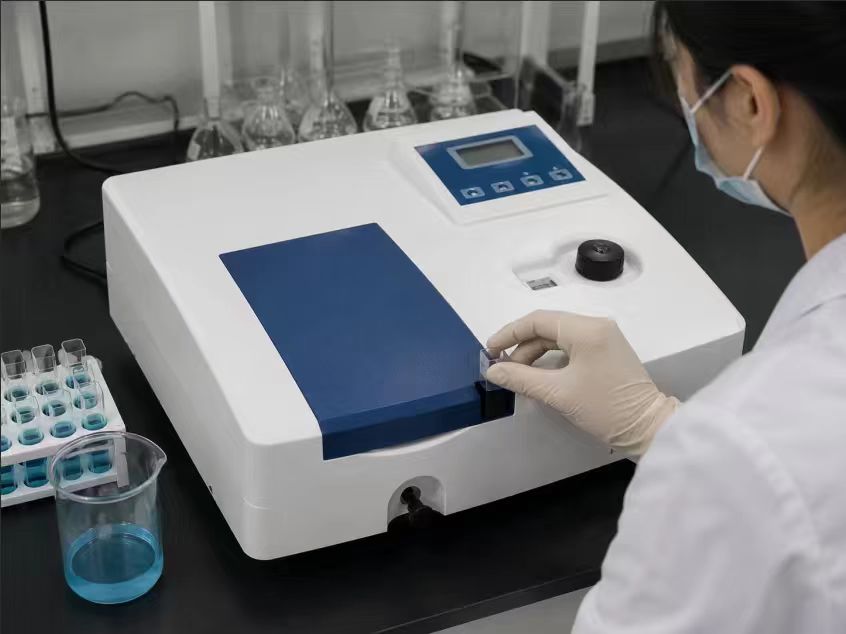
6. The Lamp or Optical System Needs Attention
Lamps lose intensity over time, and optical components can accumulate contamination or drift. If blank instability is worst at shorter wavelengths (below 300 nm), or if overall signal quality has been declining gradually, the lamp may be approaching the end of its usable life.
Running a baseline scan with an empty sample compartment gives a good indication of how the instrument itself is performing, independent of any sample or cuvette variables.
Where to Start When the Blank Is Unstable
A systematic approach saves time. Work through these steps in order before assuming the instrument needs service:
- Check the blank solution and cuvette first: Confirm the blank matrix matches your sample, inspect the cuvette for contamination or scratches, and make sure it is seated correctly.
- Look for bubbles or particles: Hold the cuvette up to the light. If you see anything floating in the solution, replace it with a fresh blank.
- Allow adequate warm-up time: Allow the instrument to complete the warm-up period specified by the manufacturer before taking measurements.
- Check environmental conditions: Move the instrument away from sunlight, air vents or other sources of temperature variation as much as possible.
- Run a baseline scan: Compare the result to your instrument’s expected performance to assess lamp and optical system condition.
When Should You Check the Instrument?
Self-troubleshooting typically resolves UV-Vis spectrophotometer problems; however, if the problem persists after these checks, or if the instrument is outside its recommended calibration or service interval, professional inspection may be needed.
High lamp hours, wavelength accuracy issues or visible optical contamination in an instrument should all be causes for concern; rather than trying to work around them by continuing to adjust around them yourself.
Simple Ways to Keep Blank Measurements Stable
A handful of consistent habits make a noticeable difference:
- Match the blank matrix to your sample every time. This one step prevents a large portion of baseline-related issues.
- Handle cuvettes by the top edges only and clean them thoroughly between runs. Fingerprints on optical surfaces are more of a problem than most people realize.
- Give the instrument its full warm-up period every day. It takes a few extra minutes and avoids a lot of repeated measurements.
- Keep a log of periodic baseline scans. A record of how baseline performance changes over time makes it much easier to spot gradual lamp degradation before it affects your data.
A stable blank is not just a procedural step—it is the foundation of reliable UV-Vis measurement. For most labs, the fixes are straightforward once you know where to look.
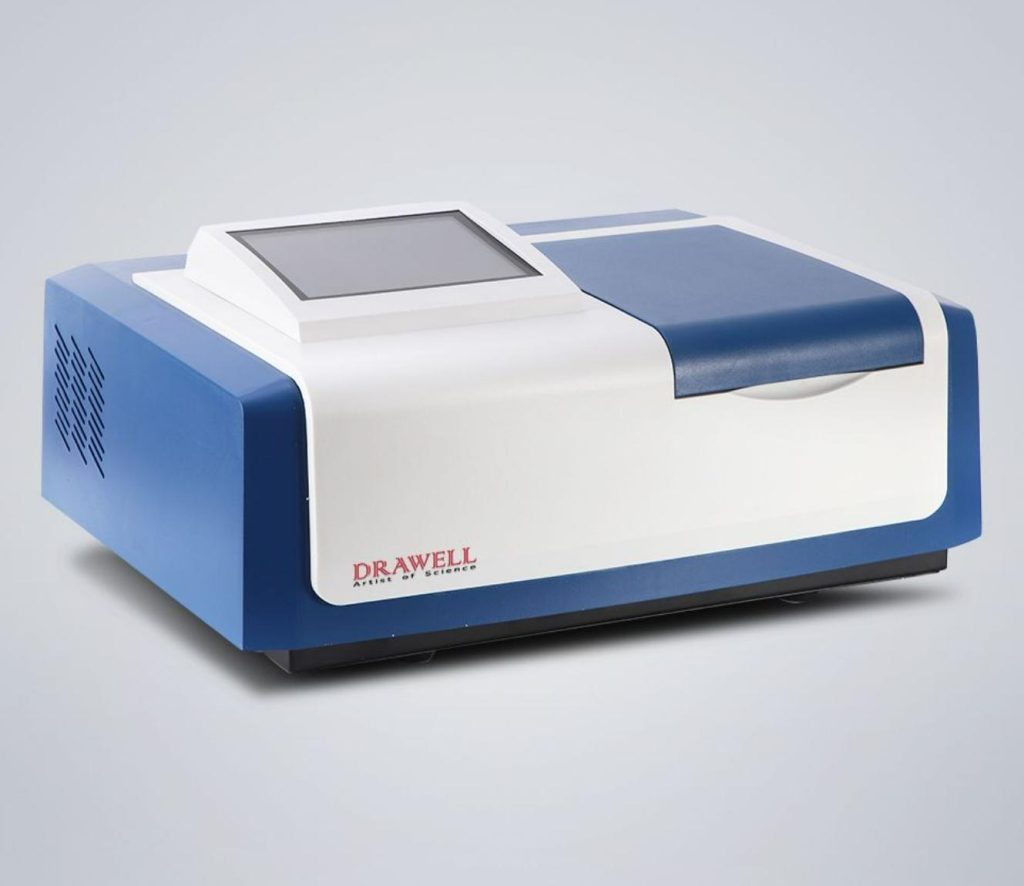
Drawell‘s team is here to assist in any way we can when troubleshooting an UV-Vis spectrophotometer and looking for second opinions. With a range of UV-Vis spectrophotometers designed for different laboratory applications and after-sales support for customers worldwide, we have encountered most of these scenarios before. Browse our UV-Vis spectrophotometer models or contact us directly to discuss your setup.
Get Quote Here!
Latest Posts


What Next?
For more information, or to arrange an equipment demonstration, please visit our dedicated Product Homepage or contact one of our Product Managers.


