


You run the same sample again on your automatic refractometer and receive two different Brix readings. Run it again and you get a third result. At this point, it’s natural to think the instrument is broken, although it’s frequently not the case.
One common reason for inconsistent Brix readings is that something in the measurement process has changed. In many cases, the instrument itself is not the problem. In this article, we will discuss five faults that impact automatic refractometer accuracy, and some practical checks you may undertake today.
Why Can the Same Sample Give Different Brix Readings?
Traditionally, Brix is employed to indicate the mass proportion of sucrose in a sucrose-water solution. The automatic refractometer measures the refractive index of the sample and displays the result in Brix. For solutions with additional solutes present, the Brix value may not be a direct measure of the sucrose content. Changes in the sample or measurement conditions can therefore affect the result.
Before we start troubleshooting, let’s differentiate repeatability from accuracy. Repeatability is the degree to which repeated measurements of the same sample agree with each other, whereas accuracy is the degree to which a measurement is close to the genuine value or reference value.
An instrument may be extremely repeatable but biased relative to the reference value, or it may be inconsistent from measurement to measurement. Knowing what the problem is makes it easier to work out the likely source.
If repeated readings are inconsistent, start by checking the measurement conditions before assuming the instrument has a problem.
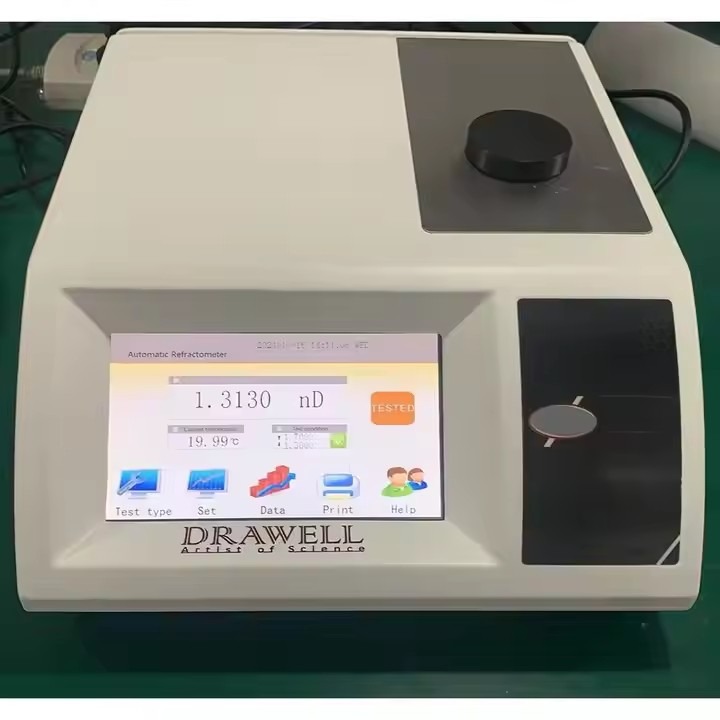
5 Common Automatic Refractometer Mistakes
Mistake 1: Calibration Was Skipped or Done Incorrectly
The first thing to examine if your Brix measurements are constantly off in one way is calibration. If an automatic refractometer is badly calibrated it will put a fixed error into all measurements and no amount of careful sampling will change that.
Start with the reference material specified for your instrument, usually distilled water or a certified Brix standard. First let it get to the right temperature and then take a reading and make sure it is in the permitted range before going to the actual samples. If the instrument is within the specified tolerance, proceed with the sample measurement.
Calibration does not need to be performed prior to each run but should be part of your routine, especially if you are moving the instrument about, storing it for any period of time or using it under changing conditions. It’s not a hard process, it’s more like a simple verification.
Mistake 2: The Sample or Instrument Temperature Is Not Stable
Temperature has a direct impact on the refractive index of a liquid and hence a direct impact on your Brix value. Even small temperature differences can affect the refractive index and may lead to noticeable differences between measurements, particularly when temperature control is poor.
One note of clarification: temperature compensation does not mean that you can measure a sample at any temperature. It means the instrument can correct for minor variations within a defined range. If the sample is outside the instrument’s specified temperature or compensation range, temperature compensation may not be sufficient.
Before measuring, check:
- Sample temperature: Has the sample reached a stable temperature?
- Instrument temperature: Has the instrument equilibrated, especially if it was moved or turned on recently?
- Timing: Was a cold or hot sample placed directly into the cell without waiting?
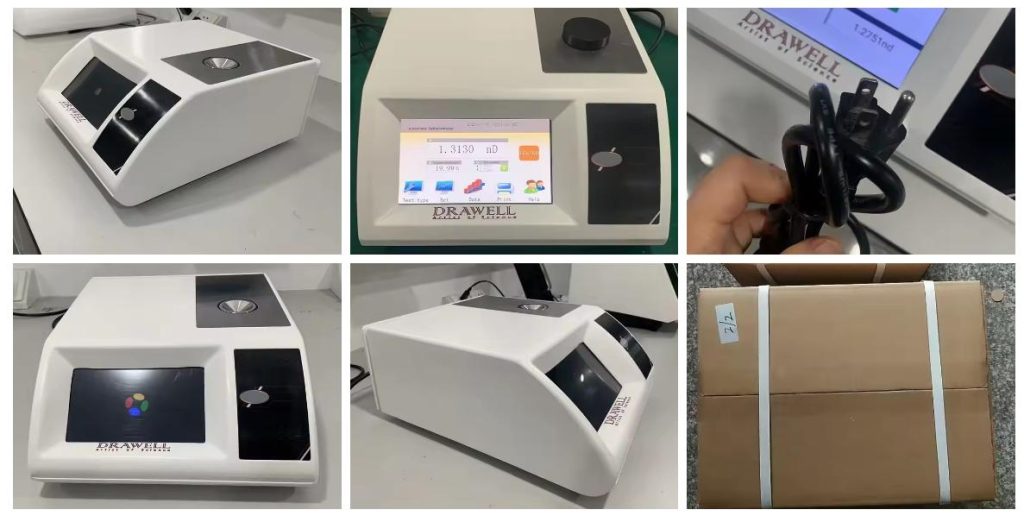
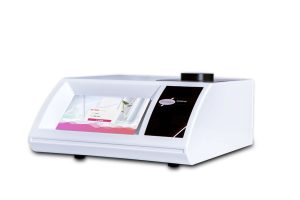
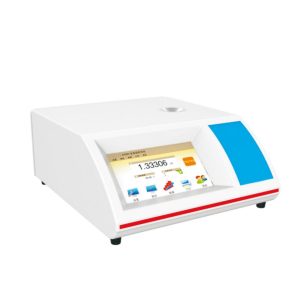
For example, Drawell has some automatic refractometer models with a built-in Peltier for temperature regulation, which ensures stable conditions for measurements. This decreases variance without needing any extra user effort.
Mistake 3: Residue on the Prism Is Affecting the Reading
One of the most prevalent and most neglected causes of irregular Brix readings is a dirty sample cell or prism. Contamination results can look random but are just the consequence of residual sugar, dry sample, dust, or even cleaning residue interfering with the optical surface.
Before the next measurement:
- Clean between every sample: Use the recommended solvent and wipe the surface gently. This applies every time you switch samples, not just when the surface looks visibly dirty.
- Inspect before loading: Always inspect the optical surface carefully particularly when transitioning from a high concentration sample to a low concentration sample. If it’s cloudy or has any residue on it, clean it again before you go any farther.
Before the next measurement, clean and dry the prism or sample cell according to the manufacturer’s recommendations. When the residue is minimal, the measurement can be affected later especially when measuring on samples with very variable amounts.
Mistake 4: The Sample Was Not Mixed or Taken Consistently
“The same sample” does not always mean every portion of that sample has the same composition. Concentrated liquids can separate over time, develop concentration gradients, or behave differently depending on where you draw from. If the container was not mixed before sampling, denser components may have settled toward the bottom. Drawing from different locations each time adds another layer of variability, and with small sample volumes, even brief exposure to air can allow enough evaporation to shift the reading.
The automatic refractometer measures exactly what is placed in the cell. It has no way to know whether that portion represents the whole batch. Use a consistent sampling procedure and take a representative portion of the well-mixed sample each time, goes a long way toward improving result consistency.
Mistake 5: The Measurement Setting Does Not Match the Sample
This one is easy to overlook. Sometimes users are interested in measuring accuracy but do not check whether the instrument is in the same measurement mode. Results may not be directly comparable between runs if the settings are different, even when everything else is identical.
Before comparing two readings, check the following:
- Is the instrument displaying Brix, not refractive index?
- Is the correct measurement method selected?
- Is the sample actually appropriate for a Brix reading?
- Are you comparing results taken under the same conditions and settings?
Brix is a historic scale for sucrose solutions. Other dissolved substances such as acids, salts or alcohol in large proportions in the sample can cause a Brix value which is not representative of the actual sucrose concentration. The Brix value displayed for these samples should be taken into consideration in relation to the application and the method of measurement.
| Common Mistake | How It Affects Brix Reading | Better Practice |
| Poor calibration | Creates a consistent offset | Verify with a suitable reference |
| Unstable temperature | Causes reading drift | Stabilize sample and instrument |
| Dirty prism/sample cell | Produces inconsistent or biased results | Clean between measurements |
| Inconsistent sampling | Different portions give different results | Mix and sample consistently |
| Wrong setting or scale | Results cannot be compared correctly | Confirm mode, scale, and sample type |
A Quick Checklist for More Consistent Brix Readings
Before repeating a measurement, work through this list in order:
1. Check the sample — Is it properly mixed and representative of the batch?
2. Check the temperature — Has the sample reached a stable condition that matches the instrument setting?
3. Check the prism/sample cell — Is the surface completely clean and dry?
4. Check calibration — Does the instrument read correctly against the reference material?
5. Check the settings — Are you using the same Brix mode and measurement conditions as the previous run?
Repeat the measurement only after you have identified and corrected the probable cause. If things are still not adding up after all five procedures, it may be time to think about instrument maintenance or reach out to the manufacturer for additional support.

Final Thoughts
Most Brix measurement problems are not instrument failures. They are process issues, and that is actually good news because they can be fixed without sending anything in for repair.
Calibration, temperature stability, cleanliness, sampling consistency, and correct settings are the five areas that account for the majority of refractometer Brix reading problems we come across. Addressing them systematically will get you much further than repeatedly running the same measurement and hoping for a different result.
If you are looking for an automatic refractometer that combines stable temperature control with straightforward operation, Drawell‘s range covers a variety of measurement needs. Feel free to contact us for guidance on selecting the right model for your application.
Get Quote Here!
Latest Posts
What Next?
For more information, or to arrange an equipment demonstration, please visit our dedicated Product Homepage or contact one of our Product Managers.


