


Quartz vs glass cuvettes are commonly utilised in UV-Vis spectrophotometric analysis. However, as their light transmission qualities are different, the measurement settings they are suitable for are also different. Quartz cuvettes often have higher light transmission in the UV area and are therefore used for measurements using UV wavelengths. Absorbance analyses in the visible region are usually done with optical glass cuvettes.
The choice of material is mostly determined by the measuring wavelength of interest, the nature of the sample and the optical requirements of the cuvette itself. Knowing the difference between quartz and glass cuvettes allows labs to achieve analytical needs while maintaining consumable costs under reasonable control.
Quartz vs Glass Cuvettes: What Are the Key Differences?
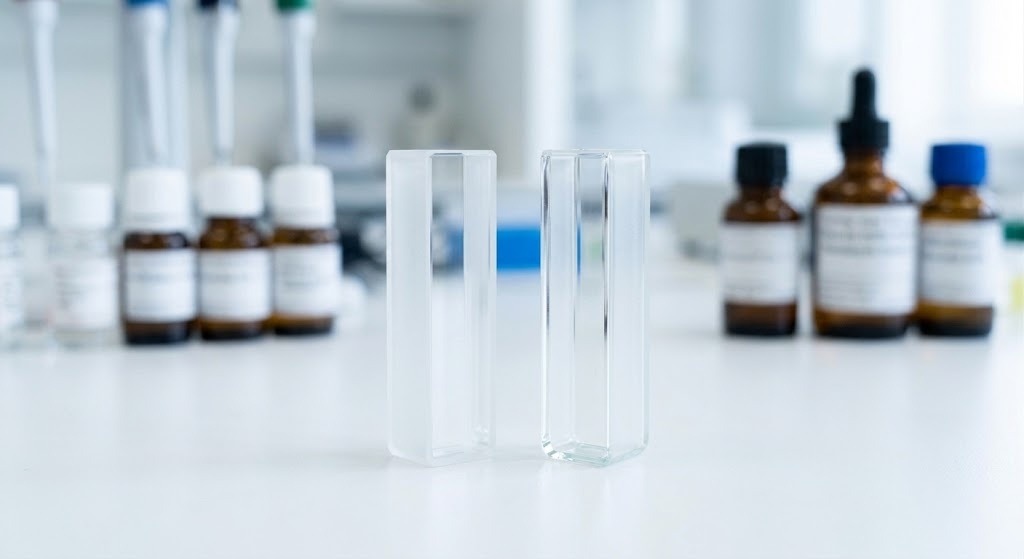
To enable laboratory professionals rapidly comprehend the differences between the two types of cuvettes, the following comparison covers material, light transmission performance, application situations and cost.
| Comparison Item | Quartz Cuvettes | Glass Cuvettes |
| Material | Fused Silica | Optical Glass |
| UV transmission performance | Good light transmission over a broad UV band, depending on material grade | UV transmission is usually limited |
| Visible-light transmission performance | Suitable | Suitable |
| Typical applications | UV and UV-Vis analysis | Routine visible-range absorbance analysis |
| Cost | Usually higher | Usually more economical |
| Main advantages | Wider wavelength range | Suitable for visible-light measurements that match its transmission specifications |
Light Transmission Range
Quartz cuvettes are generally made from fused silica and have strong light transmission over a wide range of UV and visible wavelengths, with the quality of the quartz material dictating the precise performance. Thus, Quartz cuvettes are usually a better option for measurements involving the UV band.
However, chemical composition and manufacturing grade influence the UV cutoff wavelength of optical glass. The UV transmission capability can vary for different glass cuvettes hence a single universal lower wavelength limit for all glass cuvettes cannot be established. Always check the gearbox specification from the manufacturer before taking UV measurements.
Measurement Applications
UV-band analysis is generally done in quartz cuvettes. Typical applications are nucleic acids (DNA/RNA), proteins and other samples with characteristic absorption in the UV region.
Glass cuvettes are mostly employed for routine absorbance measurements in the visible range, if the transmission performance meets the measurement requirements at the target wavelength.
Cost and Practical Considerations
Glass cuvettes are often more cheap than quartz cuvettes and are suited for cost-sensitive laboratories with measurement wavelengths in the relevant range.
But pricing shouldn’t be the only factor in buying decisions. First, determine if the cuvette transmits enough light at the wavelength you want and if its optical performance is suitable for the analytical procedure you will be using.
Why Does Cuvette Material Matter in UV-Vis Spectrophotometry?
The cuvette is used to hold the sample in the UV-Vis spectrophotometric analysis . Moreover, the cuvette material and optical performance can affect the measurement findings as the light passes through the sample . Thus, the choice of the proper cuvette material is a vital aspect in providing reliable measurements.
Cuvette Absorbance
The cuvette itself may absorb or reflect some of the incident light, depending on its composition and optical quality. Accurate blank measurements can somewhat correct for background effects due to the cuvette and solvent, but lack of sufficient light transmission at the target wavelength can still impact the reliability of measurement results.
Hence, the selection of a cuvette with good optical performance helps to achieve more stable and consistent UV-Vis spectrophotometric data.
Wavelength Compatibility
Although a UV-Vis spectrophotometer may measure at a certain wavelength it does not imply that cuvettes made from all materials can be used at that wavelength.
For example, even if the instrument can measure at 200nm, conventional glass cuvettes may not pass sufficient light. This can influence the trustworthiness of the measurement results. Laboratories will need to examine the wavelength range of the instrument and the transmission parameters of the cuvette itself.
In practice, the selection of cuvette material should also be appraised together with the UV wavelength range desired.
The University of Warwick’s guide to UV-visible absorbance spectroscopy covers basic techniques for UV-Vis absorbance measurement. It states that the choice of quartz or glass cuvettes should depend on the UV measurement range and that matched cuvettes should be used for solvent background correction.
Learning how a UV-Vis spectrophotometer measures light also explains how light interacts with the sample and why the optical qualities of the sample container are significant as well.
Measurement Reliability
The consistency of the measurements is not solely determined by the cuvette material. The purity of the material, the quality of the manufacturing of the optical windows, surface scratches and residual impurities can influence the final measurement findings.
Using cuvettes with stable optical performance and keeping their light-transmitting surfaces clean helps reduce unnecessary data variation between measurements.
When Should You Use Quartz vs Glass Cuvettes?
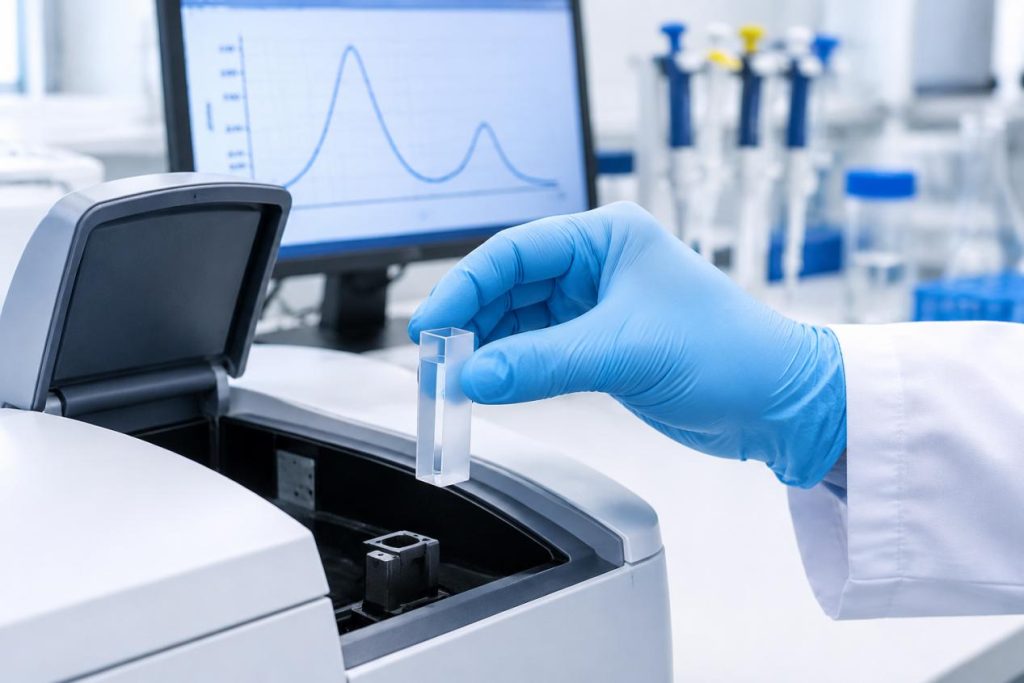
In practical experiments, the choice between quartz and glass cuvettes should mainly be based on the detection wavelength and the requirements of the analytical method.
Choose Quartz Cuvettes for UV Measurements
Quartz cuvettes are usually preferred in the following situations:
The measurement involves UV wavelengths, especially bands where ordinary optical glass may not provide sufficient light transmission.
In the experiment, substances having characteristic absorptions in the UV area have to be detected.
The analytical method must cover a broad continuous UV-Vis wavelength range.
Choose Glass Cuvettes for Visible-Light Measurements
Glass cuvettes may be a suitable choice in the following situations:
Routine absorbance measurements are mainly concentrated in the visible range.
The sample’s characteristic absorption peak falls within the transmission range supported by the cuvette specifications.
The experimental method and instrument configuration allow the use of optical glass, while reasonable control of consumable costs is desired.
What If Your Analysis Covers Both UV and Visible Regions?
If the experimental procedure requires the coverage of both UV and visible regions, then quartz cuvettes usually give more versatility in application because of their wider range of transmission.
However, the ultimate choice must still be made according to the parameters of the exact cuvette. varying grades of quartz materials and optical glass have varying transmission properties. When purchasing, pay close attention to the transmission range and related technical specifications of the manufacturer in advance, so that the cuvette can fulfil the needs of the complete wavelength range of measurement.
What Else Should You Consider When Choosing a Cuvette?
In addition to the material and transmission range, while purchasing and utilising cuvettes, other aspects such as optical route length, optical window quality, sample compatibility, and regular maintenance should be taken into account.
Optical Path Length
10 mm is a common standard optical path length in UV-Vis spectrophotometric analysis, but alternative specifications such as 2 mm, 5 mm and 50 mm are also available in the market.
The suitable optical path length relies on the sample concentration, the anticipated range of absorbances and the needs of the particular analytical technique. For high concentration samples, a shorter path length could be useful to avoid too high absorbance, while for low absorbance samples, a longer path length could be more appropriate to increase the measurement response. The actual measurement range and experimental procedure should determine the specific option, rather than just assuming that a larger or shorter path length is always better.
Optical Window Quality
The flatness and parallelism of cuvette optical windows, as well as scratches and contamination on the surface, can affect light transmittance and measurement consistency.
It is important to note that the transmission characteristics of the material itself and the optical quality brought by the manufacturing process are two different concepts. Provided that the wavelength application range is met, well-processed glass cuvettes can also have good optical performance.
Sample and Solvent Compatibility
Some chemicals may attack cuvette materials, bonded parts or sealing components, depending on the cuvette material and construction. Before employing severely corrosive chemicals or solvents, check the manufacturer’s chemical compatibility information to prevent material damage or leaks.
Cleaning and Handling
Cuvettes will maintain their optical performance and increase their life with proper cleaning and maintenance. Keep the optical surfaces clean during ordinary operation . Do not touch the light-transmitting windows directly with the fingers . Try to keep the cuvette in the same orientation in the sample holder for each measurement .
These approaches minimise surface contamination and human operational variability, allowing for more reproducible repeated measurements.
Matching Cuvettes with a UV-Vis Spectrophotometer
In addition to selecting the appropriate cuvette material, laboratories should also take into account the compatibility between the cuvette and the spectrophotometer. Here are some things to keep in mind when you buy instruments and suitable consumables.
Check the Instrument’s Wavelength Range
Check first the nominal wavelength range of the instrument and compare it with the actual transmission range of the cuvette before picking a cuvette. The cuvette must have adequate transmission at the wavelengths of interest in the experiment to satisfy the measurement criteria.
When evaluating different UV-Vis spectrophotometer systems, laboratories should also consider the optical properties of the sample and the analytical method, and comprehensively assess the instrument’s wavelength range and applicable scenarios.
Check the Cuvette Holder and Path Length
Also confirm whether the instrument’s sample compartment and cuvette holder can accommodate cuvettes of the required size and path length. varied instrument models with varied fixing structures, dimensional constraints and installation procedures.
It is important to confirm these characteristics before buying cuvettes to avoid difficulties such as size mismatch or poor fixation during later use.
Consider the Available Cuvette Options
Labs should also evaluate whether cuvette materials and standards will work with the instrument. Quartz cuvettes, glass cuvettes, or both may be required depending on normal testing duties.
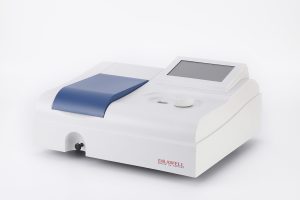
For example, the Drawell 752G UV-VIS Spectrophotometer has a nominal wavelength range of 200-1000 nm. Standard supplied with 4x10mm glass and 2x10mm quartz cuvettes. Experimenters should select the proper cuvette material for the wavelength of interest for each test, and should not assume that all supplied cuvettes are adequate for the whole wavelength range of the instrument.
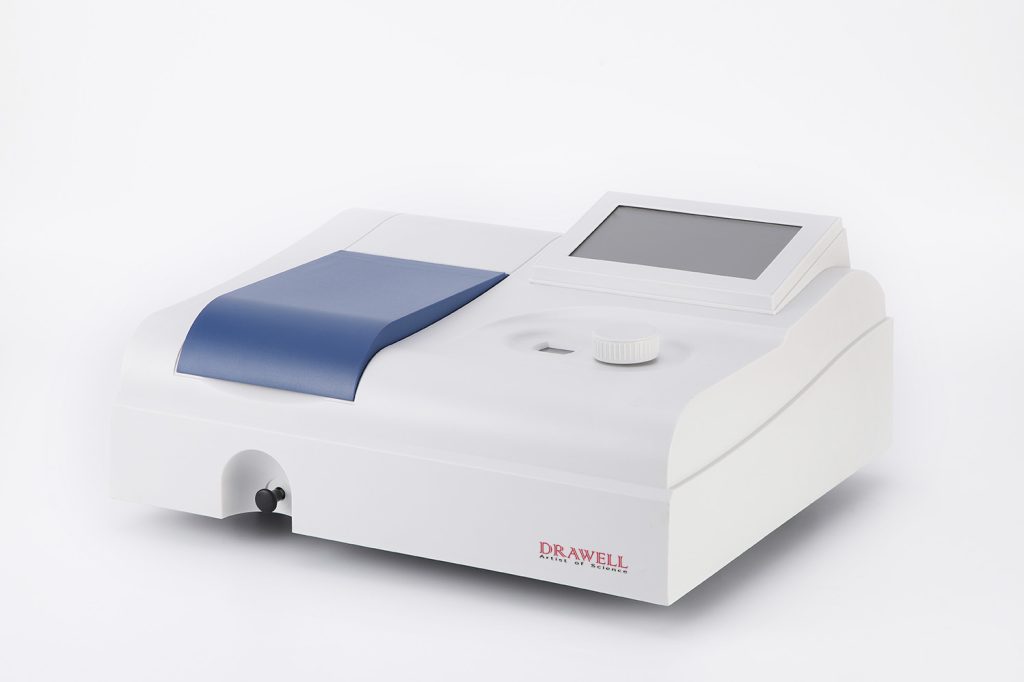
Drawell provides laboratory analytical instruments including UV-Vis spectrophotometers, with products designed for different laboratory analysis and testing needs. For laboratories evaluating spectrophotometric analysis equipment, its UV-Vis product series also offers different instrument options.
Conclusion
The choice of quartz or glass cuvettes is generally dictated by the target measurement wavelength and the needs of the individual analytical method. Quartz cuvettes are generally preferred for measurements in the UV region, while optical glass cuvettes are more cheap and practical for many regular tests in the visible region.
In addition to the selection of cuvettes, pay attention to the light transmission performance, optical path length, sample compatibility and instrument configuration before making a final decision, to ensure that the selected cuvette satisfies the real measurement requirements.
Get Quote Here!
Latest Posts

What Next?
For more information, or to arrange an equipment demonstration, please visit our dedicated Product Homepage or contact one of our Product Managers.


