


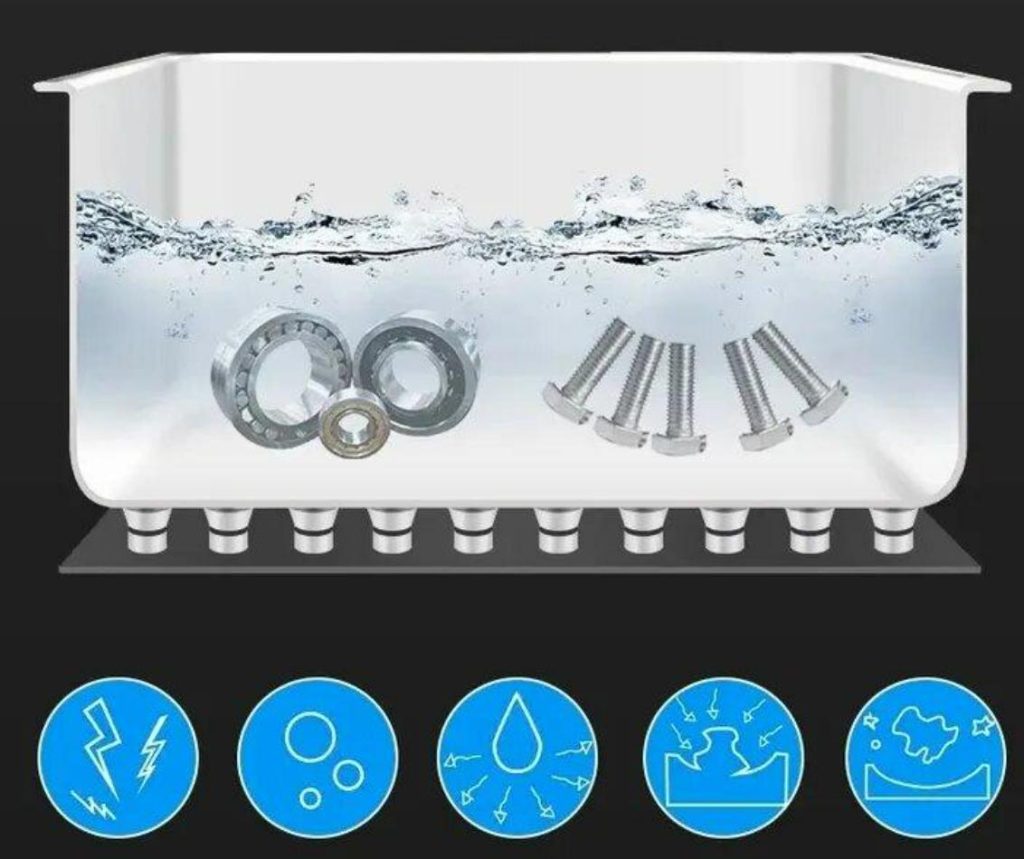
In modern laboratories—from academic research centers to pharmaceutical QA labs—ultrasonic equipment in lab settings has become indispensable. Leveraging the power of acoustic cavitation, ultrasonic technology delivers unmatched efficiency in sample preparation, cleaning, and material processing. Whether you’re using a lab ultrasonic cleaner for glassware decontamination or an ultrasonic lab homogenizer for cell disruption, the versatility of these instruments accelerates workflows while ensuring reproducibility.
At Drawell Scientific—a trusted global manufacturer of laboratory equipment exported to 80+ countries—we’ve seen firsthand how the right ultrasonic solution transforms experimental outcomes.
Below, we organize 10 high-impact applications by industry—highlighting why ultrasonics is the preferred method, what equipment to use, and how to optimize results.
Life Sciences & Biopharmaceuticals
Application 1: Cell Lysis and Tissue Homogenization
Why ultrasonics?
Traditional mechanical homogenizers (e.g., rotor-stators) generate heat and shear unevenly, while enzymatic lysis introduces contaminants. Ultrasonic homogenization offers cold, contact-free, and tunable disruption—critical for preserving protein integrity or extracting labile RNA.
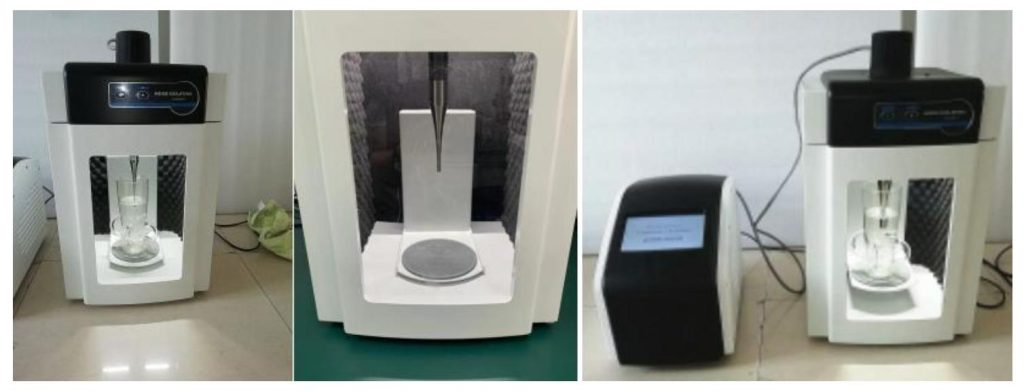
Typical equipment: Probe-type ultrasonic lab homogenizer
Key use cases:
- Lyse E. coli for recombinant protein purification
- Homogenize liver or brain tissue for metabolomics
- Prepare viral lysates for vaccine development
Operational guidance:
- Use pulse mode (e.g., 3 sec ON / 2 sec OFF) to prevent overheating
- Keep samples on ice; never exceed 4°C for sensitive biomolecules
- Start with 30–50% amplitude; increase only if lysis is incomplete
Common pitfalls:
❌ Over-sonication degrades DNA/proteins
❌ Using plastic tubes (can melt or leach chemicals)—opt for borosilicate or metal adapters
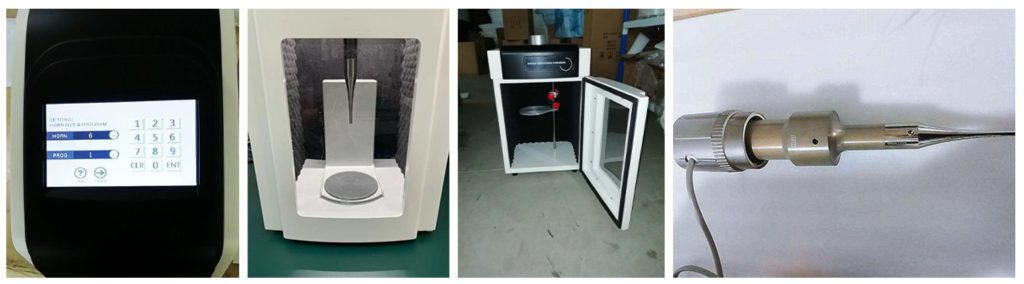
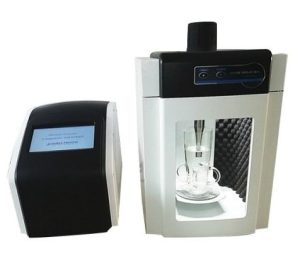
Drawell’s digital ultrasonic homogenizers feature titanium probes, precise amplitude control, and thermal protection—ideal for GMP and research labs in pharma and biotech.
Application 2: Controlled DNA/RNA Shearing for NGS
Why ultrasonics?
Enzymatic fragmentation introduces sequence bias; hydrodynamic shearing lacks reproducibility. Ultrasonics provides random, unbiased, and size-consistent fragmentation—a gold standard for Illumina and other NGS platforms.
Typical equipment: Focused ultrasonic homogenizer with microtubes or cup-horn adapters
Key use cases:
- Fragment genomic DNA to 200–500 bp for library prep
- Shear RNA for transcriptome analysis
Parameters:
- 15–30 sec total sonication time
- Amplitude: 20–40%
- Always use pre-chilled adapters
Tip: Validate fragment size via Bioanalyzer—adjust time/amplitude if peaks shift.
Analytical & Environmental Testing
Application 3: Degassing HPLC/GC Mobile Phases and Samples
Why ultrasonics?
Dissolved air causes pump cavitation, baseline drift, and poor retention time reproducibility. Vacuum degassers are slow; helium sparging is costly. A lab ultrasonic cleaner offers fast, quiet, and chemical-free degassing in minutes.
Typical equipment: Benchtop ultrasonic cleaner laboratory unit (40 kHz)
Key use cases:
- Degas methanol/water mixtures for HPLC
- Remove bubbles from viscous oil samples for GC
Operational guidance:
- Fill tank to recommended level (usually 2/3 full)
- Run for 5–15 minutes at room temperature
- Avoid overfilling vials—leave headspace for bubble escape
Caution: Do not degas volatile solvents (e.g., diethyl ether) unless using an explosion-proof model.
Drawell’s ultrasonic cleaners include digital timers and stainless-steel tanks compatible with standard HPLC solvents.
Application 4: Ultrasonic-Assisted Extraction (UAE) of Pollutants
Why ultrasonics?
Soxhlet extraction takes 6–12 hours; UAE reduces it to 10–30 minutes with higher recovery of pesticides, PAHs, or heavy metals from soil, water, or food.
Typical equipment: Ultrasonic bath or probe homogenizer (for tough matrices)
Key use cases:
- Extract organochlorine pesticides from agricultural soil
- Isolate microplastics from wastewater
Parameters:
- Solvent: Acetonitrile, hexane, or methanol (depending on analyte)
- Time: 15–20 min at 40°C
- Frequency: 40 kHz (bath) or 20 kHz (probe for denser samples)
Note: UAE is recognized in EPA Method 3550C and ISO 13877—ensuring regulatory compliance.
Food & Beverage Industry
Application 5: Residue & Contaminant Removal from Processing Equipment
Why ultrasonics?
Protein films, fat residues, or biofilms in pipettes, filters, or stainless-steel parts can cause cross-contamination. Manual scrubbing is ineffective in blind holes. Ultrasonic cleaning penetrates complex geometries without disassembly.
Typical equipment: Heated ultrasonic cleaner laboratory system
Key use cases:
- Clean sampling valves, filler nozzles, and homogenizer parts
- Decontaminate glassware used in allergen testing
Best practices:
- Use food-grade, non-foaming detergent
- Run at 50°C for 10 minutes
- Rinse thoroughly with DI water afterward
Avoid: Aluminum components (can pit)—use only with compatible metals.
Drawell supports food safety labs with cleaning and sample prep solutions meeting ISO 22000 and HACCP requirements.
Application 6: Emulsification for Functional Foods & Nutraceuticals
Why ultrasonics?
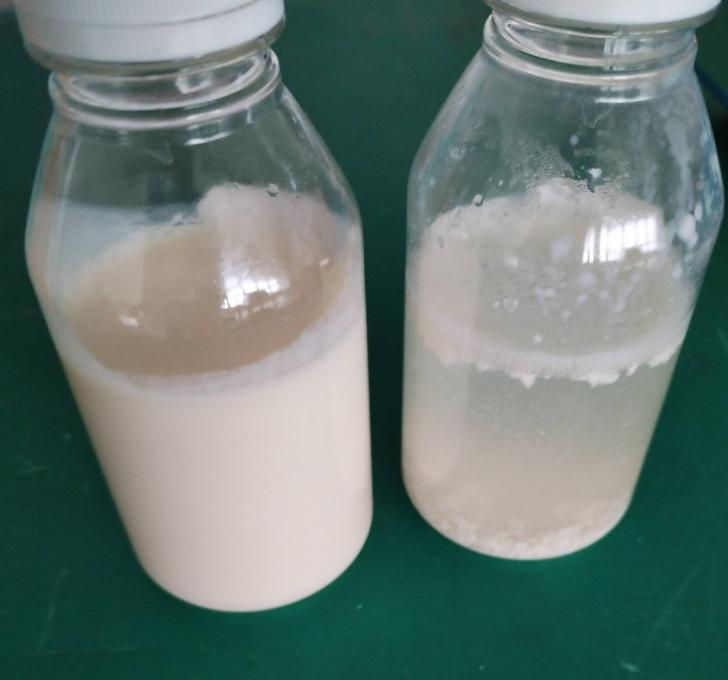
Conventional mixers produce large, unstable droplets. Ultrasonics creates nanoemulsions (<200 nm) with enhanced bioavailability—ideal for omega-3 delivery, vitamin fortification, or plant-based dairy alternatives.
Typical equipment: High-power ultrasonic lab homogenizer
Parameters:
- 2–5 min at 60% amplitude
- Use surfactants (e.g., lecithin) to stabilize interface
- Cool continuously to prevent oil oxidation

Chemical & Petrochemical
Application 7: Accelerated Reaction Synthesis (Sonochemistry)
Why ultrasonics?
Ultrasonic cavitation generates localized hotspots (~5000 K) and extreme pressures, dramatically increasing reaction rates in esterification, nanoparticle synthesis, or polymer cross-linking—without raising bulk temperature.
Typical equipment: Immersible probe homogenizer with cooling jacket
Use cases:
- Synthesize metal oxide nanoparticles (e.g., ZnO, TiO₂)
- Catalyze biodiesel production from waste oil
Tip: Combine with magnetic stirring for uniform mixing in large volumes.
Application 8: Dispersion of Additives in Lubricants & Fuels
Why ultrasonics?
Nanoparticle additives (e.g., MoS₂, graphene) improve lubricity but agglomerate easily. Ultrasonication ensures stable, homogeneous dispersion, enhancing engine performance and reducing wear.
Materials Science & Nanotechnology
Application 9: Deagglomeration of Nanomaterials
Why ultrasonics?
Carbon nanotubes, graphene oxide, or quantum dots form bundles that compromise conductivity or optical properties. Ultrasonic energy breaks van der Waals forces without damaging structure.
Typical equipment: High-power ultrasonic lab homogenizer (200–500W)
Parameters:
- Pulse mode (5s ON / 3s OFF)
- 10–30 min total time in solvent (e.g., DMF, water with surfactant)
- Use titanium or carbide probes for abrasive materials
Caution: Over-sonication can shorten CNTs—optimize via TEM or DLS.

General Laboratory & Education
Application 10: Routine Cleaning of Glassware & Labware
Why ultrasonics?
Even “clean” glassware may retain trace organics or ions. Ultrasonic baths remove sub-micron residues invisible to the eye—essential for trace metal analysis, cell culture, or calibration standards.
Typical equipment: Digital lab ultrasonic cleaner (40 kHz)
Key items cleaned:
- Volumetric flasks, pipettes, HPLC vials
- Electrophoresis combs, PCR strips
- Metal tweezers and spatulas
Protocol:
- Pre-rinse with water
- Fill tank with DI water + 1–2% neutral detergent
- Sonicate 5–10 min at 40–50°C
- Final rinse with DI water and dry in oven
Never: Clean radioactive or highly toxic materials in shared baths—dedicate separate units.
Drawell’s educational and research lab partners rely on our ultrasonic cleaners for daily decontamination in teaching and advanced research labs.
Final Insight: Match the Tool to the Task
Not every application needs the same ultrasonic system. Below is a quick industry-to-equipment guide:
| Industry | Application | Recommended Device Type | Key Features to Look For |
| General Lab | Glassware cleaning | Ultrasonic Cleaner | 40 kHz frequency, heater, timer, stainless tank |
| Life Sciences | Cell lysis / DNA shearing | Probe Ultrasonic Homogenizer | Adjustable amplitude, pulse mode, cooling jacket |
| Materials Science | Nanomaterial dispersion | High-Power Homogenizer | ≥200W output, continuous operation |
| Environmental | HPLC degassing | Compact Ultrasonic Bath | Quiet operation, small footprint |
| Food & Beverage | Emulsification | Industrial Homogenizer | Scalable probe, corrosion-resistant tip |
Ready to Optimize Your Lab Workflow?
Whether you’re validating a new SOP or scaling up production, ultrasonic equipment in lab settings offers a powerful, versatile solution across industries. At Drawell, we combine global standards with practical engineering to deliver instruments that enhance precision, ensure compliance, and boost productivity.
Need a tailored recommendation? Contact our technical team
Explore our full portfolio: Ultrasonic Cleaners | Ultrasonic Homogenizers
Related Products Recommendation
Get Quote Here!
Latest Posts
What Next?
For more information, or to arrange an equipment demonstration, please visit our dedicated Product Homepage or contact one of our Product Managers.


