

Nano Spectrophotometer – Micro Spectrophotometer
Features | Application | Work Interface | How to Maintain | Why Choose Drawell | Other Products
Drawell Nano Spectrophotometers(also known as Micro Spectrophotometers) are designed for fast quantification and purity assessment of nucleic acids, proteins and other microvolume samples. Depending on the model, only 0.3–2 μL of sample is required, with measurement completed in a few seconds without routine dilution for many concentrated samples.
Available configurations include microvolume measurement, cuvette measurement, fluorescence detection and temperature-controlled cuvette testing, allowing laboratories to select the system according to sample concentration, assay type and workflow requirements.

Features of Nano/Micro Spectrophotometer
- The required sample volume is small, only 0.3~2μL.
- With 1mm, 0.5mm, and 0.05mm three optical paths (motor control automatically selects the optical path), the sample does not need to be diluted, and the measurement range can reach 50 times that of a conventional spectrophotometer.
- Xenon flash lamp is a light source, with long life and stable performance.
- No need to preheat can be tested at any time.
- While displaying the absorbance value, the program directly gives the concentration value (nucleic acid, protein, and fluorescent dye).
- Platform material: stainless steel and quartz fiber, small size.
- Data can be transmitted via a USB port or network. Start anytime to save data permanently, built-in WIFI provides remote assistance, and unlimited printing test results.
- The built-in detection system, a high-definition touch screen.
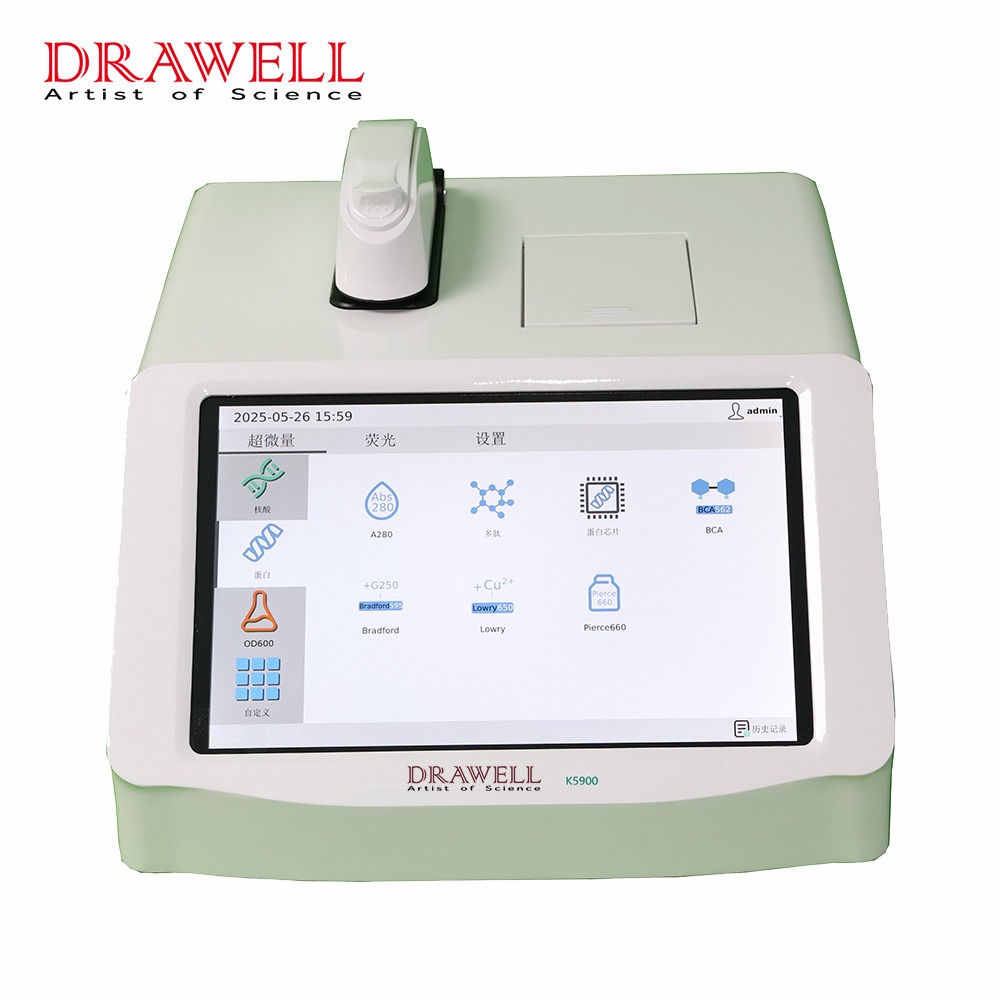
Nano Spectrophotometer DW-K5900F
• Cuvette Mode: 10/5/2/1mm
• Ultra-micro Volume: 0.3~2L
• Cuvette module:≥1000uL
• Absorbance Accuracy: 0.002 Abs
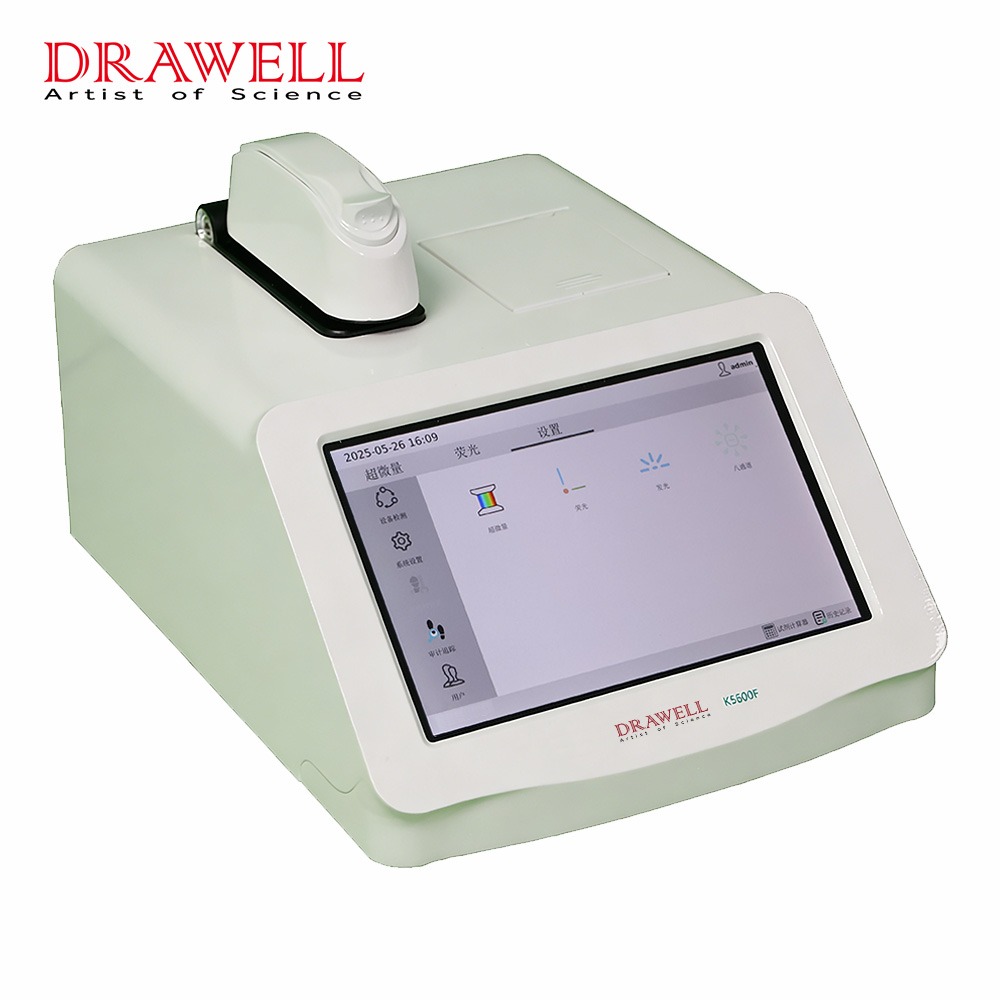
Nano Spectrophotometer DW-K5600N CN F
• Cuvette Mode: 10/5/2/1mm
• Ultra-micro Volume: 0.3~2L
• Cuvette module:≥1000uL
• Absorbance Accuracy: 0.002 Abs

Nano Spectrophotometer DW K5800N-CN-TN-F-FT
• Cuvette Mode: 10/5/2/1mm
• Ultra-micro Volume: 0.3~2μL
• Cuvette module:≥1000uL
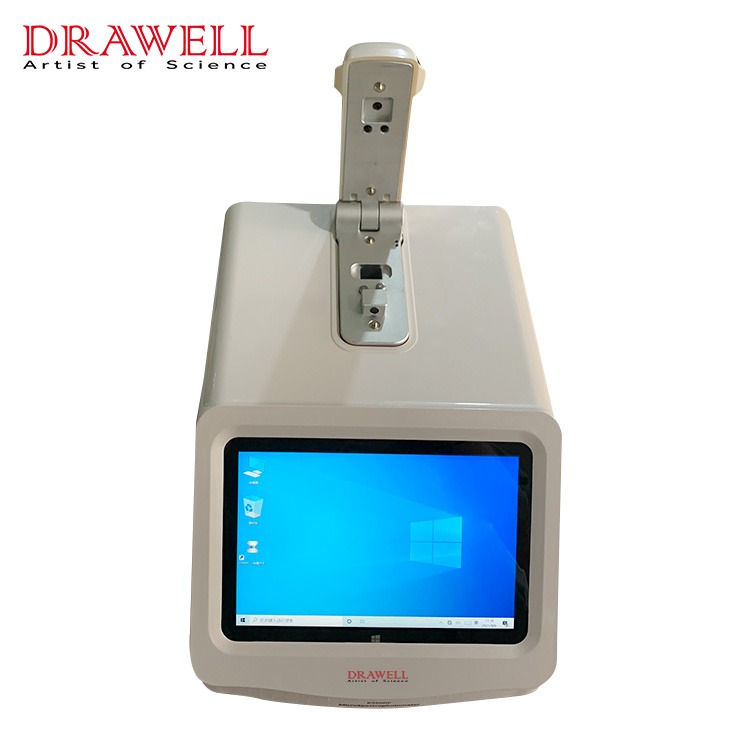
Micro Spectrophotometer DW-K5800 DW-K5800C
• Sample volume: 0.3 ~ 2 μL
• WL accuracy: <± 0.5nm
• Cuvette optical path: 1mm, 2mm, 5mm, 10mm
K5600/K5600C Nano Spectrophotometer (with cuvette)
• Sample volume: 0.3-2.0μL
• Wavelength accuracy: ± 1nm
• Trial cuvette light path: 1/2/5/10mm
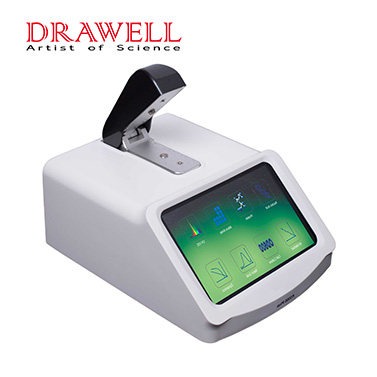
K5500Plus Nano Spectrophotometer
• Sample volume: 1~2μL
• Wavelength accuracy: ± 1nm
Applications of Nano/Micro Spectrophotometer
- Nucleic Acid Quantification & Purity: Measure DNA and RNA concentration and evaluate sample purity before PCR, sequencing, cloning and other downstream workflows.
- Protein Quantification: Measure protein concentration by direct absorbance or supported colorimetric methods, depending on the selected model and software configuration.
- Cell Culture / OD Measurement: Measure bacterial or cell suspension absorbance for growth monitoring and routine culture analysis.
- Microarray & Fluorescent Dye Measurement: Quantify nucleic acids together with fluorescent dyes in supported microarray and fluorescence workflows.
- Full-Wavelength UV-Vis Scanning: Use selected models for spectral scanning and absorbance measurement beyond dedicated DNA and protein methods.
- Low-Concentration Fluorescence Quantification: Fluorescence-equipped models extend detection to low-concentration nucleic acid or protein samples that are not ideal for absorbance-only measurement.

Work Interface of Nano/Micro Spectrophotometer
Open the K5500Plus software and enter the main interface of the micro spectrophotometer as follows:
The system main interface includes: Nucleic Acid, Protein, Micro Array, UV-VIS, Kit Method, Cell Culture, Nano Gold, Dynamics, Device Check, Oligo, Tool, eleven modules.


- Nucleic Acid: DNA / RNA concentration and purity analysis
- Protein: Direct A280 and supported protein assays
- UV-Vis: Full-wavelength absorbance scanning
- Cell Culture: Absorbance measurement of cell or bacterial suspensions
- Microarray: Nucleic acid and fluorescent dye measurement
- Fluorescence: Low-concentration quantification on fluorescence-equipped models
Which Nano Spectrophotometer Configuration Do You Need?
- Microvolume Only: Choose this configuration if your main work is routine DNA, RNA and protein quantification and sample volume is limited.
- Microvolume + Cuvette: Choose a cuvette-equipped model if you also need conventional absorbance measurements, cell culture testing or methods that require a larger optical path.
- Microvolume + Fluorescence: Choose fluorescence detection when low-concentration samples may fall outside the practical range of absorbance-based quantification.
- Cuvette Temperature Control: Consider a temperature-controlled model when assays require the cuvette sample to be maintained at a defined temperature during measurement.
Compare Popular Nano Spectrophotometers
For laboratories comparing microvolume spectrophotometers, sample volume, concentration range, measurement speed and available measurement modes are usually the first factors to consider. The table below compares representative models from Drawell and several mainstream brands.
| Key Parameter | Drawell DW-K5900F | Thermo Scientific NanoDrop OneC | DeNovix DS-11 FX+ | Implen NP80 |
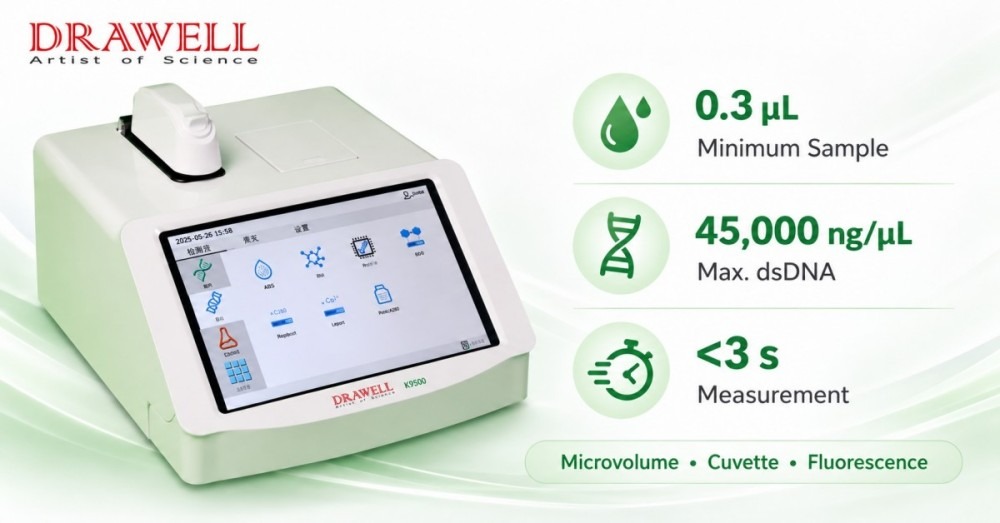
| Microvolume Sample | 0.3–2 μL | Min. 1 μL | 0.5–1 μL | 0.3–2 μL |
| dsDNA Range | 2–45,000 ng/μL | 2–27,500 ng/μL | 0.75–37,500 ng/μL | 1–16,500 ng/μL |
| Absorbance Range* | 0–900 A | 0–550 A | Up to 750 A | 0.02–330 A |
| Measurement Time | <3 s | 8 s | <3 s | 2.5–4 s |
| Wavelength Range | 200–850 nm | 190–850 nm | 190–840 nm | 200–900 nm |
| Cuvette Measurement | Yes | Yes | Yes | Yes |
| Fluorescence | Yes | No | Yes | No |
How to Maintain Nano/Micro Spectrophotometer?
- Light source. The life of the light source is limited. In order to extend the life of the light source, do not turn on the light source when the instrument is not in use. The continuous use of the instrument should not exceed 3h. If you need to use it for a long time, it is best to pause for 30min.
- Absorption tank. The absorption cell must be used correctly, and special care should be taken to protect both optical surfaces of the absorption cell.
- In order to avoid dust and contamination of the instrument, when the work is stopped, the dust cover should be covered.
- The sample base should be regularly cleaned with 75% alcohol, and washed with water after each experiment to keep the test head clean.
- Wipe the upper and lower bases with clean dust-free paper before the instrument can perform the next sample test. When using the cuvette mode, remove the cuvette, wash it thoroughly before proceeding to the next sample test.
- If the instrument is not in use for a period of time, it should be powered on at least 20 ~ 30min each time to keep the machine dry and maintain the performance of the electronic components.
Why Choose Drawell Nano Spectrophotometers?
Up to 45,000 ng/μL dsDNA, giving the DW-K5900F the highest stated upper dsDNA range among the representative models compared above.
Microvolume measurement starts from 0.3 μL, helping preserve limited DNA, RNA and protein samples.
The DW-K5900F combines microvolume UV-Vis, cuvette measurement and fluorescence detection in one platform, reducing the need for separate instruments for different concentration ranges.
1 year free official warranty, including repairing quality-damaged parts, and offering replacements of selected parts (shipping cost is extra). 5% of the product price is charged for extending the warranty before the end of the official warranty.