


Imagine a pill rolling off the production line, undergoing global transportation, storage in warehouses, and finally arriving on pharmacy shelves – a journey that takes years. How can we confidently guarantee that, the moment a patient ingests it, its efficacy, safety, and quality remain the same as they were when it left the factory? The answer lies in pharmaceutical stability testing – a critical science that ensures consistent quality throughout a drug’s lifecycle. It’s not just a regulatory requirement; it represents a commitment by pharmaceutical companies to their products.
As a leading provider of laboratory equipment, Drawell Analytical recognizes the crucial role precise stability testing instruments plays in pharmaceutical quality control. Here we detail the analytical tools required in pharmaceutical stability test, and the global standards that govern them.

Why is Pharmaceutical Stability Testing Essential?
Pharmaceutical stability testing is more than a simple “shelf life” test. It is a systematic scientific process designed to reveal how the quality attributes of drug substances and drug products change over time under varying environmental conditions (such as temperature, humidity, and light) through simulation and long-term monitoring.
Its core objectives are threefold:
- Establishing expiration dates: Providing irrefutable scientific data for the “expiration date” on drug labels and storage conditions.
- Ensuring patient safety: Identifying and quantifying potential degradation products to ensure the safety and efficacy of the drug throughout its lifecycle.
- Optimizing packaging and formulation: Assessing the adequacy of the selected packaging system and providing critical feedback for formulation process development.
In short, stability testing is the lifeline connecting drug development and commercialization, ensuring patient safety. For regulators, stability data is the ultimate evidence required for marketing authorization, demonstrating consistent drug quality.
Core Equipment for Pharmaceutical Stability Testing
A robust stability testing program revolves around two main categories of instruments:
- Stability environment instruments – to simulate controlled stress/real-world storage conditions
- Analytical instruments for drug quality evaluation – to monitor chemical, physical, and microbiological changes over time
As a pharma test instruments provider, Drawell can provide you most of the instruments in your tesing. Below we show how your lab or partner labs can build a fully compatible system using Drawell equipment.
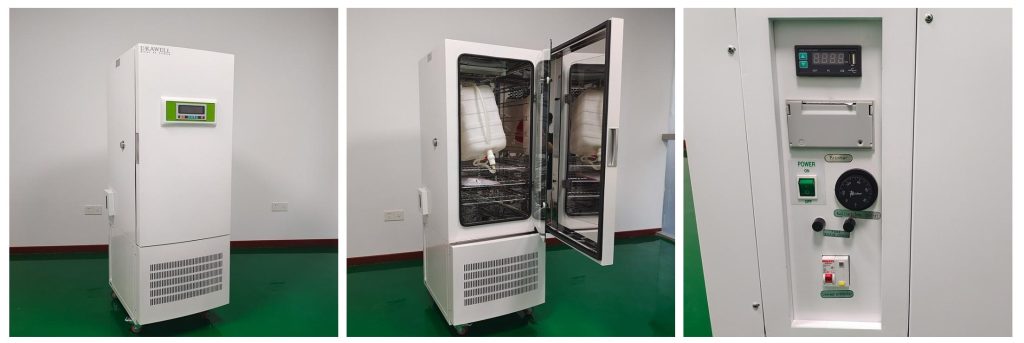
Stability Environment Instruments
At the heart of every stability test lies the stability chamber, also called a constant temperature and humidity chamber or medicine stability testing chamber. Drawell can providng you equipments including “Medicine Stability Testing Chamber / Constant Temperature & Humidity Chamber / Climate Chamber / Illumination Incubator” as part of its incubator & oven lineup.
These chambers allow simulation of conditions like:
- Long-term testing: 25 °C ± 2 °C / 60 % RH ± 5 % RH
- Accelerated testing: 40 °C ± 2 °C / 75 % RH ± 5 % RH
- Photostability testing: with built-in light modules to satisfy ICH Q1B requirements
As a supplier, Drawell’s chambers often come with features like programmable control, real-time logging, and alarm systems to prevent deviations. These features help labs stay compliant while reducing risk during long test cycles.
Analytical Instruments for Drug Quality Evaluation
Pharmaceutical stability testing goes beyond environmental simulation – it relies heavily on analytical instruments to track how a drug’s chemical, physical, and microbiological properties evolve over time.
Below, we explore each category with examples of Drawell’s professional testing instruments, trusted by pharmaceutical laboratories worldwide.

(a) Chemical Property Analysis
Chemical stability is the foundation of pharmaceutical quality assurance. It ensures that the active pharmaceutical ingredients (APIs) and excipients remain chemically intact and free from unwanted degradation or impurity formation throughout the product’s shelf life.
Drawell provides advanced analytical systems that help detect even minor chemical variations under ICH and FDA-compliant testing protocols.
| Purpose of Testing | Key Parameters / Tests | Recommended Drawell Instruments |
| To quantify active ingredients and monitor impurities | – Assay & Impurity Profiling | Drawell HPLC System – High-precision quantitative and impurity analysis |
| To measure drug concentration or detect chromophoric degradation | – Absorbance & Purity Analysis | UV-Vis Spectrophotometer – Measures optical absorbance and concentration |
| To identify molecular or functional group changes | – Structural Fingerprinting via IR Spectra | FTIR/NIR Spectrometer – Detects molecular structure alterations |
| To assess solution stability | – pH & Conductivity Monitoring | pH Meter / Conductivity Meter – Evaluates ionic balance and hydrolytic stability |
Drawell’s analytical chemistry instruments provide the sensitivity and reproducibility required for reliable chemical stability profiling, supporting accurate impurity, assay, and degradation studies in accordance with global pharmacopoeia standards.
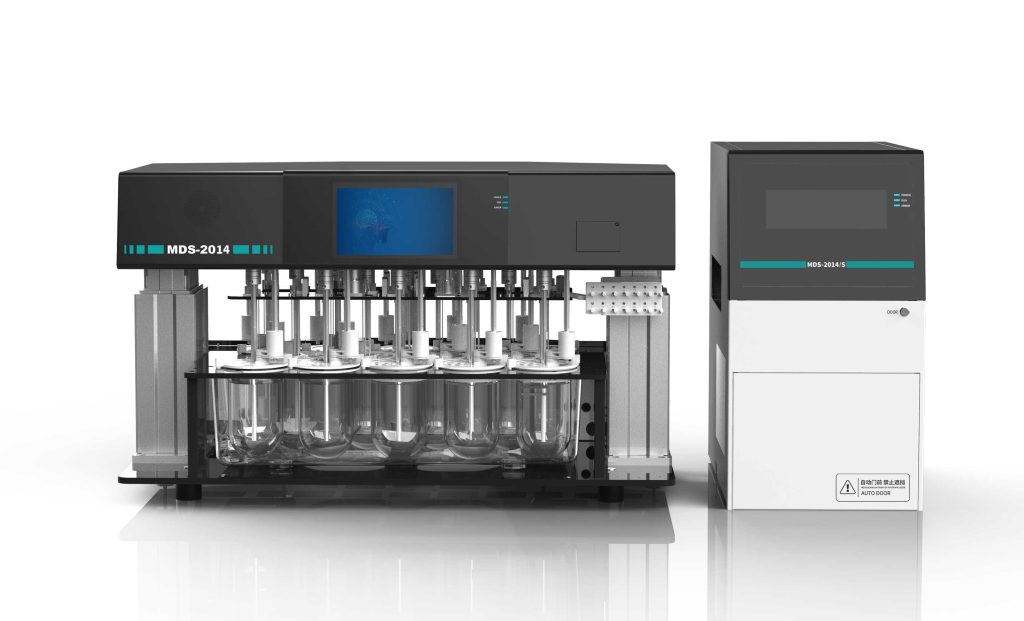
(b) Physical Property Analysis
Even when chemically stable, a drug’s physical form – hardness, dissolution rate, and disintegration behavior – may change over time, affecting bioavailability and performance.
Drawell’s physical testing instruments help manufacturers evaluate and maintain dosage form integrity throughout stability studies.
| Purpose of Testing | Key Parameters / Tests | Recommended Drawell Instruments |
| To study drug release behavior during stability testing | – Dissolution Rate | Dissolution Tester – Measures drug release profile over time |
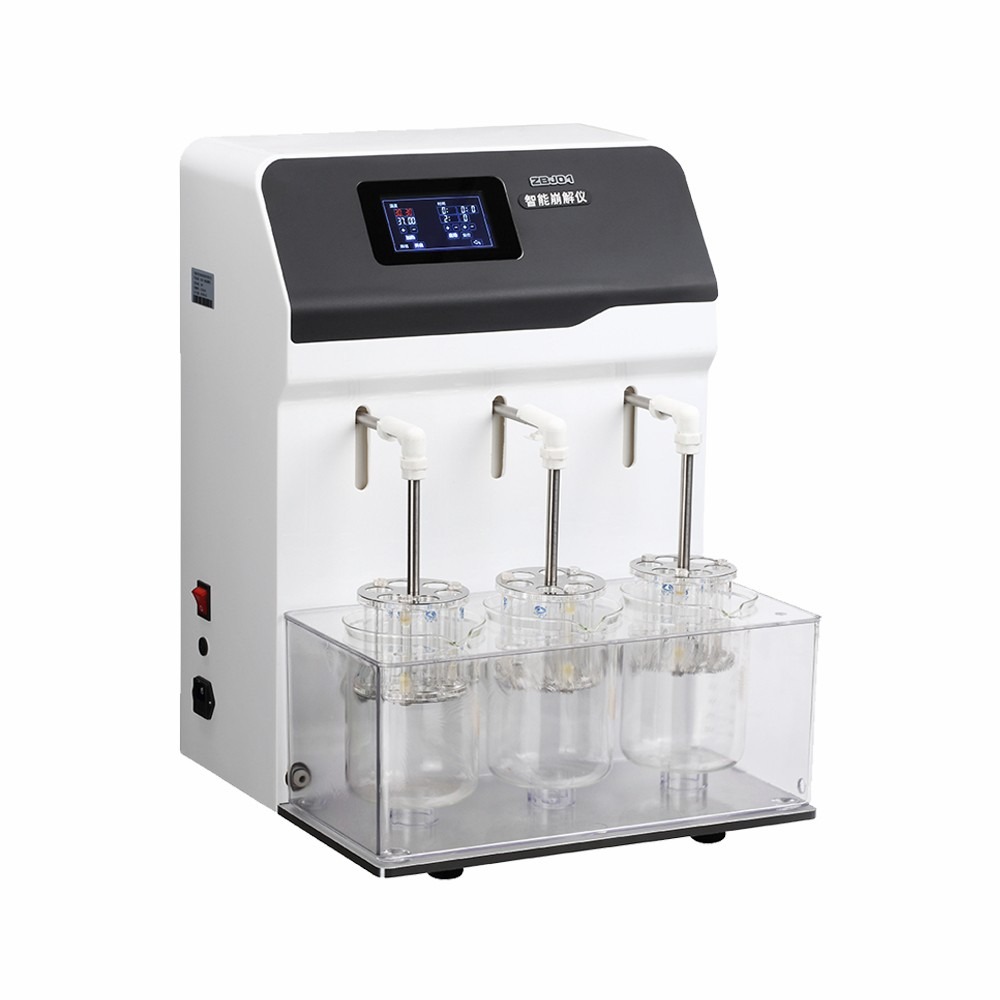
| To determine breakdown time of solid dosage forms | – Disintegration Time | Intelligent Disintegration Apparatus – Determines tablet/capsule disintegration time |
| To ensure tablet mechanical strength | – Hardness & Friability | Tablet Hardness & Friability Tester – Evaluates compressive strength and resistance |
| To assess crystal form and purity | – Melting Point / Thermal Behavior | Melting Point Meter – Detects purity and polymorphic transitions |
| To verify compactness and density changes | – Bulk Density, Powder Flow | Density Meter – Monitors compactness variations in solid formulations |
With precise mechanical and thermal analysis instruments, Drawell supports pharmaceutical labs in monitoring structural stability, ensuring tablets and capsules maintain consistent physical performance throughout storage.
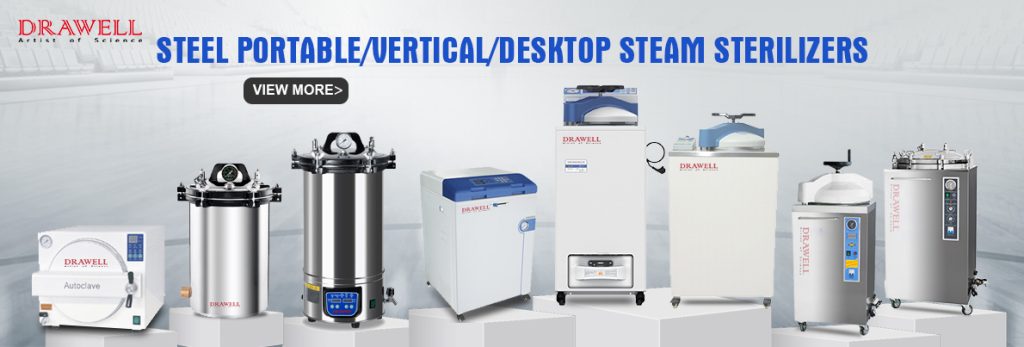
(c) Microbiological Property Analysis
Microbiological stability ensures that pharmaceutical products remain free from contamination and retain sterility over time – a critical requirement for injectables, ophthalmics, and biologics.
Drawell’s microbiological testing solutions help laboratories conduct environmental monitoring, sterility verification, and microbial load testing under controlled and compliant conditions.
| Purpose of Testing | Key Parameters / Tests | Recommended Drawell Instruments |
| To simulate microbial growth environments | – Temperature & Humidity Control | Constant Temperature & Humidity Chamber / Incubator – Maintains controlled growth conditions |
| To sterilize equipment and media | – Autoclaving / Sterility Maintenance | Autoclave / Sterilizer – Ensures aseptic processing and sample safety |
| To measure microbial load or endotoxin content | – Absorbance / Enzymatic Reaction Detection | ELISA Microplate Reader & Washer – For microbial enumeration and endotoxin quantification |
Drawell’s microbiological testing instruments are built to meet GMP and biosafety standards, providing pharmaceutical labs with dependable tools for ensuring sterility and microbial stability across product life cycles.

The Global View: Stability Testing’s International Requirements and Guidelines
All stability programs must be designed in strict adherence to international standards, primarily those set forth by the International Council for Harmonisation (ICH). These guidelines provide the common framework accepted by regulatory bodies across the US (FDA), Europe (EMA), and Japan.
| ICH Guideline | Focus Area | Mandate in Stability Program |
| ICH Q1A(R2) | Testing Protocol | Mandates the design of formal stability studies, including standard conditions (e.g., 25℃/60%RH for climatic zone II) and frequency of testing. |
| ICH Q1B | Photostability | Specifies light exposure levels to assess the inherent stability of the drug when exposed to direct or indirect light. |
| ICH Q1D & Q1E | Data Management | Provides statistical guidance for implementing reduced designs (e.g., matrixing) and the proper statistical evaluation of data to accurately assign the retest period or shelf-life. |
Compliance with these ICH principles demands that all analytical instruments, particularly complex systems like HPLC, are fully qualified (IQ/OQ/PQ) and that their software ensures 21 CFR Part 11 readiness for electronic records and signatures, securing data integrity.
Future Trends and Challenges
Even as stability testing becomes more standardized, emerging trends and operational challenges exist:
- Automation & Remote Monitoring: Stability chambers with IoT connectivity and cloud dashboards allow labs to monitor temperature/humidity deviations remotely.
- Data Integrity & Compliance: Suppliers increasingly embed 21 CFR Part 11-compliant logging, audit trails, and secure data export.
- Predictive Analytics & AI: Leveraging accumulated stability datasets, AI models can forecast degradation kinetics, reducing the number of timepoints or cycles needed.
- Eco-friendly & Energy-efficient Design: Customers are pushing for lower power consumption, better insulation, and sustainable materials in long-term stability chambers.
Yet challenges remain: maintaining calibration accuracy across geographies, synchronizing environmental controls and analytical workflows, ensuring consumables (filters, sensors) are available globally, and supporting multiregional certification.
Final Words:
In the world of pharmaceuticals, a demanding industry, no one can operate in isolation. Drug stability testing, built on rigorous global guidelines and sophisticated analytical instrumentation, bridges the gap between laboratory research and patient trust. As a trusted supplier and partner, we are committed to providing the most reliable and compliant stability testing solutions, helping pharmaceutical companies overcome the challenges of time and space, ensuring the safe and effective delivery of every treatment to future patients.
Stability may test the drug – but with the right instruments, Drawell ensures your data withstands the test of time.
Related Products Recommendation




Get Quote Here!
Latest Posts



What Next?
For more information, or to arrange an equipment demonstration, please visit our dedicated Product Homepage or contact one of our Product Managers.


