


In material science and manufacturing industries, rapid and reliable identification of different polymers are crucial. Whether for quality control, recycling, or research and development, distinguishing between different polymer types quickly can save time and reduce costs. Fourier Transform Infrared Spectroscopy (FTIR) has become one of the most widely adopted techniques for rapid polymer identification, providing a combination of speed, accuracy, and non-destructive analysis.

The Core Principle of FTIR in Polymer Analysis
The effectiveness of FTIR for polymer identification lies in its ability to reveal the unique molecular structure of polymers by analyzing how they interact with infrared light.
Molecular Vibrations and Infrared Absorption
The basic principle of FTIR relies on molecular vibratory. When infrared radiation travels through a polymer, the bonds between molecules absorb energy at certain frequency. These absorptions correspond with vibrational patterns like stretching or stretching of the chemical bonds. Since the different functional groups absorb light at specific frequencies, each polymer produces an absorption pattern that is unique to it.
Infrared Spectrum as a Molecular Fingerprint
The absorption of infrared radiation from polymers is represented as a spectrum, displaying the absorption against the wavenumber. This spectrum is a molecular fingerprint, which reveals its chemical composition. For instance, polyethylene exhibits distinct C-H stretching vibrations in the vicinity of 2915cm⁻¹ and 2849cm⁻¹ in comparison to polypropylene, which exhibits distinct peaks derived due to the methyl group vibrations. Polyvinyl chloride is recognized by the strong C-Cl stretching absorption within the 600–700cm⁻¹ area. These variations are what make FTIR an effective tool to distinguish the visually identical polymers.
Spectral Matching and Identification
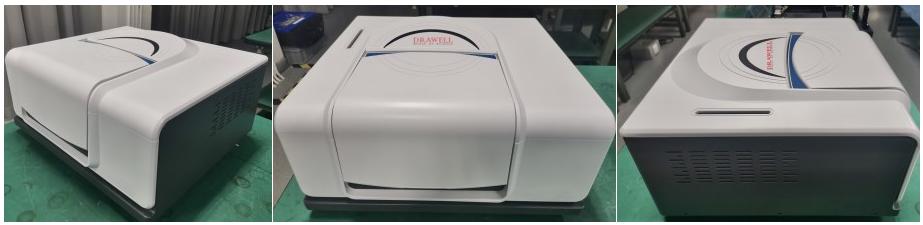
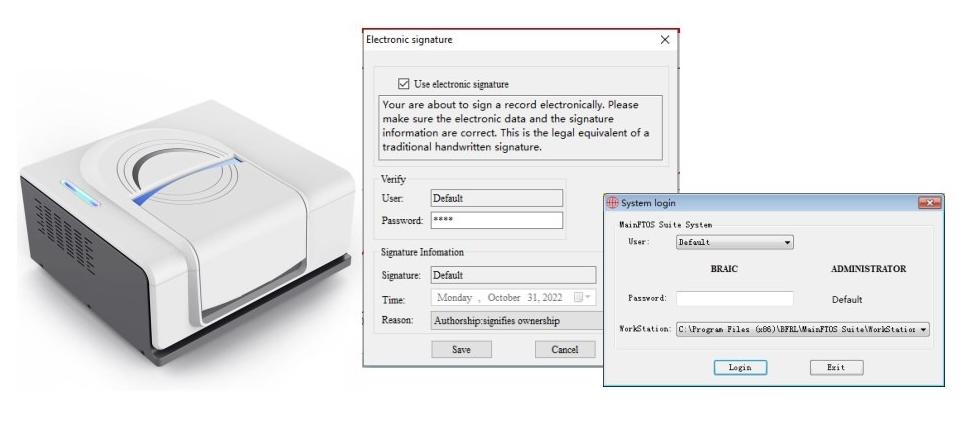
In real-world applications in real-world applications, the spectrum of polymers is compared to library of reference spectrum libraries. This process of match allows for quick and accurate identification even when only tiny pieces and thin film are accessible. The latest FTIR instruments, supported by the latest software algorithms facilitate automated matching which simplifies the process of identification.
Why FTIR is Ideal for Polymer Analysis
Speed and Efficiency
One of the main reason FTIR is the best choice for analyzing polymers is its speed. The tests can be completed in minutes or seconds, which allows factories and labs to rapidly verify the identity of materials without requiring a lengthy process of processes for preparation or testing. This speedy turnaround is especially useful when it comes to quality control and recycling in which large quantities of materials need to be screened within a short period of time.
Non-Destructive Testing
FTIR permits the study of polymers without damaging or altering the specimen. The non-destructive nature of FTIR ensures that the polymer can be further tested in the event of need. The thin films and coatings powders, pellets and even micro-fragments, can be inspected without damaging their structure.
Sensitivity and Versatility
Polymers typically contain fillers, additives or mixtures that make analysis difficult however FTIR can identify and distinguish the compounds with a high sensitivity. It is able to work with liquid, solid or gaseous samples which makes it a good choice for different applications. When it comes to identifying pure polymers or complex composites FTIR gives accurate results.
Distinct Molecular Fingerprints
Each polymer has its own unique infrared spectrum which reveals the chemical structure. FTIR can capture these spectra with extreme precision, transforming the spectra into fingerprints of molecular structure. This is a unique feature that allows researchers to differentiate between polymers that look or feel alike, yet differ in their composition like polyethylene or polypropylene.
Integration with Modern Technology
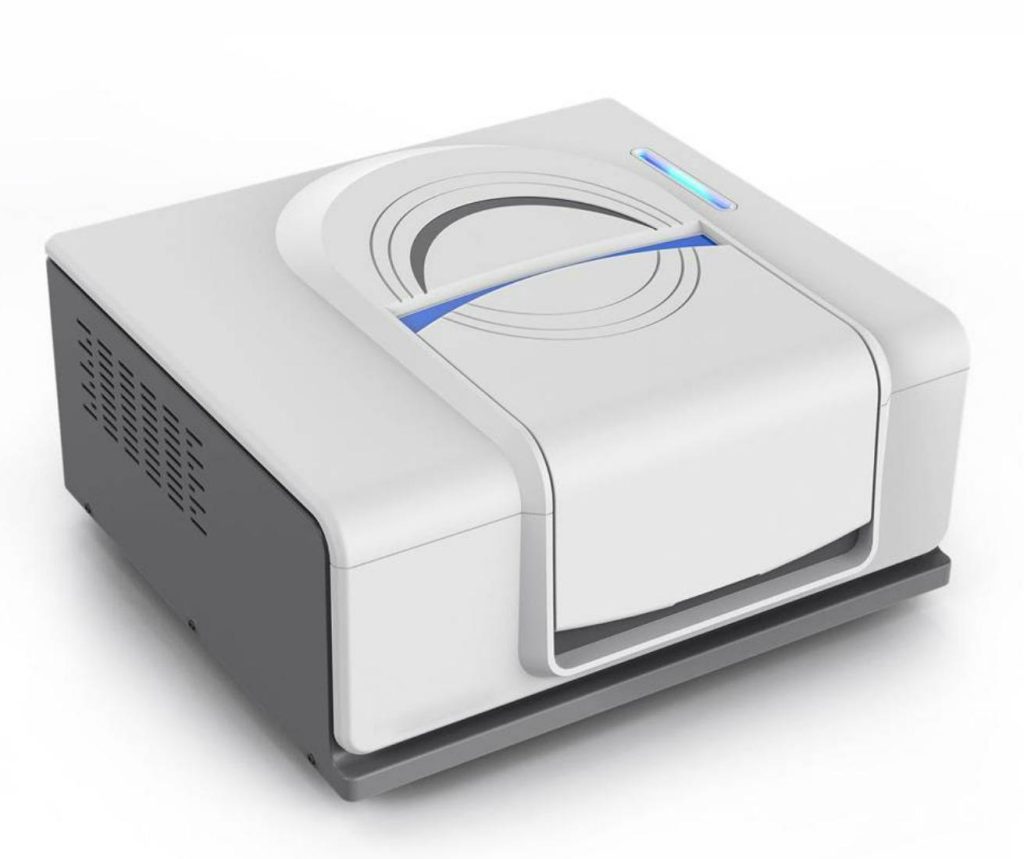
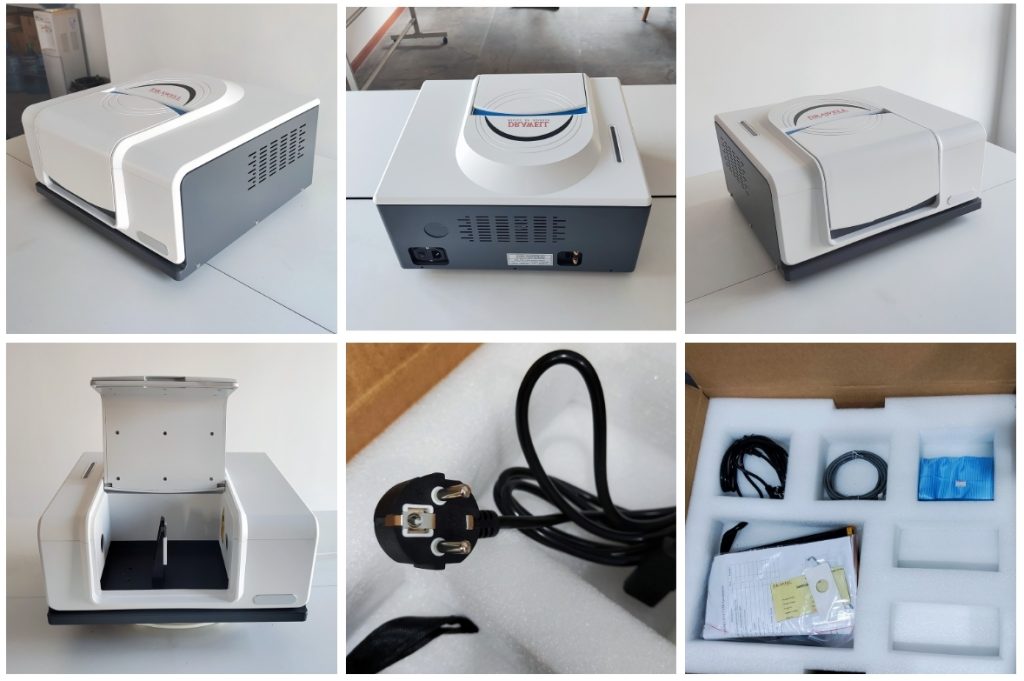
Contemporary FTIR instruments are small easy to use and mobile, making it possible to test on the spot in recycling facilities, warehouses or manufacturing facilities. With advanced spectral libraries and machines learning techniques, FTIR systems deliver automated exact identifications for polymers that have been degraded or mixed that ensure reliability in various circumstances.
The Workflow of FTIR for Rapid Polymer Identification
To understand how FTIR achieves rapid polymer identification, it is important to look at the workflow that guides the process from handling the sample to delivering a final identification.
1. Sample Preparation
The process begins with sample preparation for FTIR analysis that is usually less than other methods of analysis. FTIR can be used to analyze polymers of a variety of types that include pellets, films, powders or micro-fragments. Most of the time the material doesn’t require any chemical treatment or intricate processes prior to testing, which will save time and energy.
2. Spectral Acquisition
When the sample is placed inside the instrument, the infrared light is directed towards the sample. The polymer is able to absorb specific wavelengths of the radiation based on the motions that its molecules form. These absorptions are monitored and transformed to an infrared spectrum which is a representation of the chemical characteristics for the materials.
3. Spectrum Interpretation
The spectrum that is obtained shows its molecular signature of polymer. The peak areas correspond to certain functional groups or bond vibrations which allow you to distinguish one type of polymer from one another. For example, the variations between C-H stretching as well as methyl vibrations enable experts to differentiate between polypropylene and polyethylene, even though they look identical in physical appearance.
4. Spectral Matching
To make it easier to identify the spectrum acquired is then compared with reference spectra in the vast FTIR libraries. Modern FTIR systems utilize automated software for this sort of comparison, which results in fast and accurate matches. This process is essential to achieve quick results particularly when dealing with huge quantities of material in recycling or quality control.
5. Reporting and Decision-Making
The final step of the process is reporting the results. The results are documented and used to determine the quality of the material or classify recyclable plastics or back up research results. For industrial applications, such findings directly affect decisions regarding production, acceptance of material or the development of products.
Applications of FTIR in Polymer Identification
| Application Area | Role of FTIR | Example Use Case |
| Quality Control in Manufacturing | Assures that the polymer grades are correct and detects substitution or contamination | Verifying that polyethylene is being used instead of polypropylene in packaging film |
| Recycling and Waste Management | Sorts and recognizes polymers in order to increase the efficiency of recycling | Distinguishing PET and PVC in recycling plastic bottles streams |
| Failure Analysis | Determines if degrading or material substitution led to product failure. Determines if degradation or material substitution caused | Examining cracks in automotive components caused by the oxidation of polymers |
| Research and Development | New polymer blends are identified and composites and additives | Studying the impact on the flame-retardant properties of polypropylene |
| Regulatory Compliance | Verifies that the materials meet the required specifications and safety standards. | Examining the polymer type in medical housings for devices |
| Forensics and Material Authentication | Determines unknown polymers or the authenticity of the materials | The Authentication of polymer-based consumer products to protect against fake products made of fake materials |

Challenges and Considerations in FTIR for Polymer Identification
| Challenge / Consideration | Description | Impact on Polymer Identification |
| Sample Contamination | There is a possibility of dirt, oils or other contaminants on the polymer’s surface | Could result in false spectral peaks and can reduce the accuracy of identification |
| Polymer Additives and Fillers | Colorants, additives, or fillers can alter the spectrum of infrared radiation. | Could cause confusion in spectral interpretation, and result in misidentification |
| Polymer Blends and Composites | Combinations of polymers made up of more than two could create spectral features that overlap | It requires advanced analysis and software that can differentiate distinct components |
| Degraded or Aged Polymers | Chemical changes caused by the sun, heat or Oxidation | The peaks change, which makes library match-making more difficult |
| Sample Thickness and Form | Very thin, thick or irregular samples may alter IR signal transmission | Could result in distorted or weak the spectra |
| Instrument Calibration and Maintenance | A poor calibration or improperly maintained instruments can impact the quality of spectral information | Reduces the reproducibility and accuracy of polymer identification |
| Library Limitations | Library of spectral spectra that is outdated or incomplete. | This limits the ability to detect rare or modified polymers. |
| Operator Expertise | Interpretation of spectra is a skill that requires skilled personnel. | Inexperienced operators might misspell polymers, despite sophisticated FTIR systems |
Recent Innovations in FTIR for Rapid Polymer Identification
Recent advancements in technology have further enhanced its speed, accuracy and usability, which has made rapid polymer analysis much easier.
1. Portable and Handheld FTIR Devices
A significant advancements is the creation of handheld and portable FTIR spectrometer. These devices are small enough to allow users to carry out polymer identification at the floor of production in warehouses, at the production floor, or in recycling facilities, without the need to transport samples to the laboratory. This reduces turnaround times and boosts productivity, while allowing immediate decision-making in material sorting or quality control.
2. Advanced Spectral Libraries
Modern FTIR systems are now incorporating an extensive and continually upgraded library of spectral spectra. The libraries cover a wide variety of polymer blends, types, and even materials that contain fillers or additives. The increased coverage allows for better identification of complex or modified polymers. This was difficult to determine with earlier reference databases.
3. Automated Spectral Matching and Machine Learning
The incorporation of automated spectral matching software has significantly improved the identification process. Machine learning algorithms can analyse the spectral data, detect subtle patterns and offer better identification, even with degradation of polymer or polymer blends. This minimizes the chance of human error as well as allowing quick processing of large volumes of sample.
4. Coupling FTIR and Complementary Techniques
Modern advancements also incorporate hybrid techniques which use FTIR is integrated with other analytical techniques, such as Raman spectroscopy or microscopy. The combined methods improve the identification of small elements, multilayered polymers or other contaminants, thereby expanding the scope of applications for which FTIR can offer actionable insight.
5. Improved Sensitivity and Resolution
Improvements in instrumentation have also increased the sensitivity and spectral clarity that are available in FTIR systems. Modern detectors can now capture greater detail in the spectral spectrum, which allows for detection of the presence of polymers inside smaller pieces thin films or even complex composite materials. This is especially useful in forensic and recycling processes where the size of samples and quality could be limited.
Final Thoughts
FTIR spectroscopy has become an essential instrument for rapid polymer identification, that combines speed, reliability and flexibility. from recycling plants to research laboratories, The technique helps streamline workflows and assures material integrity.
Related Products Recommendation


Get Quote Here!
Latest Posts


What Next?
For more information, or to arrange an equipment demonstration, please visit our dedicated Product Homepage or contact one of our Product Managers.


