


The choice between a freeze dryer vs dehydrator is dictated by the material in question. The two machines achieve the same end—water removal—but through incompatible mechanisms. One uses forced hot air to evaporate liquid water. The other freezes the sample, then applies vacuum so the frozen ice transitions directly to vapor, skipping the liquid phase. That’s sublimation.
Dehydrators run faster and cost less upfront. Heat, though, is a destructive force: shrinkage, case hardening, nutrient loss, volatile compound dissipation. Freeze dryers are capital intensive and slow—typical cycles run 24 hours or more. The payoff? Preservation of native structure, color, flavor, and rehydration dynamics.
Fruit leathers, herbs, other heat tolerant materials—a dehydrator makes economic sense. For biologics, pharmaceuticals, or any sample requiring both ultra low residual moisture and minimal thermal stress, freeze drying is not simply better. It’s the only viable approach.
Now: how each machine works, and how they compare.
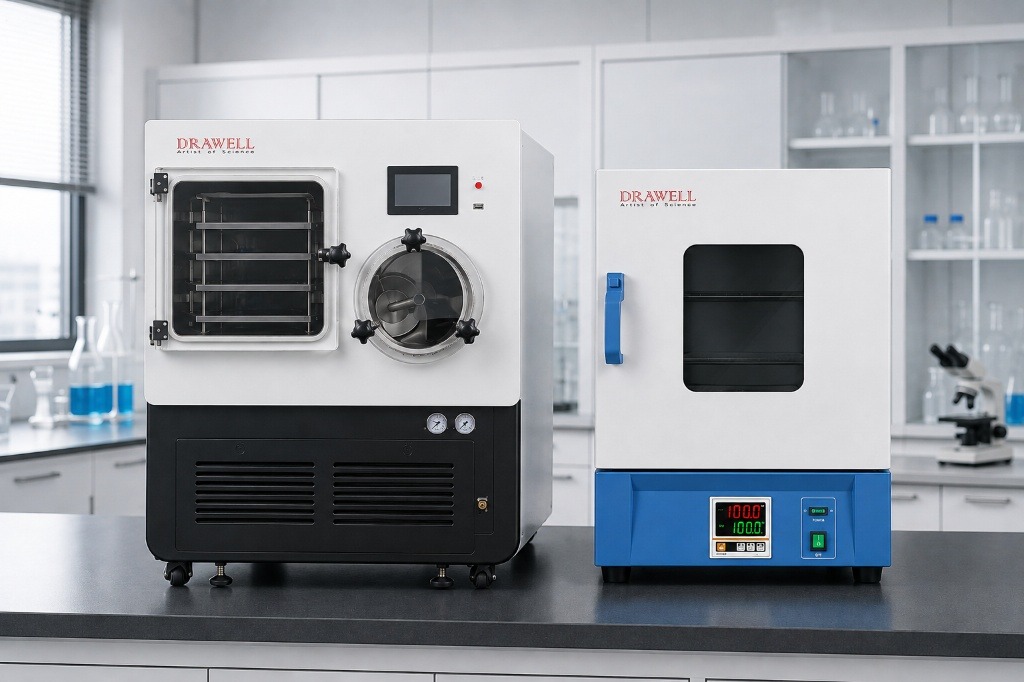
What Is a Freeze Dryer and How Does It Work?
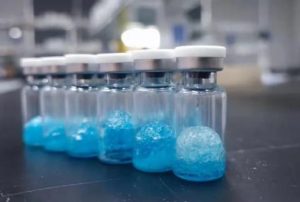
Freeze the material, pull a vacuum, and something interesting happens. Those frozen crystals don’t melt—they skip the liquid phase entirely and go straight from solid to vapor. That’s sublimation. And it’s the single most important distinction between a freeze dryer—lyophilizer is the technical term—and any heat based drying technology.
The Freeze Drying Process Step by Step
Three phases.
Freezing. The sample cools below its eutectic or collapse temperature. All free water solidifies.
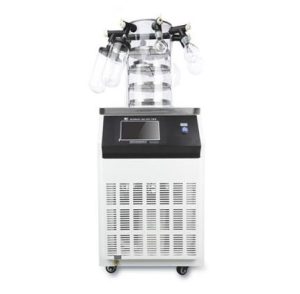
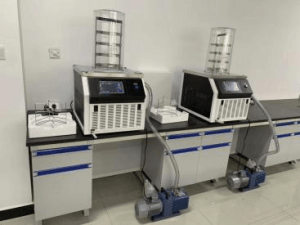
Primary Drying (Sublimation). The vacuum pump reduces chamber pressure. Shelves provide controlled heat—just enough to supply sublimation enthalpy. Ice converts to vapor, which migrates to and condenses on the cold trap. For users of benchtop freeze dryers, this stage demands precise vacuum and shelf temperature adjustment; a detailed laboratory freeze dryer operating procedure offers parameter guidance for specific sample types.
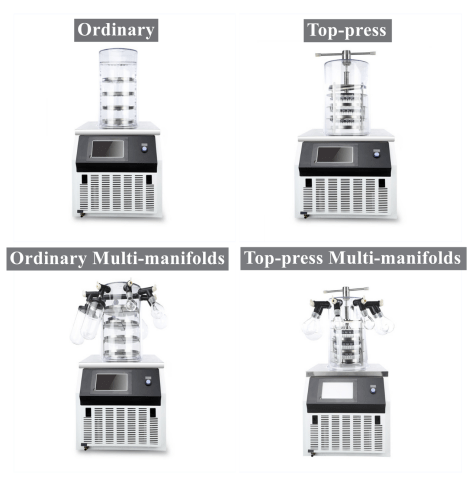
Benchtop freeze dryer configurations including ordinary top-press and multi-manifolds
Secondary Drying (Desorption). Residual bound water—molecules still associated with the solid matrix—requires higher shelf temperature, still under vacuum, to drive off. This phase brings total moisture content to its final low value.
What Happens to Your Sample During Freeze Drying?
A freeze dried sample exhibits three characteristic outcomes.
Structural integrity: sublimation leaves the matrix uncollapsed. No wrinkling, no volume reduction. The ice crystals’ former locations become void spaces, creating an open pore architecture.
With those pores present, water uptake is nearly immediate—rehydration takes seconds, not minutes. Degrading temperatures never come into play either, so proteins, enzymes, and volatile compounds remain intact. For biological tissues, APIs, vaccines, microbial cultures, and high value botanical extracts, freeze dryers are the standard choice. Structural preservation, fast reconstitution, and thermal protection—these three attributes are what drive that selection.
What Is a Dehydrator and How Does It Work?
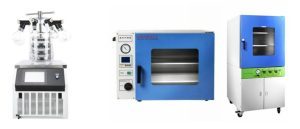
A dehydrator is mechanically simpler: heat plus air movement. Countertop food dehydrators are common domestically. In research laboratories, the equivalent function is performed by a laboratory drying oven or forced air circulation oven.
How Hot Air Removal Works in a Dehydrator
Heating elements raise air temperature inside the chamber. A fan circulates heated air across the sample surface. Liquid water absorbs thermal energy and vaporizes. As surface moisture evaporates, water from deeper within migrates outward. The humid air is exhausted and replaced by dry air.
That’s the cycle. Liquid to vapor. Evaporation. This single phase transition constitutes the fundamental difference from freeze drying.
The Laboratory Drying Oven Alternative
Domestic style dehydrators are not found in research labs. Drying ovens provide superior temperature uniformity, tighter control, and sanitary construction appropriate for scientific applications.
They handle routine tasks: glassware drying, sample conditioning, moisture content determination, material pre treatment.
Freeze Dryer vs Dehydrator: 7 Key Differences
The freeze dryer vs dehydrator comparison across seven parameters:
| Feature | Freeze Dryer (Lyophilizer) | Dehydrator / Hot Air Drying |
| Drying Method | Ice sublimation under vacuum | Hot air evaporation with forced convection |
| Water Removal Mechanism | Ice → vapor directly (sublimation) | Liquid water → vapor (evaporation) |
| Drying Temperature | Controlled low temp; product stays below 0°C during primary drying | Controlled heated air; typically 40°C to over 200°C depending on unit |
| Final Moisture Content | Usually 1% – 3% (material dependent) | Usually 5% – 15% (time and material dependent) |
| Sample Structure | Porous, lightweight, original shape retained | Shrinks, compacts, often discolors |
| Heat Exposure | Minimal—safe for temperature sensitive compounds | Sustained heat throughout the run |
| Equipment Cost | High upfront and operating costs | Lower purchase price, cheaper to operate |
How Freeze Drying and Dehydration Affect Sample Quality
The water removal pathway determines final product characteristics: morphology, texture, chemical stability, shelf life.
Structure: freeze drying leaves ice cavities intact. Shrinkage is minimal. The open cell architecture promotes rapid wetting. Dehydration, by contrast, subjects materials to surface tension as liquid water evaporates.
This tensile force collapses cell walls and the surrounding matrix. Significant volume reduction occurs. The product becomes denser and tougher. Excessive surface drying rates produce case hardening—a low permeability crust forms while internal moisture remains trapped.
Temperature exposure: dehydrators and drying ovens apply heat throughout the entire process cycle. Proteins denature. Enzyme activity decreases. Volatile compounds dissipate. Degradation accumulates with time at temperature.
Keep the product cold during primary drying and something shifts. Thermal input stays limited to sublimation enthalpy, so proteins, enzymes, viable microorganisms, and sensitive pharmaceutical compounds retain substantially higher biological and chemical activity than they would under any heat based process.
Final moisture numbers tell part of the story. Freeze drying typically lands between 1% and 3%—dry enough that water activity drops below levels that support microbial growth or rapid degradation.
That said, those porous materials are aggressively hygroscopic; leave them exposed and they’ll pull moisture from the air. So packaging becomes mandatory—vacuum sealed bags, crimped vials with elastomeric closures, oxygen barriers—and temperature and humidity control during storage matter just as much as the drying step itself.
Which Drying Method Is Better for Laboratory Samples?
No universal answer applies across all laboratory contexts. The optimal method depends on sample characteristics and analytical requirements.
Freeze drying is indicated for samples that are expensive, biologically active, or thermally fragile. Tissue specimens, serum, vaccines, APIs, microbial cultures, and heat labile botanical extracts all benefit from the combination of low temperature processing, low final moisture, and porous structure that supports consistent reconstitution.
Drying ovens are the practical choice for routine laboratory operations—glassware drying, moisture determination on stable solids, conditioning heat tolerant samples. Soils, minerals, reference materials do not require cryogenic processing. Drying ovens offer proven reliability, low operating cost, and operational simplicity for high throughput workloads.
What Are Freeze Dryers and Dehydrators Used For?
Common Freeze Dryer Applications cluster in three sectors. Pharmaceutical and biotech: vaccines, antibodies, plasma fractions, API stabilization. That’s the largest segment. Research and development labs are another big user—they need freeze dryers for culture preservation, analytical sample preparation, and preventing agglomeration in nanoparticle drying. Then there’s premium food production, where they’re used for specialty coffee, enzyme preparations, and any ingredient where quality cannot be compromised.

Dehydrators are employed in food processing—fruit slices, vegetable materials, herbs, jerky—and in commercial snack manufacturing where bulk production and per kilogram cost drive equipment selection.
Laboratory drying ovens serve several functions. They dry glassware and metal instruments after washing. They’re used in environmental analysis for moisture testing of soil, sludge, and solid waste. In materials engineering, they handle thermal aging studies and conditioning of polymers, rubber, and electronic components.
How to Choose the Right Drying Equipment
A freeze dryer makes sense if the material cannot tolerate temperatures above freezing during primary drying. Same goes for cases where final moisture must stay below 3%, where original morphology and porous structure need preserving, or where the work involves biological research, pharmaceutical development, or high precision analytical science.
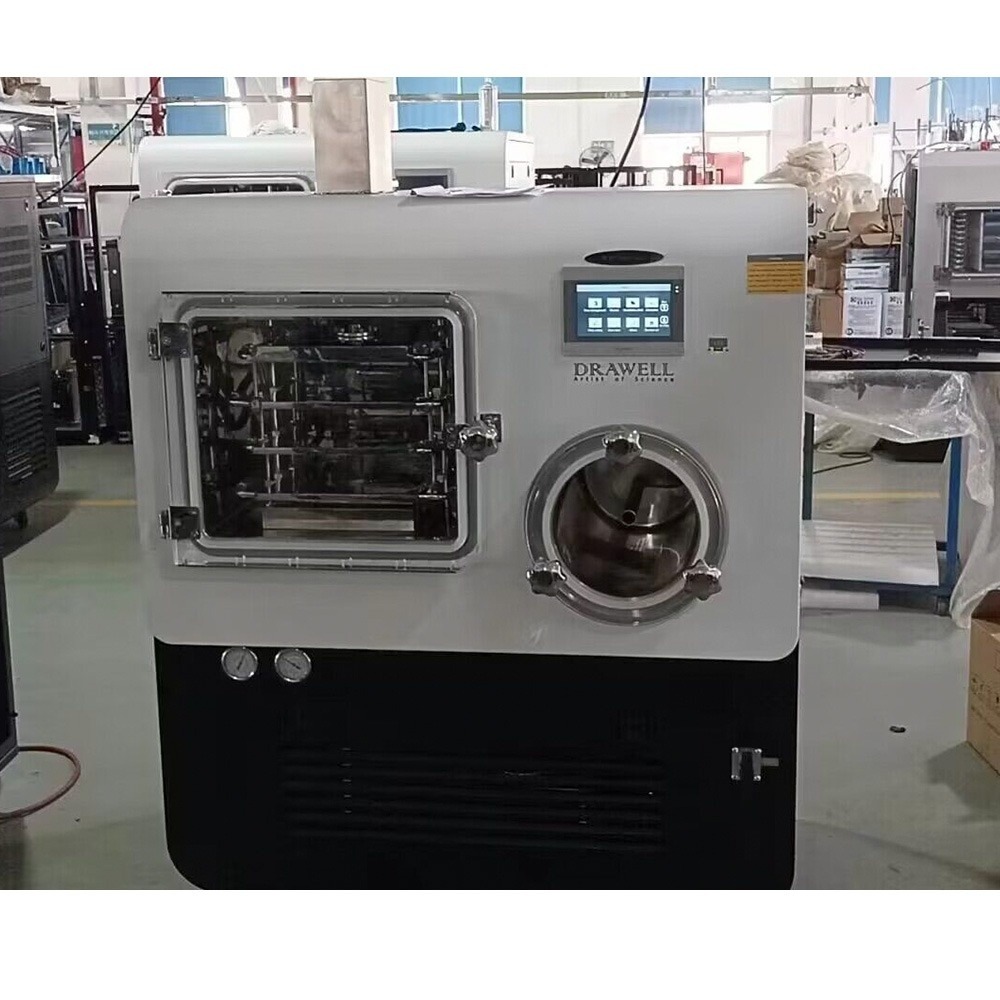
A dehydrator is appropriate when the material is food or agricultural product for general consumption, when capital cost constraints favor simpler equipment, or when hot air evaporation produces acceptable product quality.
A laboratory drying oven fits when controlled uniform hot air circulation is required, when drying or sterilization of glassware and tools, when routine moisture or constant weight determinations, or when a versatile heating solution for general laboratory use is needed.
What Does a Freeze Dryer Cost Compared With a Dehydrator?
Capital and operating cost differences reflect hardware complexity.
Freeze dryers require multiple engineered subsystems: high capacity refrigeration compressors, vacuum systems capable of sustained low pressure, cold traps for vapor capture, and multi sensor control systems with precise shelf temperature regulation.
Dehydrators have minimal componentry: heating element, circulating fan, drying chamber, basic thermostat. No vacuum. No cryogenic cooling. No hermetic sealing. Manufacturing cost is substantially lower.
Laboratory drying ovens are priced between domestic dehydrators and research grade freeze dryers. Chamber volume, temperature control accuracy, airflow design, and safety certification determine final cost. They represent a cost effective compromise for standard thermal processing.
Freeze Dryer vs Dehydrator: Which One Should You Choose?
The selection is not ambiguous once sample requirements are defined.
Freeze drying is mandatory for thermally labile materials requiring residual moisture below 3% and structural preservation. For these applications, the higher capital expenditure and longer processing times are justified; alternative drying methods would degrade product quality to unacceptable levels.
For apples, herbs, glassware, and any material where modest shrinkage or extended rehydration time is acceptable, a dehydrator or drying oven delivers adequate performance at a fraction of the capital expenditure.
Three parameters determine equipment choice: heat tolerance of the material; target residual moisture content; and the relative priority of processing speed versus structural fidelity.
With these factors specified, the freeze dryer vs dehydrator decision is straightforward. Heat-sensitive, low-moisture, structure-critical applications require freeze drying. All other materials can be processed effectively with hot-air equipment.
Get Quote Here!
Latest Posts

What Next?
For more information, or to arrange an equipment demonstration, please visit our dedicated Product Homepage or contact one of our Product Managers.


