


In high-stakes research and manufacturing, a tiny decimal-place error in fluid density can reject a pharmaceutical batch or halt a chemical production line. Density isn’t just a textbook formula—it is the ultimate indicator of material purity and quality control.
Yet, achieving flawless data is tough. Labs constantly battle practical headaches like sample evaporation, micro-air bubbles trapping on solids, or manual reading errors. Choosing the wrong density measuring instrument doesn’t just waste time; it compromises your audit trail.
That is why matching the right technology to your workflow is critical. Density is a fundamental physical property defined as mass per unit volume (typically expressed in units such as g/cm³ or kg/m³). Accurate density measurement is essential in understanding the properties of solids, liquids, and gases. Regular laboratories rely on various instruments to measure density, depending on the nature of the sample and the required precision. Whether you are a laboratory procurement manager sourcing reliable devices or a technician aiming for strict compliance with international testing methods, this guide maps out the exact lab equipment to measure density effectively. Below, we explore the core principles, the specific types of instruments used, and their real-world applications in laboratory settings.
Principles of Density Measurement
Density measurement is based on determining the relationship between the mass and volume of a sample. Mathematically, density (ρ) is expressed as:
ρ = Mass (m) / Volume (V)
Mass Measurement: Determined using precise balances or scales, ensuring accuracy to an appropriate number of decimal places.
Volume Determination: The volume of a sample can be measured directly (e.g., with volumetric containers) or indirectly (e.g., using displacement methods or specialized devices).
Methods of Density Measurement:
- Direct Measurement: Suitable for simple cases where both mass and volume are easily measurable.
- Archimedes’ Principle: Based on buoyancy, where the volume of a sample is determined by the amount of fluid it displaces. Note: While highly reliable for bulk materials, real-world execution requires strict correction for fluid temperature variations and removing micro-air bubbles from the sample surface, which can skew buoyancy data.
- Oscillatory Techniques: Used in advanced digital density meters, measuring changes in oscillation frequency caused by the sample’s density. Note: This electronic approach completely isolates the test from manual reading errors and surface tension variables, making it the modern benchmark for volatile or highly viscous liquids.
The choice of principle depends entirely on your sample type (solid, liquid, or gas) and your desired precision. Let’s look at the actual instruments used to measure density based on these principles.
Types of Density Measurement Instruments
Density measurement instruments vary widely based on the sample’s physical state and the precision requirements. Here we list some common instruments:
A. For Solids
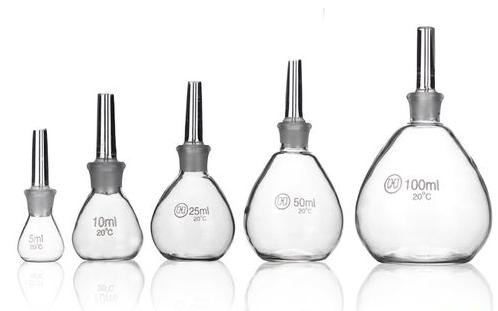
Pycnometers: A pycnometer is a specialized glass container with a precisely calibrated volume. The solid sample’s mass is weighed dry, and its true volume is determined by measuring the volume of a reference liquid it displaces. It is highly valued for powdered, granular, or porous solids (often adhering to standards like ISO 1183-1 for plastics).
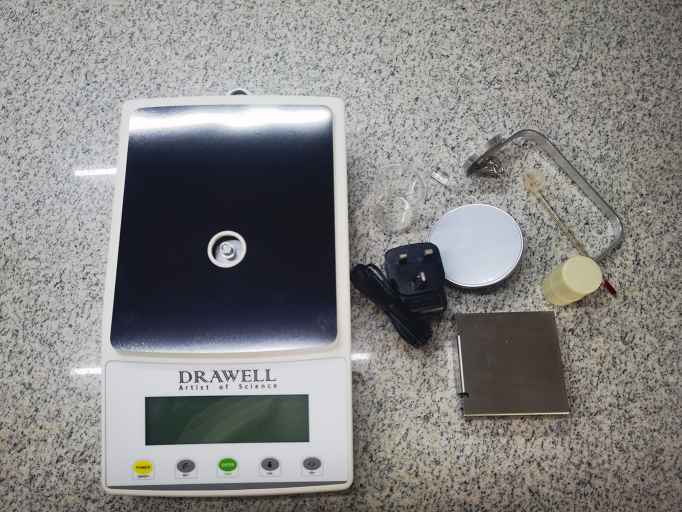
Density Determination Kits (Archimedes Principle): Used directly with high-end balances, these auxiliary kits measure solid density based on buoyancy when the object is weighed both in air and submerged in a liquid.
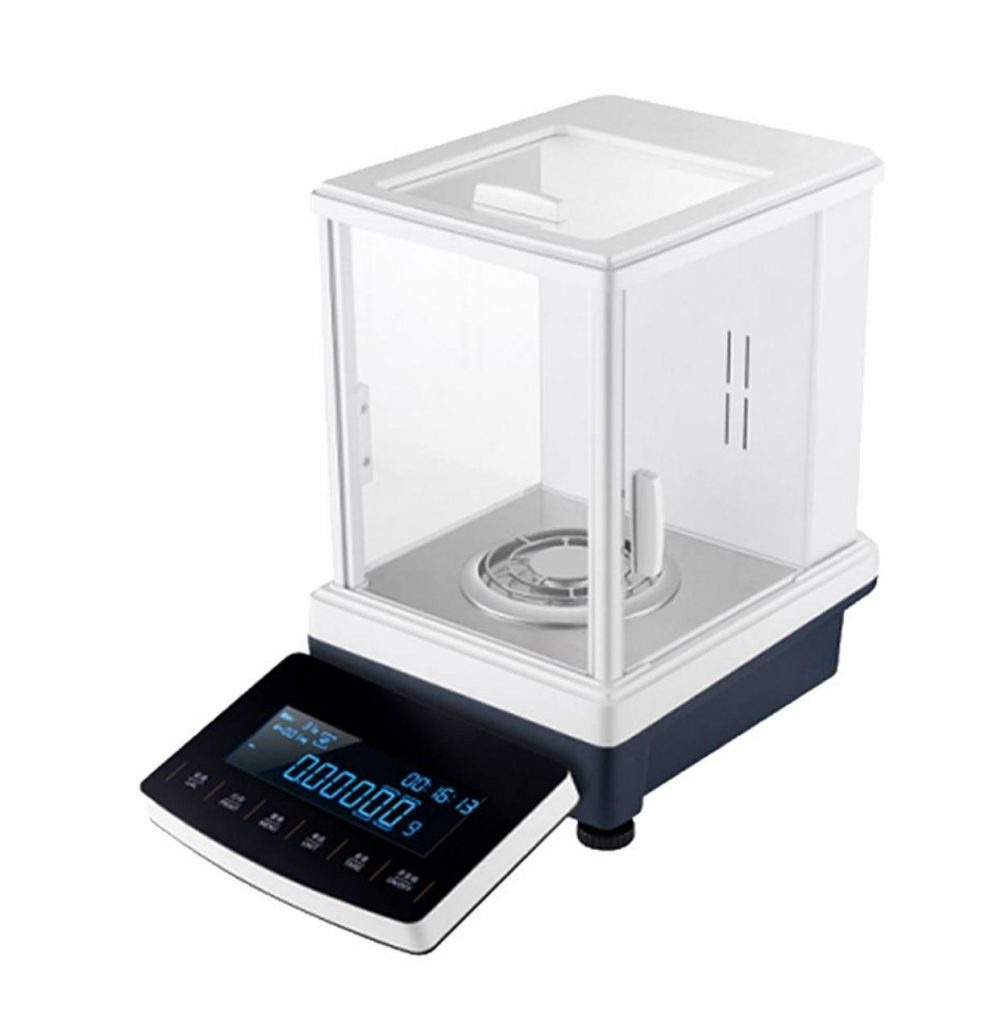
Application Tip: By combining an analytical balance with a specialized buoyancy fixture, integrated setups like the Drawell DW-M Density Balance allow laboratory technicians to automate these complex calculations within seconds via built-in software.
| Instruments for Solids | Description | Applications | Precision |
| Pycnometers | Glass containers with precise volumes used to determine density via displacement. | Powdered and granular solids. | High |
| Density Determination Kits | Kits based on Archimedes’ Principle; measure buoyancy in a liquid. | Irregularly shaped solids. | Moderate to high |
B. For Liquids
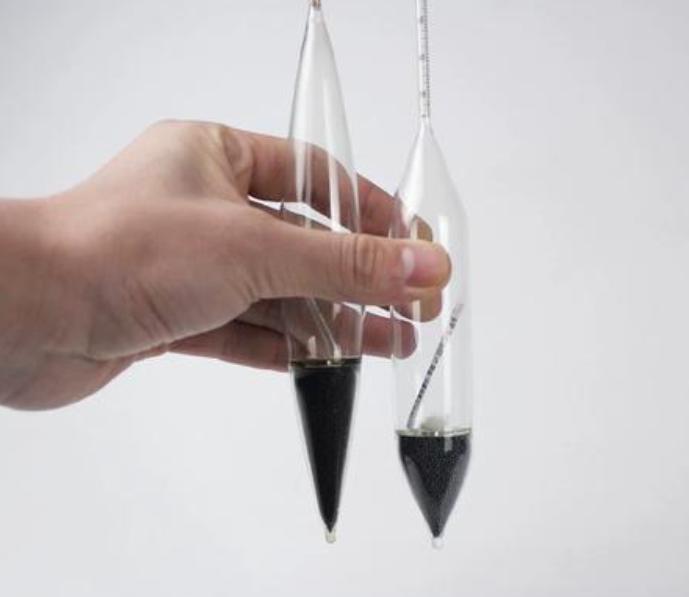
Hydrometers: A traditional, low-cost glass device that floats directly in the fluid. The depth of its immersion on a calibrated scale indicates the liquid’s specific gravity. While fast, it is highly sensitive to manual reading parallax and surface tension, making it ideal for quick field checks rather than strict QC audits.
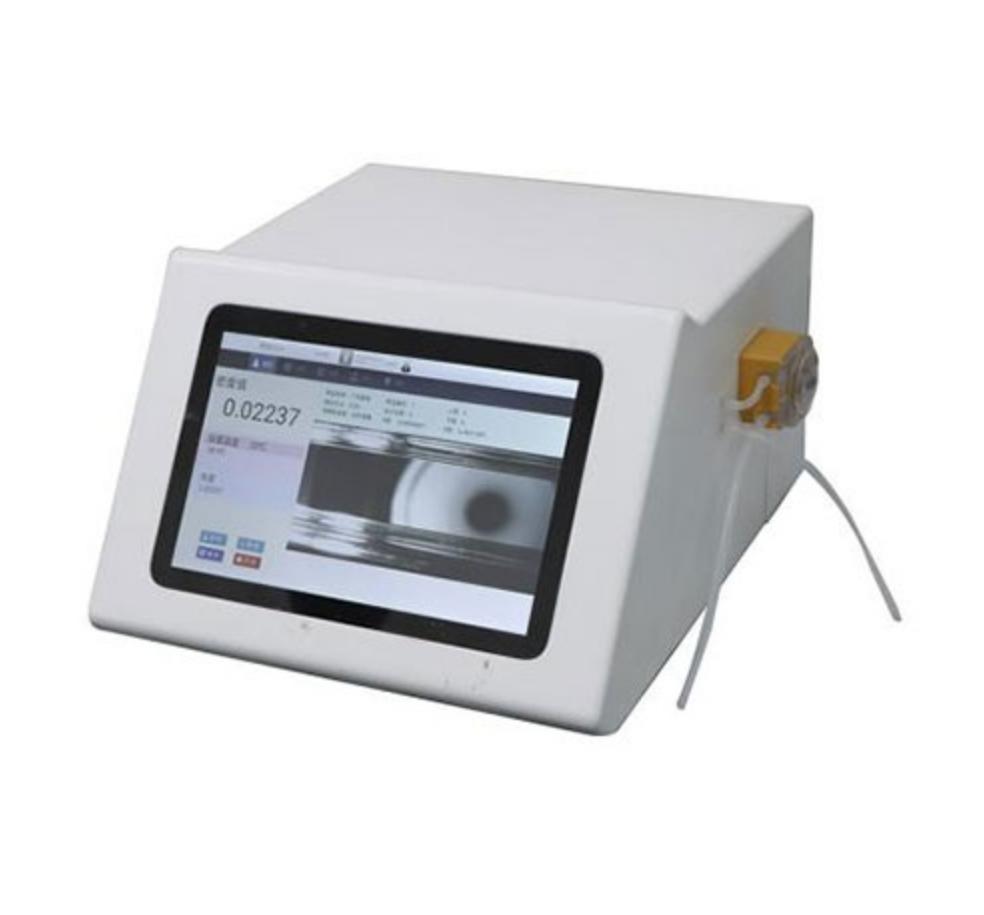
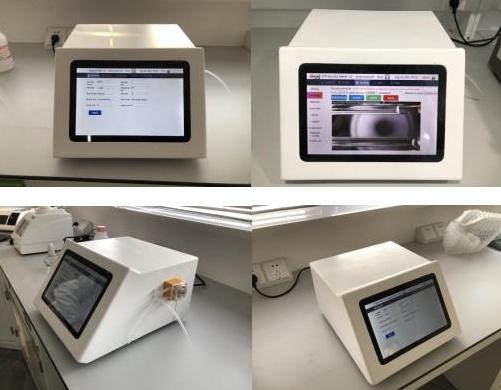
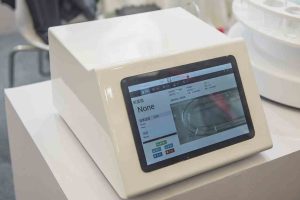
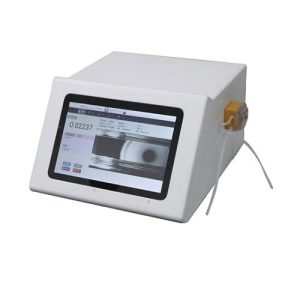
Digital Density Meters: Automated benchtop devices based on electronic oscillating U-tube technology.
Application Tip: For laboratories requiring strict regulatory compliance in pharmaceutical or chemical quality control (such as USP <841> or ASTM D4052), automated setups like the Drawell DigiPol-D Density Meter eliminate volumetric alignment errors completely, delivering up to 4-decimal accuracy with zero manual calculation.
Pycnometers for Liquids: Specifically calibrated glass bottles used to measure liquid density by determining the exact mass of a fixed fluid volume at a tightly controlled room temperature.
| Instruments for Liquids | Description | Applications | Precision |
| Hydrometers | Floating devices; immersion depth indicates density. | Beverages, petroleum products. | Moderate |
| Digital Density Meters | Automated devices using oscillating U-tube technology. | Precise density measurements of liquids. | Very high |
| Pycnometers | Glass containers for liquid density measurement by mass and volume determination. | Research labs. | High |
C. For Gases
Gas Pycnometers: Instruments that determine gas density by measuring pressure changes in a known volume.
Ultrasonic Density Meters: Measure the density of gases by analyzing the speed of sound through the sample.
| Instruments for Gases | Description | Applications | Precision |
| Gas Pycnometers | Instruments measuring pressure changes in a known volume to calculate density. | Material science and gas research. | Very high |
| Ultrasonic Density Meters | Measure gas density by analyzing sound speed through the sample. | Specialized industrial and research settings. | High |
Choosing Between Routine and High-Precision Workflows
For routine measurements, graduated cylinders, basic top-loading balances, and simple hydrometers are frequently used where minor margins of error are acceptable and fast results are needed.
Conversely, for high-precision measurements, analytical balances, specialized pycnometers, digital densitometers, and gas pycnometers are mandatory. These systems provide the structural traceabilities and deep accuracy required for critical research, quality control, and strict industrial compliance applications.
By matching the right density measurement instrument to your sample type and precision criteria, your team can consistently achieve optimal testing throughput.
Factors to Consider When Choosing a Density Measurement Instrument
Selecting the appropriate hardware is essential for achieving long-term accuracy. Here are the practical factors your lab should evaluate before buying:
- Sample Type: Determine whether your target material is a solid, liquid, or gas. Always select hardware engineered for that specific physical state (e.g., gas pycnometers cannot process heavy liquids effectively).
- Required Precision and Accuracy: High-stakes industries (like pharmaceuticals or petrochemicals) require automated instruments like digital density meters to prevent human error. Moderate academic or general manufacturing needs can often be met with simpler tools like hydrometers or Archimedes balances, such as the Drawell DEB Series Analytical Balances.
- Volume of Sample: If you work with highly valuable or limited substances (such as rare chemical compounds), choose micro-pycnometers or low-volume digital meters that require minimal sample input. For larger bulk volumes, ensure the intake plumbing can handle the flow rate.
- Ease of Use: Think about your team’s daily workload. Manual methods require tedious cleanup and temperature tracking. Digital, automated instruments provide fast results with less user intervention and feature automated cleaning cycles.
- Budget Constraints: Basic instruments like hydrometers are highly cost-effective for tight budgets. Advanced instruments like oscillating U-tube density meters involve a larger upfront investment but drastically lower labor costs and eliminate calculation mistakes over time.
- Environmental Conditions: Ambient temperature changes drastically alter density readings. Ensure your choice functions under your lab’s real-world conditions. For instance, high-end digital systems feature integrated Peltier temperature controls to stabilize samples internally.
- Sample Properties: Take into account viscosity, corrosiveness, or chemical reactivity. If you test acidic liquids or thick oils, choose an instrument constructed from heavy-duty, chemically resistant materials (like borosilicate glass or Teflon) to prevent expensive internal damage.
Applications of Density Measurement in Labs
Density measurement is indispensable in various scientific and industrial fields. Key applications such as:
Chemical Analysis:
- Determining the concentration of solutions (e.g., molarity, molality).
- Identifying unknown substances based on their density.
- Monitoring the progress of chemical reactions.
Materials Characterization:
- Assessing the quality and purity of materials.
- Determining the composition of alloys and other materials.
- Investigating the microstructure of materials.
Pharmaceutical Research:
- Ensuring the quality and purity of drugs.
- Optimizing drug formulations and dosage.
- Conducting stability studies on pharmaceuticals.
Environmental Monitoring:
- Analyzing water and soil samples for pollutants.
- Monitoring the quality of air and other environmental factors.
Food Science:
- Monitoring the quality and consistency of food products.
- Detecting adulteration in food.
- Optimizing food processing techniques.
FAQ: Common Questions on Lab Density Measurement
Q1: What is the main source of error in manual density measurements?
A: Temperature fluctuation is the leading cause of error. Because fluids expand as temperature rises, a change of just 1°C can shift a liquid’s density significantly. High-precision workflows require built-in thermal control or real-time temperature compensation software to keep readings accurate.
Q2: When should I choose a pycnometer over an Archimedes kit for solids?
A: Choose a pycnometer if your samples are powders, small pellets, or porous materials where liquid cannot easily penetrate the internal gaps. For large, solid, non-porous blocks (like metals or hard plastics), an Archimedes-based density balance kit is much faster and easier to operate daily.
Q3: Can a digital density meter handle highly viscous liquids like honey or heavy oils?
A: Yes, but they require a digital system with a sufficiently powerful sample pump or an injection method designed to prevent micro-air bubbles from getting trapped in the oscillating U-tube, as trapped air will cause falsely low density readings.
Q4: What is the difference between true density and bulk density?
A: True density calculates mass based strictly on the solid material’s volume, excluding any internal air pockets or spaces between particles. Bulk density is used for powders and soils, measuring the total volume the material occupies, including the natural air spaces between the granules.
Q5: How often should an automated laboratory density meter be calibrated?
A: For optimal accuracy, operators should perform a quick air and ultra-pure water double-point calibration check every morning. A full validation using certified reference materials (CRMs) should be scheduled annually or semi-annually, depending on your internal quality audit protocols.
Need the Right Density Testing Setup for Your Lab?
Getting accurate, repeatable density data doesn’t have to be a complicated process. Choosing the ideal balance between manual tools and fully automated systems depends entirely on your daily testing volume, required precision, and budget targets.
At Drawell, we supply global laboratories with a complete range of professional analysis gear—from ultra-precise analytical balances to advanced, automated testing systems designed to streamline your workflows.
Not sure which equipment fits your specific laboratory testing requirements? Contact our technical application specialists today for a personalized consultation and a tailored product quote!
Get Quote Here!
Latest Posts

What Next?
For more information, or to arrange an equipment demonstration, please visit our dedicated Product Homepage or contact one of our Product Managers.


