


When it comes to measuring the density of gases and liquids in modern laboratories, precision and efficiency are of the utmost importance. Traditional pycnometers and hydrometers remain are reliable tools, but in terms of speed, accuracy, and reproducibility, digital density meters are a must. The digital density meter is a tool that performs automated density measurement with a very high degree of accuracy and speed for a variety of scientific and industrial purposes.
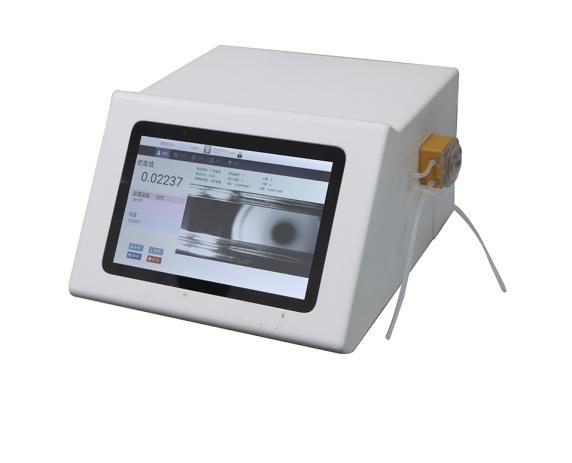
Understanding Digital Density Meters
A digital density meter is a sophisticated analytical device used to determine the density of liquid and gas samples by measuring the U tube’s oscillation and vibrating frequencies. The device then uses the instrument’s calibrated frequency data to convert the oscillation frequency to an easily readable density figure. More sophisticated devices compensate for the effect of temperature and viscosity for meters that provide precise, stable, and more repeatable results.
There are benchtop and portable digital density meters. As their name suggests, benchtop models are used in laboratories for routine analysis and portable digital density meters for the field are used for mobility and in situ measurements.
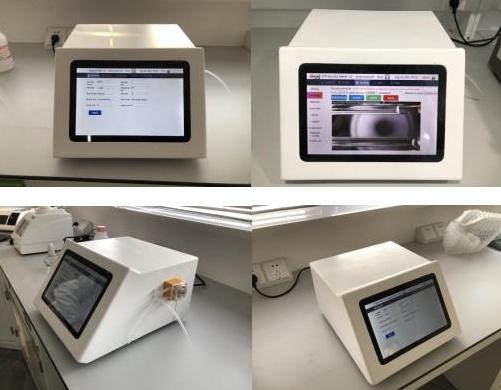
The Working Process of Digital Density Meters for Laboratory Use
At the heart of a digital density meter is the oscillating U-tube principle. Every digital density meter consists of a small U-shaped glass or metallic tube. When the tube is empty, it oscillates and vibrates at a natural frequency. When a sample is placed in the tube, the additional mass changes the frequency of oscillation. If the sample is denser, the oscillation becomes slower. This frequency or oscillation change is captured by sensors and the instrument microprocessor processes the data. The system uses the calibration data and frequency to calculate and display the density value on the digital screen. This entire process takes a few seconds, which is why digital density meters are more efficient than the manual methods.
1. Sample Introduction and Preparation
The working process of digital density meters starts with adding and preparing samples. For laboratory applications, measuring small volumes of liquid (between 1 and 2 milliliters) is enough. To load the sample into the oscillating tube, a syringe is used, or in some models, an automated sampling system does it. It is vital that no air is trapped inside the tube, because it will impact oscillation and provide inaccurate results. Once the sample occupies the space, the U-tube detects the mass and starts oscillation. The process is automated. The instrument calculates density from the oscillation frequency.
2. Temperature Control and Compensation
Since temperature heavily dictates density, digital density meters added temperature control and compensation systems. Most laboratory-grade instruments use Peltier elements to control the sample and keep it in a range of approximately 20°C or 25°C.
Temperature sentinels monitor for temperature control and referenced conditions. This compensation replaces the necessary manual temperature control and keeps the results control and reproducible. Ambient conditions can change, and the results will still hold.
3. Measurement and Data Processing
Once the instrument measures the oscillation frequency, it identifies the density. It uses internal, density-related frequency calibration constants to do this. All these calibration constants and thresholds form the basis upon which the frequency and its associated thresholds are assigned and later used for determining the density.
Finally, the instrument uses the internal microprocessor to make temperature, viscosity, and sample characteristic adjustments. In a few seconds, the density value displays. Depending on the model, the instrument may calculate concentration, specific gravity, alcohol content, and other properties automatically.
4. Calibration and Accuracy Assurance
To calibrate the density meter for precision, one must use primary standard density liquids, which are liquids like air and water, and measure them against the apparatus. It is of primary importance to align the measurement frequency and the calibration intervals to ensure its longevity and stability.
Another of the most important functions is self-compensation during measurement. The instrument can measure even when one of the sample’s environmental conditions, viscosity, or temperature varies and remains consistent. This is the main reason laboratories prefer digital density meters over handheld, manual devices.
5. Cleaning and Maintenance Process
Depending on the type of sample used, the digital density meter can be cleaned either automatically or manually after each measurement. Rinsing an instrument that analyzes aqueous solutions can be done with distilled water, while oils and other viscous materials will need organic solvents. Most instruments come with automated cleaning and drying functions, which allow operators to focus on other tasks while also minimizing the potential for cross sample contamination. Proper cleaning and maintenance will guarantee that no residue will be left in the U-tube, which will help the instrument maintain its sensitivity and prolong its operational life.

Key Advantages of Digital Density Meters Over Traditional Methods for Laboratory Use
This chart provides a detailed comparison chart highlighting the benefits of digital density meters over traditional density measurement methods for laboratory use
| Aspect | Digital Density Meters | Traditional Methods (Hydrometers / Pycnometers) |
| Measurement Principle | Uses oscillating U-tube technology with precise frequency detection | Relies on manual buoyancy or volume–mass measurement methods |
| Accuracy and Precision | Delivers very high accuracy (up to ±0.00001 g/cm³) and excellent repeatability | Accuracy limited by operator skill, reading errors, and temperature variations |
| Speed of Measurement | Provides instant digital results within seconds | Requires manual stabilization, weighing, and calculations, leading to slower results |
| Sample Volume Requirement | Requires minimal sample volume (1–2 mL) | Needs larger sample quantities for immersion or filling |
| Temperature Control | Equipped with built-in temperature sensors and automatic temperature compensation | Manual temperature correction required; prone to thermal influence |
| Ease of Operation | Fully automated operation with digital interface; minimal user training needed | Manual handling; time-intensive and dependent on operator expertise |
| Data Management | Offers digital data logging, storage, and connectivity with LIMS/computers | Manual recording of results; risk of transcription and calculation errors |
| Maintenance and Cleaning | Often features automatic cleaning and drying systems | Requires manual cleaning and handling, increasing contamination risk |
| Versatility | Measures multiple parameters such as density, specific gravity, and concentration | Primarily limited to density measurement |
| Environmental Stability | Provides stable results through electronic compensation for external variations | Readings easily affected by ambient temperature and handling conditions |
| Laboratory Efficiency | Enhances workflow efficiency and supports high-throughput testing | Slower workflow with limited sample processing capacity |
Common Laboratory Applications of Digital Density Meters
| Laboratory Field | Application Purpose | Examples of Use |
| Chemical Analysis | Determining the concentration, composition, and purity of chemical solutions | Measuring density to verify solvent mixtures, acids, and chemical reagents |
| Pharmaceutical Industry | Ensuring product consistency, quality control, and formulation accuracy | Determining the density of active pharmaceutical ingredients (APIs), syrups, and liquid formulations |
| Food and Beverage Testing | Monitoring concentration, sugar content, and alcohol levels | Measuring Brix values in juices, alcohol concentration in spirits, and density of oils and dairy products |
| Petrochemical and Energy Sector | Analyzing fuels, lubricants, and other hydrocarbons for quality and compliance | Testing crude oil, diesel, and lubricating oils for standard density specifications |
| Environmental Laboratories | Assessing water quality and pollutant concentration | Measuring density of wastewater or environmental samples to detect contamination |
| Research and Education | Supporting experimental studies and material characterization | Teaching fluid property analysis and conducting scientific experiments |
| Cosmetic and Personal Care Industry | Verifying formulation consistency and product quality | Measuring density of lotions, creams, and essential oils to maintain product standards |
| Beverage and Fermentation Research | Monitoring fermentation and production processes | Tracking density changes during fermentation in beer or wine production |
| Quality Assurance and Control Laboratories | Ensuring batch consistency and process standardization | Conducting routine density checks as part of production quality monitoring |
Key Considerations for Selecting the Right Digital Density Meter for Modern Laboratory Use
Choosing the right digital density meter for modern laboratory use will determine measurement accuracy, streamlining workflows, and the overall reliability of the instrument over time. Different instruments come in various models and configurations, thus it is also the laboratory’s responsibility to analyze several technical and operational aspects to ensure their chosen device will fulfill their specific analytical requirements.
- Understanding Laboratory Requirements
Every lab has different needs. Some need ultra-high precision for research or fast results for routine quality control. Knowing the sample types that the lab will analyze—be it aqueous solutions, oils, solvents, or materials with a high viscosity, will determine the expected accuracy, the primary measurement range, and the required configuration for the digital density meter.
- Accuracy and Measurement Range
When selecting a digital density meter for the lab, the accuracy of the meter is of utmost importance. Laboratory grade digital density meters differ in terms of the range of accuracy that they provide. Some provide an accuracy of ± 0.0001 g/cm³ while another grade meter provides an accuracy of ± 0.00001 g/cm³. As precision increases, the instrument will better be able to find small gaps in density. This is particularly important for the testing of materials in the pharmaceutical, chemical and petrochemical industries. Furthermore, the measurement range of the density meter should be able to accommodate all sample types that the lab analyzes. Flexibility is best achieved by selecting instruments with a wider measurement range.
- Temperature Control and Compensation
It is important to choose a digital density meter with good temperature control and automatic compensation. This is because density is affected by temperature. Most high-end devices use a Peltier temperature control system and keep the sample at a reference temperature (usually 20 °C or 25 °C). This feature helps to minimize errors caused by thermal expansion or contraction and helps to reproduce results. This is especially important in laboratories where the environment is working in areas with fluctuations in ambient temperature.
- Sample Volume and Handling Efficiency
For some laboratories, sample control is very vital especially if sample materials are expensive to acquire. For laboratory digital density meters, the usual sample requirement is around 1-2 milliliters which is very small. Testing processes are streamlined by instruments which have efficient sample introduction mechanisms like automatic samplers or syringes. There are also features like automatic bubble detection and removal which increase the precision of the measurement and maintain consistency during measurement.
- Calibration and Maintenance Requirements
You can establish a reliable and accurate density measurement system by ensuring calibration and traceability. Automatic and semi-automatic calibrating systems using reference materials like water and air are features of quality digital density meters. Some systems provide periodic calibration reminders. This is helpful in meeting ISO and GLP standards for laboratory quality systems. Maintenance of the system is straightforward in cases where automated cleaning and drying are incorporated. This will significantly reduce the operator’s workload and prevent contamination of the sample, which is especially important in labs where multiple liquid types are tested.
- Data Management and Connectivity
In a laboratory where operations rely heavily on data, the absence of systems that enable connectivity and digital integration is a major issue. Digital density meters that enable data storage and through a variety of connections, including wireless, send, and receive data are vital. Analyses performed in a laboratory can be integrated with LIMS to facilitate traceability and improve productivity by linking the analysis with its report. Such integration eliminates manual data entry and transcription errors. For labs where analysis results require documentation and auditing, instruments that provide electronic signatures with data security are of great importance.
- Durability and Material Compatibility
When it comes to instruments, especially the U-tube, the construction materials should match the kinds of samples being assessed. For ordinary lab uses, glass U-tubes work. For aggressive chemicals or solvents, use metal or corrosion-resistant tubes. Choosing an instrument with construction materials of metal or corrosion-resistant tubes means more consistent performance, and longer service, even with sustained use.
- Budget and Long-Term Value
Purchase price is an important factor, but the total cost of ownership should also be considered. Some features drive operational costs down, such as automated operation and long calibration intervals. It is also wise to choose a model of a reliable supplier, as it provides lasting value through minimal downtime and will be less likely to run out of technical support or spare parts.
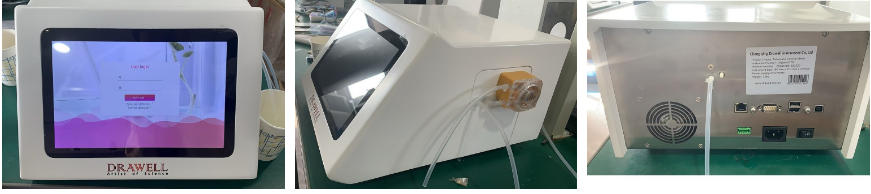
Drawell stands out as reliable suppliers of laboratory-grade digital density meters with high-precision density measurement, advanced temperature control, automated functionalities, and complete data handling. Drawell density meter serves pharmaceuticals, petrochemicals, food and beverage and quality-control labs and receive consistent support and quick delivery.
Future Trends in Digital Density Meters for Modern Laboratory Use
The future for digital density meters relates to advancing accuracy alongside smart integrations and digital transformations in laboratory workflows. These instruments are developing in automation, measurement performance, and smart connectivity. The digital density meter is becoming more advanced, and the focus is on improving performance.
Advancements in Sensor and Measurement Technology
One of the key future developments for digital density meters is sensor technology. More advanced instruments will have oscillation detection systems with the ability to recognize ultra-fine oscillation frequency variation. More advancements in material science, such as the construction of U-tubes with sapphire, ceramic, or high-strength alloys, will promote durability and handle high aggressive and chemically complex samples. Also, more advanced microfluidic technology will produce more precise density meters that need extremely small sample volumes, which is beneficial to pharmaceutical and biological laboratories.
Enhanced Digital Connectivity and Cloud Integration
Digitally modern index laboratories are defined by their connectivity. Future density meters will have more seamless integration with remote cloud systems and the Internet of Things (IoT). These integrations enable real-time data sharing across remote-controlled and collaborative sets of instruments. Cloud integration will allow labs to centralize their storage and data for traceable advanced analytics. Instruments capable of secure Ethernet, Wi-Fi, and Bluetooth for safe communication will become standard, allowing their integration with Laboratory Information Management Systems (LIMS) and all other digital systems.
Automation and Workflow Optimization
Automation is changing how laboratories operate, and that includes the use of digital density meters. Future models will include fully automated sample handling systems that fill, measure, and clean and dry the equipment without user help. This will boost throughput and reproducibility, particularly in high-volume testing scenarios. Pairing systems with robotic arms or automated sample changers will further cut down on manual work and lower the risks of contamination. Automated intelligent systems will be able to transform dense measurement systems into fully hands-free instruments, integrated into completely automated work lines in the laboratory.
Miniaturization and Portability
With advancing technology, digital density meters and other equipment are expected to become more compact and portable, while still maintaining accuracy. Miniature equipment with high precision sensors that will allow on-site density measurements is of interest in the density measurement market for the petrochemical and beverages industries, as well as for environmental testing. These portable meters will be able to operate on batteries, have touch screens, and allow for wireless data transfer to provide more flexibility in the field and between benchtop applications. The need for compact and portable density measurement instruments will also spur further miniaturization of laboratory-grade instruments and models.
User Experience and Interface Innovation
As technology advances, I foresee the development of even more advanced user interfaces. These interfaces will make digital density meters more user friendly than ever. There will be touchscreen control interfaces and even AI that might help people use it seamlessly. These interfaces will help make training a lot more efficient. More and more advanced graphical visualization tools will be able to create a trend graph and a 3D display of measurement data, and give real-time error notifications. These tools will help the user gain additional insights about the sample. This interaction provides and informative feedback that improves the overall speed of the measurement.
Final Thoughts
The digital density meters help integrate more efficient and sleek technology into modern laboratories. The high speed, superior precision and ease of use have transformed density measurement and it has become a crucial device within analytical laboratories with the wide-ranging applications. From basic scientific research to quality control in manufacturing, the digital density meter provides convenience for the user and is a crucial part in modern analytical environments.
Related Products Recommendation
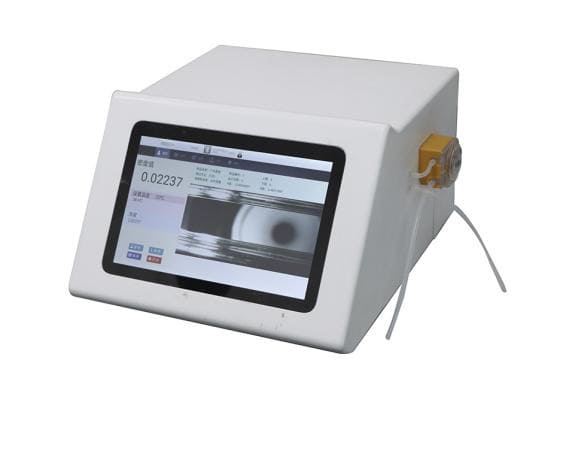
Get Quote Here!
Latest Posts
What Next?
For more information, or to arrange an equipment demonstration, please visit our dedicated Product Homepage or contact one of our Product Managers.


