


Density is a fundamental property of matter that directly correlates with concentration, composition, and temperature. In laboratory and industrial settings, density data supports:
- Quality control in pharmaceuticals, chemicals, and food manufacturing
- Purity verification for solvents, acids, and reagents
- Concentration monitoring in formulations and mixtures
- Process optimization in petrochemical, energy, and environmental testing
Yet, the challenge lies in diverse sample types: water-based solutions are easy to measure, while strong acids, viscous liquids, or volatile solvents demand specialized instruments. This is why selecting the correct digital density meter for liquids matters more than ever.

Traditional vs Modern Methods of Measuring Density of Liquids
The evolution of density testing highlights a crucial shift from time-consuming manual processes to high-speed, automated measurement.
Traditional Methods: The Limits of Manual Testing
Classic techniques for density measurement, such as the Hydrometer and the Pycnometer, are still in use but present significant limitations in a modern, regulated laboratory environment:
Hydrometers (Density Floats): These are inexpensive and straightforward, often used as a rough water density tester. However, they rely on visual reading, are highly susceptible to human error (meniscus reading), and lack the precision required for modern quality standards. Furthermore, they are impractical for hazardous or difficult-to-handle liquids like fuming acids.
Pycnometers: These small glass flasks offer higher accuracy than hydrometers but demand meticulous temperature control, are incredibly time-consuming, and require significant operator training to achieve repeatable results.

Modern Methods: The Rise of the Digital Density Meter
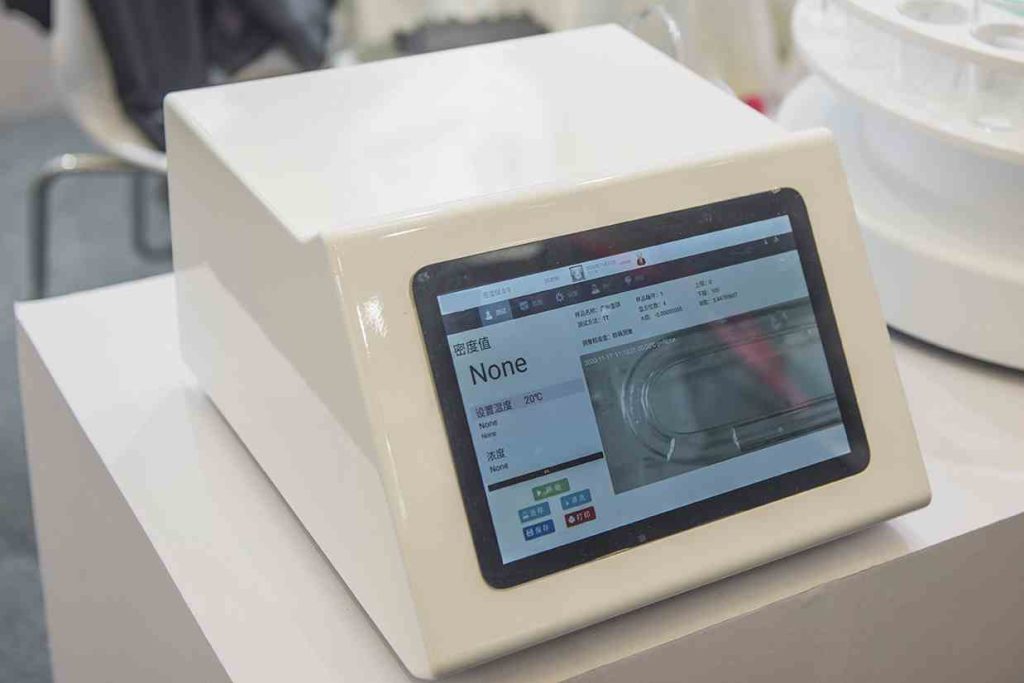
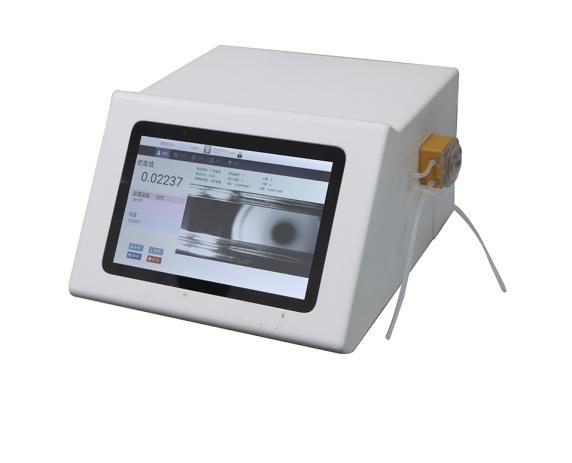
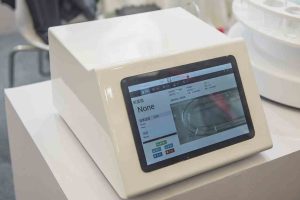
Modern digital density meters — such as Drawell’s DIGIPOL-D Series — use the Oscillating U-Tube principle, where a U-shaped glass tube vibrates at a natural frequency that changes according to the sample’s density.
Key benefits:
- High accuracy up to 0.0001 g/cm³
- Automatic temperature compensation
- Minimal sample volume (1–2 mL)
- Fast measurement (within seconds)
- Optional data connectivity and printer output
These features make the digital density meter for liquids an essential tool for modern laboratories handling diverse liquid types.
Match the Right Density Meter to Your Liquid Type
The right choice depends heavily on what you intend to measure liquid density. A universal instrument rarely provides the optimal solution for every single application. Drawell helps you categorize your liquids to match them with the perfect configuration.
| Liquid Type | Characteristics | Recommended Instrument | Key Configuration / Supplier Tips |
| Neutral or Mild Liquids (e.g., water, alcohol, aqueous buffer) | Stable, low viscosity, non-corrosive | DIGIPOL-D Standard Model | Use built-in Peltier temperature control; ideal as a water density tester or for routine QC. |
| Strong Corrosive Liquids (e.g., sulfuric acid, hydrochloric acid) | High acidity, chemical reactivity | DIGIPOL-D Corrosion-Resistant Model | Equipped with PTFE or titanium measuring cell; ensure proper cleaning with compatible solvents. Serves as an acid density meter. |
| High-Viscosity Liquids (e.g., oils, syrups, polymers) | Thick, slow-flowing, may trap bubbles | DIGIPOL-D High-Viscosity Model | Includes heating unit to reduce viscosity; wide U-tube diameter to prevent clogging. |
| Volatile or Flammable Liquids (e.g., solvents, fuels) | Rapid evaporation, safety risks | Closed-loop sampling system | Prevents sample loss and exposure; supports automatic degassing and explosion-proof design. |
Drawell’s Density Meter allows customization for any of the above scenarios, ensuring accurate results and long-term instrument protection.

Tips for Buyers: Professional Advice from a Supplier’s View
When selecting a laboratory density meter, Drawell recommends evaluating several key factors to ensure lasting performance and cost-effectiveness:
- Accuracy is not the only metric – Clearly define the true accuracy requirements of your application scenario. For online quality inspection, speed and stability may take precedence over ultimate accuracy.
- Consider long-term operating costs– The purchase price of the instrument itself is only the first part. Subsequent maintenance costs, availability of consumables (such as cleaning solvents), and the convenience and cost of calibration services all need to be included in the budget. Consider instruments with automatic cleaning functions and replaceable tubing first.
- Sample Compatibility – Confirm that the measuring cell material (glass, PTFE, titanium) can withstand your liquid type.
- Temperature Control – Opt for models with automatic temperature compensation to maintain stability.
- Data Management & Compliance – For regulated labs, look for digital output, audit trail, and 21 CFR Part 11 support.
- Scalability and intelligence– Modern digital density meters are more than just measurement tools. Consider whether they support autosamplers and can be connected to multiple instruments such as refractometers and polarimeters to achieve multiple data outputs from a single sample injection, greatly improving efficiency.
- After-Sales Support – A reliable supplier should provide calibration standards, technical training, and responsive service.
With these factors in mind, laboratories can balance cost, performance, and longevity — ensuring reliable density measurement across all sample types.
Why Choose Our Drawell Density Meter?
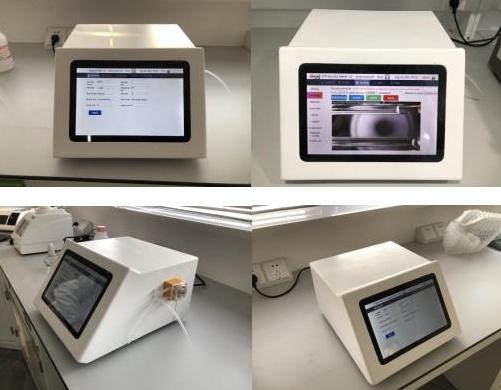
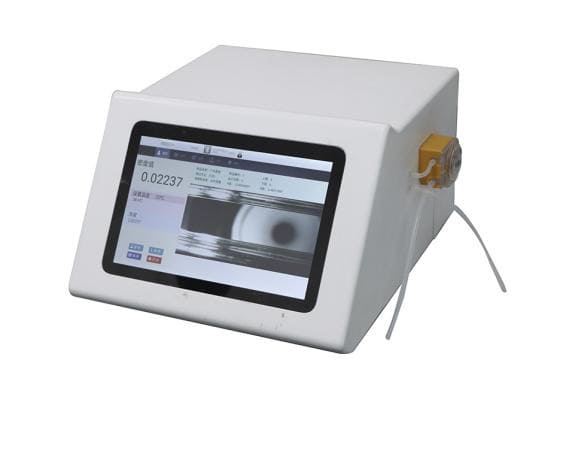
When you choose Drawell, you are partnering with a specialist in analytical precision. Our Drawell Digipol-D Digital Density Meter is engineered to meet the challenges presented by diverse liquid matrices, from ultra-pure water to corrosive concentrated acids.
Our Commitment:
- Tailored Solutions: We offer configurable models with specialized corrosion-resistant options, ensuring that your investment is safe and durable, even when testing highly corrosive media.
- Ease of Use: Our systems are designed for intuitive, one-touch operation, reducing training time and minimizing human error—letting your lab technicians focus on science, not setup.
- Certified Performance: The Digipol-D delivers fast, highly accurate results crucial for maintaining product quality and compliance across the board.
Do not compromise on the quality of your fundamental measurements.
Take the next step towards superior laboratory efficiency and safety. Contact the Drawell analytical team today or visit our product page to find the perfect digital density meter for liquids that matches your exact application needs.
Learn More about the Drawell Digipol-D Density Meter now!
Related Products Recommendation
Get Quote Here!
Latest Posts

What Next?
For more information, or to arrange an equipment demonstration, please visit our dedicated Product Homepage or contact one of our Product Managers.


