


As we move into 2026, and laboratory managers find themselves once more caught in a trap which they have been in before but with more intensity—how to produce better analytical results while also having to deal with strict budgets and the demands for faster delivery. The issue of liquid chromatography, however, is not simply a matter of which one to choose between HPLC and UHPLC, but rather the decision will be based on what is more suitable for the business.
To us at Drawell, the new analytical instrument is not merely a piece of equipment but also an investment that will provide your facility with better efficiency in the long run. It does not matter if you are testing the HPLC with its sturdy build or if you are after the state-of-the-art functionalities of the UHPLC, the following is a reason why 2026 could be the turning point for the digital and technical transition of your lab.
The Core Technology: Understanding the Real Difference
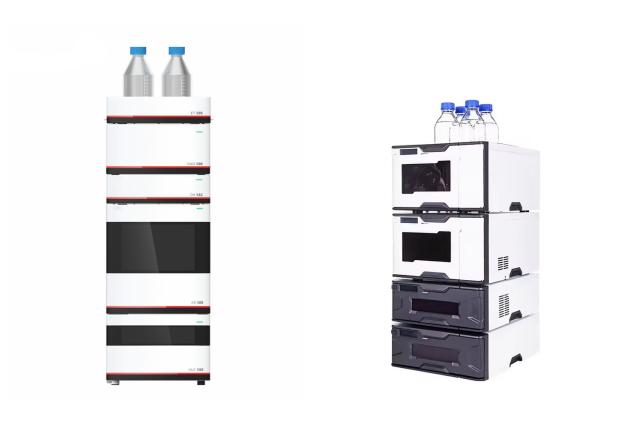
The marketing language requires customers to disregard its content because they must understand the scientific evidence behind their products. The separation process between HPLC and UHPLC systems operates on different fundamental principles. The design of UHPLC systems enables them to operate at much higher backpressures, which permits the use of columns that contain particles smaller than 2 μm (sub-2 μm) size.
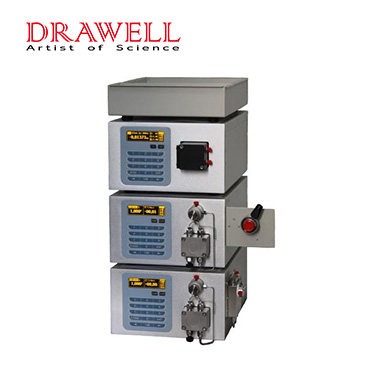
The DW-LC1620A HPLC system serves as a dependable instrument for everyday analysis, but UHPLC chromatography achieves better results through its use of smaller particles that create sharper peaks and quicker separations while maintaining their resolution. The 2026 lab environment needs the ability to access detailed information within brief time periods because this displays a major advantage in competitive situations.
The Economic Case: ROI Beyond the Price Tag
For a procurement officer, the initial cost of ultra-high-performance liquid chromatography (UHPLC) can be higher than that of traditional HPLC. However, the operational ROI (Return on Investment) tells a different story. When you accelerate your run times, your cost-per-sample drops significantly.
| Performance Metric | HPLC (Standard) | UHPLC (High Efficiency) | 2026 Business Impact |
| Average Run Time | 15–30 Minutes | 2–5 Minutes | Up to 5x higher sample throughput |
| Solvent Usage | 10–20 mL per run | 1–3 mL per run | ~80% reduction in solvent & waste costs |
| Particle Size | 3–5 μm | < 2 μm | Superior resolution for complex mixtures |
| Pressure Limit | ~400–600 bar | Up to 1000–1500 bar | Compatible with all modern column tech |
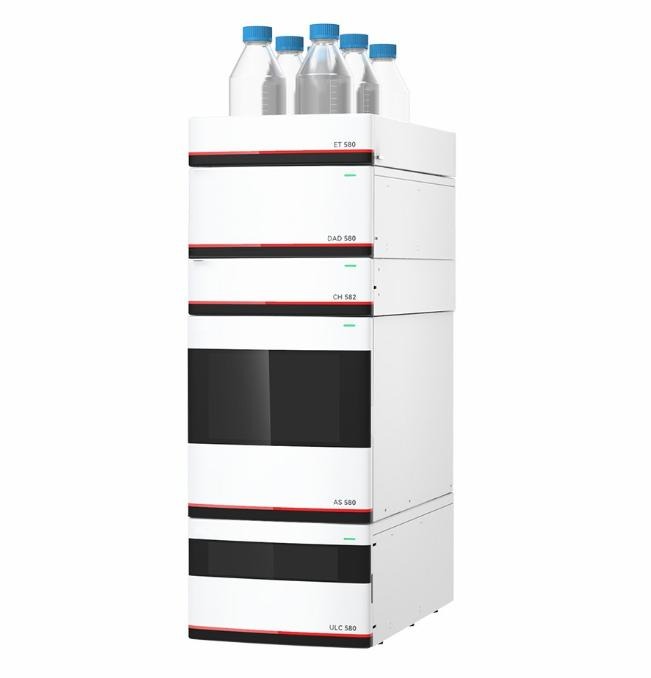
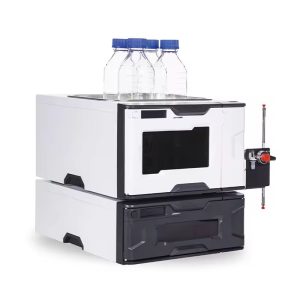
By transitioning to a high-efficiency system like the DW-EXPEC 5180, high-volume laboratories can often recover the price difference through solvent savings and reduced labor hours within the first 12 to 18 months of operation.
Practicality for Scientists: Precision Meets Productivity
Underlying its detailed discussion, is reliability the most important point in regard to HPLC and UHPLC for usage being made by practical scientists? In 2026, a core unusability among any modern researcher might be to sit on the bench all day and concurrently analyze hundreds of samples. UHPLC doesn’t simply work faster; most definitely, it produces better data, translating to less re-runs and less time spent troubleshooting baseline problems.
The high-pressure tolerance of ultra-high performance liquid chromatography is crucial to prevent the detection of impurities at below trace levels. This will critically affect various industries such as bio-pharma and environmental testing (e.g., PFAS, which is “forever chemicals” detection) as they get stricter over 2026. If your laboratory currently has HPLC instruments 10 years old, detection limits around recent standards could pose a serious challenge.
Future-Proofing: Obsolescence of HPLC?
The short answer is NO; its use may be limited. HPLC, after all, is an economical solution for simple types of quality control in which speed is not the issue. But you will need UHPLC in striving to be set up for mass spectral proteomics, innovative drug discovery, or high-throughput clinical testing.
By the year 2026, most new HPLC-based methods have been moved to the UHPLC platform due to improvements about speed and sensitivity. Your lab would be wise in choosing UHPLC to maximize your compatibility with future scientific advancements. Here at Drawell, we offer a lot of chromatography solutions that help you gear your equipment toward the unique research goals you would like to attain.
Which One Should You Choose for 2026?
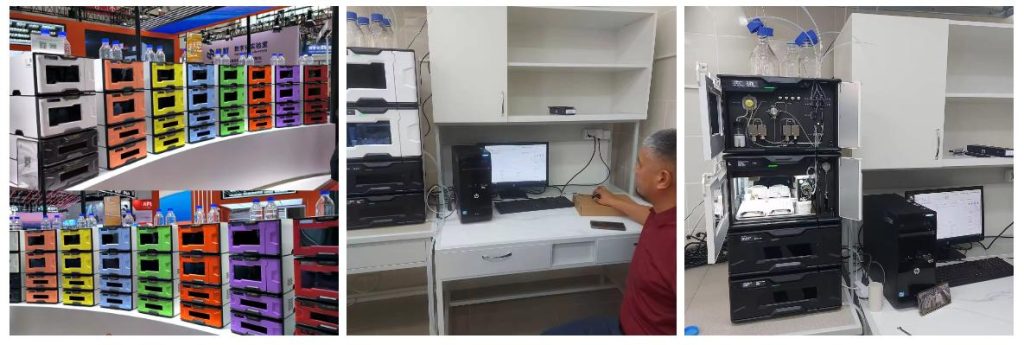
The decision to upgrade should be driven by your specific workflow and business objectives. If your laboratory runs more than 15–20 samples a day or handles complex biological matrices, migrating to ultra high performance liquid chromatography uhplc is a strategic necessity.
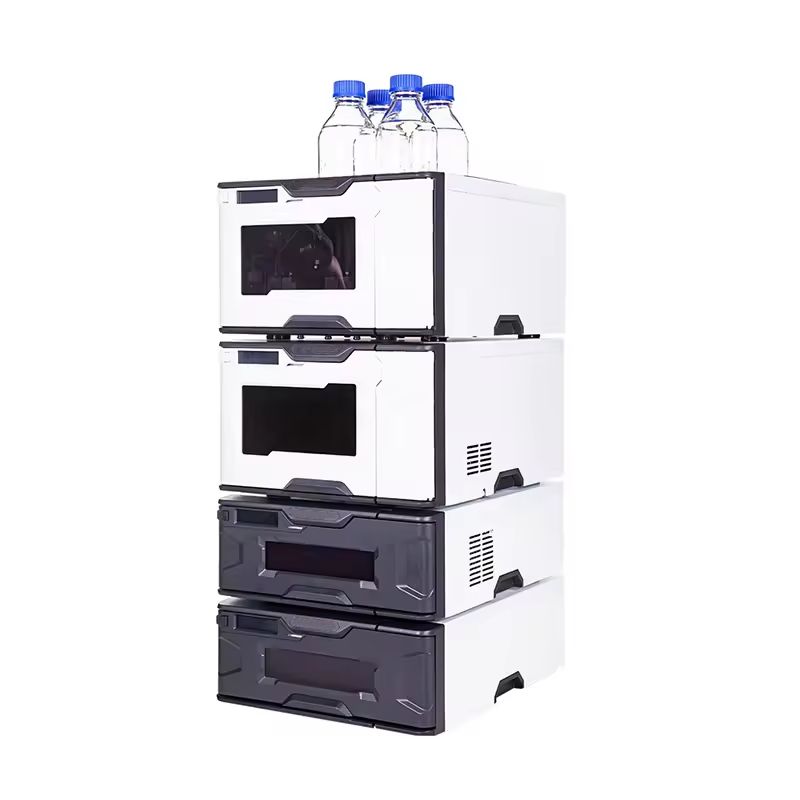
Choose HPLC (like our DW-K2025) if you prioritize a lower initial investment for well-established, routine educational or industrial methods.
Choose UHPLC (like our DW-EXPEC 5180) if you need to maximize throughput, drastically reduce solvent waste, and ensure your lab is ready for 2026 regulatory standards.
Ready to optimize your lab’s performance for 2026? Explore our official chromatography page to compare our latest models. You can also contact the technical team at Drawell Analytical for a personalized ROI analysis based on your specific sample volume and solvent costs. Let’s build a faster, greener, and more precise laboratory together.
Related Products Recommendation
Get Quote Here!
Latest Posts

What Next?
For more information, or to arrange an equipment demonstration, please visit our dedicated Product Homepage or contact one of our Product Managers.


