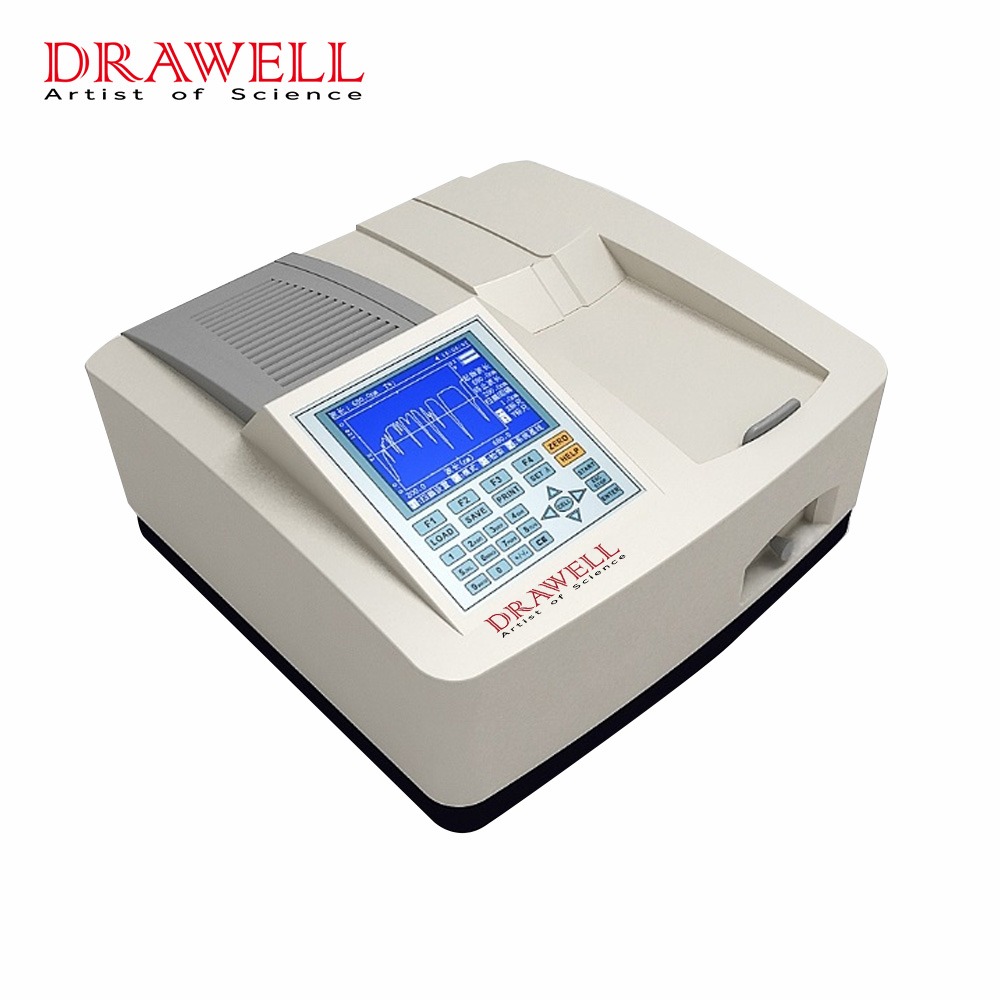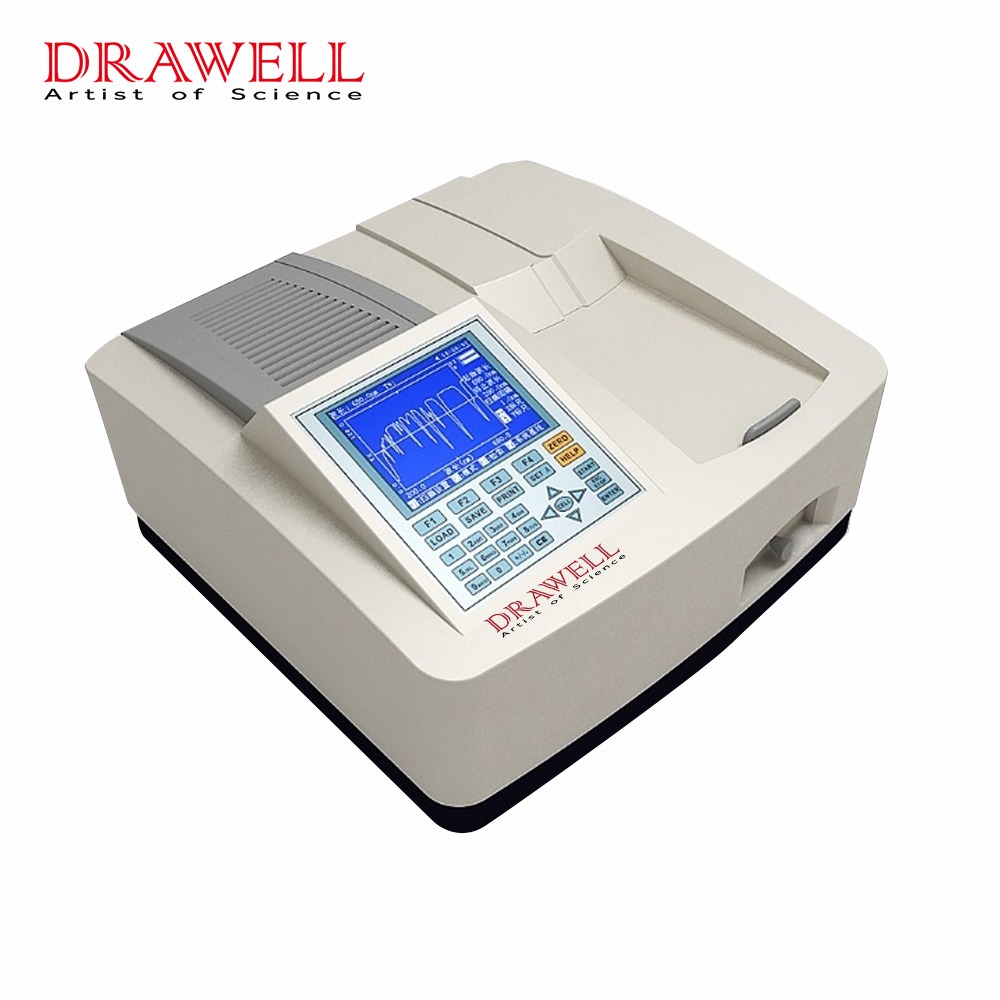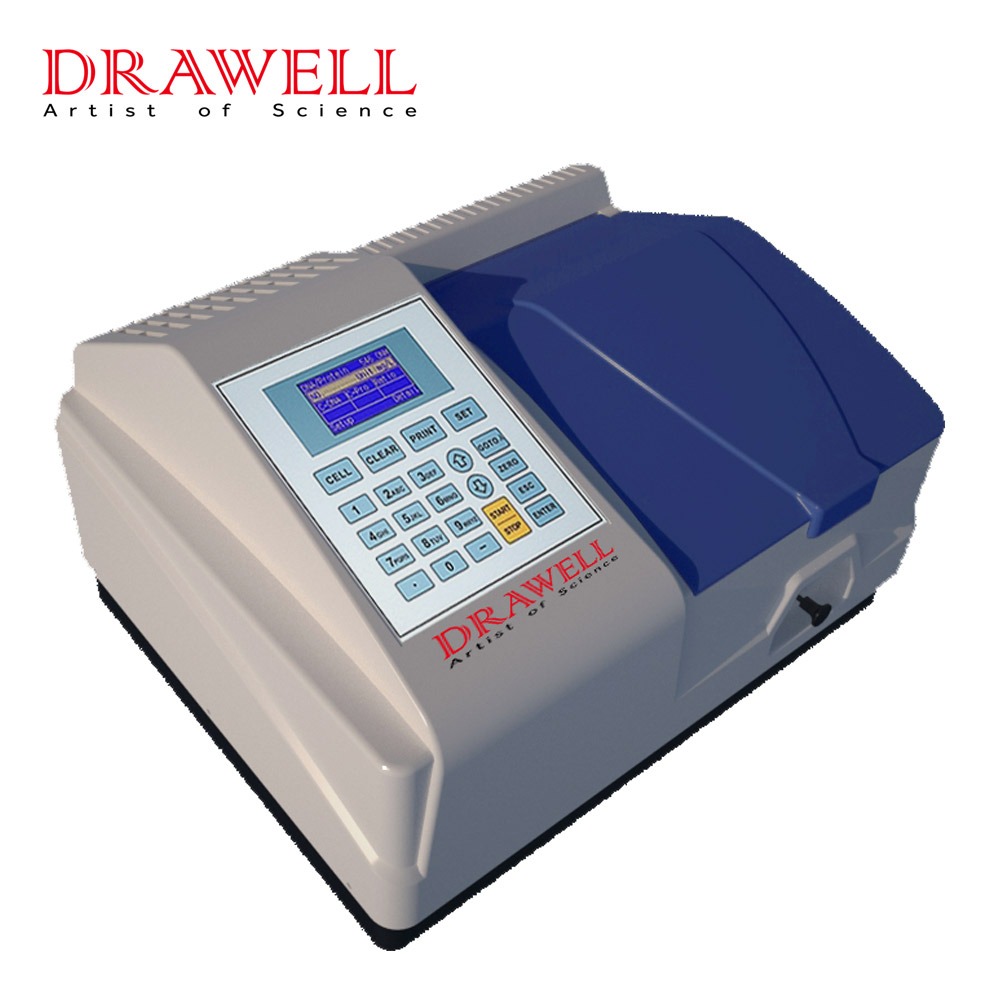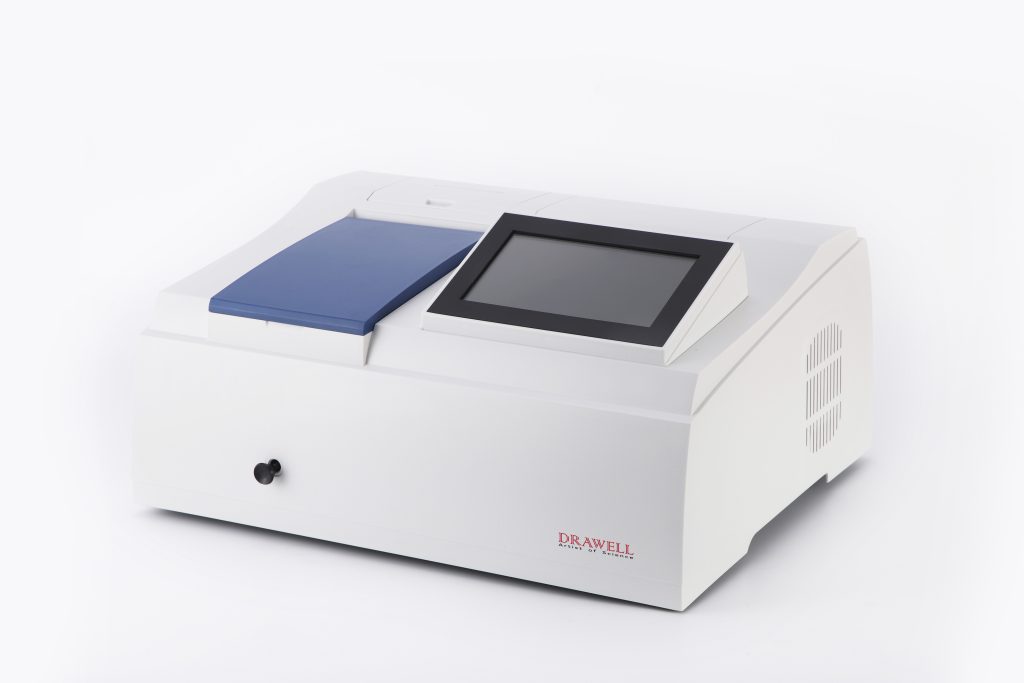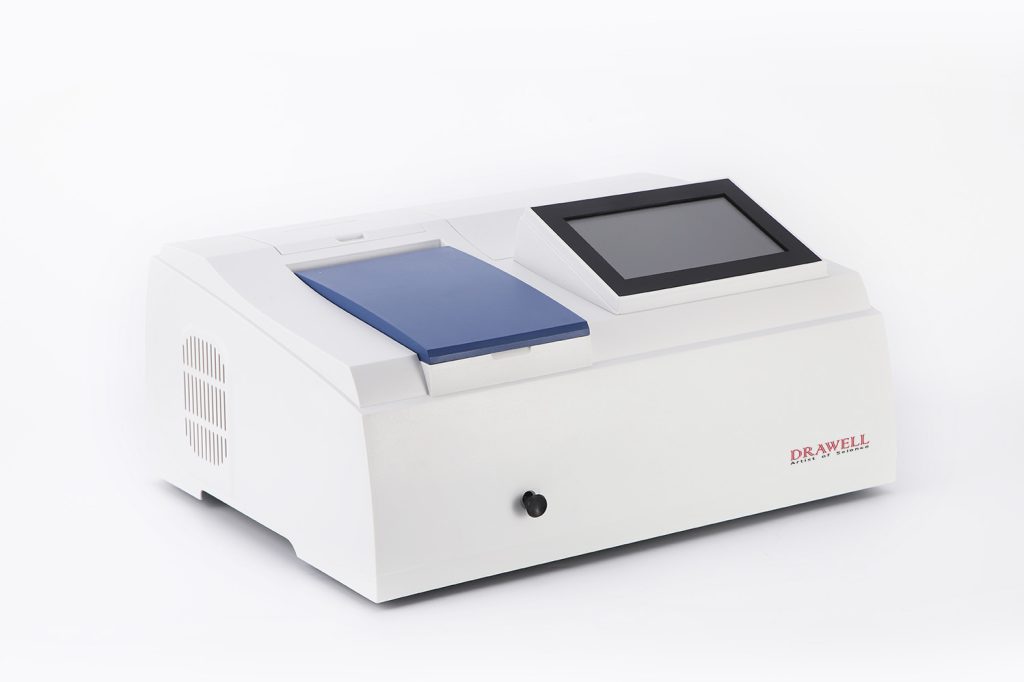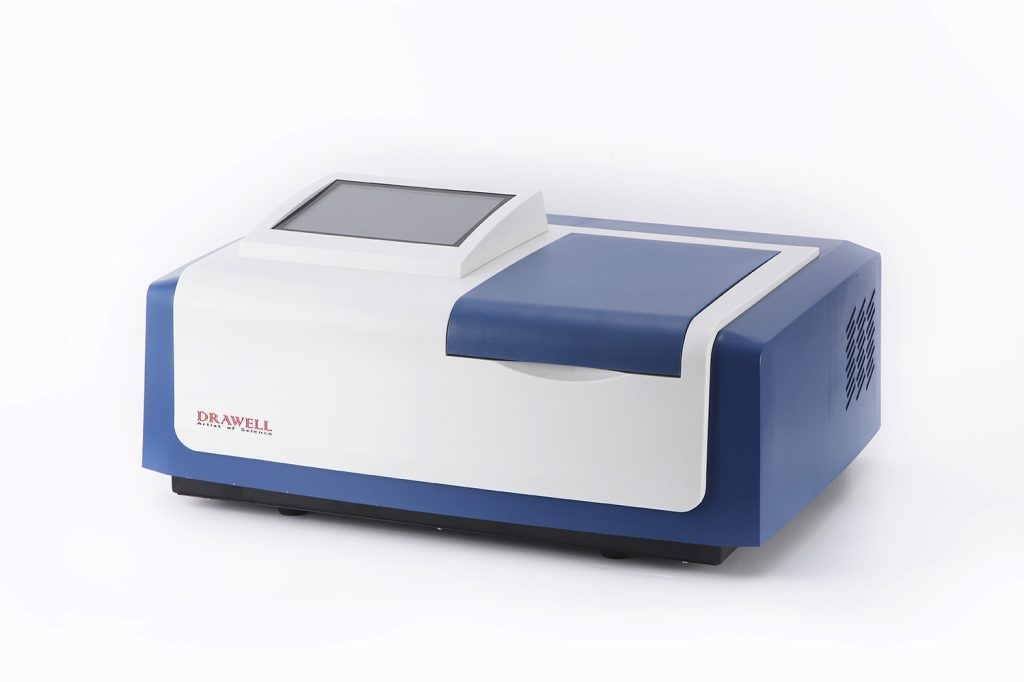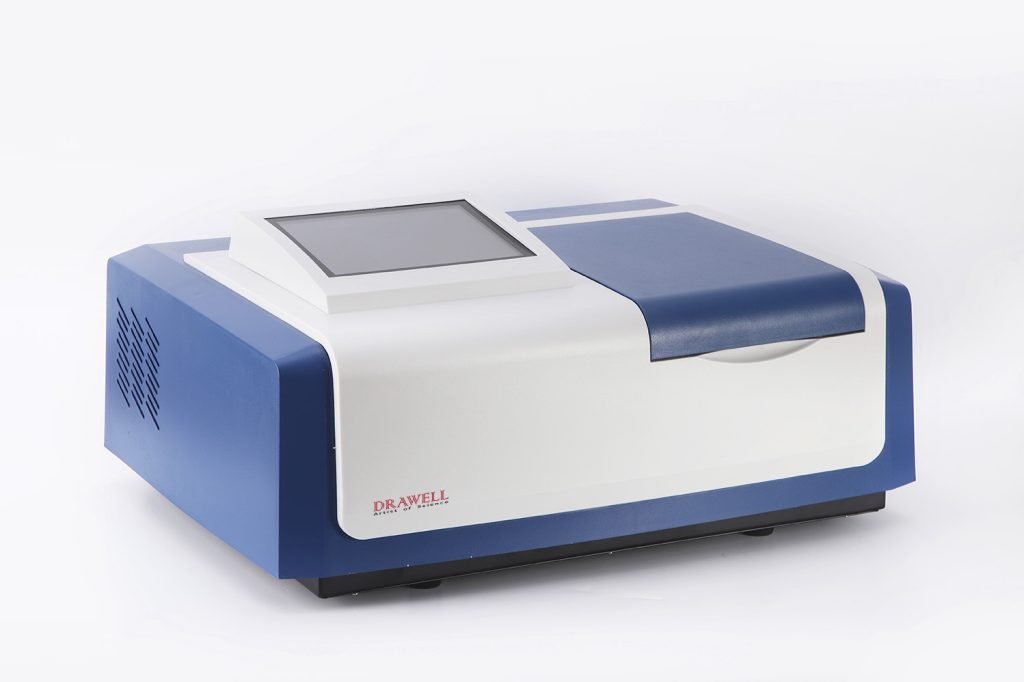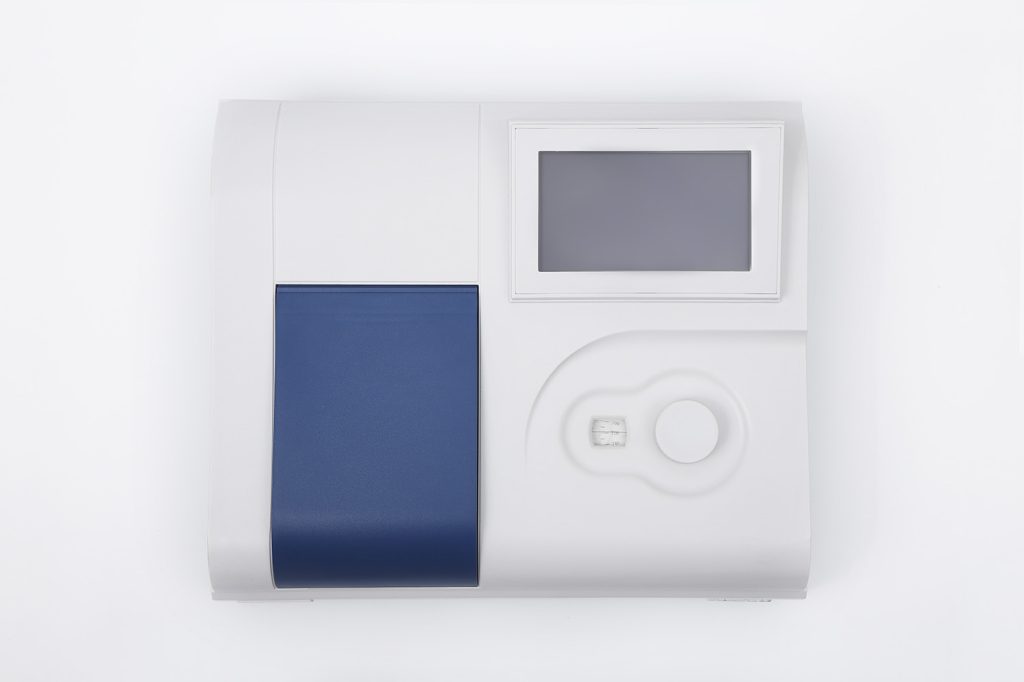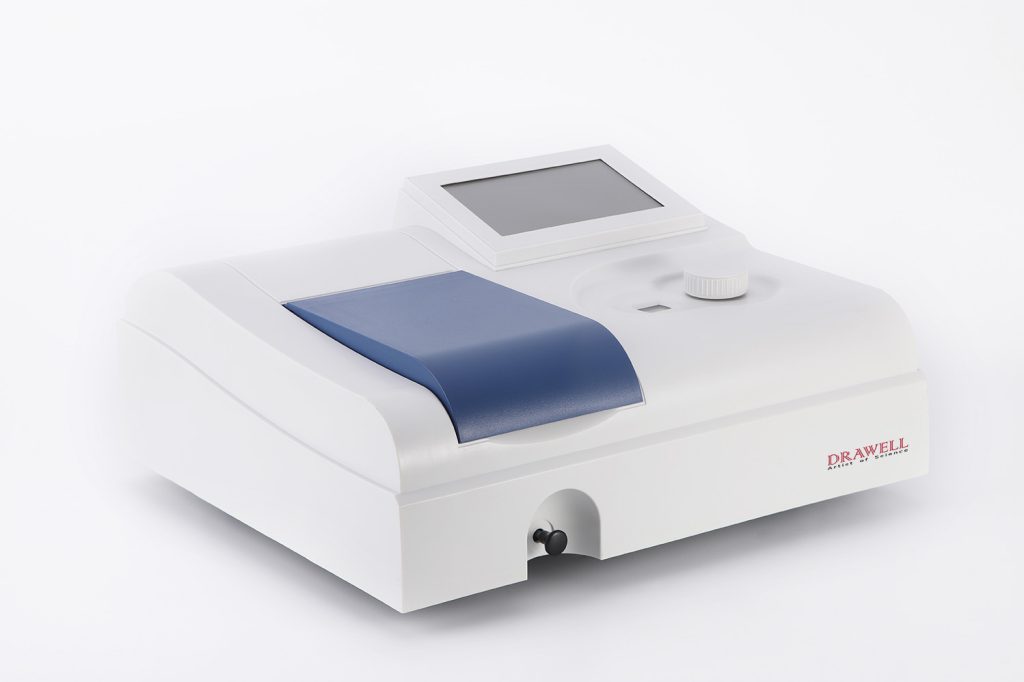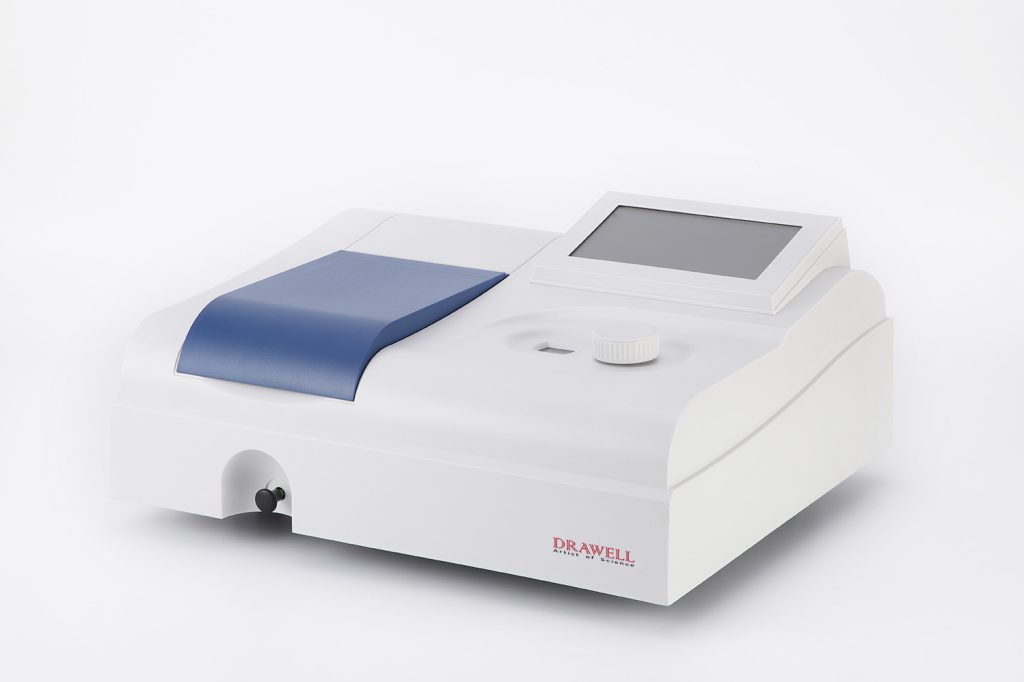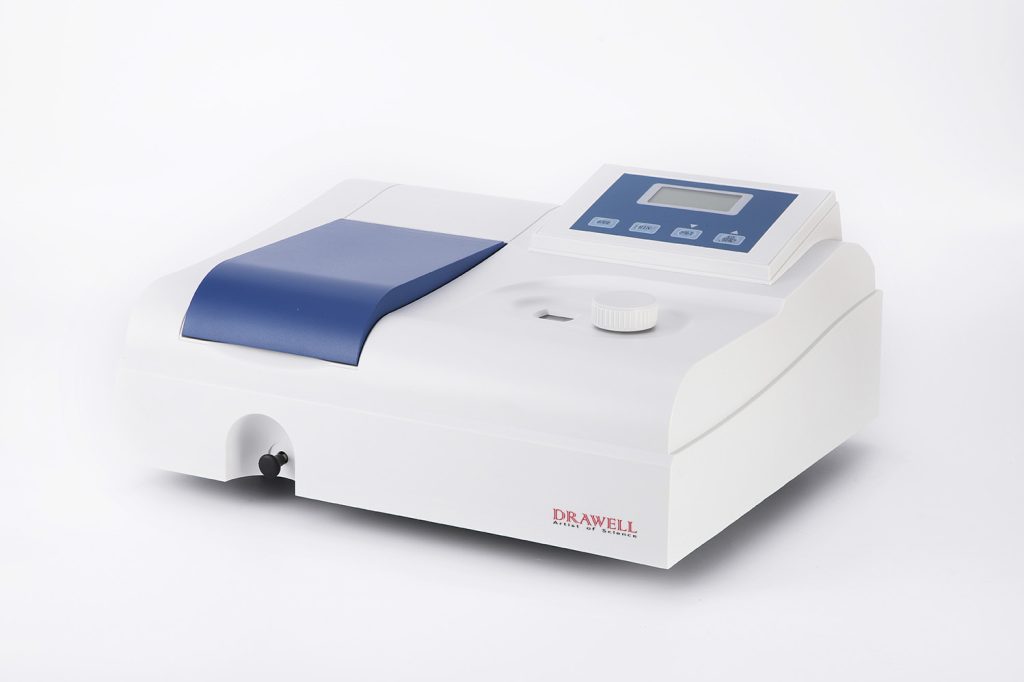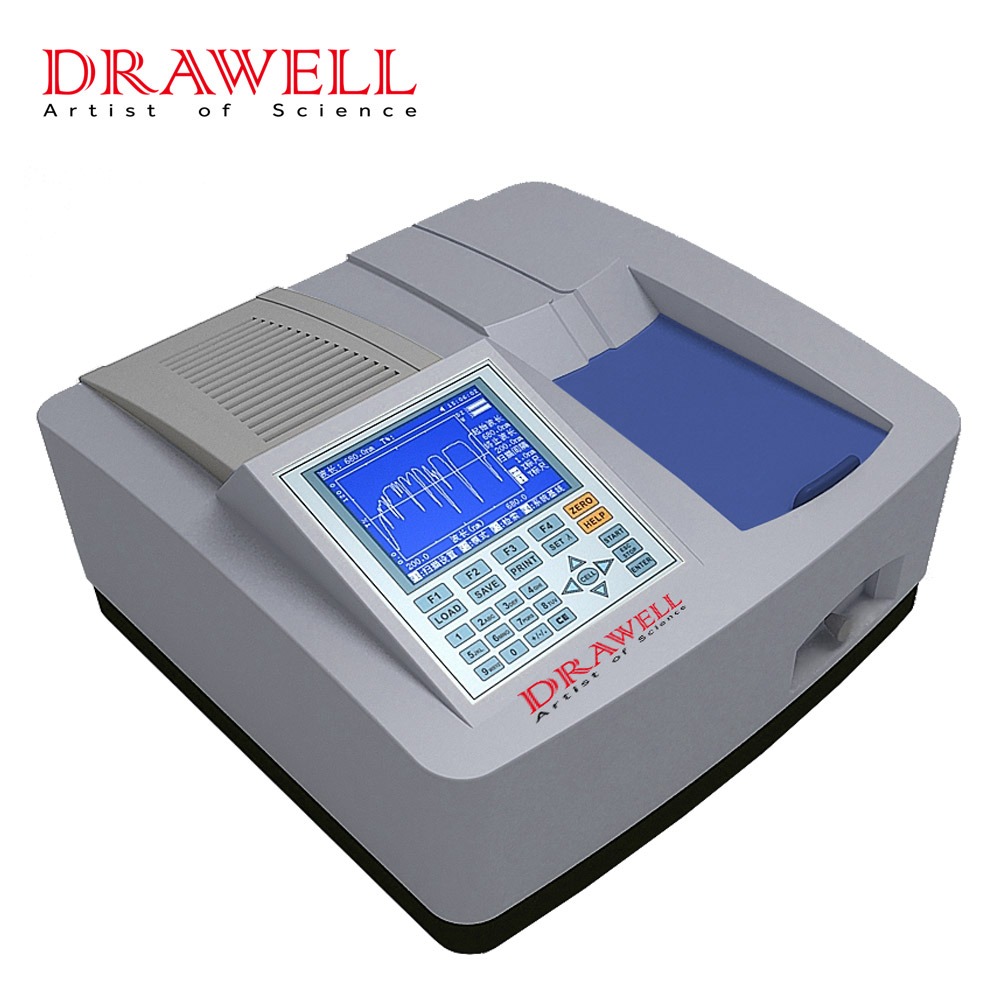



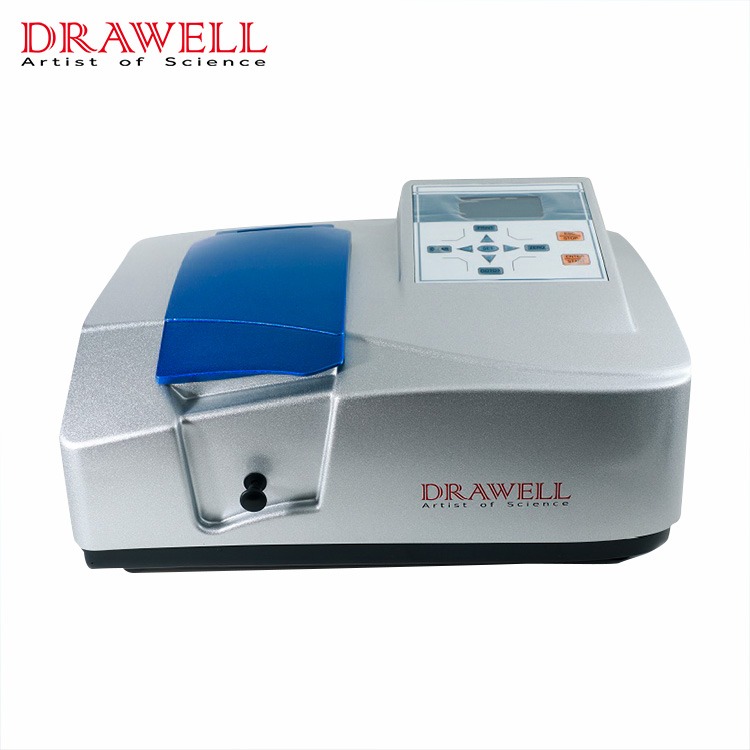
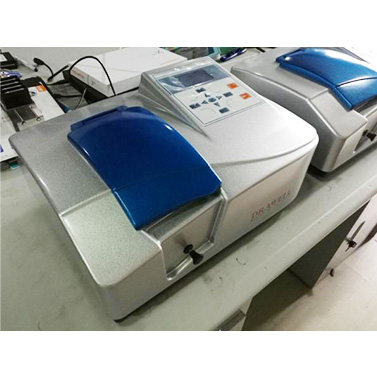
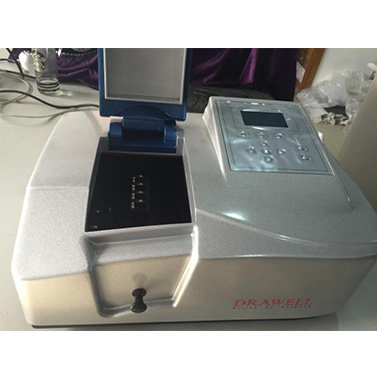
DU-8200 Single Beam UV/VIS Spectrophotometer
DU-8200 Single Beam UV/VIS Spectrophotometer is designed for educational, research, and quality control laboratories to measure the absorbance or transmittance of samples.
Widely used for quantitative analysis such as creating standard curves, measuring absorbance (Abs) and transmittance (T%), and performing basic spectral scans. It also supports functions like wavelength scanning and kinetics analysis when connected to PC software.
- Optical System: Single beam.
- Wavelength Range: 190 to 1100 nm.
- Bandwidth: 4.0nm (2.0nm optional).
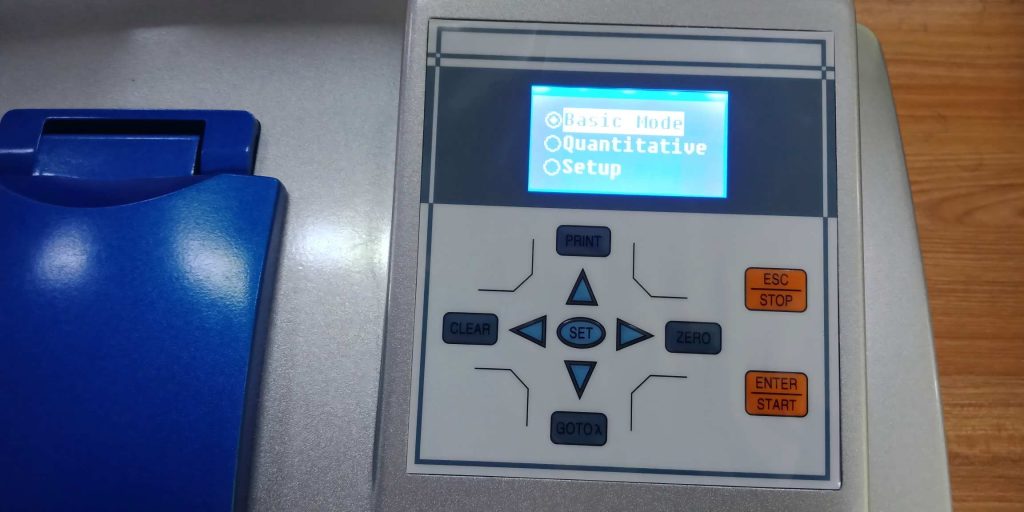
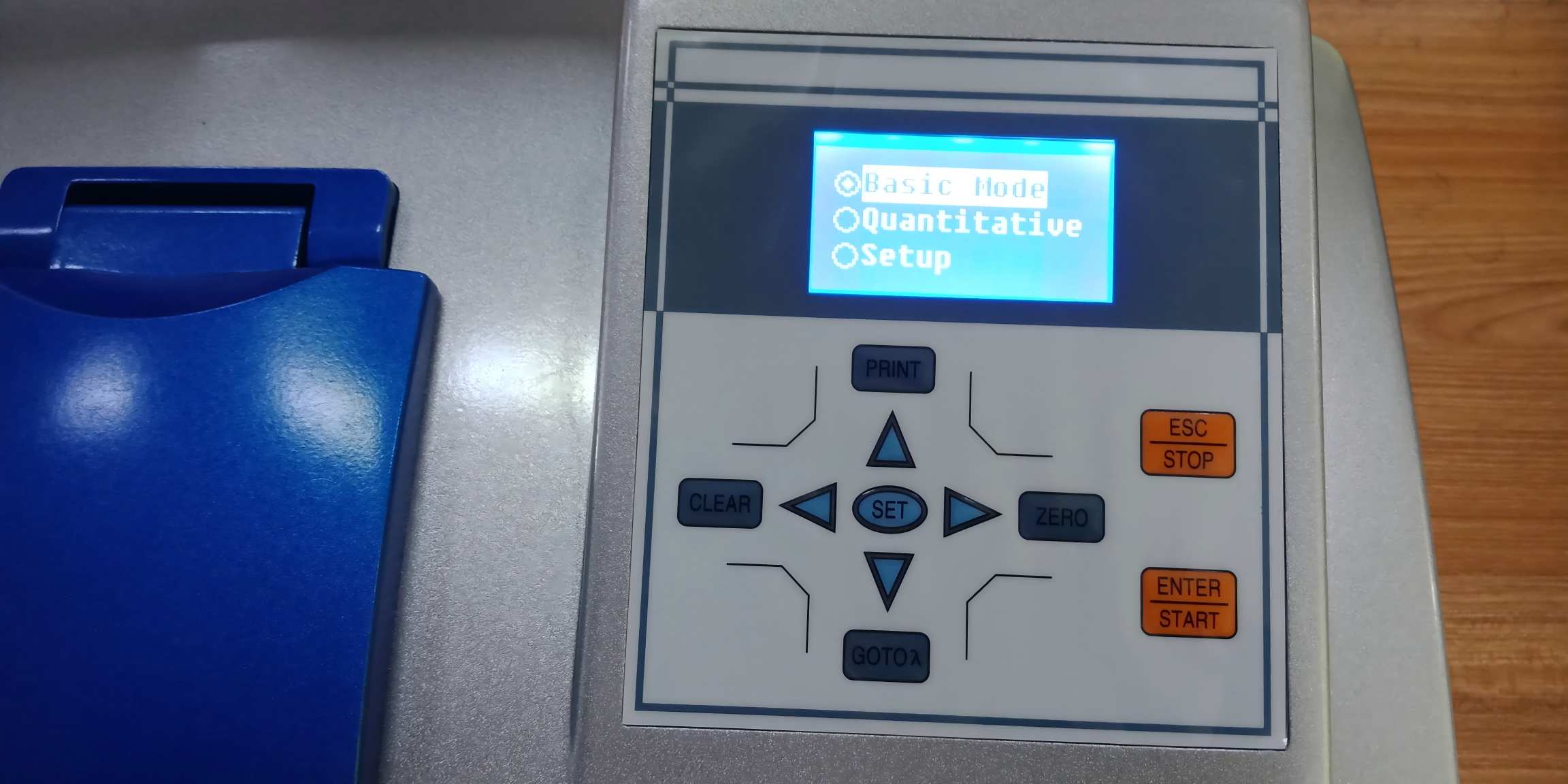
- Display: 128×64 mm LCD.
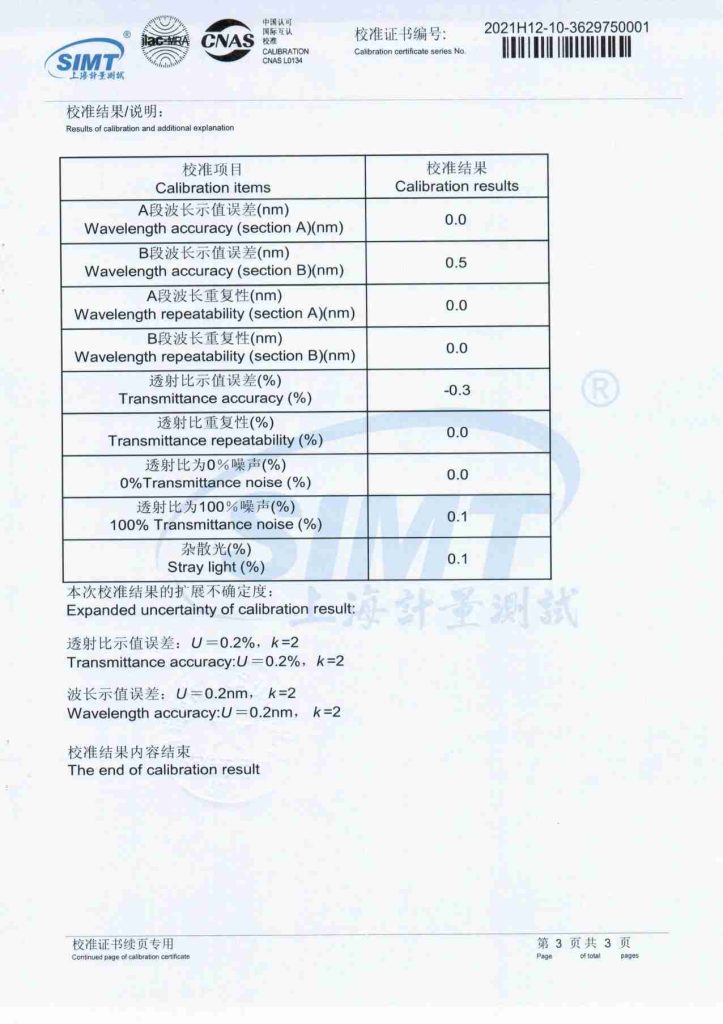
- Wavelength Accuracy: ±0.8nm
Features of DU-8200 Spectrophotometer:
- Wide UV-Vis Range (190–1100 nm) for versatile quantitative and qualitative analysis.
- Stable Single-Beam Optical System with holographic grating for accurate, low-noise measurements.
- High Accuracy & Low Stray Light ensure reliable and repeatable laboratory results.
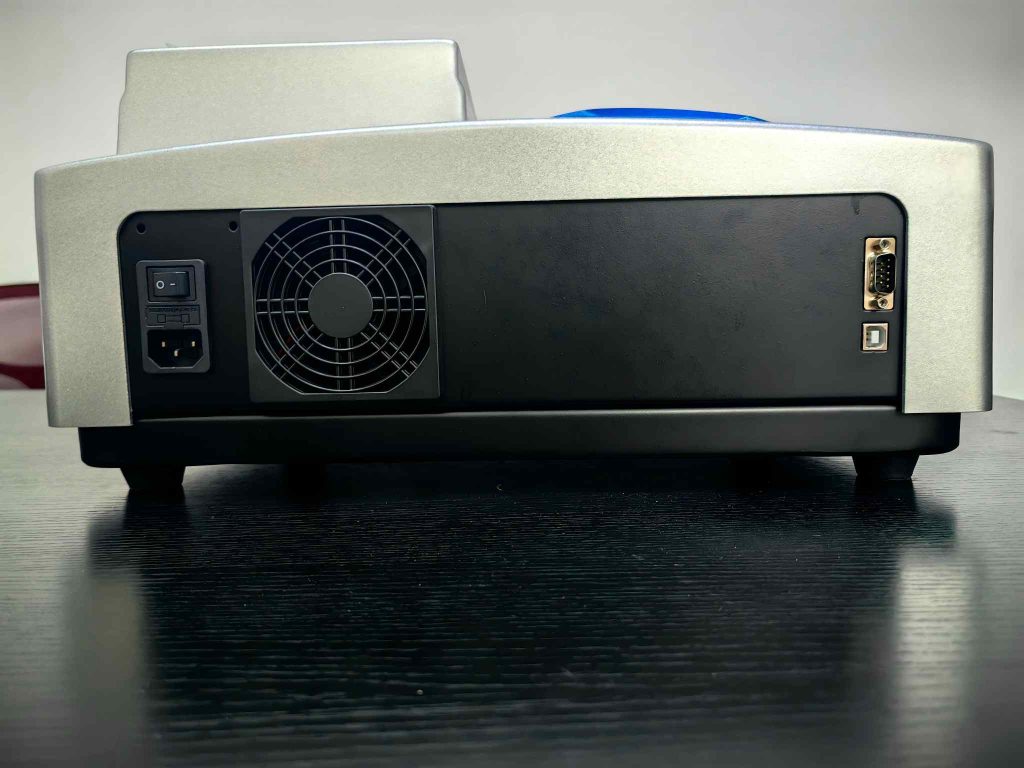
- User-Friendly Operation & Data Output with LCD display, USB/RS232 connectivity, and optional PC software.
- High Photometric Stability & Low Noise improve analytical reliability.
- PC & Printer Connectivity via USB and RS232 for easy data management.
- Wide Wavelength Range (190–1100 nm) for UV and visible quantitative analysis.
- Multiple Testing Modes including absorbance, transmittance, and quantitative analysis.
Function of DU-8200 Spectrophotometer:
1. Photometric: T%, Abs
2. Quantitative: Standard Curve
3. System Utility
4. WL Scan (Spectrum Scan) (PC)
5. Time Scan (Kinetics) (PC)
6. DNA/Protein Test (PC)
7. Multi-WL Test (PC)
Main Structure of DU-8200 Single Beam UV-VIS Spectrophotometer
The spectrophotometer consists of five parts:
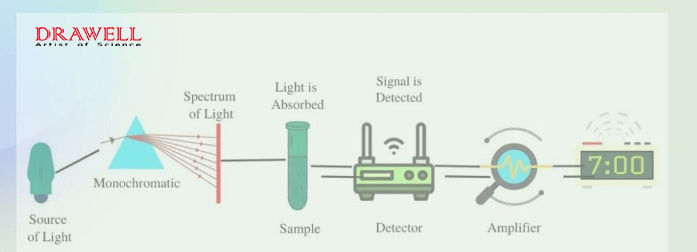
- 1) Halogen or deuterium lamps to supply the light;
- 2) A Monochromator to isolate the wavelength of interest and eliminate the unwanted second order radiation;
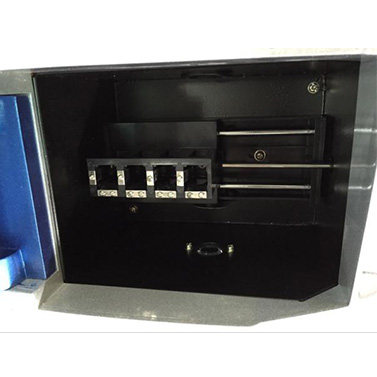
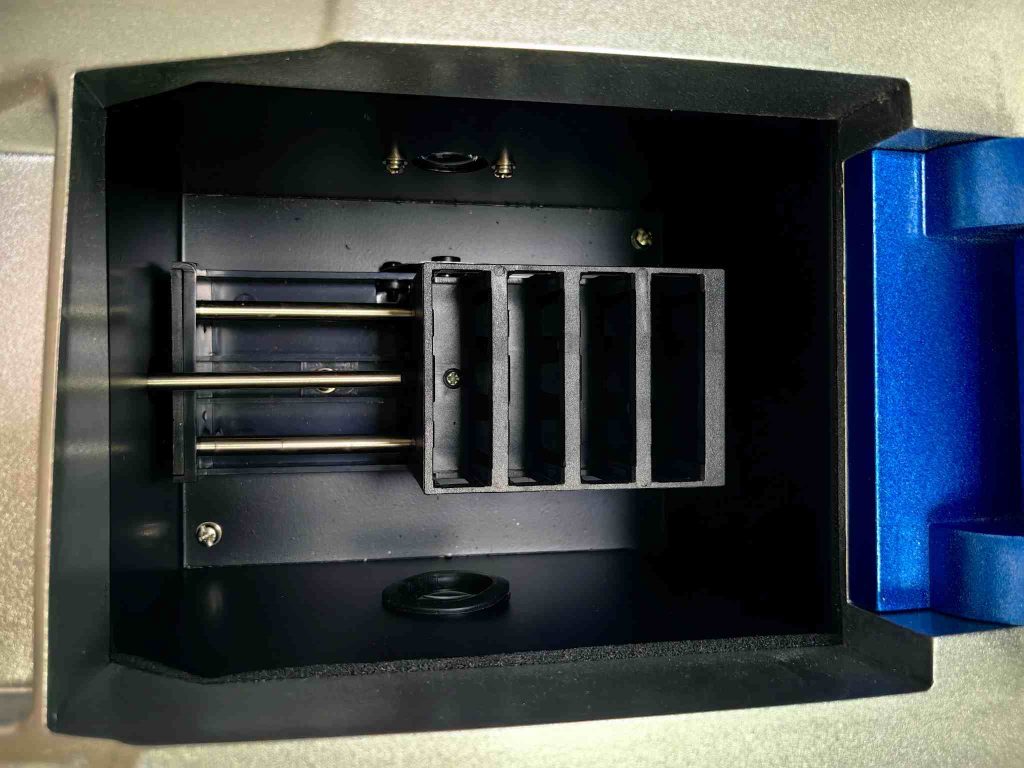
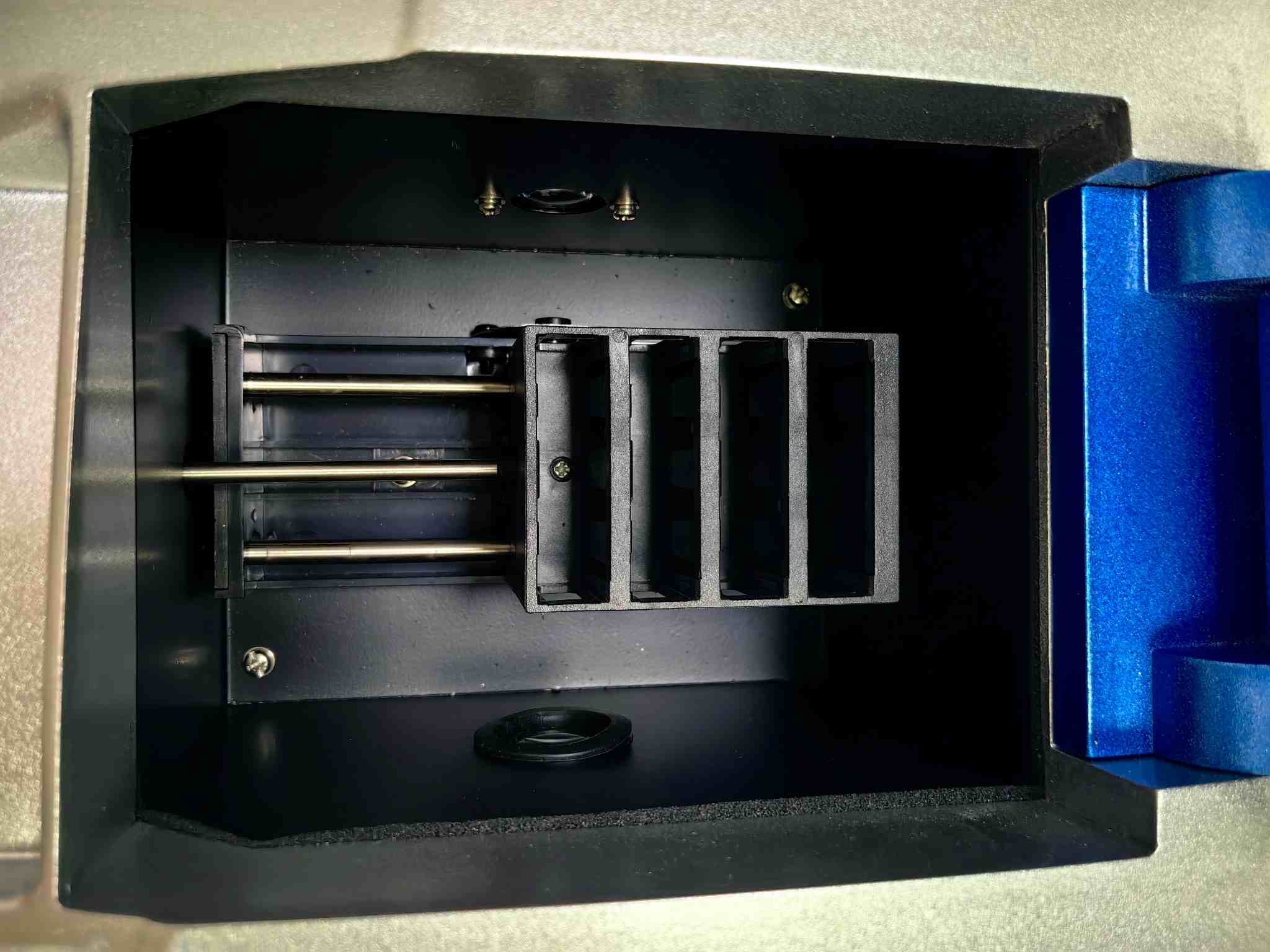
- 3) A sample compartment to accommodate the sample solution;
- 4) Detector to receive the transmitted light and convert it to an electrical signal; and
- 5) A digital display to indicate absorbance or transmittance. The block diagram (Fig2-4) below illustrates the relationship between these parts.
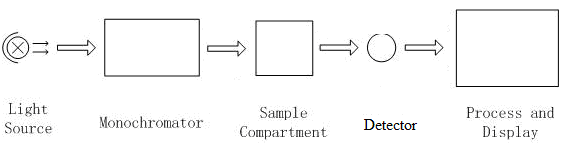
In your spectrophotometer, light from the lamp is focused on the entrance slit of the monochromator where the collimating mirror directs the beam onto the grating. The grating disperses the light beam to produce the spectrum, a portion of which is focused on the exit slit of the monochromator by a collimating mirror. From here the beam is passed to a sample compartment through one of the filters, which helps to eliminate unwanted second order radiation from the diffraction grating. Upon leaving the sample compartment, the beam is passed to the silicon photodiode detector and causes the detector to produce an electrical signal that is displayed on the digital display.rence Solution and its Transmittance is considered as 100%T. While the Transmittance of the sample to be tested is a relative value which is got comparing to that of the Reference.
Applications of DU-8200 Single Beam Visible Spectrophotometer

Education & Teaching Laboratories
Widely used in teaching laboratories for demonstrating Beer-Lambert Law, calibration curves, and basic qualitative and quantitative analysis of colored solutions.

Chemical & Industrial Process Control
Measuring absorbance-based color intensity and tracking reaction kinetics in dyes, coatings, inks, and electroplating solutions for routine industrial quality control.

Pharmaceutical & Biotech Quality Control
Used for quantitative analysis of APIs and finished products with visible absorbance, dissolution testing, and optional basic DNA/protein quantification and reaction kinetics monitoring via PC software.

Water & Environmental Analysis
Used for routine colorimetric determination of ammonia nitrogen, total phosphorus, Cr⁶⁺, nitrite, and volatile phenols in environmental water quality monitoring.

Food & Agricultural Quality Control
For colorimetric detection of nitrite, nitrate, phosphate, peroxide value, and pigments in food and agricultural products for quality control compliance.
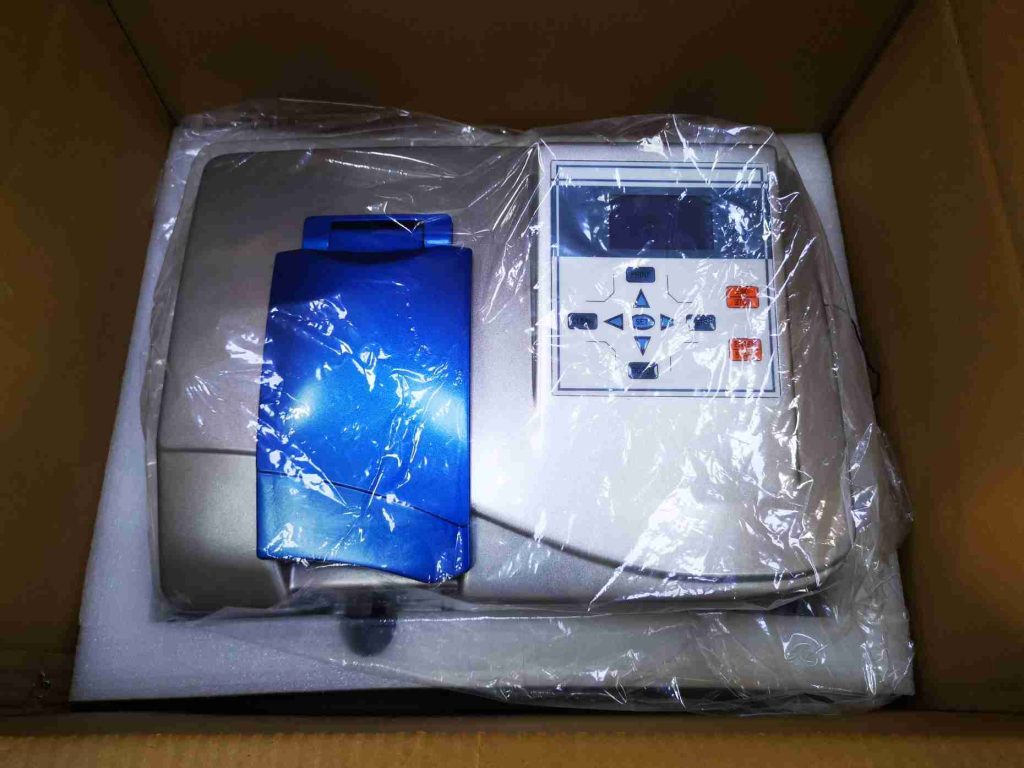
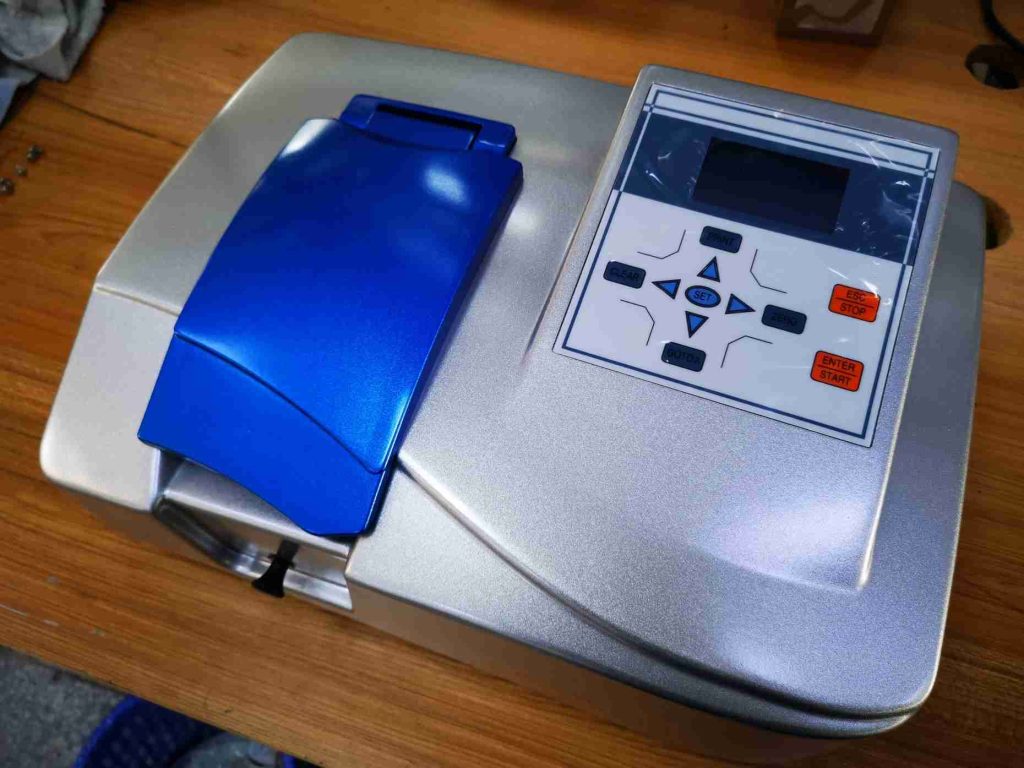
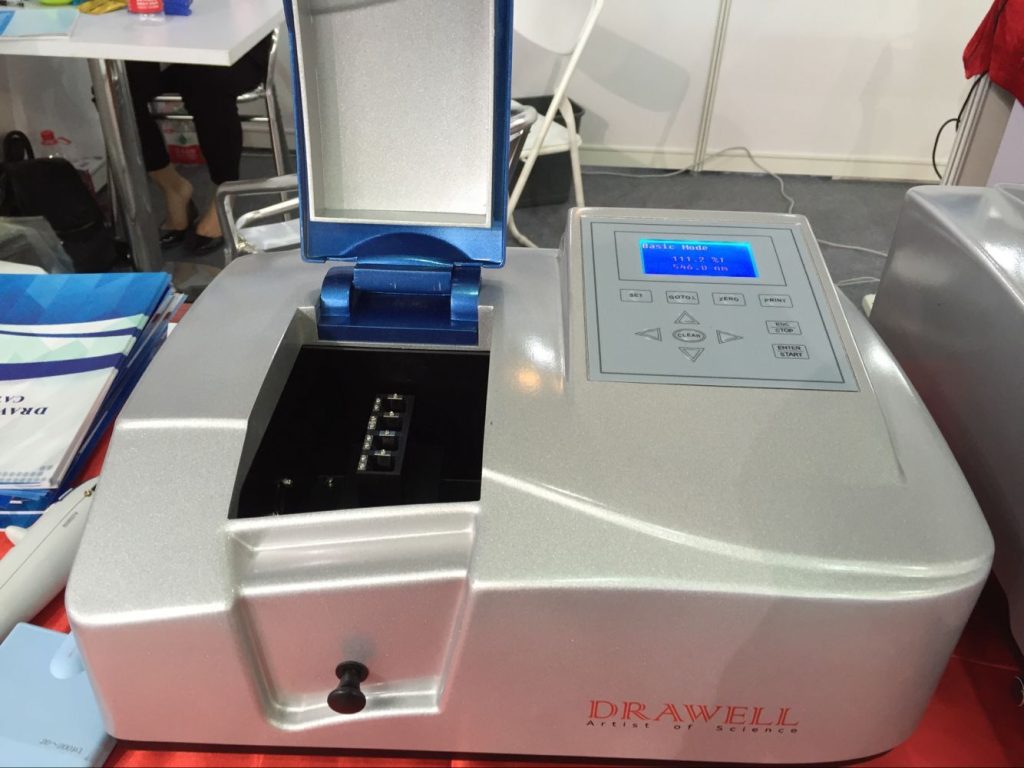
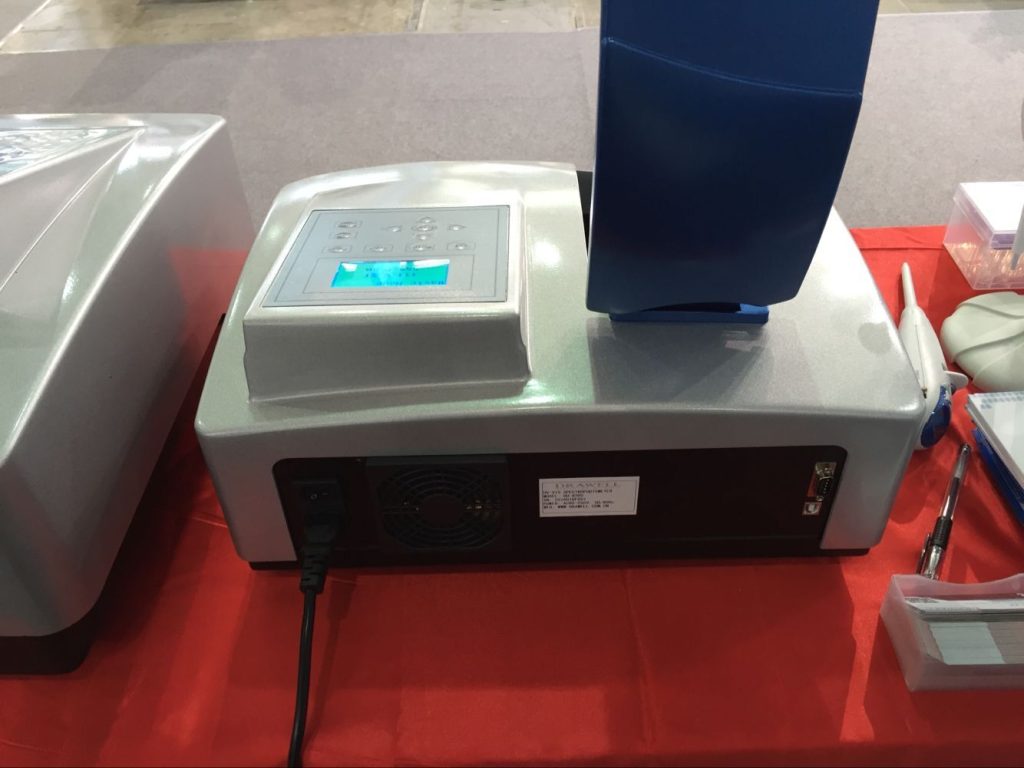
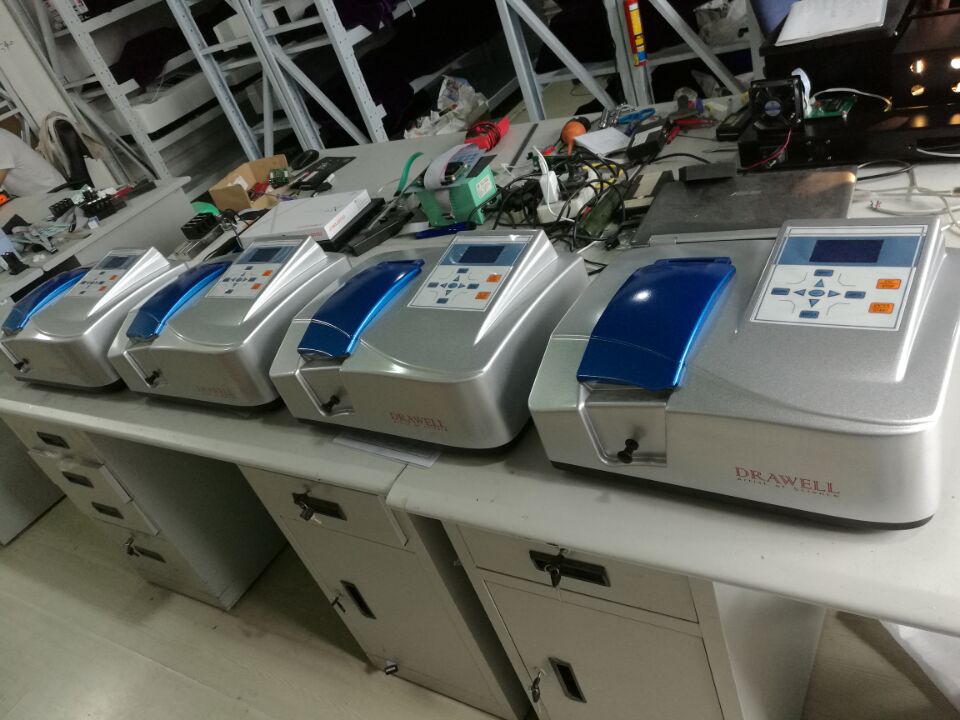
DU-8200 Spectrophotometer Display
FAQ
Specifications of DU-8200 Visible Spectrophotometer
| Model | DU-8200 |
| Wavelength Range | 190-1100nm |
| Spectral Bandwidth | 2.0nm or 4.0nm optional |
| Optical System | Single Beam, Blazed Holographic Grating (1200 lines/mm) |
| Wavelength Accuracy | ±0.8nm |
| Wavelength Repeatability | ≤0.2nm |
| Wavelength Setting | Auto, Resolution 0.1nm |
| Photometric Range | 0~200%T, -0.3 ~3A, 0~9999C |
| Photometric Accuracy | ±0.002A (0~0.5A), ±0.004A (0.5~1A), ±0.3%T (0~100%T) |
| Photometric Repeatability | ≤0.001A (0~0.5A), ≤0.002A (0.5~1A), ≤0.2%T (0~100%T) |
| Stray Light | ≤0.1%T(220/360nm) |
| Scan Speed | High, Medium, Low. Max.1000nm/minute |
| Baseline Flatness | ±0.003A |
| Stability | ±0.002A/h (500nm,0A) |
| Noise | ≤0.2%T/3min (250/500nm,0%T); ≤0.5%T/3min (250/500nm,100%T) |
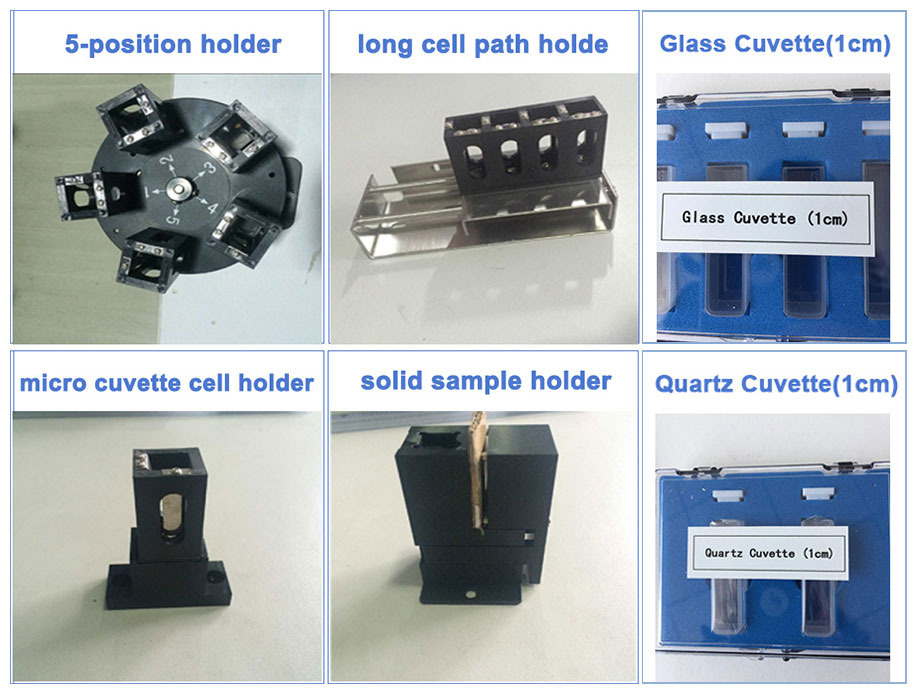
| Sample Compartment | Accommodate 5-100mm Pathlength Cuvette |
| Detector | Silicon Photodiode |
| Lamps | Tungsten Lamp & Deuterium Lamp (Pre-aligned) |
| Display | Graphic LCD (128×64 Dots) |
| Keypad | 11-key Membrance Keypad |
| Output Port | USB Port & RS232 Port |
| Printer | Mini Serial Printer; PC Printer |
| PC Software | Optional PC Scanning Software |
| Power Requirements | AC 90-250V,50/60Hz |
| Dimension | 431x318x195mm |
| Net Weight / Gross Weight | 9kgs / 13kgs |
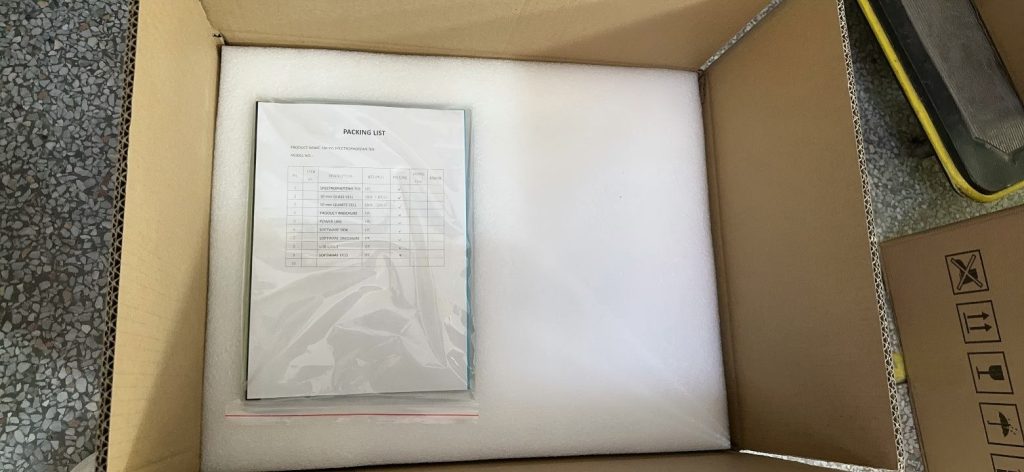
Accessories of DU-8200 Single Beam Visible Spectrophotometer
| Standard Configuration | ||
| Item | Quantity | Unit |
| SPECTROPHOTOMETER | 1 | set |
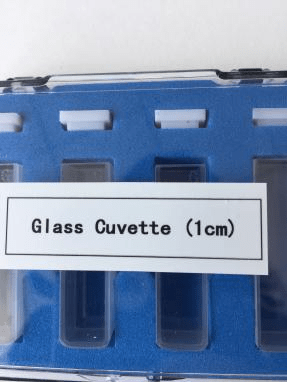
| 10mm glass cuvette | 4 | pcs |
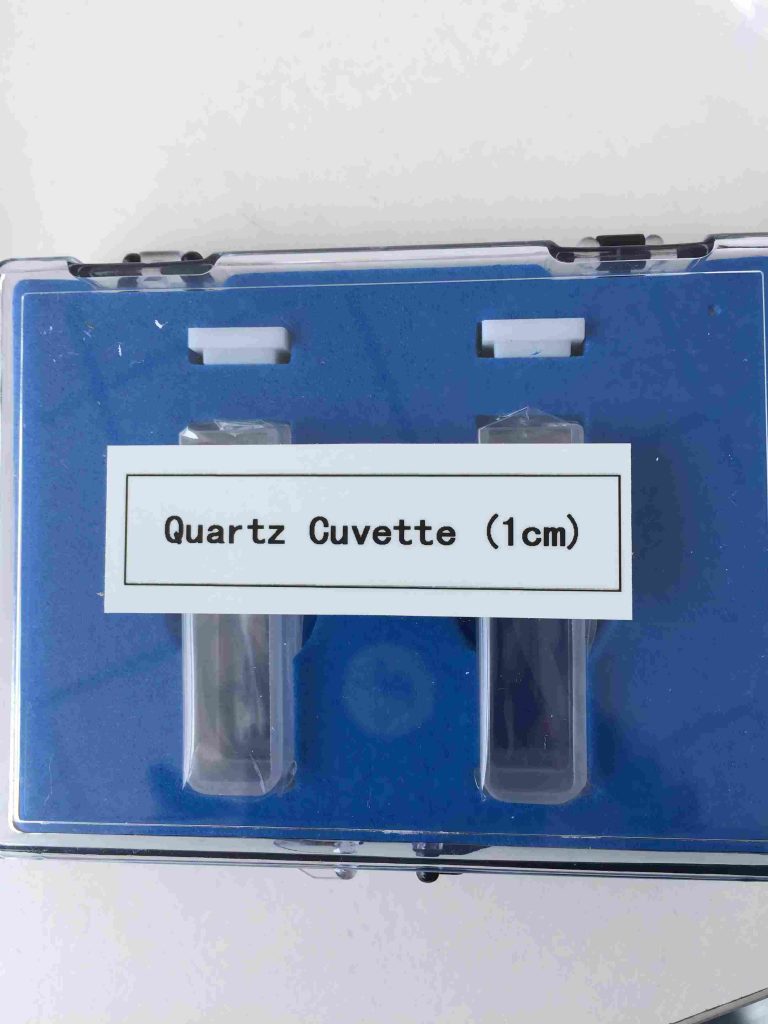
| 10 mm Quartz Cuvette | 2 | pcs |
| Power line | 1 | pcs |
| Optional Software | ||
| Item | Quantity | Unit |
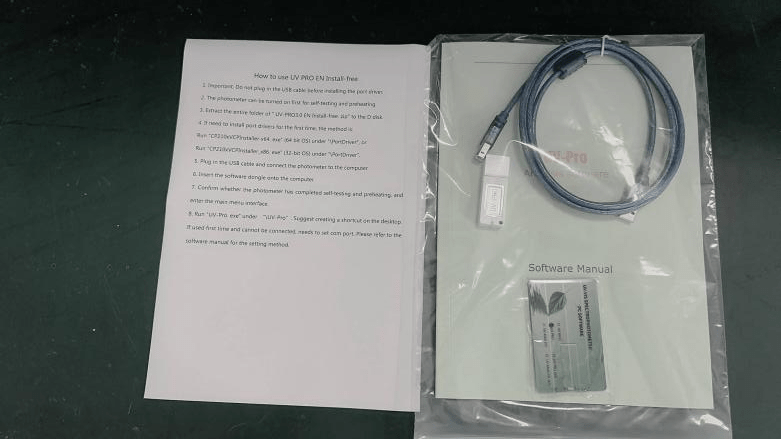
| Software card | 1 | pcs |
| Software brochure | 1 | pcs |
| Software dog | 1 | pcs |
| USB cable | 1 | pcs |
Optional Accessories:
- PC scanning software
- Tungsten Lamp
- Deuterium lamp
- Micro cuvette cell holder (one-position)
- Manual 4-positions cell holder
- Automatic 4/8 positions cell holder
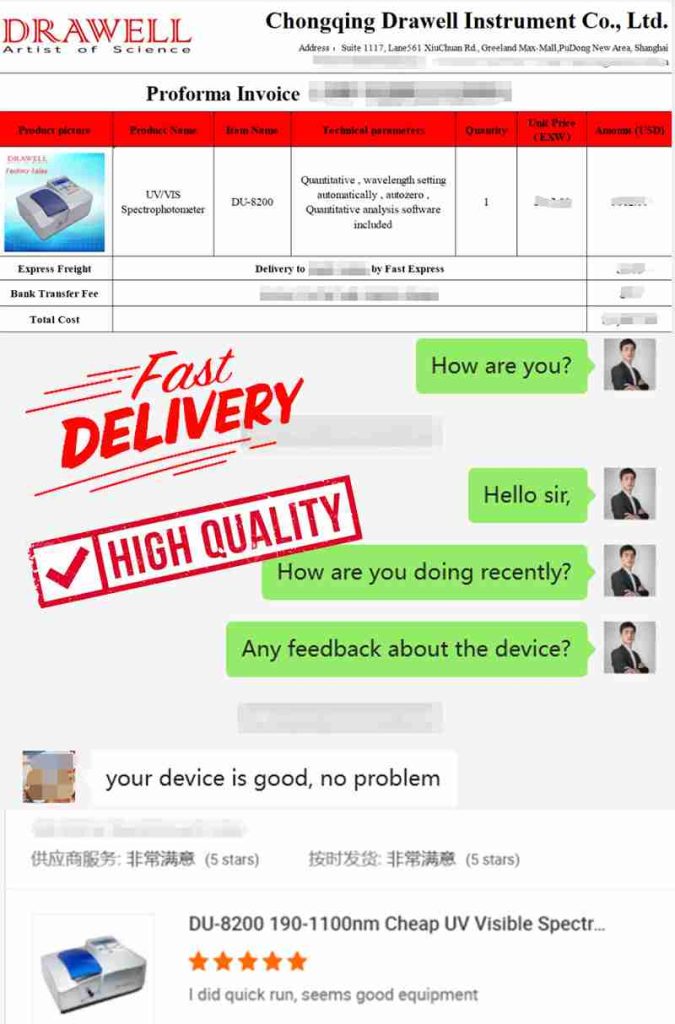
Customer Feedback of DU-8200 Spectrophotometer