


Muffle furnaces are critical in laboratories, research, and industries involving high precision heating, such as for sintering, calcination, and ash determination analysis. For muffle furnaces, high-temperature precision is of utmost importance. Even minor temperature deviations can greatly affect experiments, products, and safety. Such deviations can be avoided through a compromise of a combination of design, operational, and maintenance considerations which streamline the processes.

Understanding High-temperature Precision in Muffle Furnaces
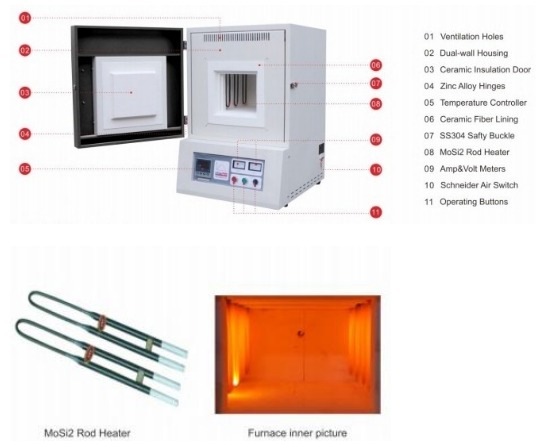
The ability of a muffle furnace to achieve and maintain accurate and stable temperature is referred to as high-temperature precision. This precision enables a furnace to maintain a set temperature without exceeding it which is critical for processes like sintering, calcination, and testing of materials. It is influenced by the quality of the heating elements, the strength of the insulation, temperature sensing devices, and the control systems, all working together to give dependable and consistent performance for industrial and laboratory functions.

Key Factors Affecting High-temperature Accuracy of Muffle Furnaces
| Factor | Impact on Temperature Accuracy | Details |
| Heating Elements | High impact | Material quality (e.g., Kanthal, silicon carbide), design, and placement determine uniform heat distribution and stability. |
| Insulation | High impact | Effective insulation (ceramic fiber, refractory bricks) minimizes heat loss, prevents temperature gradients, and improves energy efficiency. |
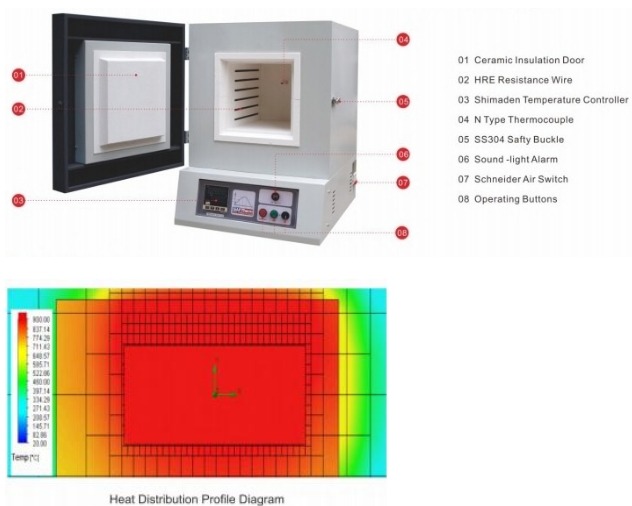
| Temperature Sensors & Control Systems | High impact | Accurate thermocouples and PID controllers maintain setpoint temperature with minimal deviation. Calibration and responsiveness are critical. |
| Chamber Design & Load Distribution | Medium to high impact | Chamber shape and airflow affect uniform heating; uneven or overloaded sample placement can create hotspots or cold zones. |
| Environmental Conditions | Medium impact | Ambient temperature fluctuations, drafts, and ventilation can influence internal furnace temperature. Stable placement reduces external effects. |
| Maintenance & Calibration | Medium to high impact | Regular inspection, replacement of worn components, and calibration ensure long-term temperature stability and prevent drift. |
Best Practices for Maintaining High-temperature Precision in Muffle Furnaces
Implementing proper procedures during operation, monitoring and maintenance of muffle furnaces can enhance temperature stability and performance .

1. Proper Preheating and Stabilization
Establishing counteracted control of muffle furnaces starts with the foundation of allowing preheat and stabilizes prior to the loading of any sample materials. In any case where sample materials are loaded, or a cold furnace is used, the results will matched as the heating structures will lack accuracy. Allocating a specific time to the furnace will greatly increase the success of functioning the internal equipment.
2. Even Sample Placement
Being able to properly arrange materials used during the heating of the furnace plays a very important part on the results gained. In any case where materials are packed, or the sample are unevenly stacked, there will always be a large chance of the furnace blocking the air and eventually producing heating zones. In the case where materials are poorly organized, the chances of stabilizing temperature are gone and that will increase the chances of better and precise results.
3. Regular Calibration and Sensor Maintenance
The performance of a muffle furnace relies heavily on its temperature sensors and control systems. Thermocouples with PID (Proportional Integral Derivative) controllers maintain certain temperature setpoints by controlling and regulating the heating elements. Routine calibration of sensors helps maintain accuracy, while drift is prevented by servicing and scrutinizing the sensors. Calibration is needed to provide optimal performance and prevent results from deviating.
4. Routine Inspection and Replacement of Heating Elements
Heating elements suffer the consequences of thermal cycling, thus are critical components worn the most. The outcome of worn or defective elements is uneven heating and loss of temperature stability. Consistent and timely inspections and replacements of heating elements ensures the furnace’s temperature precision is maintained and energetic distribution is consistent.
5. Monitoring Environmental Conditions
There is a sudden change in temperature and the flow of air that can alter the the strength of the furnace. It is necessary to observe the position of the furnace in order to keep the hot air surrounding it, keeping the temperature around the furnace always steady. Modern approaches check the system performance so that they can maintain the alaram system without the system alarming them for anomalies.
6. Cleanliness and Chamber Care
The buildup of debris, ash, and residue in the furnace chamber can obstruct the flow of heat and air. This results in uneven temperatures. Cleaning the chamber regularly and properly disposing of residue keeps the furnace clog-free, ensuring residue-free, reliable heat distribution, and optimal performance of the device.
7. Leveraging Advanced Control Technologies
Modern muffle furnaces are more technologically advanced, having features such as digitized PID controllers, remote monitoring, and multi-zone heating. These features enable operators to more easily manage precise temperatures, track performance trends, and make necessary adjustments, resulting in improved performance. Maintaining precise control of the internal furnace even during periods of uninterrupted work enables optimal, reproducible, and high temperature conditions.

Innovative Technologies for Enhancing High-temperature Precision in Muffle Furnaces
New technologies brought to the market have greatly improved the accuracy, stability, and reliability of high-temperature muffle furnaces.
- Advanced Digital PID Controllers
Muffle furnaces of modern designs have come to rely on PID controllers more and more in the effort to retain high temperature precision. Digital PID controllers, as opposed to traditional controllers, monitor the temperature and modulate the power to the heating elements as is needed, overriding supply delays. With this kind of control, the setpoint during long operations is less likely to be overshot or undershot, proving better control of the operation. Also, programmable temperature profiles that come with digital interfaces allow for more complex heating and cooling sequences to be executed for more specialized applications.
- Multi-Zone Heating Technology
Providing every part of a system with the same level of energy is one of the biggest challenges in large temperature controlled installations. Each Multi-zone system can system can be configured to have each heating/baking element controlled by a separate zone for the chamber. This reduces the chances of the formation of hotspots and cold zones within the chamber. These systems work very well with large chambers that require uniform heating across multiple samples being tested at the same time.
- High-Performance Heating Elements
Advanced materials for heating elements have Continued development of temperature control materials have considerably improved the precision of temperature control. Heating elements that are made of high grade Kanthal alloys, Silicon Carbide, and Molybdenum disilicide are able to provide a consistent energy output while resisting oxidation at very high temperatures and performing in long cycle operations. Further optimised layout designs of heating elements ensure uniform heating and distribute the raised temperatures within the chamber while minimizing reduced zones of temperature.
- Enhanced Thermal Insulation and Chamber Design
Modern improvements in materials for insulation and the construction of chambers are closely associated with better temperature control results. Internal and external chamber surfaces with high density and low thermal conducting ceramic fiber combined with multilayer reflective Coatings improve the retention of the internal temperature by maintaining the heated zones and minimizing thermal dispersion to the external environment. Chamber designs that optimize the airflow reinforce the uniformity of temperature across the chamber while preventing formation of Thermal Stratification zones. Every part of the chamber can be accurately set to a specific temperature with high precision and controlled reproducibility for the temperatures, ensuring the internal temperature is consistent across the entire chamber.
- Remote Monitoring and Connectivity
Compact modern muffle furnaces have the ability of some degree of remote monitoring and control functions. These functions enable an operator to track temperature configurations, distribute alerts on temperature alerts and deviations, and make changes to the system from anywhere in the world. These advancements in the technology improve the operator’s overall level of comfort, while increasing operational precision by responding quickly to deviations in ideal conditions.
- Data Logging and Predictive Maintenance
Muffle furnaces tilt to the innovative side by synchronizing integrated muffle ferns with the ability to log data on temperature graphs and operational elements over time. This data facilitates the ushering in of preventative maintenance schedules, should the data trend indicate drifting or initial signs of wear. This style of management is ideal and ensures the consistent longevity and performance of the muffle furnace.
- Integration with Automation Systems
Some muffle furnaces can now be used with laboratory automation systems, which makes it possible to use the muffle furnaces in wider workflows. Enhancing reproducibility and accuracy of muffle furnaces to benchmarking standards. Full automated systems on user sample muffle furnace devices, control the on-board circulation pumps, water-cooled junctions, and programmable temperature rise and programmable control.

Summary
For precise and dependable outcomes, processes engaging muffle furnaces demand high-temperature precision. These can easily be achieved through high-grade components, strict adherence to operation protocols, and regular maintenance. The accuracy and stability of high-temperature muffle furnace can be ensured through laboratory and industrial optimization through further advancing control technologies coupled with precision monitoring that upgrade muffle furnaces performance.
Related Products Recommendation
Get Quote Here!
Latest Posts


What Next?
For more information, or to arrange an equipment demonstration, please visit our dedicated Product Homepage or contact one of our Product Managers.


