


As pharmaceutical research is highly regulated, accuracy, precision, and reliability of analytical data is of utmost importance. Chromatographic techniques play a pivotal role in quality control (QC), research and development (R&D), stability studies and more – High-Performance Liquid Chromatography (HPLC) and Gas Chromatography (GC) are both fundamental separation techniques; however their fundamental principles differ significantly and applications differ accordingly. Here, we offer an in-depth comparison between HPLC and GC, exploring their roles within pharmaceutical industries while exploring their fundamental differences as well as providing recommendations tailored specifically to analytical needs of various analytical needs.
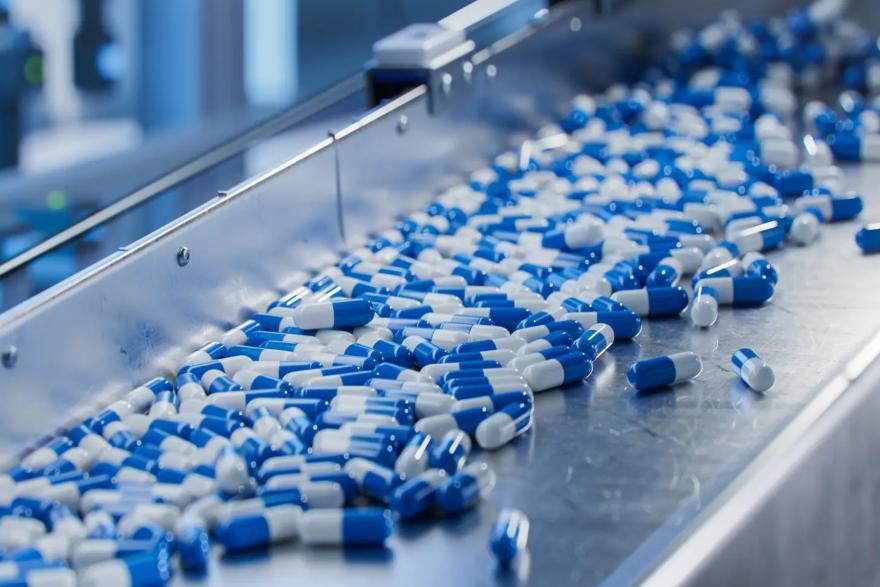
GC and HPLC in the Pharmaceutical Industry
In the Pharmaceutical Industry, choosing between HPLC and GC as an analytical technique depends on the physicochemical properties of an analyte. Both techniques have their own set of strengths but serve different functions.

HPLC: The Versatile Tool in Pharma
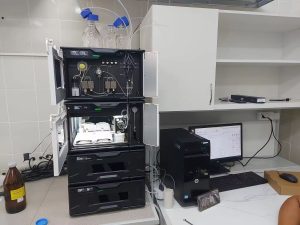
HPLC, or High-Performance Liquid Chromatography in its full form in pharmaceutical analysis, is a technique for isolating components from mixtures by passing liquid mobile phase through a column with solid stationary phase. Due to its versatility and effectiveness in pharmaceutical analysis, it serves as one of the key “workhorses”.
HPLC is used in the pharmaceutical industry for:
- Drug Substance and Product Assays: High Performance Liquid Chromatography (HPLC) is the gold standard in quantitative analysis of active pharmaceutical ingredients (APIs). This process determines the precise concentration of each API within final products such as tablets containing 50 mg. HPLC uses its precise accuracy to ensure content conforms with USP guidelines (i.e. 90%-110% of labeled amount), an essential aspect regulated by such documents as USP.
- Impurity and Related Substances Analysis: One of the primary roles for HPLC in pharmaceutical industry applications is to detect and quantify impurities, whether related substances, degradation products or process impurities. HPLC methods can easily separate main drug peaks from trace levels (0.1%) of impurity peaks such as degradation products.
- Chiral Separations: Many drugs are chiral, meaning that they exist as non-superimposable mirror images (enantiomers). Only one enantiomer may be therapeutically active while its counterpart can be inactive or even harmful, making chiral HPLC essential in developing and quality controlling stereospecific medications like omeprazole. Specialized columns used by this technique allow HPLC to distinguish these enantiomers and ensure effective development and quality control processes for stereospecific drugs like this one.
- Dissolution and Stability Studies: When conducting stability testing, HPLC monitors drug degradation over time in various conditions (e.g., high temperature and humidity). HPLC also serves an integral part in dissolution testing – measuring how quickly a dosage form dissolves, an indicator of its bioavailability.
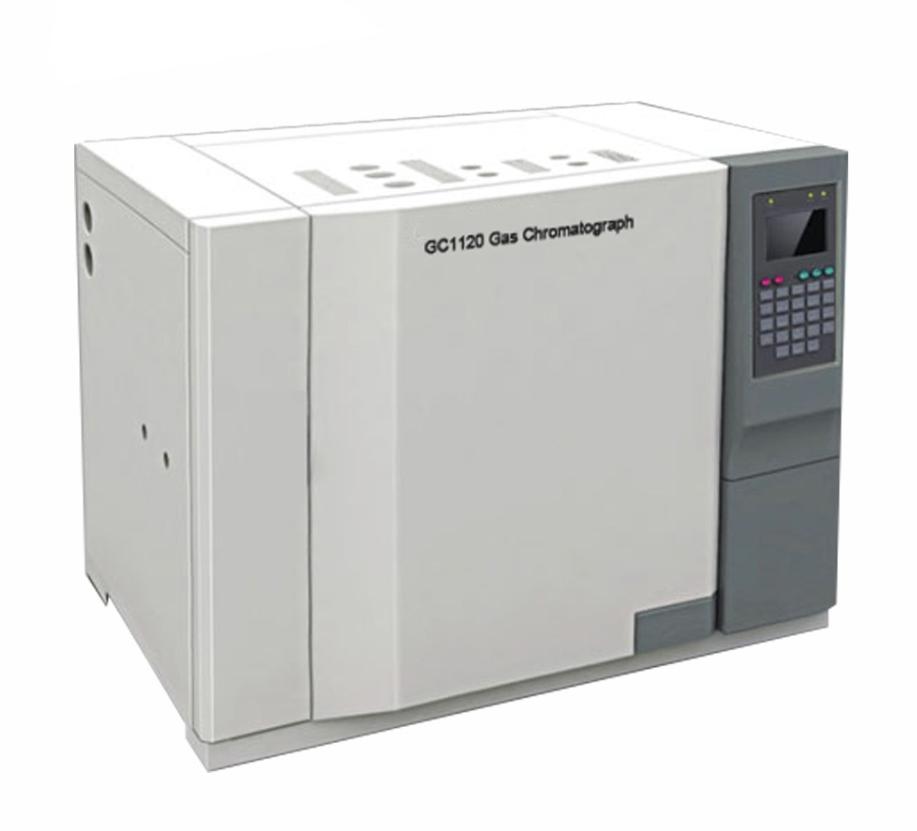
GC: The Specialist for Volatile Substances
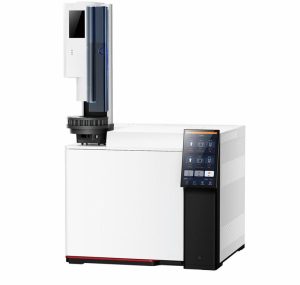
Gas Chromatography in Pharmaceutical Analysis GC analysis in pharmaceutical analysis is more specialized. It utilizes inert gases (e.g. helium and nitrogen) as its mobile phase to separate compounds that can be vaporized without decomposition, making GC particularly suitable for volatile and thermally stable substances requiring high sensitivity analysis.
- Residual Solvents Analysis: Gas chromatography is one of the primary applications used in pharmaceutical analysis. Drug manufacturing employs various organic solvents that may leave trace amounts behind after production; according to ICH Q3C guidelines, there must be strict limits set on these residual solvents due to potential toxicity issues. GC-Headspace provides an ideal technique for this analysis; for instance GC can test batches for trace levels of methanol or acetone to ensure compliance.
- Volatile Impurities: GC analysis in pharmaceutical manufacturing can also detect and quantify volatile impurities that arise during production or storage, such as small molecular weight by-products or precursors.
- Essential Oils and Flavorings: Gas Chromatography is used to analyze products containing natural extracts or flavorings such as flavorings. One example would be the analysis of volatile components found in herbal medicine excipients that contain plant material.
GC can serve as an invaluable scout, efficiently identifying and quantifying inherently volatile substances – particularly when combined with mass spectrometry (GC-MS), which allows precise structural identification.
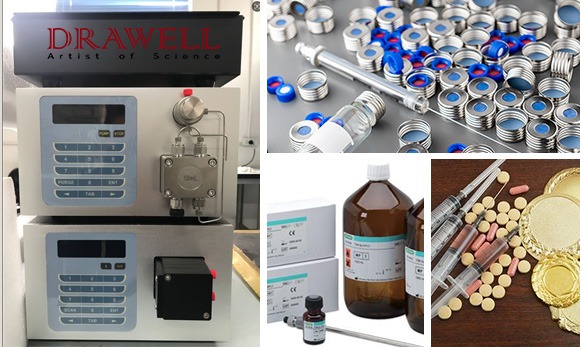
GC vs. HPLC: Core Differences and Comparison
The table below summarizes the GC vs HPLC differences across multiple parameters relevant to pharmaceutical analysis.
| Feature | High-Performance Liquid Chromatography (HPLC) | Gas Chromatography (GC) |
| Mobile Phase | Liquid (often a mixture of organic solvents and water) | Gas (e.g., helium, nitrogen, hydrogen) |
| Sample State | Analyte must be soluble in the mobile phase. | Analyte must be volatile or easily derivatized. |
| Applicable Compounds | Non-volatile, thermally unstable, large molecules, polar, and ionic compounds. | Volatile, thermally stable, small molecules (typically <1000 Da). |
| Separation Principle | Based on partitioning, adsorption, ion exchange, or size exclusion. | Based on boiling point and polarity. |
| Detector Types | UV-Vis, Refractive Index (RID), Fluorescence, Mass Spectrometry (HPLC-MS). | Flame Ionization (FID), Thermal Conductivity (TCD), Electron Capture (ECD), Mass Spectrometry (GC-MS). |
| Operating Temperature | Ambient or slightly elevated (typically <100°C), protects column and sample. | High temperatures (some columns can go up to 400°C), essential for vaporization. |
| Typical Applications | APIs, excipients, impurities, stability testing, biomolecules. | Residual solvents, volatile impurities, gases, hydrocarbons. |
| Coupling with MS | HPLC-MS (LC-MS) for peptides, metabolites, biologics | GC-MS for residual solvents and volatile impurity profiling |
Key Differences:
- Sample Nature: This is the most decisive factor. If a compound cannot be vaporized without decomposing (e.g., proteins, peptides, most APIs), HPLC is the only option. Conversely, if a compound is naturally volatile (e.g., ethanol, toluene), GC offers superior separation efficiency.
- Detection: Both techniques can be coupled with mass spectrometers for definitive identification. HPLC vs GC MS is a common consideration for complex matrices. HPLC-MS is ubiquitous in metabolite identification and bioanalysis, while GC-MS is the gold standard for confirming the identity of unknown volatile peaks, such as in residual solvent testing.
- Advantages (HPLC vs GC advantages):
HPLC Advantages: Broader application range, analysis of thermolabile compounds, easier sample preparation for many solids, and ambient temperature operation.
GC Advantages: Higher separation efficiency (more theoretical plates), faster analysis times for simple mixtures, highly sensitive and robust detectors like FID, and excellent for gas analysis.

Preferred Use Cases: When to Choose HPLC or GC
Selecting between these two techniques is not a matter of which one is “better,” but rather which one is the right tool for the job.
Choose HPLC when:
- The analyte is non-volatile and thermally unstable. This covers the vast majority of APIs, peptides, sugars, and ionic compounds.
- The sample is solid and readily soluble in a common solvent.
- The application is assay, purity, dissolution testing, or bioanalysis.
Example Case: Developing a stability-indicating method for a new small-molecule API. HPLC-UV is selected because the API and its known degradants are polar, non-volatile solids that decompose upon heating.
Choose GC when:
- The analyte is volatile and thermally stable.
- The analysis involves gases or residual solvents.
- The sample can be easily vaporized at temperatures up to 300-350°C without decomposition.
Example Case: Quantifying Class 2 residual solvents (e.g., Methanol, Dichloromethane) in a final drug substance batch. A validated GC-FID method is employed as per ICH Q3C guidelines, as it provides the required sensitivity, specificity, and precision for these volatile targets.
Final Words
As we discussed above, there is no clear answer in the HPLC vs GC debate, as both have their weaknesses. HPLC takes the lead in testing biologics and as the first option in routine drug testing and stability studies. In contrast, GC is invaluable for analyzing volatile and thermally stable compounds.
Every pharmaceutical company should realize that the main concern is not which method is superior, but which one fits the purpose best. At the same time, choosing a reliable analytical equipment supplier will make your research and analysis results more trustworthy. Equipped with this knowledge, pharmaceutical companies will find more accurate answers while staying compliant and most importantly, keeping patients safe.
Related Products Recommendation
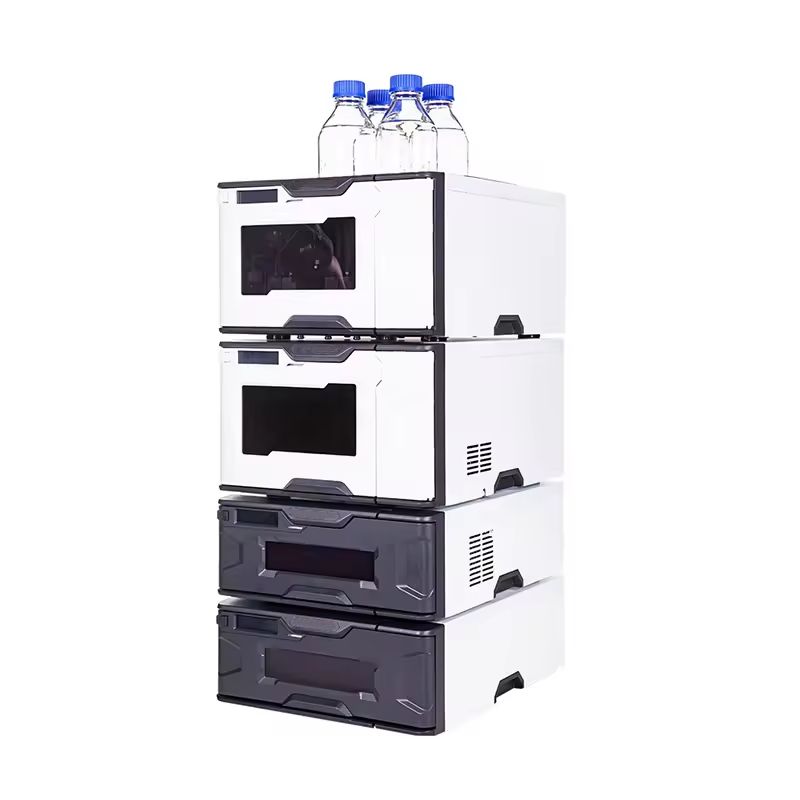
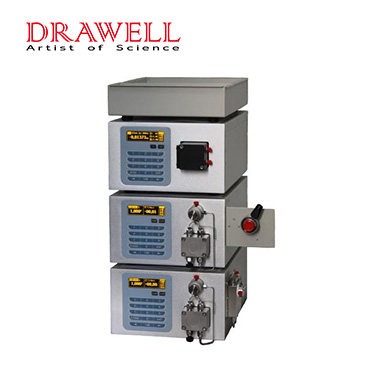
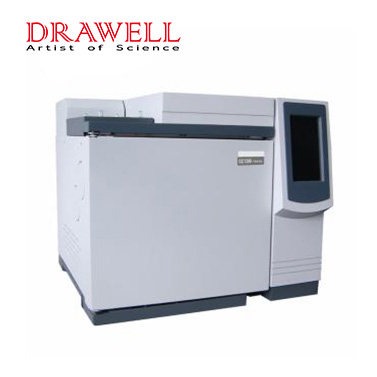
Get Quote Here!
Latest Posts

What Next?
For more information, or to arrange an equipment demonstration, please visit our dedicated Product Homepage or contact one of our Product Managers.


