


In the world of analytical chemistry, precision and accuracy are paramount. Researchers and scientists often find themselves at a crossroads when choosing the most suitable method for their analysis. Two popular techniques that frequently come into play are gas chromatography (GC) and mass spectrometry (MS). Each method offers unique advantages and applications, and selecting the right one for your analysis requires a thorough understanding of their principles and capabilities.
At Drawell’s application support center, our laboratory engineers frequently guide researchers through this exact decision-making process to optimize their analytical workflows and match budgets with the correct instrument configurations.
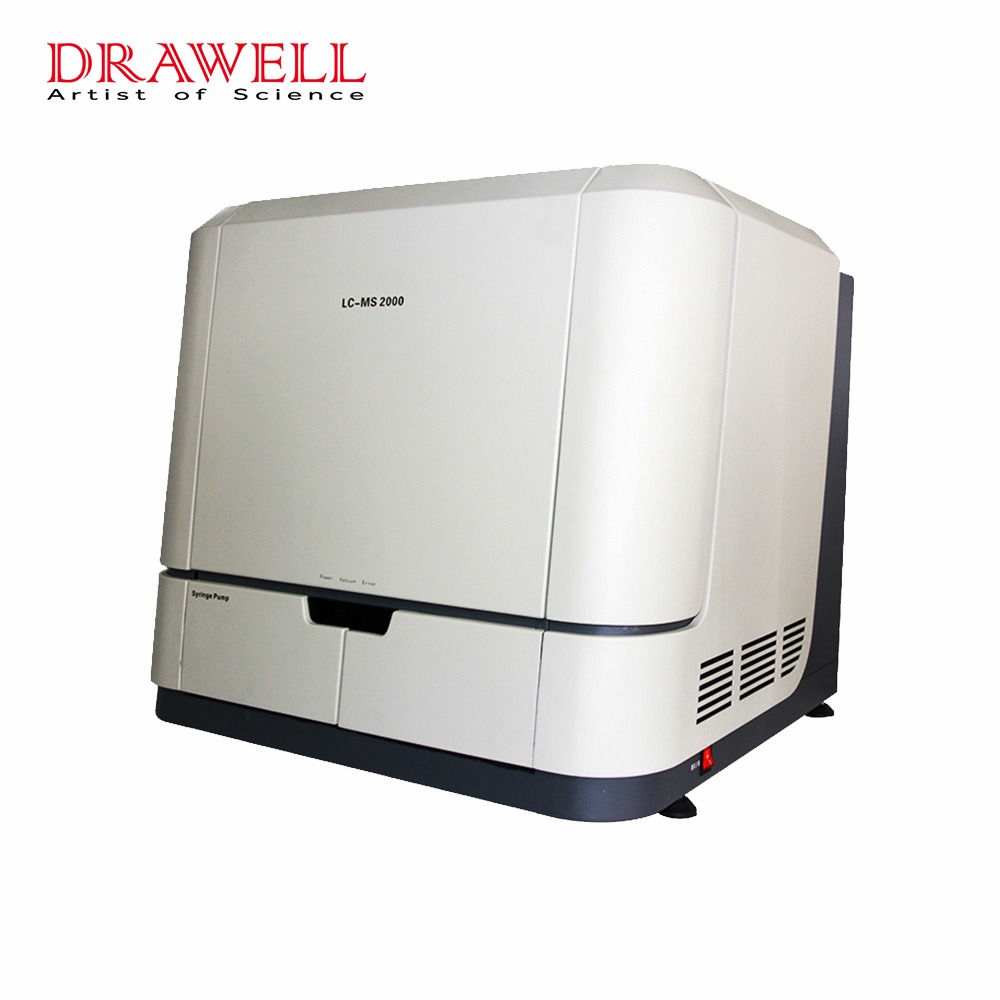
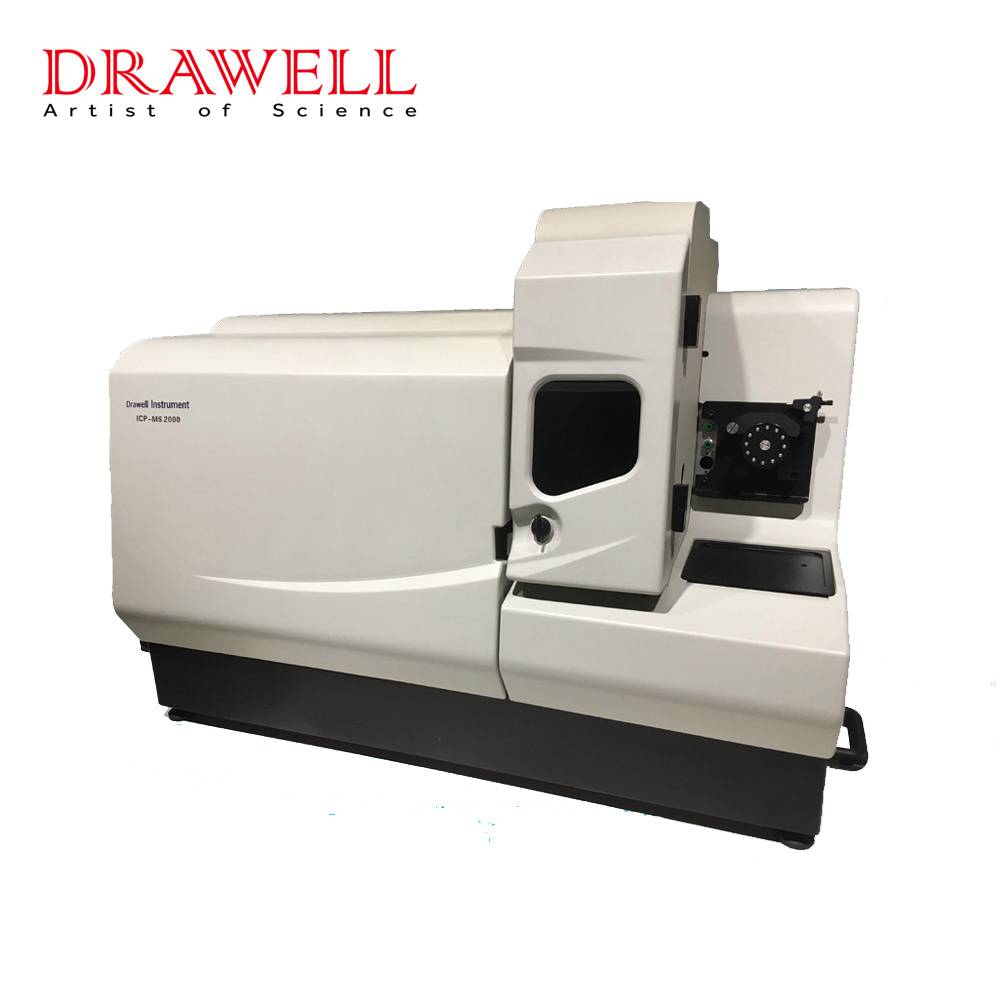
What are Gas Chromatography (GC) and Mass Spectrometry (MS)?
What is Gas Chromatography (GC)?
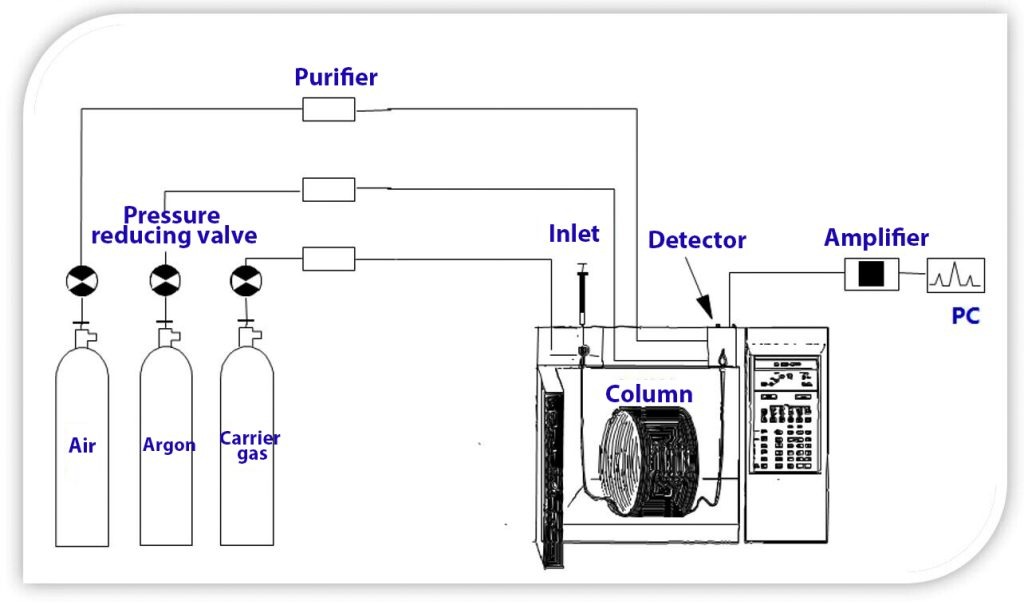
Gas chromatography is a separation technique that excels at separating and quantifying volatile compounds in a complex mixture. It operates on the principle that a sample mixture is injected into a chromatographic column, where it interacts with a mobile phase, usually an inert carrier gas like helium or nitrogen. The components of the mixture then partition between the stationary phase (often a coated capillary column) and the mobile phase based on their chemical properties and boiling points.
One of the primary strengths of GC is its ability to separate compounds with high precision, making it ideal for applications like environmental analysis, drug testing, and food quality control. It can effectively separate and quantify individual compounds, even when they are present in trace amounts.
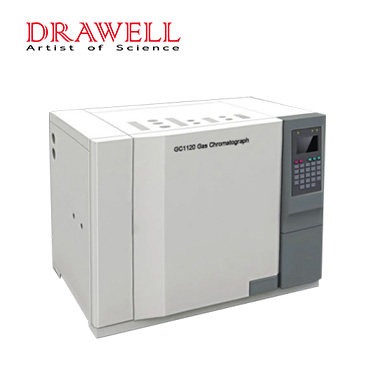
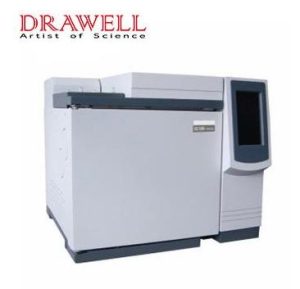
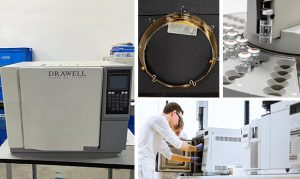
GC is also known for its excellent reproducibility, making it a reliable choice for routine analyses where consistent results are crucial. Researchers can confidently use GC to identify and quantify specific compounds, especially when dealing with volatile organic compounds (VOCs) in environmental samples or complex mixtures in petrochemical analysis. or budget-conscious laboratories performing these types of routine testing, standard instruments like the Drawell GC1120 Gas Chromatography system provide exceptional reproducibility and stability without unnecessary complexity.
When component identification relies strictly on retention times, GC systems are typically paired with robust, cost-effective detectors such as the Flame Ionization Detector (FID) for hydrocarbons or the Thermal Conductivity Detector (TCD) for general compounds.
What is Mass Spectrometry (MS)?
Mass spectrometry, on the other hand, is a powerful analytical technique that focuses on the determination of the molecular identity and structure of compounds within a sample. MS works by ionizing molecules (commonly using Electron Ionization, or EI, for volatile samples) and then measuring the mass-to-charge ratio (m/z) of the resulting ions. This process provides valuable information about the molecular weight, elemental composition, and structural characteristics of the analyte.
MS can be coupled with other separation techniques like gas chromatography (GC-MS) or liquid chromatography (LC-MS), creating hybrid systems that combine the advantages of both separation and mass spectrometry. This versatility allows scientists to tackle a wide range of analytical challenges, from identifying unknown compounds in forensic science to elucidating the structures of pharmaceutical compounds.
The distinguishing feature of MS is its ability to provide high-resolution mass spectra, which can help distinguish between compounds with similar molecular weights but different structures. This capability is crucial in fields like metabolomics and proteomics, where the identification of biomolecules relies on precise molecular characterization.
The Core Difference Between Gas Chromatography and Mass Spectrometry
The choice between GC and MS often hinges on the specific requirements of your analysis. While both handle organic molecules, understanding the fundamental difference between gas chromatography and mass spectrometry ensures you do not waste laboratory resources.
To look at it simply: GC separates the components of a mixture but cannot definitively identify a brand-new unknown compound on its own. MS identifies pure chemical structures with extreme precision by breaking them into molecular fragments, but it struggles to analyze raw, complex mixtures without a separation step.
Key Evaluation Criteria:
- Compound Type: Consider the nature of the compounds you’re analyzing. GC is better suited for volatile and semi-volatile compounds, while MS excels at identifying a wide range of compounds, including non-volatile and thermally labile substances.
- Quantification vs. Identification: If your primary goal is quantification, GC is the go-to choice. It provides accurate and reproducible quantification of individual compounds. In contrast, MS is ideal for compound identification and elucidation of complex structures.
- Sensitivity: If your analysis requires high sensitivity, MS generally has the edge. It can detect compounds at lower concentrations, making it suitable for trace-level analysis.
- Sample Complexity: Consider the complexity of your sample matrix. GC may struggle with complex mixtures, while MS can handle them more effectively, especially when coupled with a separation technique like LC or GC.
- Resolution: If you need high resolution to separate closely related compounds, MS typically provides better results, thanks to its ability to distinguish between compounds with similar molecular weights.
- Budget and Resources: Take into account the availability of instrumentation and budget constraints. MS instruments are often more expensive to purchase and maintain than GC instruments.
Quick Comparison Matrix: Gas Chromatography vs Mass Spectrometry
| Analytical Metric | Gas Chromatography (GC) | Mass Spectrometry (MS) |
| Primary Function | Physical separation & routine quantification | Molecular weight & structural identification |
| Ideal Sample State | Volatile, thermally stable gases/liquids | Pure compounds (or requires LC/GC inlet) |
| Detectors/Analyzers | FID, TCD, ECD | Quadrupole, Time-of-Flight (TOF) |
| Destructive Test? | No (with TCD); Yes (with FID) | Yes (Sample is ionized and fragmented) |
| Typical Footprint | Benchtop, lower operational overhead | Benchtop to large scale, requires high vacuum |

The Ultimate Solution: Gas Chromatography-Mass Spectrometry (GC-MS)
What happens when you are dealing with a highly complex sample matrix—like environmental soil contaminated with multiple unknown pesticides—where you need both flawless separation and definitive proof of identity?
This is where laboratories combine both worlds into a single, seamless workflow: GC-MS.
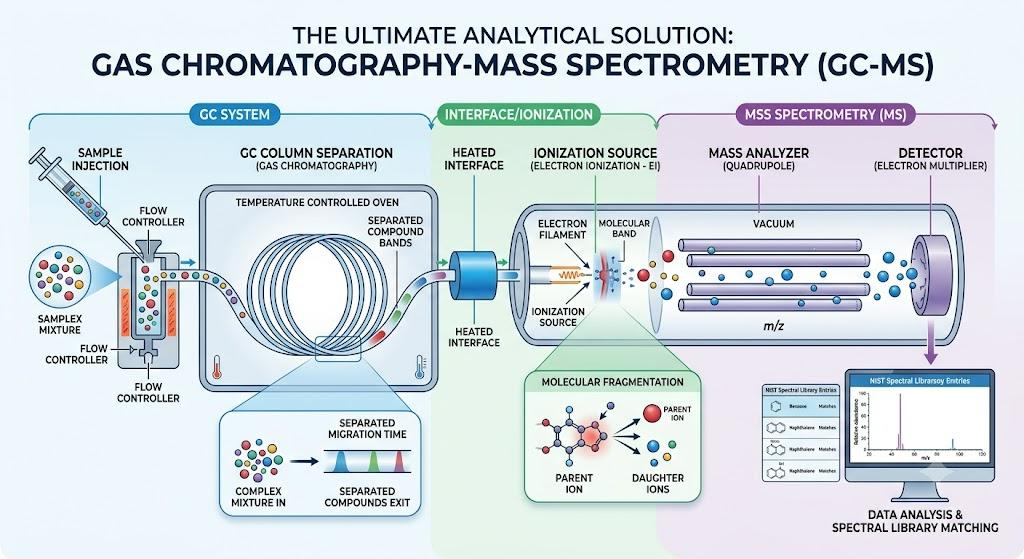
In a GC-MS system, the gas chromatograph physically separates the chemical mixture over time. As each pure component exits the GC column, it enters the MS vacuum chamber directly. The MS instantly ionizes and fragments the molecules, creating a unique “chemical fingerprint” (mass spectrum) that can be matched against standard spectral libraries (like NIST or Wiley).
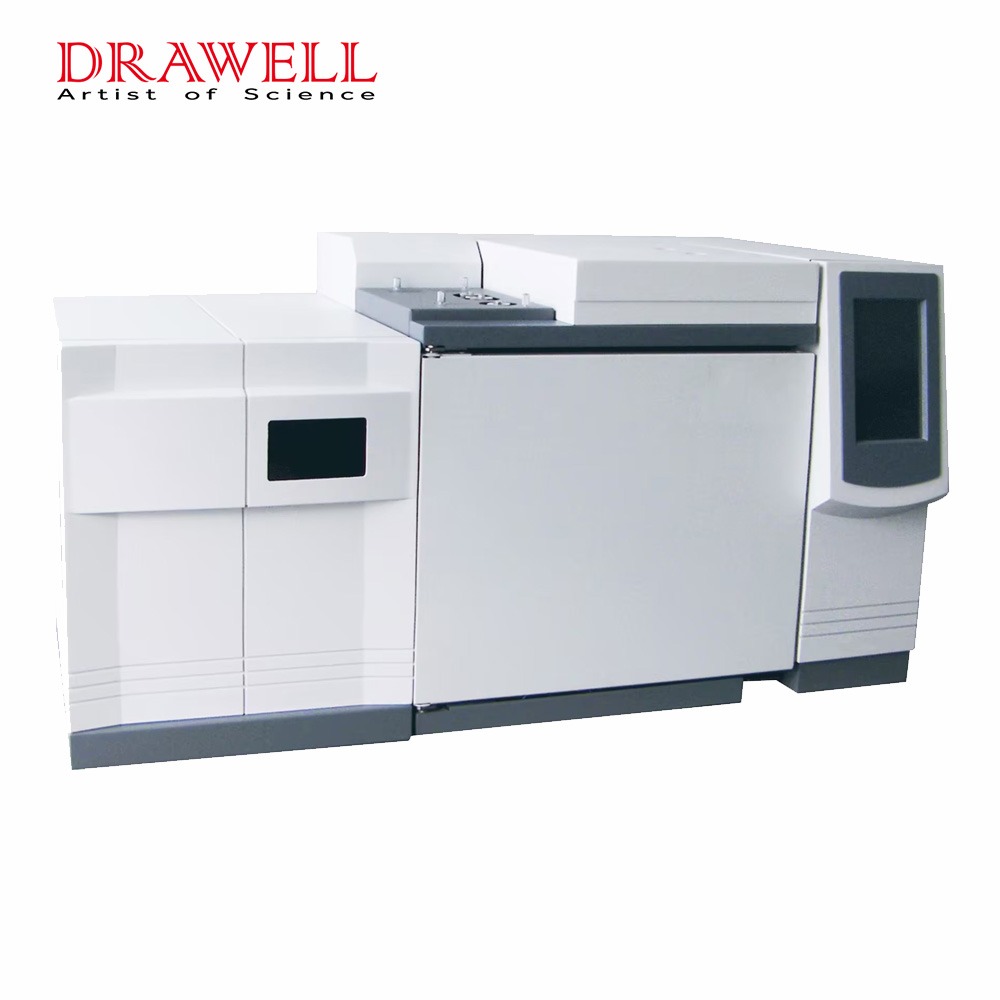
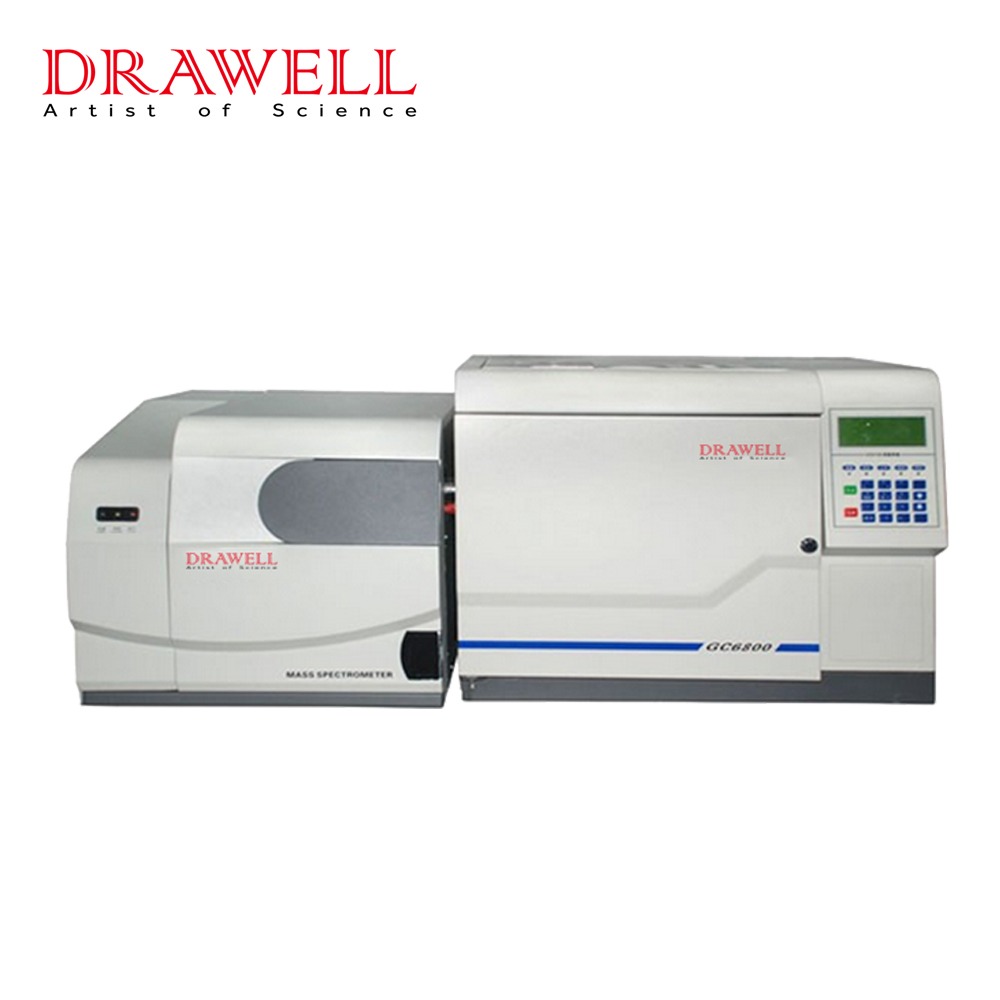
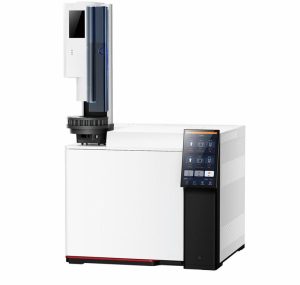
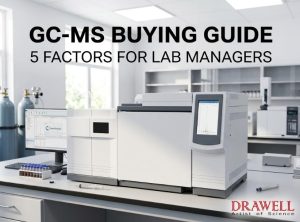
By upgrading to a hybrid system, you eliminate the guesswork of relying solely on GC retention times. For labs ready to implement this dual-power workflow, investing in a high-sensitivity platform like the Drawell GCMS Gas Chromatograph and Mass Spectrometry system ensures full compliance with international testing guidelines while maximizing unknown compound discovery.
How to Choose Between Gas Chromatography (GC) and Mass Spectrometry (MS)
To make the right choice between individual instruments or a combined system, let your target application guide your purchasing decision.
1. Choose a Standalone GC System When:
- You are performing routine, repetitive monitoring of known compounds.
- Your target analytes are highly volatile, such as industrial solvent purities, petrochemical hydrocarbons, or ethanol percentages in beverages.
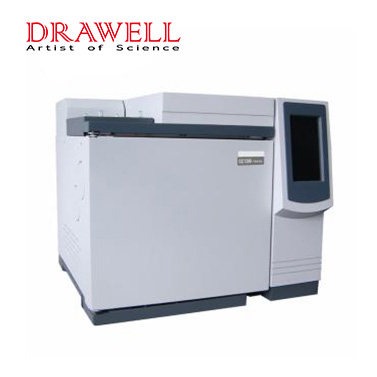
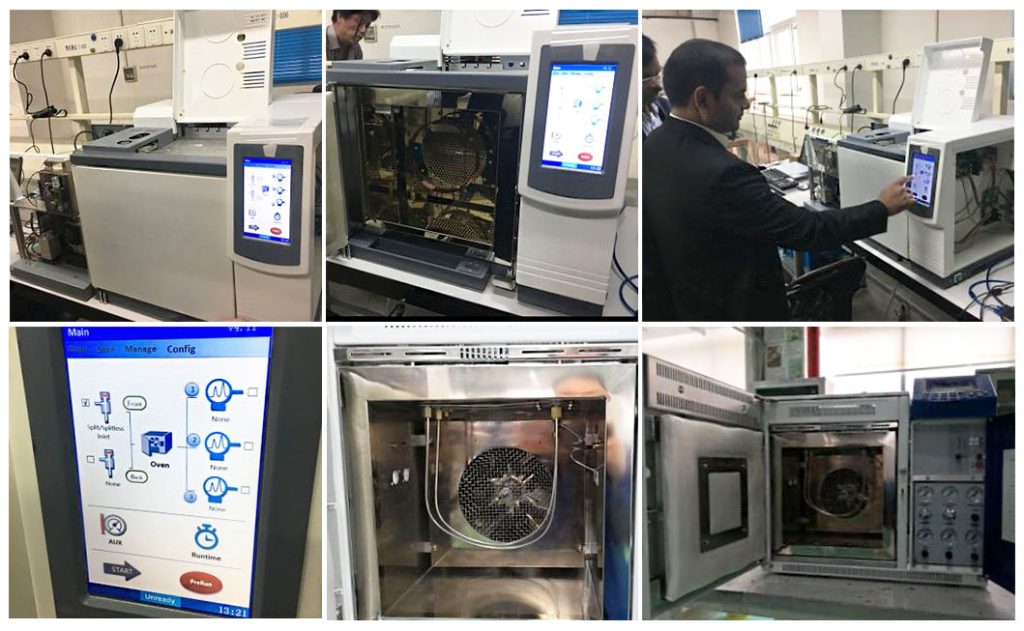
- You are operating under strict budget limits and need high-throughput, low-maintenance field testing. If your lab requires enhanced user interaction and automated control features, upgrading to an advanced setup like the GC1290 Gas Chromatography with LCD Touch Screen can significantly reduce operator learning curves and streamline daily recipes.
2. Choose a Combined GC-MS System When:
- You are analyzing unknown environmental contaminants at trace levels (parts-per-billion, ppb, or parts-per-trillion, ppt) following official methods like US EPA Method 8260 or EPA Method 624.
- Your workflow involves forensic toxicology, anti-doping tests, or food safety screenings where false positives are legally unacceptable.
- You are working in flavor, fragrance, or essential oil R&D, where a single natural sample contains hundreds of volatile organic fractions that must be identified.
Frequently Asked Questions
Q1: Can standard GC analyze non-volatile or heat-sensitive compounds?
No. Standard GC requires samples to vaporize without decomposing in the heated inlet injector. If your compounds are non-volatile or break down under high heat (thermally labile), you must either perform chemical derivatization to make them volatile or bypass GC entirely and choose High-Performance Liquid Chromatography (HPLC) or LC-MS.
Q2: What are the main maintenance differences between GC and MS?
GC maintenance is straightforward, typically involving routine septa changes, liner replacements, and clipping the head of the capillary column. MS units require a continuous high-vacuum environment managed by turbo pumps, periodic cleaning of the ion source, and calibration/tuning using reference compounds, which demands higher technical skill and operational costs.
Conclusion
In the end, the choice between gas chromatography and mass spectrometry depends on the specific goals of your analysis. GC excels at separation and quantification of volatile compounds, while MS is the go-to choice for compound identification and molecular characterization. The decision may also involve factors such as sensitivity, sample complexity, and budget constraints.
It’s not uncommon for researchers to utilize both techniques in tandem to harness their complementary strengths. Gas chromatography and mass spectrometry are indeed powerful tools in the analytical chemist’s arsenal, offering a broad range of applications across various scientific disciplines. To make an informed decision, it’s crucial to understand the principles and capabilities of each technique and tailor your choice to the unique requirements of your analysis.
📞 Get Expert Advice for Your Lab Setup:
Still unsure which instrument configuration aligns with your target industry regulations or laboratory footprint? Contact Drawell’s Analytical Instrument Specialists today for expert technical consulting, custom laboratory equipment layouts, and a comprehensive quote.
References & Regulatory Frameworks
- US EPA Method 8260D: Volatile Organic Compounds by Gas Chromatography-Mass Spectrometry (GC-MS).
- ASTM D5134: Standard Test Method for Detailed Analysis of the Petroleum Naphthas through n-Nonane by Capillary Gas Chromatography.
Get Quote Here!
Latest Posts
What Next?
For more information, or to arrange an equipment demonstration, please visit our dedicated Product Homepage or contact one of our Product Managers.


