


Water used in pharmaceutical manufacturing must meet stringent purity standards to ensure product safety and regulatory compliance. Among the key parameters monitored, Total Organic Carbon (TOC) is a critical indicator of organic contamination. High TOC levels can suggest microbial growth, system contamination, or process inefficiencies, which could compromise product quality.
This article explores total organic carbon in water analysis, particularly in purified water (PW) and water for injection (WFI). It also examines various types of TOC analyzers, outlines TOC determination in water samples, and provides insights into selecting the most appropriate TOC monitoring strategy for pharmaceutical applications.
Pharmaceutical-Grade Water and TOC
Pharmaceutical-grade water is categorized based on its intended use, ranging from Purified Water (PW) for general manufacturing processes and cleaning to Water For Injection (WFI) for parenteral preparations where endotoxin and microbial load must be exceptionally low. Any deviation from specified water quality can lead to serious consequences, including product degradation, contamination, reduced shelf-life, and even adverse patient reactions.
Regulatory bodies globally mandate stringent control over water quality, defining specifications for conductivity, microbial limits, endotoxins, and crucially, TOC. Adherence to these pharmacopeial standards (e.g., USP <643>, EP 2.2.44, JP 2.59) is not just a regulatory obligation; it is a fundamental aspect of Good Manufacturing Practices (GMP) that ensures patient safety and product quality.
Why TOC is a critical parameter for Purified Water (PW) and Water For Injection (WFI)
TOC is a measure of the carbon atoms in organic molecules present in a water sample. These organic molecules can come from a variety of sources: natural organic matter in the source water, leachates from water system components (e.g., plastics, resins), microbial byproducts (e.g., biofilm), or even residual cleaning agents. In pharmaceutical-grade water, even trace amounts of organic carbon can be problematic.
For PW and WFI, pharmacopeias like USP <643> and EP 2.2.44 specify TOC limits typically ≤ 500 ppb (or 0.500 mg/L). Elevated TOC levels in WFI may indicate endotoxin risk or the presence of leachables from system materials.
| Water Type | TOC Limit (USP/EP) | Application |
| Purified Water | ≤ 500 ppb | Equipment rinse, oral formulations |
| WFI | ≤ 500 ppb | Injections, sterile product prep |
Monitoring TOC allows for proactive identification of these issues, preventing potential product contamination and costly batch failures.
Principles of Total Organic Carbon Analysis
TOC analysis involves oxidizing organic carbon in water to carbon dioxide (CO₂), which is then quantified. Common oxidation methods include:
- UV/persulfate oxidation (used in most online TOC analyzers)
- High-temperature combustion (common in lab TOC analyzers)
The resulting CO₂ is measured using techniques such as:
- Non-Dispersive Infrared (NDIR) Detection
- Conductivity-based Measurement
These principles are foundational across analyzer types.
Types of TOC Analyzers for Pharmaceutical Applications
The choice of TOC analyzer depends heavily on the specific application, required measurement frequency, sample throughput, and budget. For pharmaceutical applications, instruments must meet stringent regulatory requirements for accuracy, precision, and system suitability.
Benchtop TOC Analyzers (Lab TOC Analyzers)
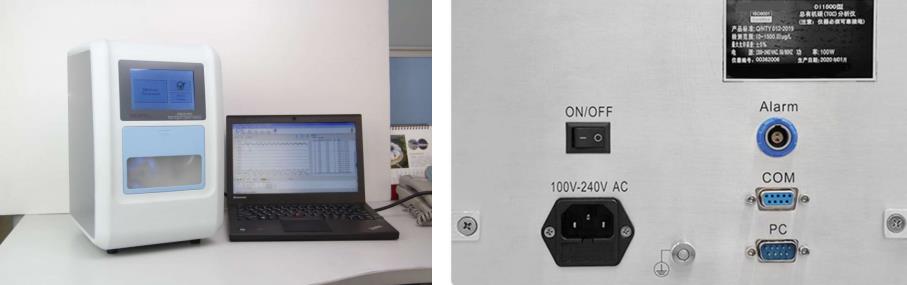
Benchtop TOC analyzers are the workhorses of the quality control laboratory. They offer high precision and versatility for offline analysis of various water samples.
- Advantages: High accuracy and precision, capable of analyzing a wide range of sample types and concentrations, ideal for method development and troubleshooting, and generally offer advanced software for detailed data analysis and reporting.
- Disadvantages: Requires manual sample collection and transport to the lab, which can delay results. They also need dedicated lab space and trained personnel for operation and maintenance.
When considering a lab TOC analyzer, factors like sample throughput, ease of use, compliance features (e.g., 21 CFR Part 11 readiness for data integrity), and maintenance requirements are crucial.
Online Total Organic Carbon Analyzers
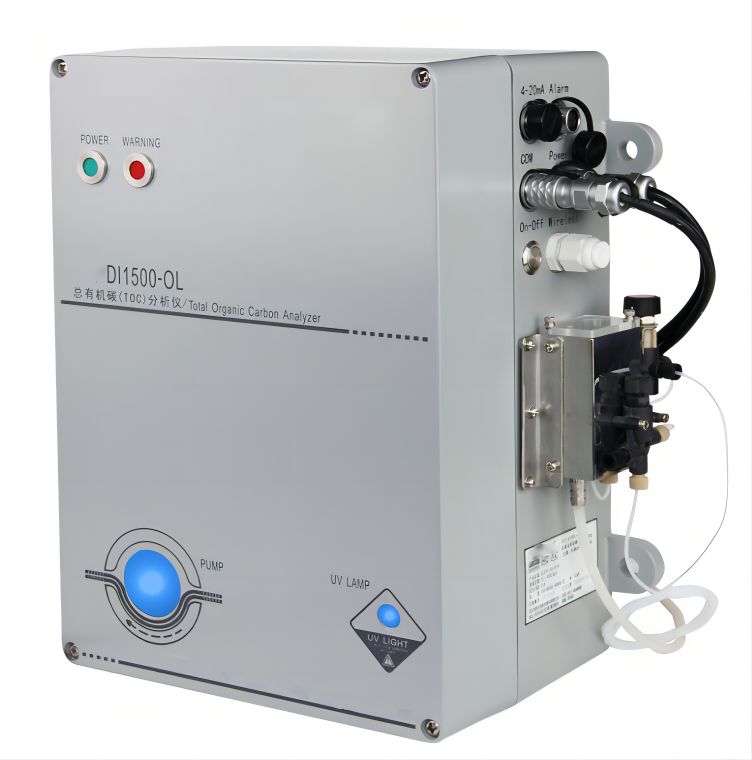
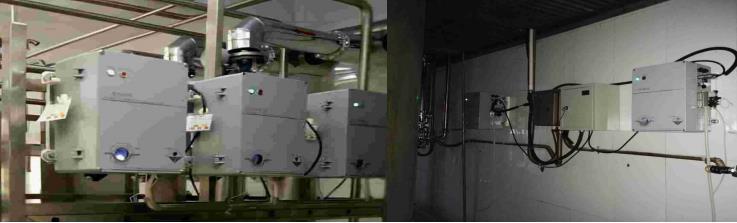
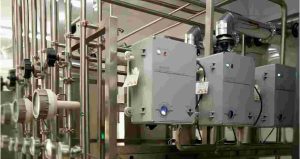
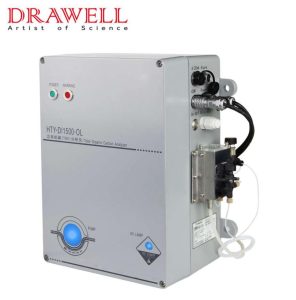
Online TOC analyzers are becoming the standard for continuous, real-time monitoring of pharmaceutical water systems. They provide immediate insights into water quality.
- Advantages: Deliver continuous, real-time data, enabling immediate detection of contamination events and proactive process control. They reduce the need for manual sampling and labor, enhancing overall efficiency and regulatory compliance.
- Disadvantages: Higher initial investment cost, more complex integration into existing water systems, and can require specialized calibration and maintenance procedures due to continuous operation.
Integration ease, communication protocols (e.g., 4-20mA, Modbus, Ethernet), maintenance frequency, and instrument uptime are key factors when choosing.
Portable TOC Analyzers
Portable TOC analyzers offer flexibility and convenience for on-site, point-of-use testing and rapid troubleshooting.
- Advantages: Compact and lightweight, allowing for quick analysis in various locations within a facility. They are excellent for identifying contamination sources during excursions and for quick verification during cleaning validation.
- Disadvantages: Generally have a narrower measurement range and may not offer the same level of precision, advanced features, or long-term data logging capabilities as benchtop or online models. Battery life can also be a limitation.
Battery life, ruggedness, ease of calibration in the field, and sample volume requirements are important considerations when choosing.
Here are the conclusion:
| Feature | Benchtop TOC Analyzer (Lab TOC Analyzer) | Online Total Organic Carbon Analyzer | Portable TOC Analyzer |
| Typical Use | Lab-based batch analysis, QC, troubleshooting, method development | Continuous, real-time monitoring of water systems | On-site, point-of-use testing, troubleshooting |
| Data Availability | Delayed (post-sampling and analysis) | Real-time, continuous | On-demand (at time of testing) |
| Automation Level | High (with autosamplers) | Very High (fully automated operation, calibration, SST) | Low (manual sample introduction) |
| Integration | None (standalone) | High (integrated into water loops) | Minimal (standalone) |
| Regulatory Compliance | Excellent (with 21 CFR Part 11 features) | Excellent (continuous data for audits) | Good (for spot checks and verification) |
| Sensitivity | High (often sub-ppb to low ppm) | High (typically sub-ppb to low ppm) | Moderate to High (typically ppb range) |
| Maintenance | Periodic (as per sample volume) | Regular (due to continuous operation) | Periodic (as per usage) |
| Initial Cost | Medium to High | High | Low to Medium |
| Space Requirement | Moderate (lab bench space) | Low (compact for installation in piping systems) | Very Low (handheld) |
| Sample Throughput | High (multiple samples per batch) | Continuous (effectively infinite) | Low (single samples at a time) |
| Common Oxidation | UV Persulfate, High-Temp Combustion | UV Persulfate | UV Persulfate (often with conductivity) |
Determination of Total Organic Carbon in Pharmaceutical Water Samples
The determination of TOC in pharmaceutical water samples is a critical process that requires adherence to standardized procedures to ensure accurate and reliable results.
Step-by-step guide
A typical TOC analysis procedure, whether performed in a lab or via an online system, involves several key steps:
- Sample Collection (for offline analysis):
Collect water samples in pre-cleaned, low-TOC vials (typically borosilicate glass, certified to be less than 10 ppb TOC).
Minimize exposure of the sample to the atmosphere, as atmospheric CO2 can increase inorganic carbon levels.
Fill the vial completely to eliminate headspace and prevent dissolution of organic contaminants from the air or vial cap.
Cap the vial securely and transport it to the lab promptly, ideally refrigerated to prevent microbial growth.
- Inorganic Carbon (IC) Removal (if using NPOC method):
Many TOC analyzers, especially those for high-purity water, measure Non-Purgeable Organic Carbon (NPOC). This involves acidifying the sample (e.g., with phosphoric acid) to convert inorganic carbon species (bicarbonates, carbonates) into dissolved CO2.
The acidified sample is then sparged with a CO2-free carrier gas (e.g., purified air or nitrogen) to remove the dissolved CO2. This ensures that only organic carbon is measured in the subsequent oxidation step.
- Oxidation:
The sample containing only organic carbon is then introduced into the analyzer’s oxidation chamber.
Depending on the analyzer’s technology, either UV persulfate oxidation or high-temperature combustion will convert the organic compounds into CO2.
- Detection and Quantification:
The CO2 produced from the oxidation of organic carbon is carried by a gas stream to a detector, most commonly an NDIR detector.
The NDIR detector measures the concentration of CO2, and this signal is then correlated back to the original TOC concentration using a pre-established calibration curve.
- Calibration and System Suitability Testing (SST):
Calibration: Analyzers must be regularly calibrated using certified reference materials (e.g., potassium hydrogen phthalate, KHP) at known carbon concentrations. A calibration curve is generated, establishing the relationship between the detector response and the TOC concentration.
System Suitability Testing (SST): As per pharmacopeial requirements (e.g., USP <643>), SST must be performed periodically. This involves analyzing specific organic compounds, typically sucrose (easily oxidizable) and 1,4-benzoquinone (difficult to oxidize). The instrument’s response to these standards must fall within a specified recovery range (e.g., 85% to 115%) to demonstrate its ability to accurately oxidize a variety of organic compounds. This ensures the “total” aspect of TOC measurement is valid.
- Data Analysis and Reporting:
The analyzer’s software processes the raw data, calculates TOC concentrations, and generates reports.
Results are compared against established pharmacopeial limits (e.g., <0.500 mg/L for PW/WFI).
Trend analysis of TOC data over time is crucial for identifying gradual changes in water quality and predicting potential issues.
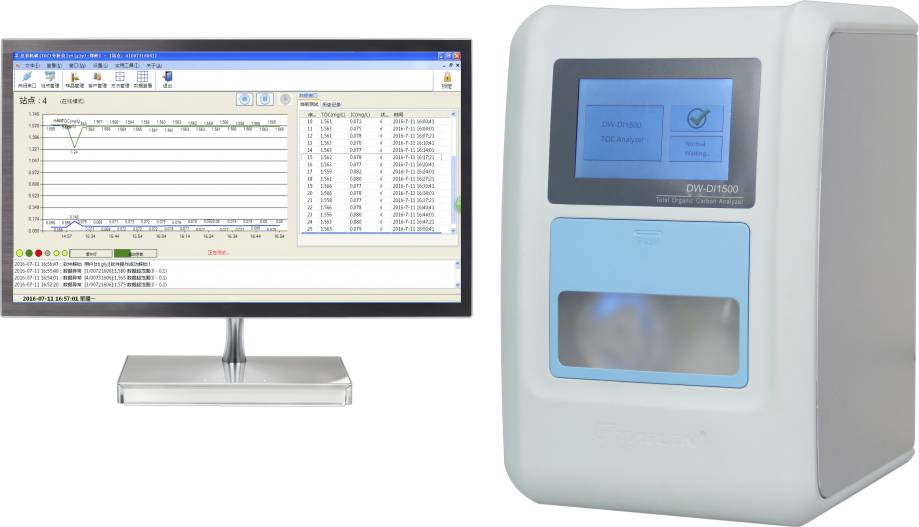
TOC of Purified Water and Water For Injection (WFI)
As mentioned, the pharmacopeial limit for TOC in both Purified Water (PW) and Water For Injection (WFI) is consistently 0.500 mg/L C (500 ppb).
Purified Water (PW): Used for non-parenteral preparations, cleaning of non-sterile equipment, and as a solvent for analytical tests. While the TOC limit is the same as WFI, PW typically has higher microbial limits.
Water For Injection (WFI): Used for parenteral preparations, sterile irrigation solutions, and for cleaning critical equipment where sterility is paramount. WFI has stricter microbial and endotoxin limits than PW.
It’s important to note that while the regulatory limit is 0.500 mg/L, many pharmaceutical facilities routinely achieve TOC levels significantly lower, often in the range of 0.050 mg/L to 0.100 mg/L, due to efficient water treatment processes. Maintaining TOC levels well below the limit provides a safety margin and indicates a robust water system.
8 Causes of High TOC in Purified Water
High TOC levels in pharmaceutical-grade water are a clear indication of contamination and necessitate immediate investigation. Understanding the common sources of these excursions is crucial for effective troubleshooting and prevention.
- Degradation of Incoming Feed Water Quality: Fluctuations in the quality of municipal feed water, such as seasonal changes in natural organic matter, can overwhelm the pre-treatment stages of a water purification system, leading to higher TOC in the purified output.
- Exhausted or Fouled Resin Beds (Ion Exchange/Deionization): Over time, ion-exchange resins used for deionization can become saturated with organic compounds, or even leach organic materials themselves, leading to breakthrough and increased TOC.
- Compromised Reverse Osmosis (RO) Membranes: RO membranes are highly effective at removing organic compounds. However, damage to the membrane (e.g., tears, fouling, or chemical degradation) can lead to a significant increase in TOC in the permeate.
- Biofilm Formation in Distribution Systems: Microorganisms thrive in water systems and can form biofilms on the inner surfaces of pipes and storage tanks. These biofilms continuously release organic byproducts and cellular debris, significantly contributing to TOC.
- Leaching from System Materials: Components within the water purification and distribution system, such as new piping, gaskets, or even certain plastic materials, can leach organic compounds into the water, especially after installation or system modifications.
- Ineffective Sanitization Procedures: Insufficient or infrequent sanitization (e.g., hot water sanitization, ozonation) can allow microbial growth and biofilm accumulation, leading to elevated TOC.
- Cross-Contamination: Accidental introduction of organic substances from external sources during maintenance, sampling, or unexpected leaks can quickly elevate TOC levels.
- Improper Storage Vessel Design and Materials: Storage tanks for purified water can become sources of TOC if not properly designed (e.g., inadequate venting, stagnant areas) or if materials of construction leach organics.
Preventive actions include routine sanitization, component validation, and continuous online monitoring.

Best Practices for TOC Monitoring and Control in Pharmaceutical-Grade Water
Effective TOC monitoring is an integral part of a robust water quality management system in pharmaceutical manufacturing. Implementing best practices ensures consistent compliance and minimizes risks.
| 1. Strategic Placement of TOC Analyzers | Real-time insights: Provides immediate feedback on water quality at critical points (e.g., post-purification, distribution loop return). |
| Early detection: Quickly identifies contamination sources, enabling rapid intervention. | |
| 2. Routine Calibration & System Suitability Testing (SST) | Ensures accuracy: Guarantees the analyzer provides reliable and precise measurements. |
| Regulatory compliance: Meets pharmacopeial requirements (e.g., USP <643>) for instrument performance and data validity. | |
| 3. Trend Analysis of TOC Data | Proactive issue identification: Detects gradual increases or subtle shifts in TOC that may signal deteriorating system performance. |
| Predictive maintenance: Allows for anticipation of issues before they become critical, reducing downtime. | |
| 4. Proactive Maintenance & Sanitization | Prevents contamination: Controls microbial growth and biofilm formation, which are significant sources of TOC. |
| Extends equipment lifespan: Ensures optimal performance and longevity of water system components. | |
| 5. Root Cause Analysis for Excursions | Effective problem resolution: Systematically identifies the underlying cause of high TOC. |
| Prevents recurrence: Guides the implementation of robust corrective and preventive actions (CAPA), minimizing future incidents. | |
| 6. Data Integrity (ALCOA+ Principles) | Regulatory confidence: Provides attributable, legible, contemporaneous, original, accurate, and complete data for audits. |
| Traceability: Ensures all TOC data is reliable and verifiable, crucial for product release. | |
| 7. Comprehensive Personnel Training | Competent operations: Ensures staff understand proper procedures for sampling, analysis, and troubleshooting. |
| Reduced errors: Minimizes human error, leading to more reliable data and system management. | |
| 8. Risk-Based Internal Action Limits | Enhanced safety margin: Setting limits tighter than pharmacopeial requirements provides an extra layer of control. |
| Optimized processes: Aligns TOC monitoring with specific product sensitivities and manufacturing risks. |
Conclusion
Total organic carbon analysis is an essential part of water quality control in pharmaceutical manufacturing. Whether monitoring TOC of purified water, WFI, or system return loops, accurate and timely detection of organic contaminants ensures regulatory compliance and product integrity.
Choosing the right TOC analyzer—be it benchtop, online, or portable—depends on your operational requirements and budget. While TOC analyzer prices vary, the investment is crucial for risk management. Partnering with a reliable TOC analyzer supplier that offers strong technical support and validated systems ensures long-term operational success.
Related Products Recommendation
Get Quote Here!
Latest Posts

What Next?
For more information, or to arrange an equipment demonstration, please visit our dedicated Product Homepage or contact one of our Product Managers.


