


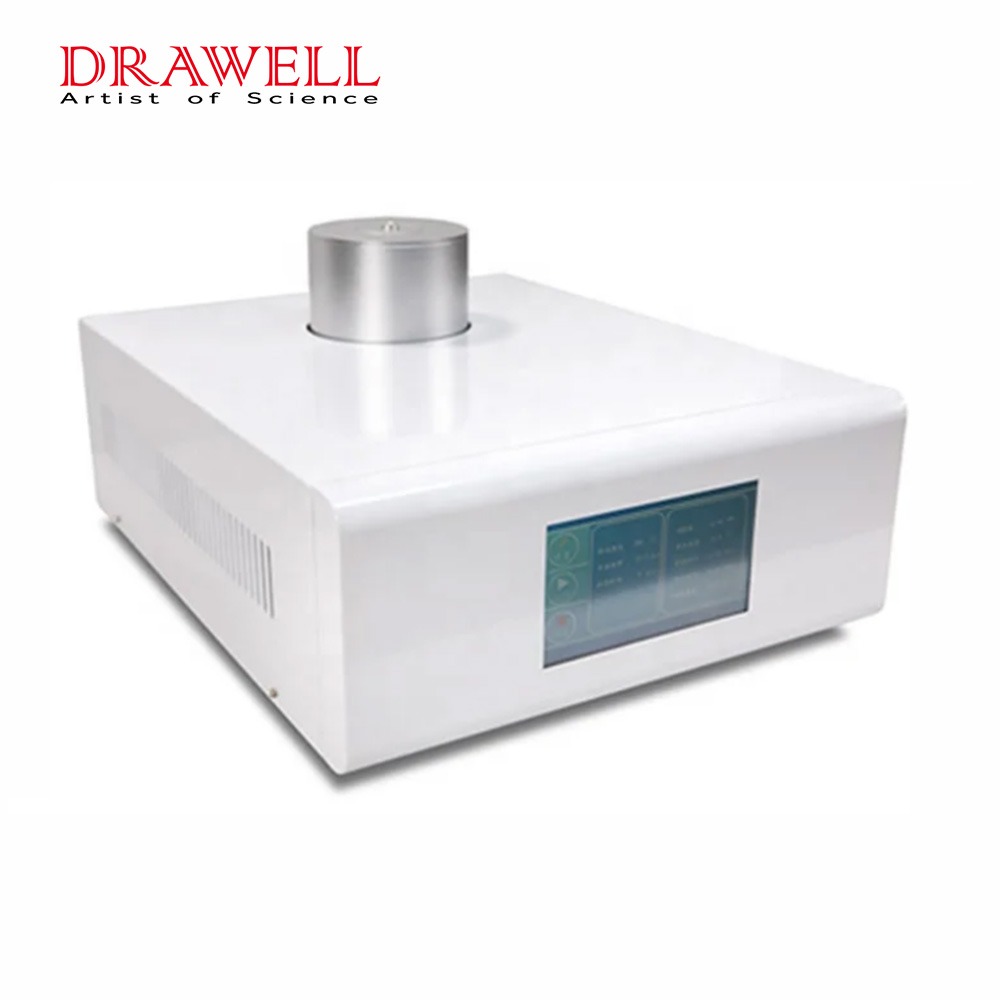
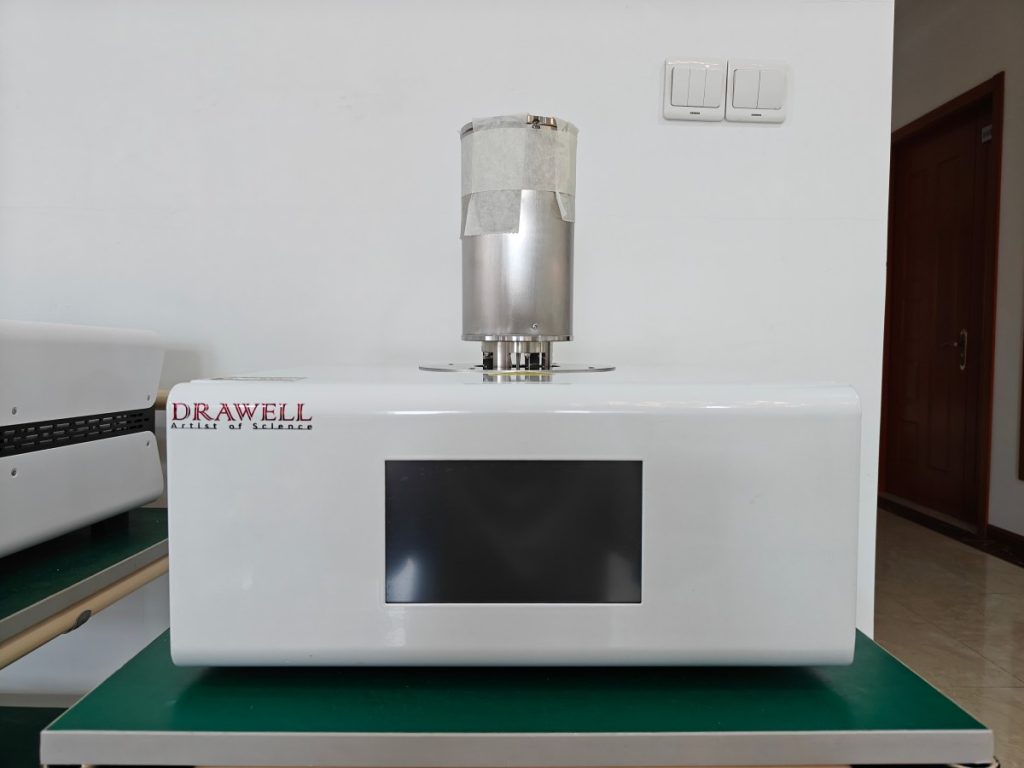
Thermogravimetric Analyzer BXT-TGA-101
A thermogravimetric analyzer (TGA) is an instrument that measures the weight change of a sample during heating, cooling, or isothermal processes.
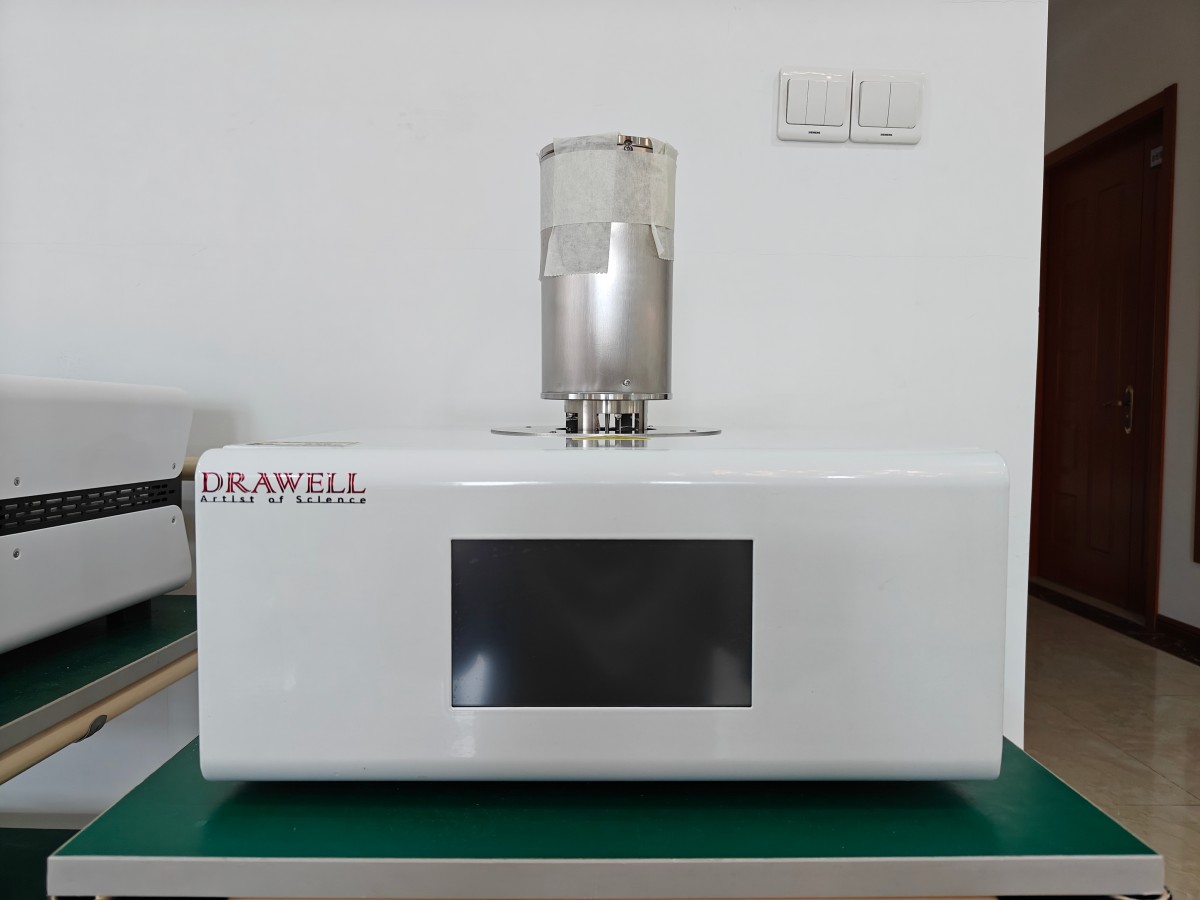
Drawell’s TGA instrument consists of three main parts:
- a high-precision 0.1 μg microbalance,
- a programmable temperature furnace ranging from room temperature to 1250 degrees Celsius,
- a control system that can be supplied with nitrogen, air, argon, or other special gas atmospheres.
Features of BXT-TGA-101 TGA
- Internal calibration ensures accuracy and repeatability.
- Imported alloy sensor: corrosion-resistant, anti-oxidation, high sensitivity.
- Precious metal alloy wire heating reduces interference and withstands high temperatures.
- Perfect atmosphere control with automatic software parameter switching; data directly recorded in database.
- ARM Cortex-M3 controller enables faster operation and precise temperature control.
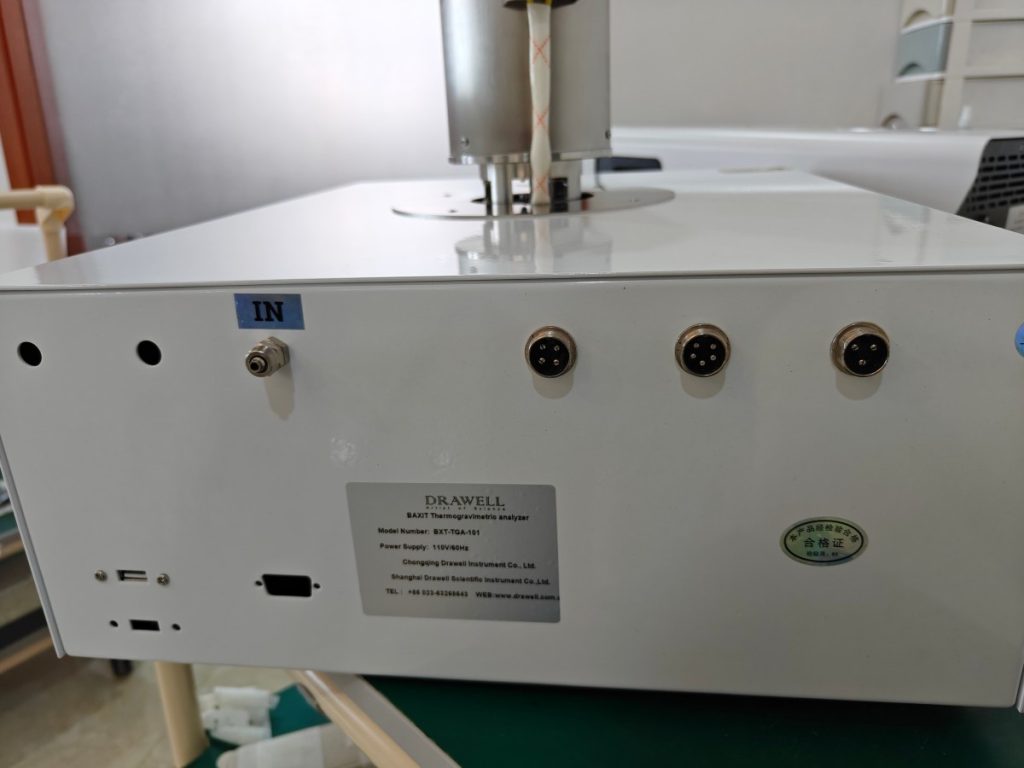
- Bidirectional USB for intelligent operation.
- inch 7-bit color LCD touchscreen displays real-time status.
- Top lid opening for easy use; however, moving oven body upwards for sample placement is difficult and risks damaging sampling rod.
- Automated test report generation and printing: integrated software for recording, processing, and formatting.
Applications for TGA

Polymers/Plastics: Thermal stability testing, carbon black content determination, plasticizer volatilization. Pharmaceuticals: Solvent residue/moisture determination, excipient compatibility, drug crystal form transformation. Inorganic Materials: Ceramic sintering process, catalyst coking analysis, metal oxidation behavior. Energy/Batteries: Thermal decomposition of electrode materials, electrolyte thermal stability. Food/Tobacco: Moisture/ash content, pyrolysis behavior. Environmental Science: Thermal decomposition of pollutants, microplastic analysis, soil composition characterization.


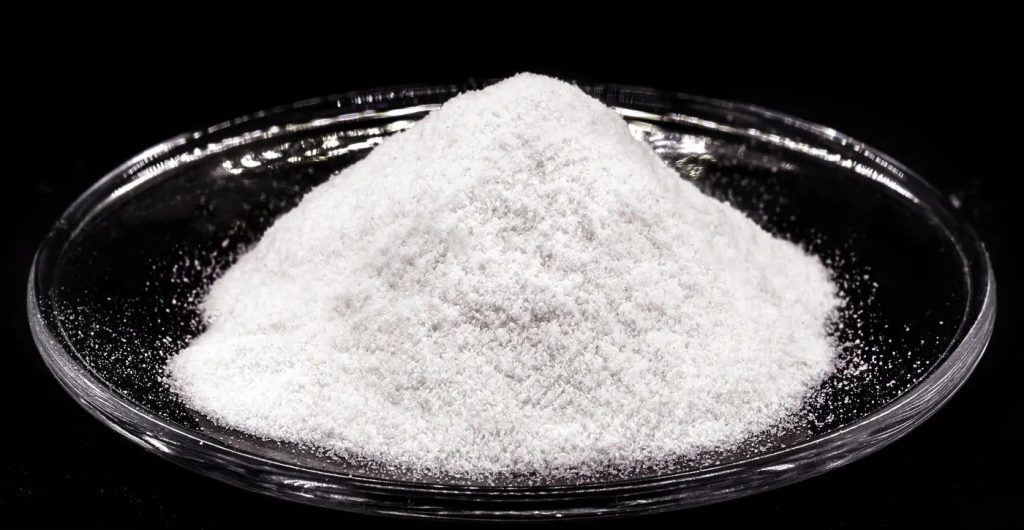
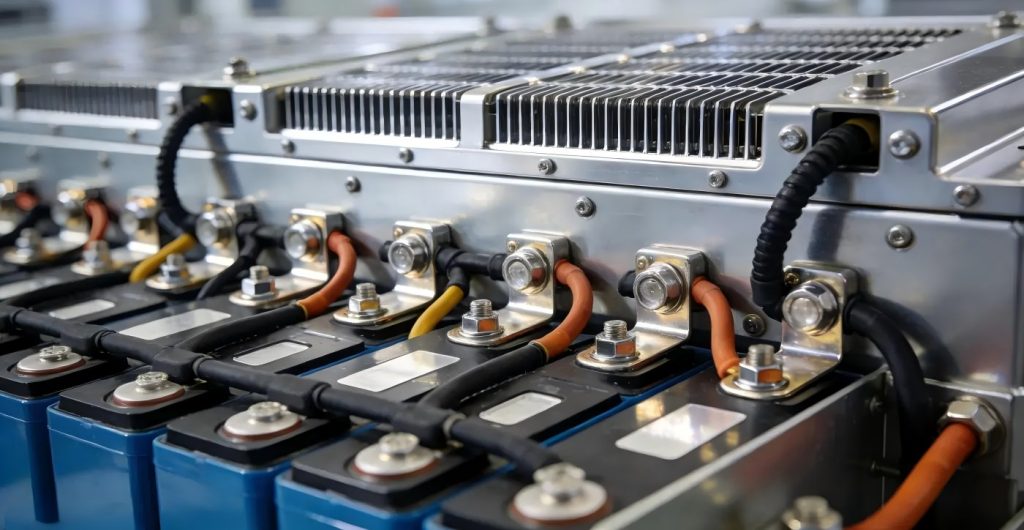
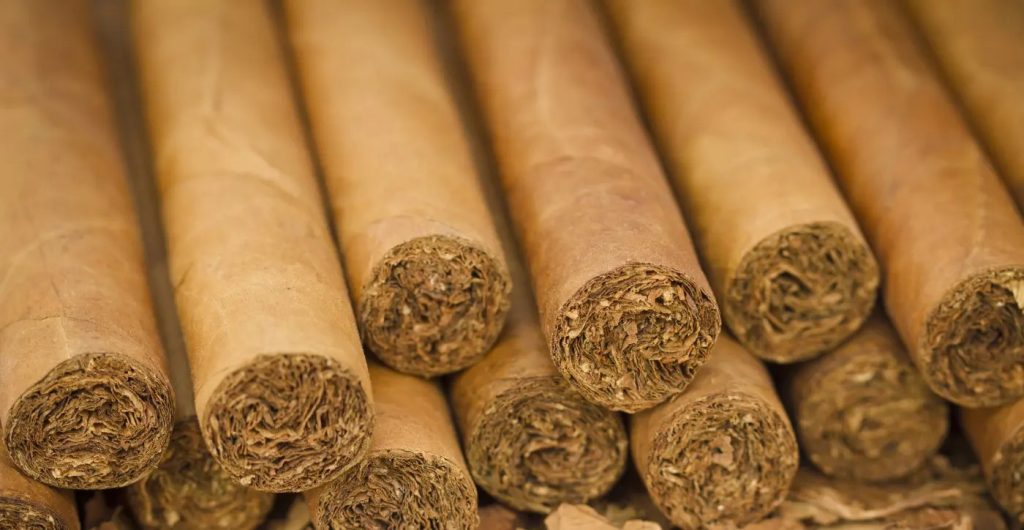

Applications for TGA
- Polymers/Plastics: Thermal stability testing, carbon black content determination, plasticizer volatilization.
- Pharmaceuticals: Solvent residue/moisture determination, excipient compatibility, drug crystal form transformation.
- Inorganic Materials: Ceramic sintering process, catalyst coking analysis, metal oxidation behavior.
- Energy/Batteries: Thermal decomposition of electrode materials, electrolyte thermal stability.
- Food/Tobacco: Moisture/ash content, pyrolysis behavior.
- Environmental Science: Thermal decomposition of pollutants, microplastic analysis, soil composition characterization.
Technical Parameters of BXT-TGA-101 TGA
| Temperature range | Room temperature ~ 1250 ℃ |
| Temperature resolution | 0.01 ℃ |
| Temperature fluctuation | ± 0.1 ℃ |
| Heating rate | 0.1 ~ 100 ℃ / min |
| Temperature control mode | heating and constant temperature |
| Measurement range of balance | 0.01mg-2g |
| Resolution | 0.01ug |
| Constant temperature time | 0-300min, arbitrary setting |
| Display mode | large English LCD |
| Atmosphere | inert, oxidizing, reducing, static and dynamic |
| Atmosphere device | built in gas flowmeter, including two-way gas switching and flow size control |
| Software | built in gas flowmeter, including two-way gas switching and flow size control |
| Data interface | standard USB interface, special software (free upgrade of software from time to time) |
| Power supply | AC220V 50Hz |
Standard
- GB/T 19466.2-2004 / ISO 11357-2: 1999 Part 2: Determination of glass transition temperature; GB/T 19466.3-2004 / ISO 11357-3: 1999 Part 3: Determination of melting and crystallization temperature and enthalpy;
- GB/T 19466.4–2016/ISO 11357-4:1999 Part 4: Determination of specific heat capacity;
- GB/T 19466.6-2009/ISO 11357-3:1999 Part 6 Oxidation induction period: Determination of
- oxidation induction time (isothermal OIT) and oxidation induction temperature (dynamic OIT).
TGA Coupled Analysis
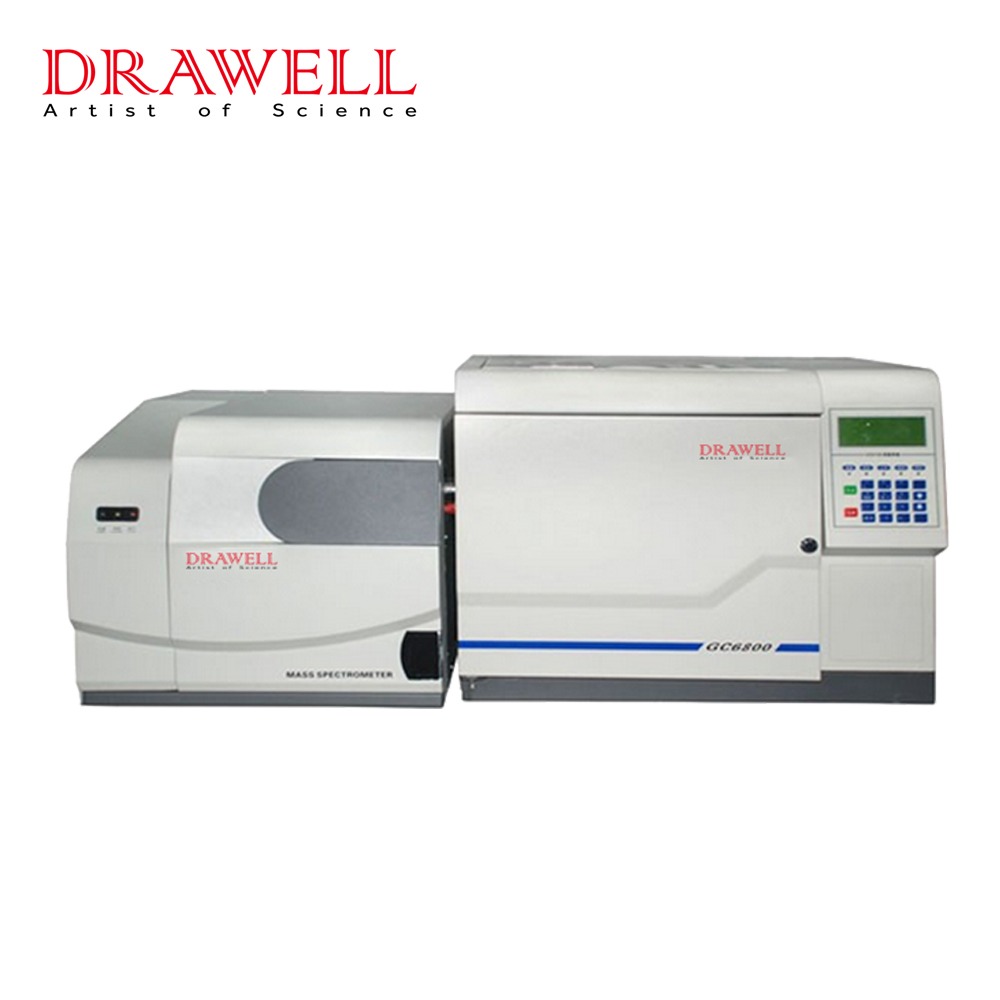
For more in-depth analysis of the released gas composition, TGA analyzers are often coupled with the following instruments: