


The pharmaceutical industry operates under rigorous standards to ensure the safety, efficacy, and quality of medicines reaching patients worldwide. At the heart of achieving these critical objectives lies High-Performance Liquid Chromatography (HPLC). This analytical technique has become an indispensable tool, offering unparalleled precision and versatility across the entire drug lifecycle. This article will provide an introduction to HPLC for pharmaceutical analysis, delve into its widespread application of HPLC in the pharmaceutical industry, and discuss crucial considerations when choosing HPLC equipment for pharma labs, thus reinforcing the great significance of HPLC in the pharmaceutical industry.
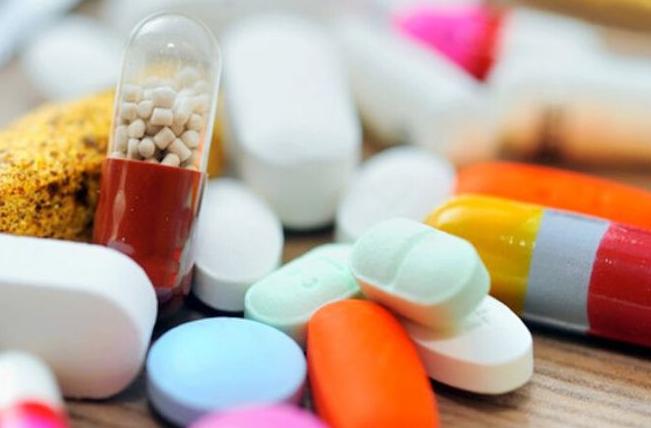
Applications and Benefits of HPLC in the Pharmaceutical Industry
HPLC’s broad utility spans every stage of drug development and manufacturing, making it one of the most versatile tools available to pharmaceutical scientists. Its applications are diverse, ranging from the fundamental research bench to the rigorous production line.
HPLC in Research and Development: Driving Innovation
In pharmaceutical R&D, HPLC is a key enabler of innovation. It provides the analytical muscle needed to explore new chemical entities, understand their behavior, and optimize their properties.
During drug discovery, when thousands of compounds are synthesized and screened, HPLC allows for rapid purity assessment of newly created molecules. For instance, a medicinal chemist might synthesize a novel compound, and an immediate HPLC analysis can confirm the compound’s purity, ensuring that subsequent biological assays are performed on a clean sample. This significantly streamlines the discovery pipeline.
In formulation development, HPLC method development for pharmaceuticals is critical. Consider a new oral drug: HPLC is used to study its stability under various environmental stresses (temperature, humidity, light). By monitoring the degradation products over time, scientists can determine the optimal formulation and packaging to ensure a long shelf life. For example, a stability study might show that a certain excipient accelerates degradation, prompting formulators to switch to a more compatible alternative.
Furthermore, for drugs with chiral centers, where one enantiomer may be therapeutic and the other inactive or even toxic, chiral HPLC is indispensable. It can precisely separate these isomers, ensuring that only the desired, active form is present in the final product. A classic example is Thalidomide, where one enantiomer was a sedative and the other a teratogen, highlighting the critical need for chiral separation.
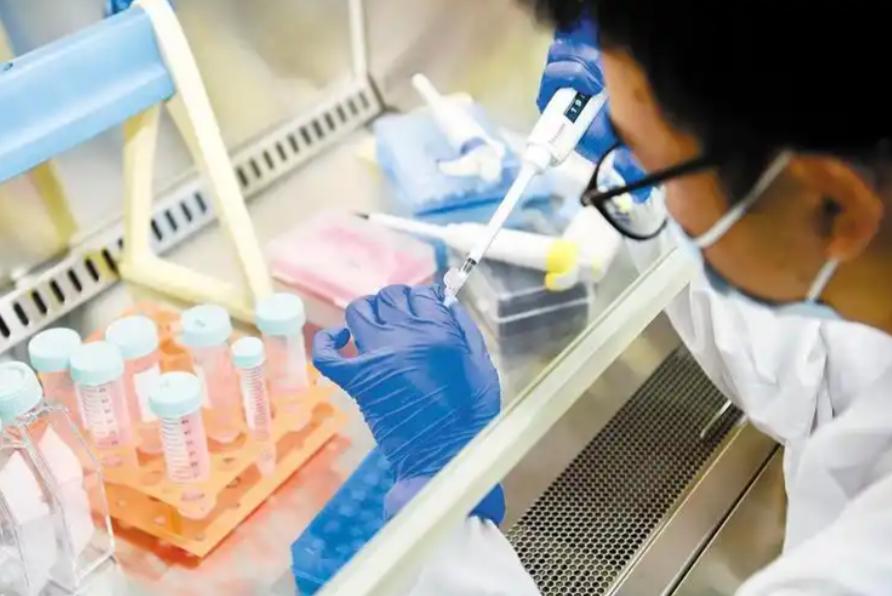
HPLC in Pharmaceutical Quality Control: Protecting Production
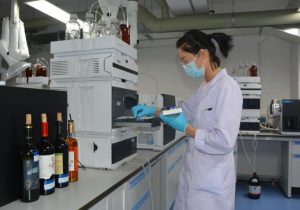
Moving from the lab to large-scale production of a drug means HPLC in Pharmaceutical Quality Control will now be the gatekeeper of the entire product and the law. It is necessary to conduct an in-depth evaluation of each batch produced. Each batch is put to a strict predefined quality benchmark.
The process begins with carefully checking raw materials. Active pharmaceutical ingredients (APIs) and excipients must undergo HPLC tests to confirm their identity and purity prior to manufacturing. This step saves a lot of time and resources. For example, an HPLC assay on one of the purchased batches of APIs may show an unacceptable purity profile, and in that case, the batch will be discarded instead of using it on the entire production run.
During in process control, HPLC is used to supervise chemical reaction progress and the purity of the by-products. This makes it possible to change the manufacturing conditions on the go, which guarantees a good yield and quality.
HPLC is equally used to check content uniformity by measuring the amount of an API in dosage units, impurity quantification, and analyzing degradation products. Some control checks set a limit to the total impurities that can be detected, for example, a total of 0.1%. Because of its sensitive nature and advanced detection capabilities, HPLC can measure these minute amounts of impurities, which makes it possible to clear the batch for release. Using the same example of the batch of tablets, if they are suspected to be contaminated with an unacceptable level of some by-products, the HPLC results will ensure that the batch is withheld which protects patients from receiving substandard medication.
HPLC in Pharmacognosy and Natural Products: More Than Just Synthetic Drugs
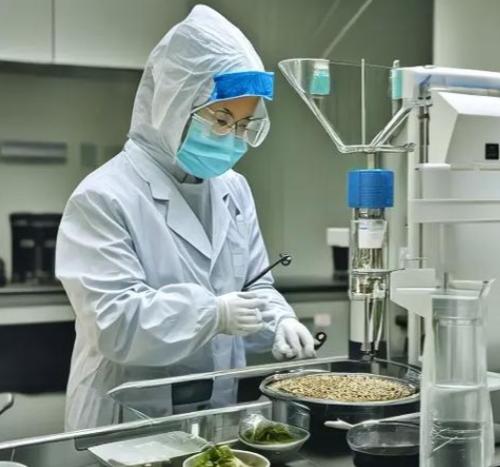
Although HPLC is mostly known for its use in synthetic drug analysis, it is also widely used in pharmacognosy and natural products. Sphisticated HPLC chromatographic techniques used in pharmacognosy are essential for unlocking the medical benefits of botanicals and for quality control in herbal medicine manufacturing.
Natural products are often in the form of extracts and present complicated mixtures of various compounds. HPLC is invaluable in the separation, identification, and quantitation of certain active ingredients in these extracts. For instance, in traditional Chinese medicine, HPLC is used for making “fingerprints” of herbal raw materials and finished products. These are known as chromatographic profiles. In quality control, chromatographic profiles are used to test the herbal mixtures for authenticity and consistency from batch-to-batch. A change in the HPLC fingerprint may suggest the presence of adulterants or change in the source material, thus guaranteeing the genuineness and consistency of products. Furthermore, for the HPLC-guided discovery of new lead compounds from plants, HPLC is relied upon for the isolation and purification of compounds so that their biological activities can be examined. Such HPLC-guided strategies, based on traditional knowledge, assist to modernize in a faster way.
Considerations When Choosing HPLC Equipment for Pharma Labs
Selecting the right high-performance liquid chromatography equipment for a pharmaceutical laboratory involves a careful balance of analytical needs, throughput requirements, and budgetary constraints. Understanding the different types of HPLC systems and their specific advantages is crucial.
Comparison of Different Types of HPLC Equipment
HPLC systems can broadly be categorized by their purpose and performance characteristics.
| Feature | Analytical HPLC | Preparative HPLC | UHPLC (Ultra-High Performance Liquid Chromatography) |
| Purpose | Compound identification, quantification, purity | Isolation and purification of compounds | High-speed, high-resolution analysis |
| Column ID | Narrow (e.g., 2.1 – 4.6 mm) | Wide (e.g., 10 mm – 5 cm or more) | Narrow (e.g., < 2.1 mm) |
| Particle Size | 3-5 µm | 5 µm or larger | < 2 µm |
| Operating Pressure | Up to 600 bar | Lower pressure (depends on column size) | Up to 1500 bar or more |
| Flow Rate | Lower (e.g., 0.5 – 2 mL/min) | Higher (e.g., 10 mL/min – several L/min) | Very low (e.g., 0.2 – 0.7 mL/min) |
| Throughput | Standard | Lower (due to larger sample volumes) | Very High |
| Sample Load | Nanograms to micrograms | Milligrams to grams | Nanograms to micrograms |
| Applications | QA/QC, routine analysis, method development | Drug synthesis, natural product isolation | R&D, high-throughput screening, complex impurity profiling |
Analytical HPLC systems are the workhorses of any pharma QC laboratory. They are designed for precise qualitative and quantitative analysis of samples, ensuring the purity and potency of raw materials, in-process samples, and finished products. They are often used for routine testing and method validation.
Preparative HPLC systems, on the other hand, are built for scaling up. They use larger columns and higher flow rates to isolate and purify larger quantities of specific compounds from complex mixtures. This is invaluable in early drug discovery for purifying synthesized compounds for further biological testing, or in the natural product arena for isolating bioactive compounds from extracts.
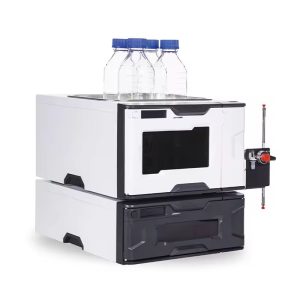
UHPLC represents the cutting edge of liquid chromatography. By utilizing sub-2 µm stationary phase particles and operating at significantly higher pressures, UHPLC offers dramatically faster analysis times, superior resolution, and enhanced sensitivity compared to conventional HPLC. This makes it ideal for high-throughput environments like drug discovery screening or for analyzing complex samples where subtle differences need to be resolved, such as trace impurity profiling. For instance, a typical HPLC method might take 20 minutes per sample, while the equivalent UHPLC method could complete the analysis in 2-3 minutes, leading to a substantial increase in sample throughput. Companies like Drawell offer a range of HPLC and UHPLC systems, catering to different laboratory needs from routine analysis to advanced research. Their offerings often prioritize robustness and user-friendliness, critical factors in a busy pharmaceutical lab.
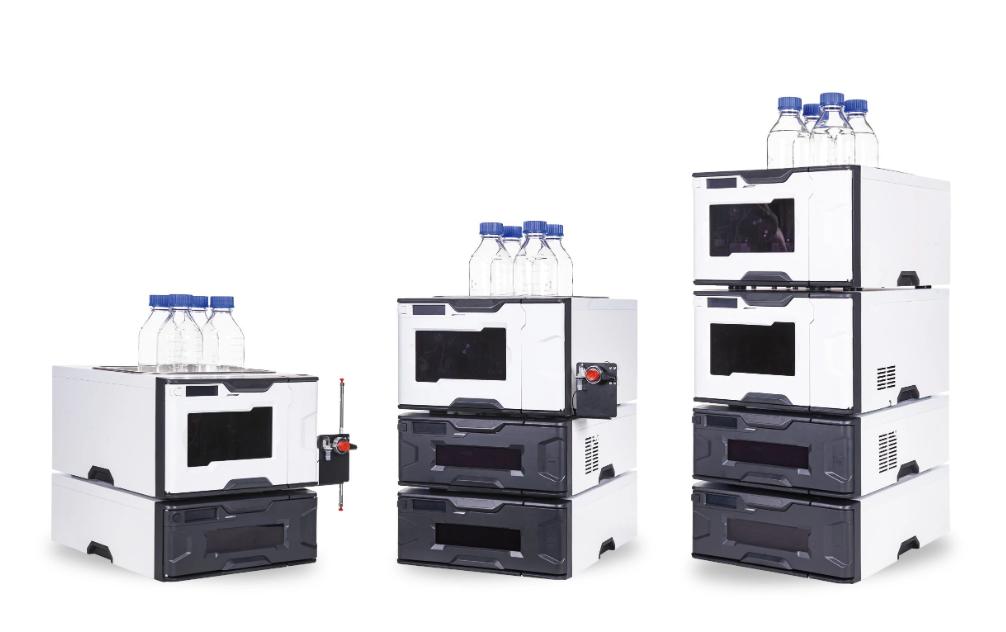
Recommendations for Equipment Selection
Choosing the right HPLC equipment is a strategic decision that impacts operational efficiency and data quality. Several factors should guide this selection process, extending beyond just the initial HPLC chromatography price.
First, consider the primary application. For routine quality control of well-established products, a standard analytical HPLC system might be sufficient, offering a balance of performance and HPLC chromatography cost. If your lab frequently deals with complex samples, needs to identify trace impurities, or requires high sample throughput for early-stage development, investing in a UHPLC system would be highly beneficial. While the UHPLC chromatography price is generally higher than traditional HPLC, the return on investment can be substantial due to increased productivity and enhanced data quality.
Second, evaluate the software and automation capabilities. Modern HPLC systems come with sophisticated software for method development, data acquisition, and analysis. Features like automated sample injection, column switching, and data processing can significantly reduce manual labor and improve data consistency. For a pharmaceutical lab aiming for GxP compliance, robust data integrity features and audit trails within the software are non-negotiable.
Third, factor in running costs and maintenance. While the initial high-performance liquid chromatography equipment purchase is significant, ongoing expenses like solvents, columns, and routine maintenance should not be overlooked. UHPLC, for instance, often uses less solvent per analysis due to shorter run times, which can lead to considerable cost savings over time. Service contracts and local technical support are also vital to minimize downtime and ensure continuous operation.
Finally, consider the scalability and modularity of the system. Can the system be upgraded with different detectors (e.g., Mass Spectrometry for LC-MS) or automated modules as your needs evolve? This foresight can save future investment in entirely new systems. For example, a lab initially purchasing a standard HPLC might later decide to upgrade it with a Mass Spectrometry detector to perform advanced impurity identification, turning it into a powerful LC-MS system without replacing the entire setup. This strategic approach ensures that the investment provides long-term value and adaptability in a dynamic industry.
Future Trends and Innovations in HPLC Technology
Emerging trends are pushing HPLC beyond its traditional boundaries:
- Miniaturized and portable HPLC systems for on-site testing in manufacturing
- Green chromatography using eco-friendly solvents to reduce waste
- AI-assisted method development, reducing setup time by 30–50%
- 2D-LC (two-dimensional chromatography) for separating ultra-complex samples
- Integrated MS detection (LC-MS) becoming more accessible for impurity profiling
Manufacturers are also focusing on digital connectivity and automation. Cloud-connected instruments, remote monitoring, and predictive maintenance tools are reshaping how pharma labs operate. These future trends highlight a collective drive towards faster, more precise, more automated, and more sustainable analytical solutions.
As regulations become stricter and products more complex, investing in the right HPLC in laboratory setup is not just beneficial—it’s necessary. For both new players and established pharma companies, HPLC continues to deliver accuracy, consistency, and confidence across the drug lifecycle.
Related Products Recommendation
Get Quote Here!
Latest Posts

What Next?
For more information, or to arrange an equipment demonstration, please visit our dedicated Product Homepage or contact one of our Product Managers.


