


Whenever a client sends us an inquiry, the first question is almost always: “How much is your vertical laminar flow cabinet?” And my next question – “What’s your main application?”- is usually met with a pause. Most people assume all laminar flow cabinets look alike, so picking one is just about size and price.
It’s not.
At Drawell, we’ve shipped thousands of units over the years. Some clients use theirs for eight years with nothing more than a filter change. Others end up with noisy fans, unstable airflow, and maintenance costs that nearly match the original price – all within two years. The difference isn’t luck. It’s a handful of decisions made at the very start.
Below are eight factors we’ve reverse engineered from hundreds of lab installations – read them carefully, and you’ll save more than just money down the road.
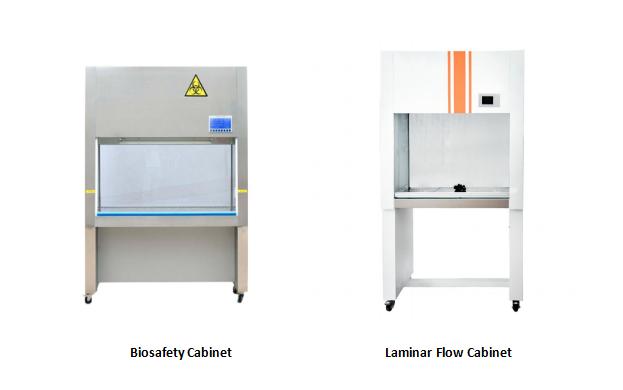
1. Cleanliness Performance: The Filter Is the Heart – Don’t Just Look for “Class 100”
Almost every cabinet claims to meet ISO Class 5 (Class 100). But even among Class 100 units:
- Filter grade differs – Entry level units use HEPA (≥99.99% efficiency at 0.3μm); high end lines use ULPA (≥99.999%). All Drawell laminar airflow cabinets come standard with HEPA filters, plus a replaceable pre filter-think of it as the mesh screen on an air conditioner. You can clean or change it without touching the main HEPA, which easily adds one to two years to the main filter’s life.
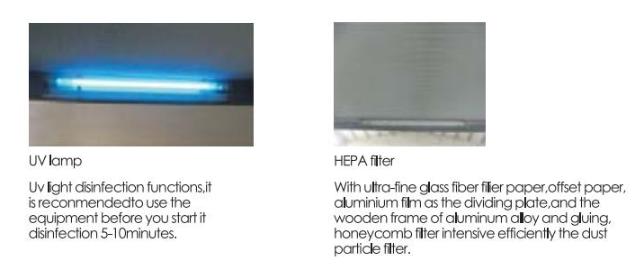
- Airflow uniformity matters more than peak data – Some cabinets meet Class 100 right under the blower, but drop to Class 10,000 at the corners. Our factory reports include five point airflow velocity measurements across the whole work zone-not just a single reading at the centre.
In a word, you aren’t buying a filter; you’re buying uniformly clean air across the entire work surface.
2. Compliance & Certification: Without This Paper, Your Cabinet May Never Enter the Lab
For pharma, hospital, and third party lab procurement, the first thing the acceptance team checks is the documentation.
In China, YY 0569 is the mandatory standard. Drawell equipment complies with it and carries CE and ISO certifications. For export orders, we routinely support NSF/ANSI 49 differential testing when required.
| Certification Type | Applicable Scenario | Drawell Support |
| Type Examination Report | Mandatory for pharma/hospital tenders; proves batch to batch consistency | ✅Official stamped copy available |
| CE Marking | EU exports | ✅ Copy included with shipment |
| ISO 9001 | Verifies factory QMS | ✅ Publicly verifiable |

3. Airflow Direction: Vertical or Horizontal? Let Your Application Decide
This is where most people overthink. The rule is actually simple:
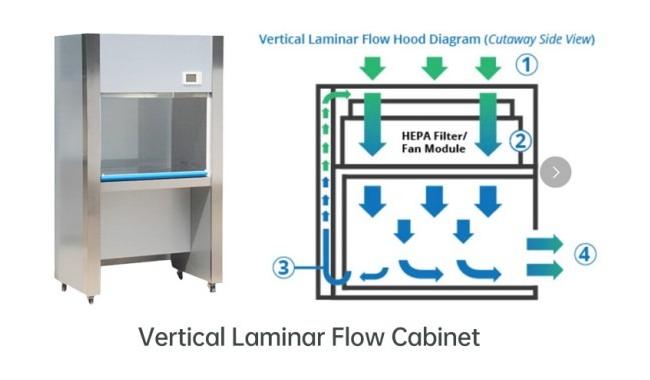
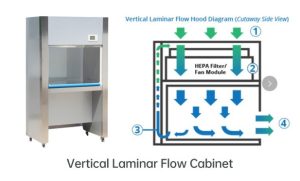
- Vertical laminar flow cabinet – Air moves downward from the top. The sample is upstream of the operator. Ideal for cell culture, media dispensing, PCR setup-you’re protecting the sample, and the vertical flow minimises disturbance from hand movements.
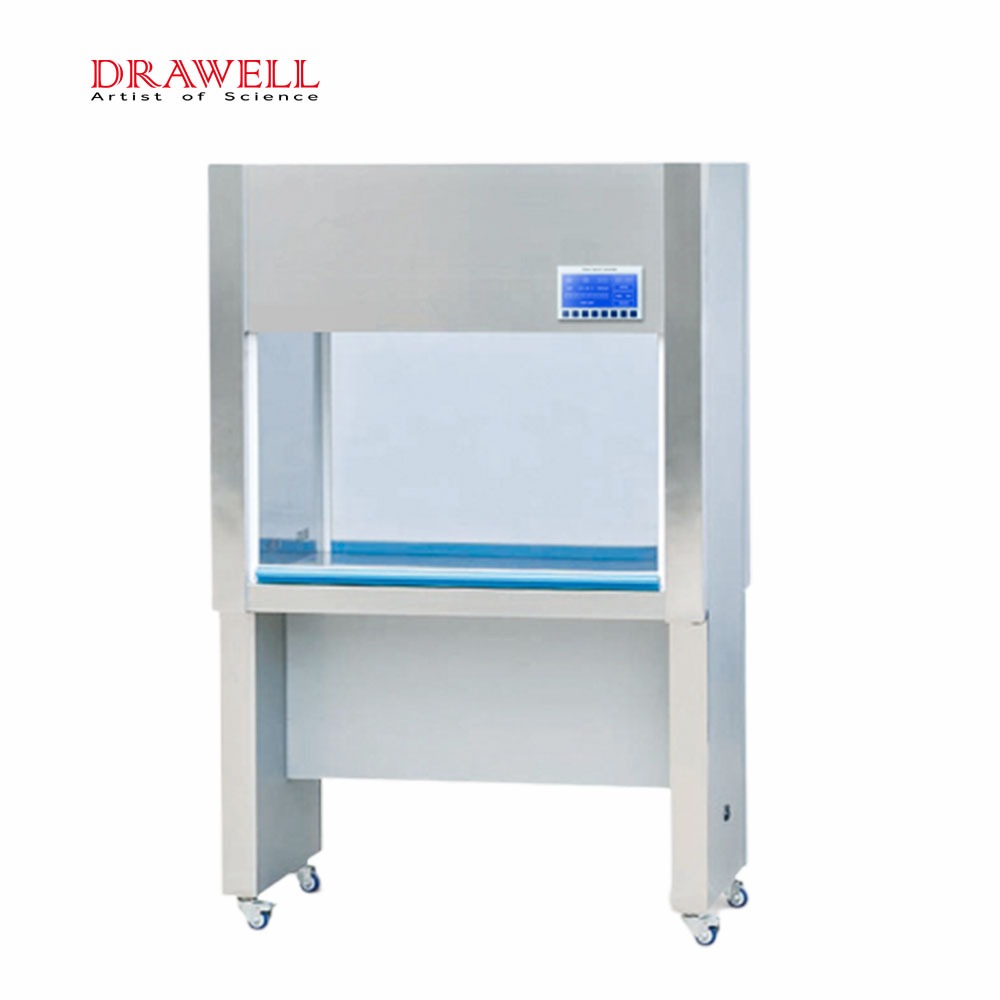
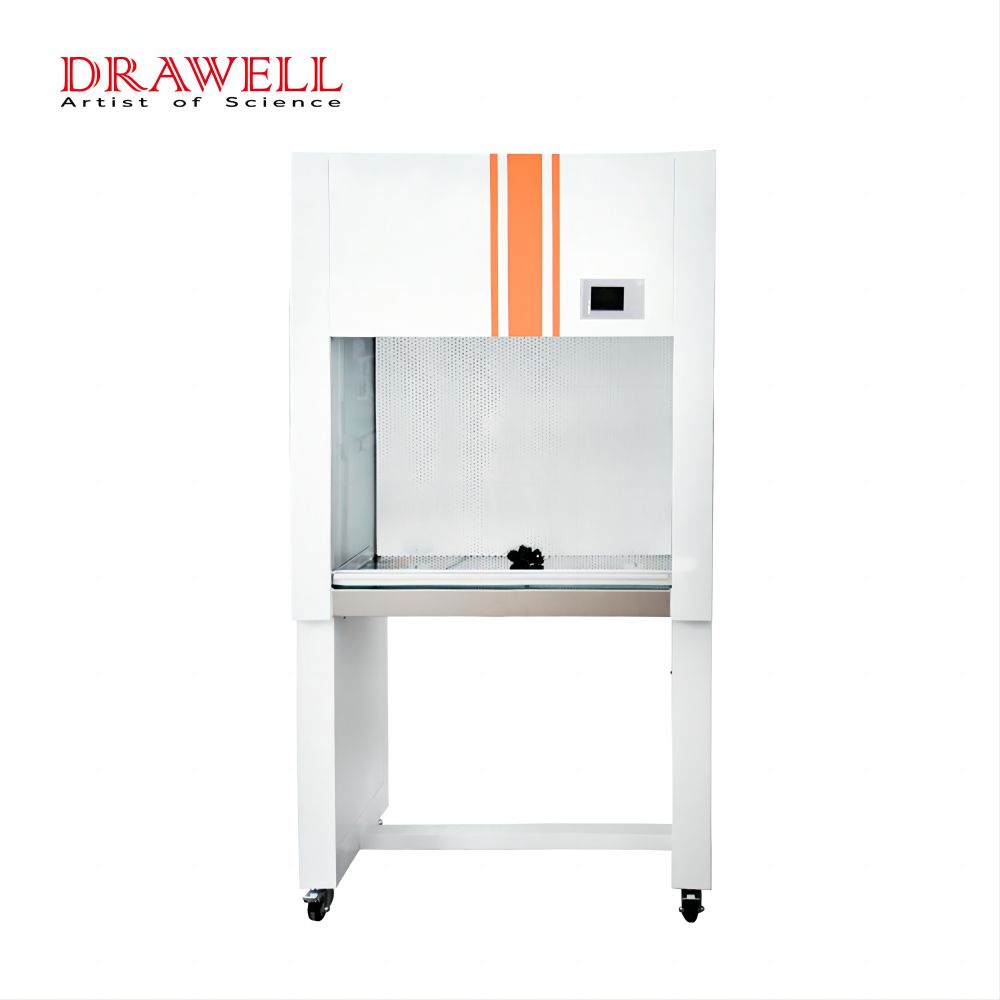
Such as SW CJ 1FD Vertical Laminar Flow Cabinet – vertical flow, UV light interlock, a common choice for molecular biology labs.
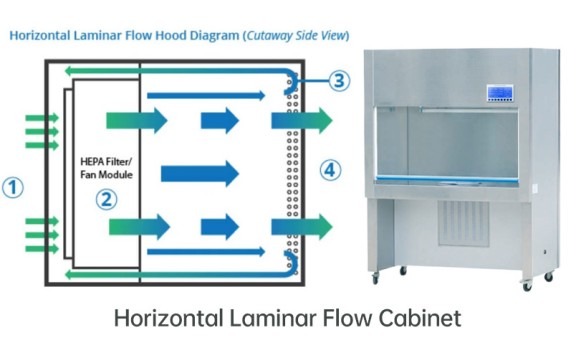
- Horizontal laminar flow cabinet – Air moves horizontally from rear to front. The sample is downstream of the HEPA filter. Suited for electronics assembly, precision optics cleaning, soldering stations-the operator stays upstream, so sample contamination from breath or clothing particles is virtually eliminated.
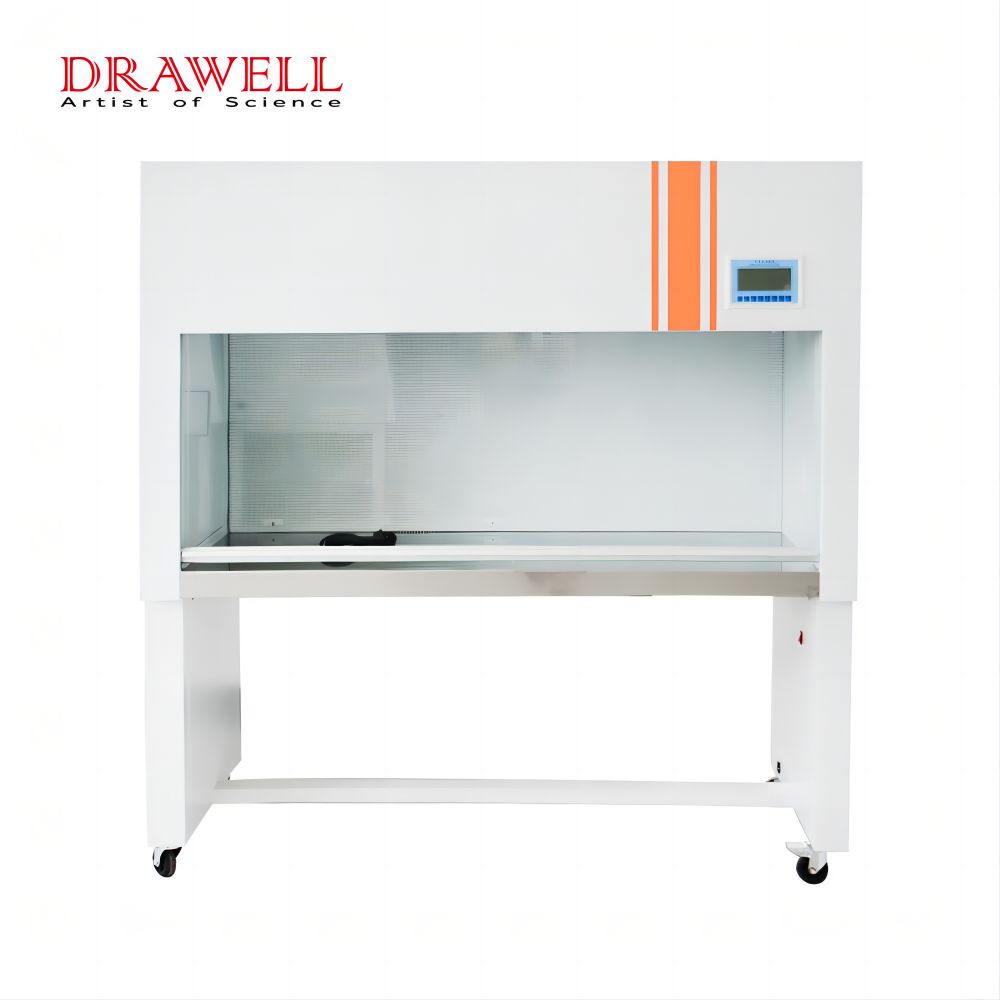
Such as Drawell Horizontal Laminar Flow Cabinet HS 840U – veteran technicians in electronics factories often call it “the horizontal clean bench”.
Vertical/Horizontal Convertible Cabinet SW CJ 1FB/2FB – airflow direction can be switched between vertical and horizontal. One cabinet, two modes. Ideal for labs that frequently change project types.
4. Size & Fit: Don’t Just Measure the Door–Measure Your Own Arms
Many labs only check whether the cabinet fits on the floor. Two often overlooked dimensions:
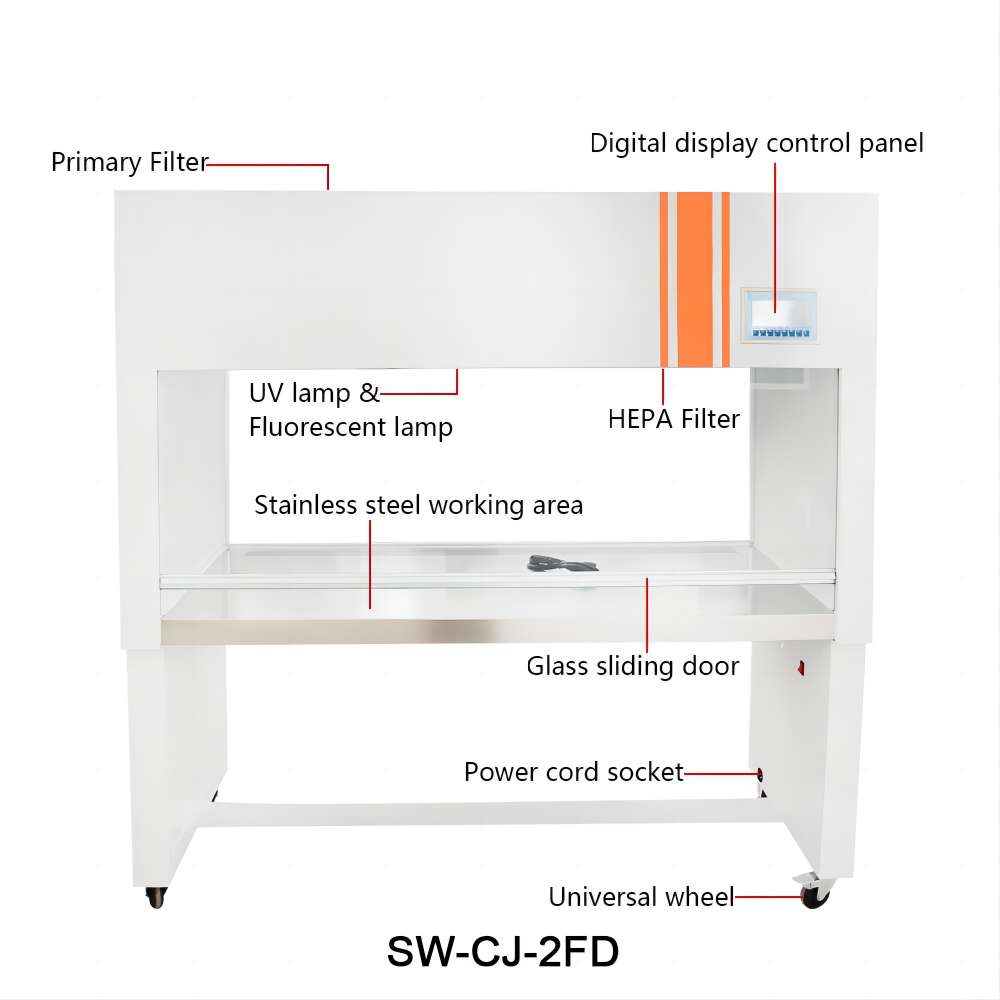
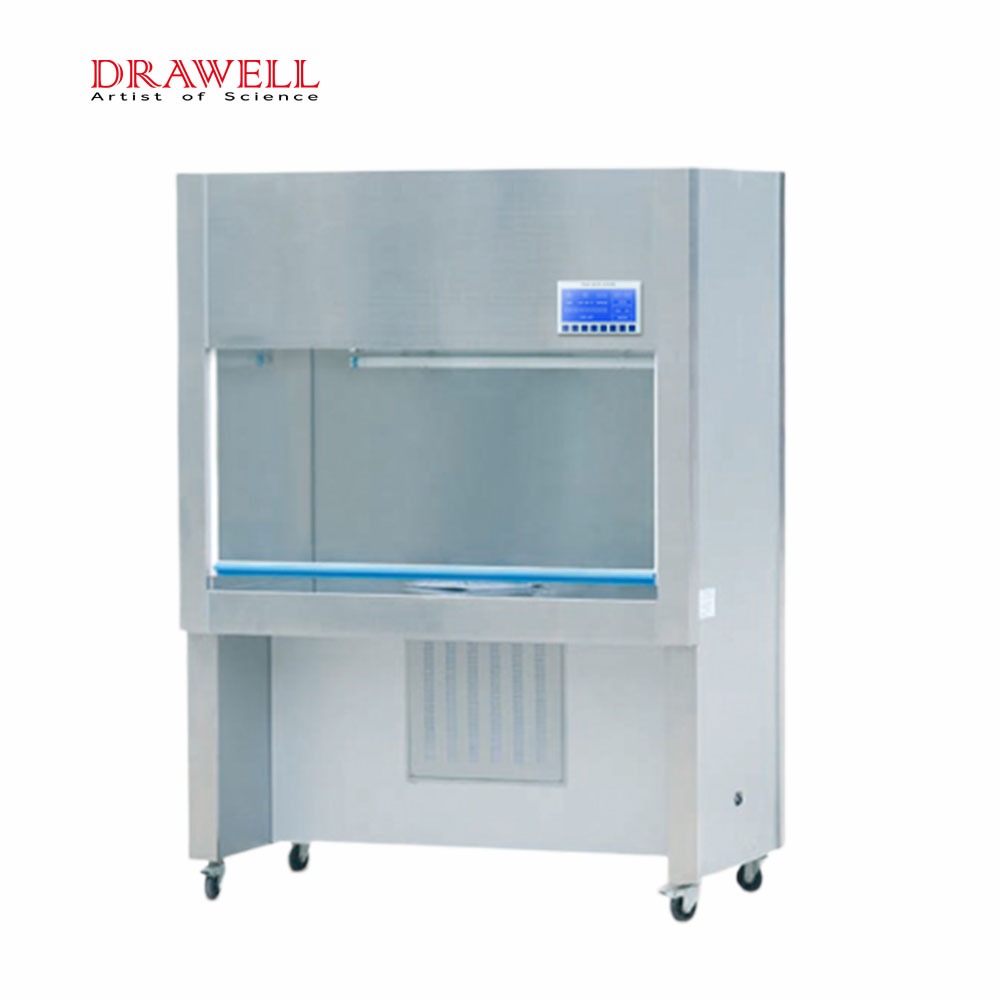
- Comfortable working width – For single user work, we recommend a net work zone width ≥870mm (e.g. Drawell SW-CJ-1F/1FD). For two people working side by side, ≥1320mm (e.g. SW-CJ-2FD). Anything narrower and you’ll be elbowing each other-splitting into two separate units is actually more productive.
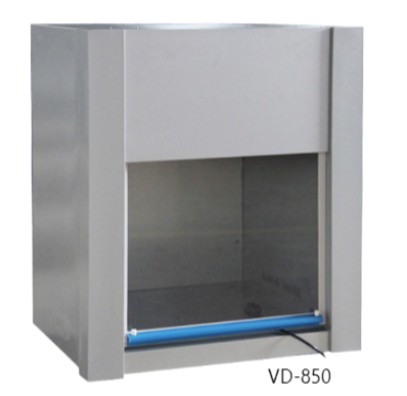
- Headroom for filter changes – Leave at least 300mm clearance above the cabinet. The saddest case we saw: a client fell in love with the SW-CJ-2D (1140mm depth), but a ceiling beam sat right above the installation spot. They ended up with a VD 850 benchtop model-perfectly adequate, but the budget that could have covered a one time purchase had to be split.
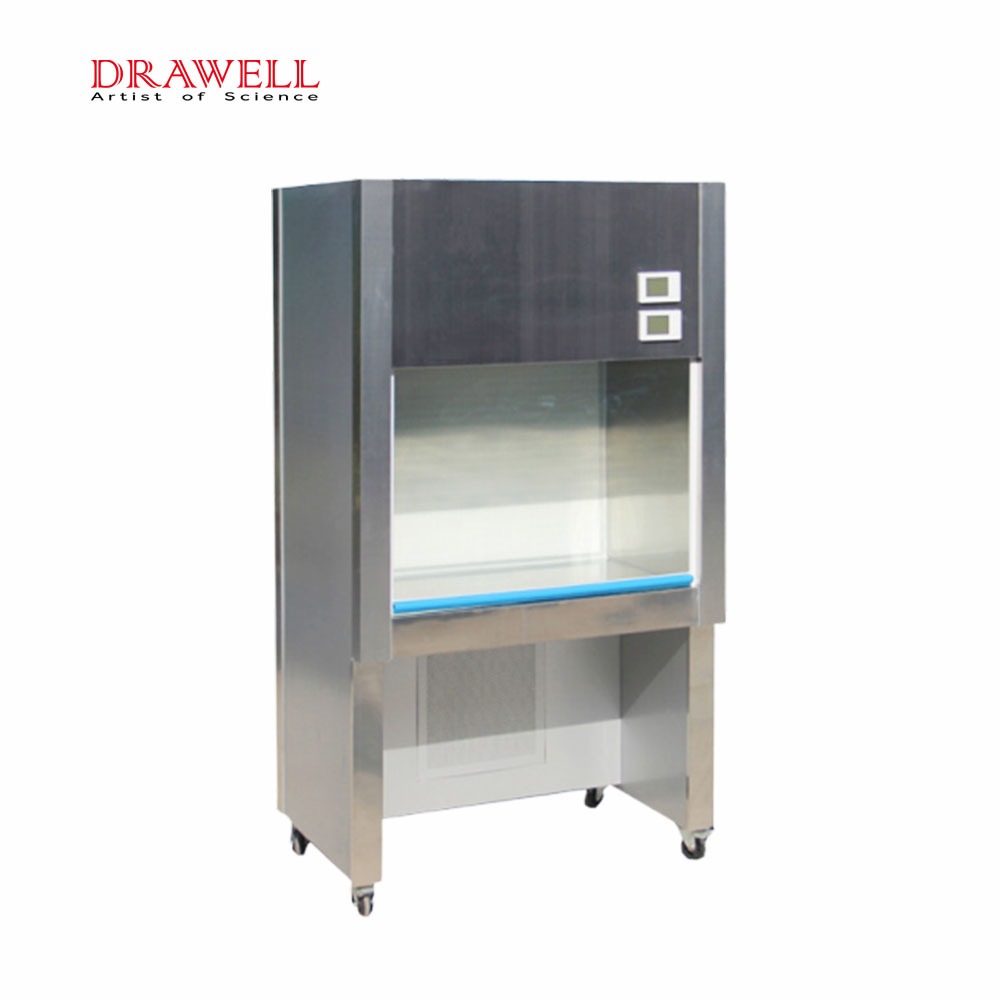
VD-850 Benchtop Vertical Laminar Flow Cabinet – space saver, also a good entry choice for labs with tight budgets.
At Drawell, before we confirm an order, we always ask for your lab door dimensions, elevator size, and ceiling beam height. This isn’t red tape-we’ve learned the hard way, and we don’t want you to learn the same way.
5. Maintenance Cost: What You Save on the Purchase, You May Pay Double for Filters
Over five years, electricity costs far less than filter replacements and service labour. Three details help you calculate the real cost:
- Is the filter a standard size?
Custom size filters = future purchases only from the original manufacturer, and they set the price. Drawell’s benchtop series (VD/HD) use common dimensions like 480×460×38mm and 680×460×38mm-these are widely available from third party suppliers. If you need an emergency replacement, you can often source one locally.
HD-850 Horizontal Benchtop Cabinet – frequently chosen by electronics and precision instrument workshops.
- How many screws to change the HEPA?
Some brands require removing the top cover, unplugging the fan, and disconnecting wiring-labour can cost more than the filter itself. Drawell’s mechanical team made this a design requirement: the fan is modular, top mounted, and the filter frame is secured with just four corner screws. Our distributors report that customers can do it themselves after watching a short video.
- AC fan or EC fan?
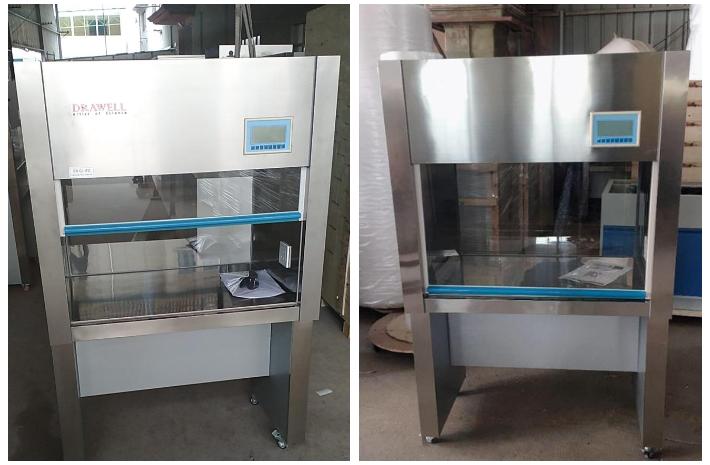
An electronically commutated (EC) motor costs 20–30% more than an AC motor, but it runs 5–8dB quieter and lasts 2–3 years longer in continuous operation. Our mainstream models like the SW-CJ-1FD and 2FD have already switched to EC fans-one client said, “I forgot the machine was on.” That’s the idea.
6. Supplier Capability: Selling You the Cabinet Is Just the Beginning – Being There When You Need Help Is the Real Skill
A laminar flow cabinet is not a “set and forget” instrument. It needs periodic certification, occasional troubleshooting, and filter end of life alerts. How far your supplier is from you matters more than how famous the brand is.
Three questions to separate reliable suppliers from the rest:
- “Can you perform 3Q validation? Who signs the reports?”
For pharma clients, without Installation, Operational, and Performance Qualification reports, the equipment often cannot be capitalised or even used in GMP areas. Drawell supports IQ/OQ/PQ-our engineers can guide you remotely or travel to your site. Reports are available in English or Chinese.
- “How fast do you respond to a service call?”
We don’t claim 24 hour nationwide dispatch, but we put “48 hour response, 72 hour onsite visit” in the contract appendix. For remote locations, we start with a video diagnostic and air freight spare parts immediately. We’ve never had a client wait more than a week for a fix.
- “Do you stock spare parts locally?”
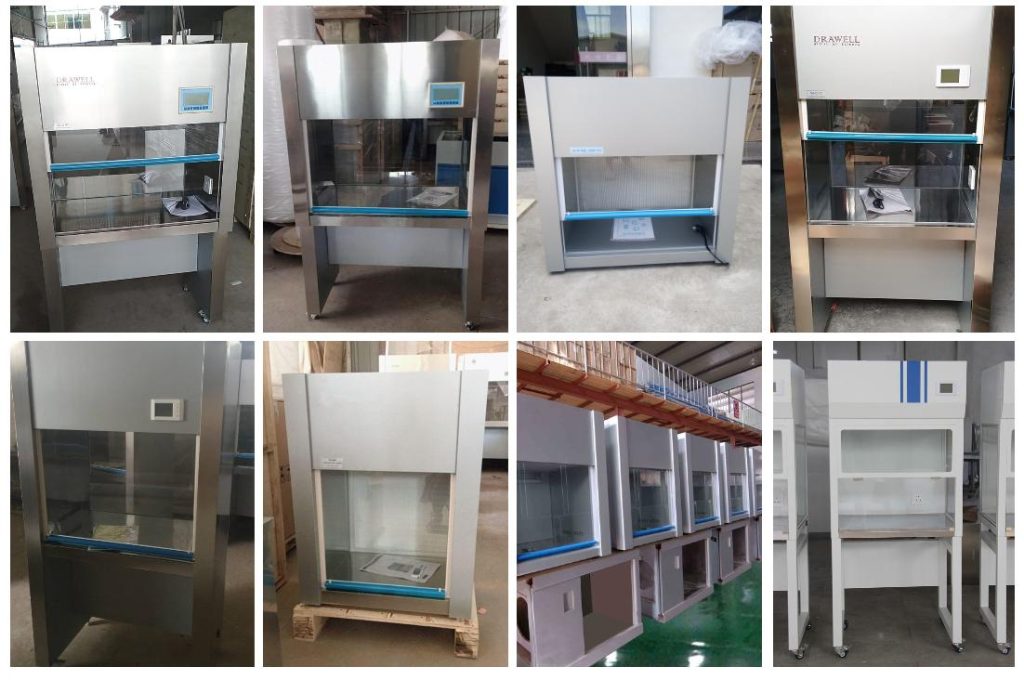
Our Shanghai bonded warehouse maintains inventory of HEPA filters, fans, UV lamps, and control boards–the four high turnover items. During warranty time, we can send product accessories when you need them for free; Technical guidance is free and ready forever.
7. Ergonomics: If Your Staff Stands at It for 6 Hours a Day, Comfort Equals Productivity
Lab technicians don’t read your cleanroom classification reports. They notice: Is it loud? Do my knees hit the cabinet? Does my shoulder ache?
- Noise – The national standard allows ≤67dB, but the difference between 60dB and 67dB is massive in daily perception. Drawell’s benchtop VD/HD series measure ≤62dB-you can hold a normal conversation standing next to one.
- Sash inclination – A flat vertical face vs. a 10° slope makes a huge difference in forearm support. Our full height cabinets have a 12° front slope. A senior technician once told us, “My arm doesn’t feel like it’s floating-I don’t shake when I pipette.”
- Knee space – Some builders skimp on steel and leave a low crossbeam. The SW CJ 2FD has a 700mm depth and a recessed toe kick. Tall engineers have confirmed: your knees don’t hit the front panel when you’re seated.
- UV interlock – Forget to turn off the UV before switching on the light? The lamp won’t light until the UV is off. Open the sash? UV shuts automatically. Not rocket science, but every year this feature saves a few lamps and a few retinas.
8. Appearance & Extra Features: Nice to Have, Not Must Have
This last category is icing on the cake. Spend budget here only after the seven factors above are satisfied.
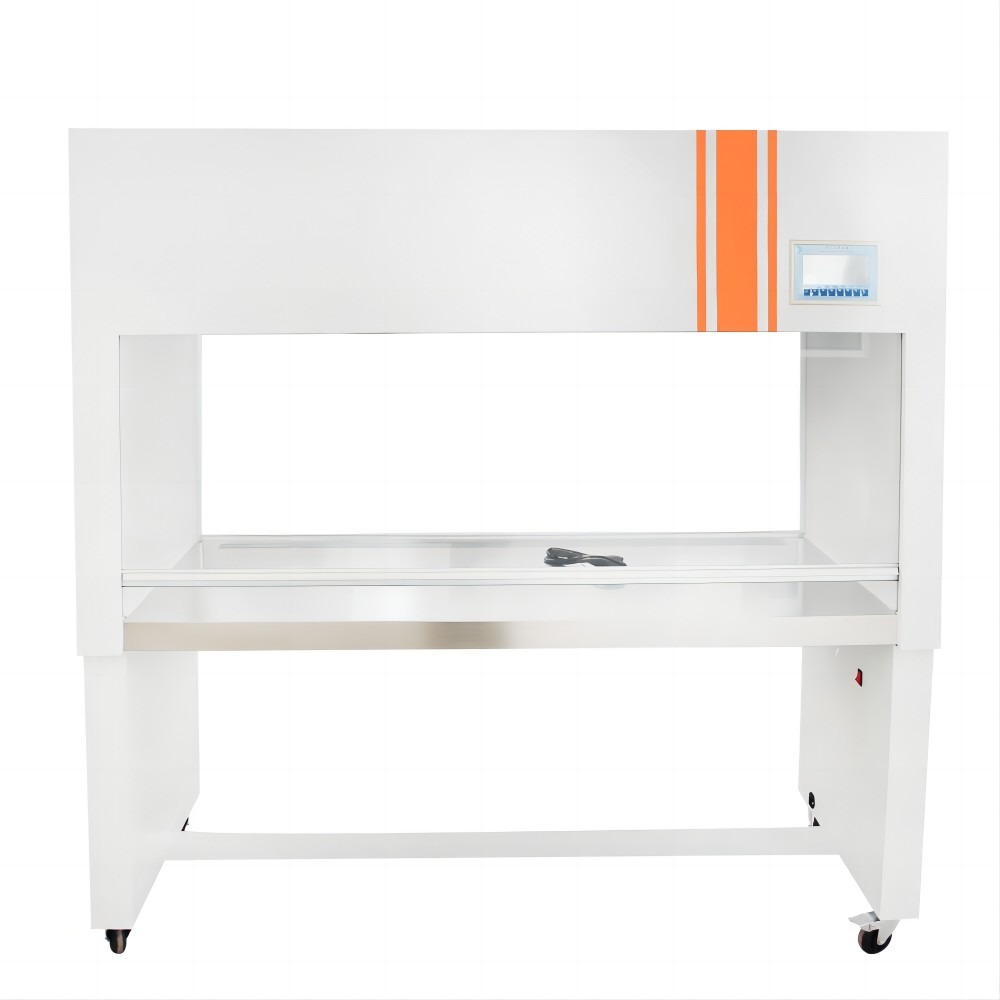
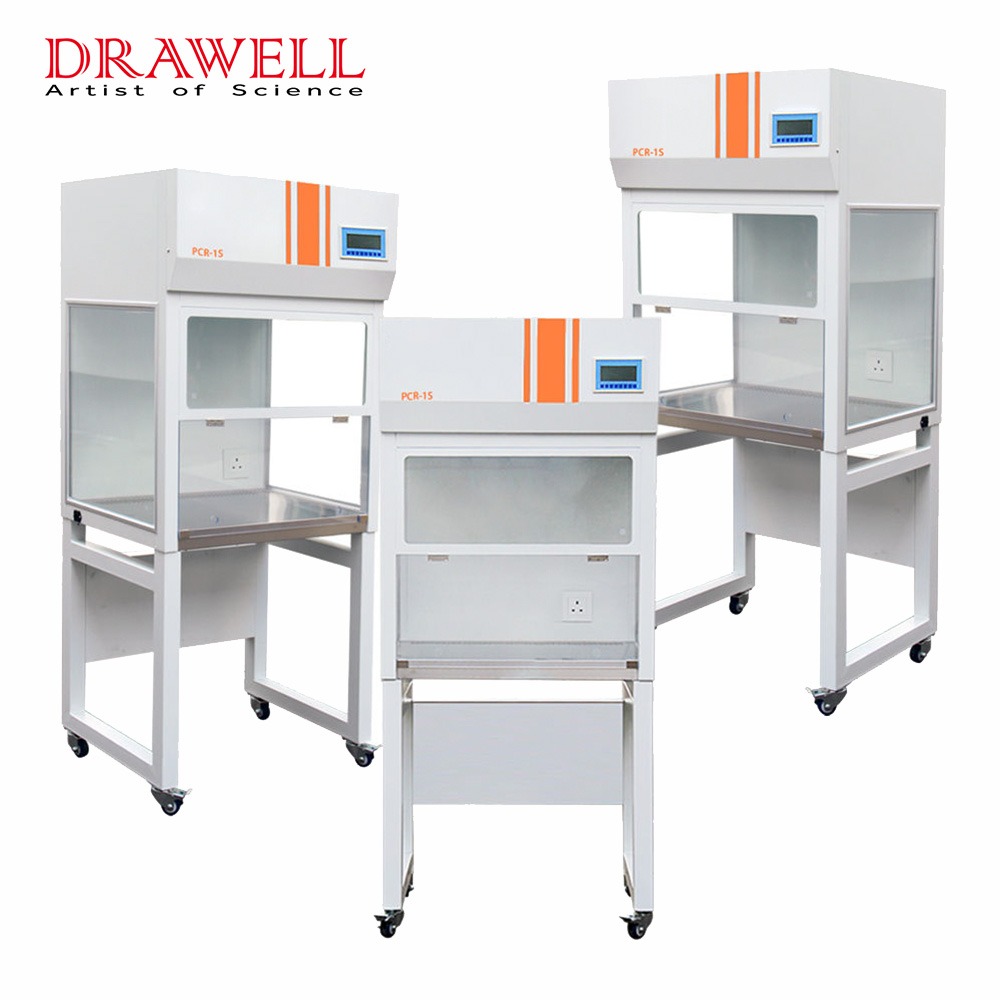
- Material – Cold rolled steel with anti bacterial powder coating (e.g. SW-CJ-1F) resists corrosion and is easy to clean-best value for most labs. SUS304 brushed stainless steel (e.g. the work surface of our PCR series, PCR-1S/2S Laminar Flow Cabinet – seamless welded stainless steel work surface, no crevices to trap contaminants.) is for heavy duty acid/alkali exposure and adds about 30% to the cost. For routine microbiology, tissue culture, or electronics, the steel cabinet is overkill.
- Smart controls – Touchscreens look slick, but with gloved hands, physical buttons are far more practical. Drawell uses LCD displays with tactile membrane buttons. Fan speed (high/medium/low) is shown clearly, and you can operate it with two layers of nitrile gloves without looking away from your work.
- Customisation – Need extended legs, side wall ports, or a different power supply voltage? We’ve been taking OEM orders for years. Feel free to contact us for your needs.
Choosing a laminar flow cabinet is a bit like choosing a daily driver. The 0–60 time on the spec sheet matters far less than how the seat feels during your commute and what the fuel bill looks like at the end of the month.
Drawell’s catalogue doesn’t claim to have a single “perfect” model. What we do have is a wide range of solid options and–more importantly–engineers and salespeople who give straight answers. You bring us your application scenario; we’ll walk you through the trade offs. You’re on a tight budget this year? We’ll suggest a benchtop unit now and an upgrade path later.
Because at the end of the day, a clean bench is just a tool. Its real job is to help you get your experiment done, your product released, or your samples analysed–reliably, affordably, and without surprises.
Got a specific requirement? Send us your lab layout or a quick video of your current setup. We’ll take a look and give you our honest recommendation–no pressure, just years of experience talking.
Related Products Recommendation


Get Quote Here!
Latest Posts


What Next?
For more information, or to arrange an equipment demonstration, please visit our dedicated Product Homepage or contact one of our Product Managers.


