


In modern laboratories, accurate liquid handling is essential for getting reliable results that are actually reproducible. Choosing the right pipette for the required volume range, directly affects precision, efficiency, and experimental success. And because in different applications you end up moving different liquid quantities, understanding how to select the appropriate lab pipette for specific volume ranges is a critical part of lab practice.

The Importance of Matching Lab Pipette Volume to Application
Basically, lab pipette is engineered to work best within a certain volume band. If you use it outside the recommended range, you can get shaky measurements, uneven dispensing and more experimental error. For instance , trying to dispense extremely small volumes with a high-capacity pipette can reduce precision quite a lot. At the same time, using a micropipette for larger liquid transfers can feel slow and awkward, and it wastes time, too.
Selecting the correct pipette helps with:
- Measurement accuracy
- Reproducibility of results
- Workflow efficiency
- Sample integrity
- Operator comfort and ergonomics
Also, proper pipette selection helps reduce contamination risks and cuts down reagent waste, especially when you are handling costly chemicals or biological materials.
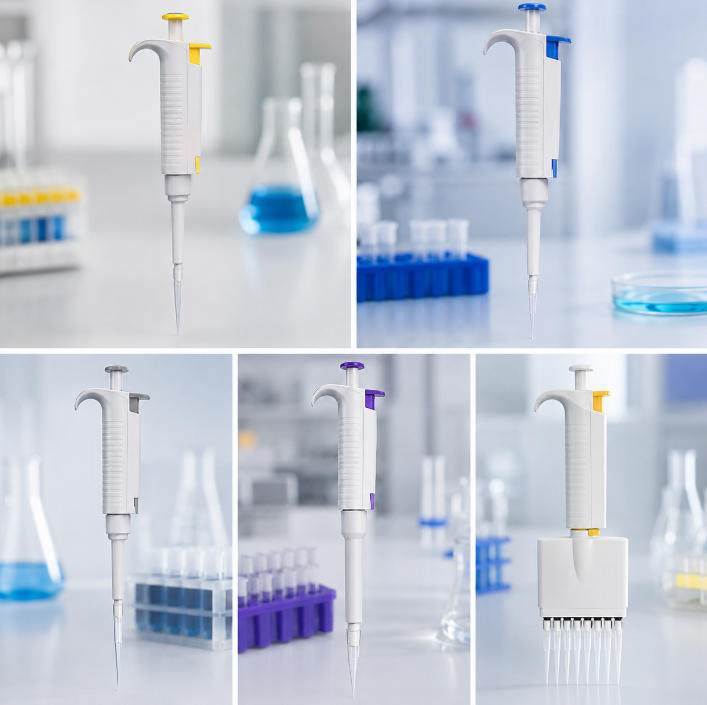
Common Volume Categories in Lab Pipettes
Laboratory pipettes are generally categorized according to the liquid volume they can accurately handle. Each category is suited for specific laboratory tasks.
| Volume Category | Typical Volume Range | Common Pipette Type | Applications | Benefits |
| Ultra-microliter range | 0.1 – 10 µL | Ultra-micropipette / Positive displacement pipette | PCR setup, DNA sequencing, enzyme assays, genomics | Extremely sensitive to technique; requires high precision and calibration |
| Low microliter range | 2 – 20 µL | Micropipette (P20) | Small reagent additions, molecular biology assays | Best for very small sample handling in research labs |
| Medium microliter range | 20 – 200 µL | Micropipette (P200) | ELISA, clinical diagnostics, routine lab assays | One of the most commonly used ranges in labs |
| High microliter range | 100 – 1000 µL (1 mL) | Micropipette (P1000) | Buffer prep, sample dilution, cell culture work | Good balance between volume capacity and accuracy |
| Milliliter range | 1 – 10 mL | Serological pipette / Electronic pipette | Media preparation, microbiology, environmental sampling | Often used with pipette aids or electronic systems |
| Large volume transfer | 10 – 50 mL+ | Serological pipette / Dispensing systems | Industrial testing, large solution preparation | Prioritizes speed and bulk transfer over ultra-fine precision |
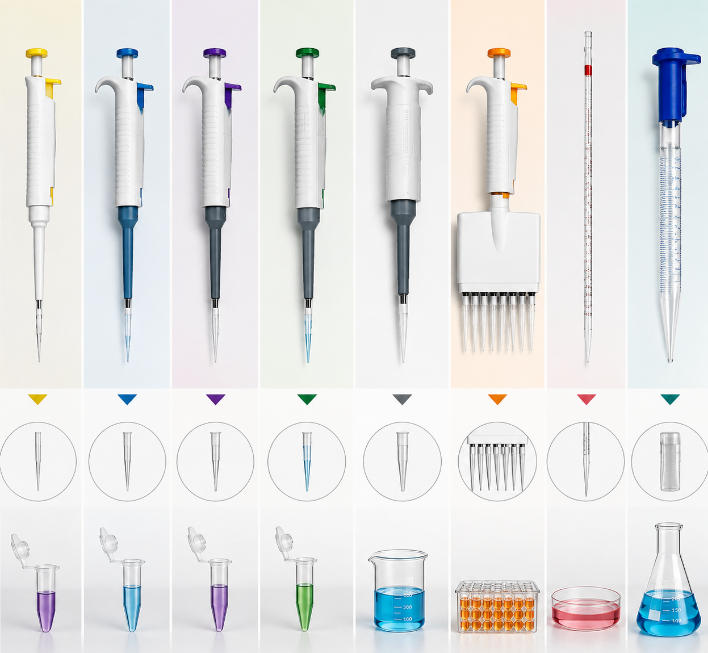
Factors that Influence the Selection of Lab Pipette for Different Volume Ranges
Because laboratories operate across diverse applications, from molecular biology to chemical analysis and clinical diagnostics. Understanding these influencing factors for the pipette choice is essential for reliable performance.
1. Volume Range Compatibility and Measurement Accuracy
One of the main things you have to think about when choosing a pipette is whether the target volume actually fits the pipette’s best operating band. Most pipettes are built to work with the highest precision when you stay within a certain portion of their total capacity. If you start using a pipette right at its lowest , or right at its highest , limit then the measurement precision usually drops. For instance, a micropipette set for 100–1000 µL will typically feel more reliable when you dispense around the middle of that scale , rather than near the very top or bottom. This link between volume range and accuracy is often a big deal in practical work like PCR setup or enzyme assays , because even tiny deviations can skew the experimental results in a real way.
2. Type of Liquid Being Handled
The liquid properties play a major role in determining the suitable pipette type for a given volume range.
| Type of Liquid | Key Properties | Suitable Pipette Type | Recommended Features |
| Aqueous solutions | Low viscosity, moderate surface tension | Standard air-displacement micropipette | Universal tips, adjustable volume models |
| Viscous liquids | High viscosity, slow flow | Positive displacement pipette | Direct piston contact, low retention tips |
| Volatile liquids (e.g., ethanol, acetone) | High evaporation rate, low boiling point | Air-displacement pipette with pre-wetting or positive displacement pipette | Tight sealing tips, pre-wetting capability |
| Foaming liquids (e.g., detergents, protein solutions) | Low surface tension, foam formation | Reverse pipetting-capable micropipette | Reverse pipetting mode, low-retention tips |
| Corrosive liquids (e.g., acids, bases) | Chemically reactive, may degrade materials | Chemical-resistant pipette (PTFE-coated or specialized polymer) | Corrosion-resistant materials, disposable tips |
| Biological samples (e.g., blood, serum) | Variable viscosity, contamination-sensitive | Air-displacement or electronic lab pipette | Filter tips, autoclavable design, sterile operation |
| High-density solutions | Higher mass per volume, altered flow behavior | Micropipette with calibration adjustment or positive displacement pipette | Density compensation, precision calibration |
| Suspensions (e.g., cells, particulates) | Particles in liquid, settling tendency | Wide-bore tips with micropipette or electronic pipette | Gentle mixing, wide orifice tips |
3. Required Level of Precision and Experimental Sensitivity
Different lab applications need different degrees of exactness. In highly sensitive workflows, like genomic sequencing or quantitative PCR , even a tiny volume drift can cause noticeable data inconsistency . In those cases, picking a pipette with better accuracy for the required volume band becomes kinda critical.
Meanwhile, for tasks like buffer preparation or routine liquid transferring, a bit more tolerance in variability might be perfectly acceptable. If you understand how sensitive the experiment really is, you can decide what will fit best, ultra-microliter pipettes, standard micropipettes, or those larger-volume dispensing tools , depending on the situation.
4. Frequency of Use and workflow efficiency
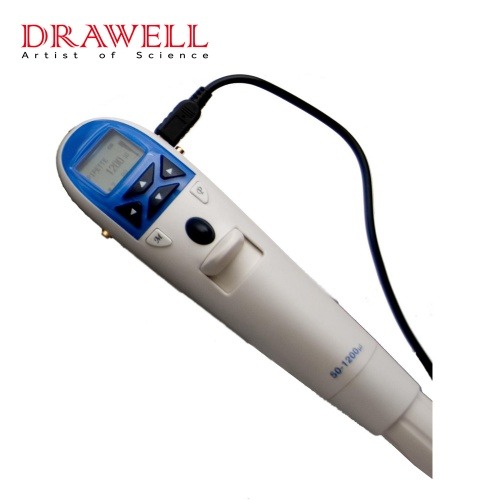
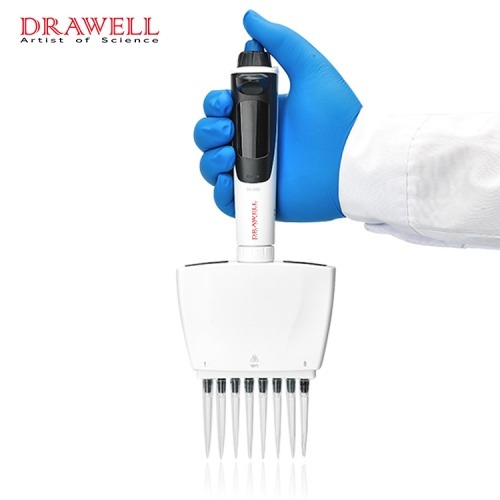
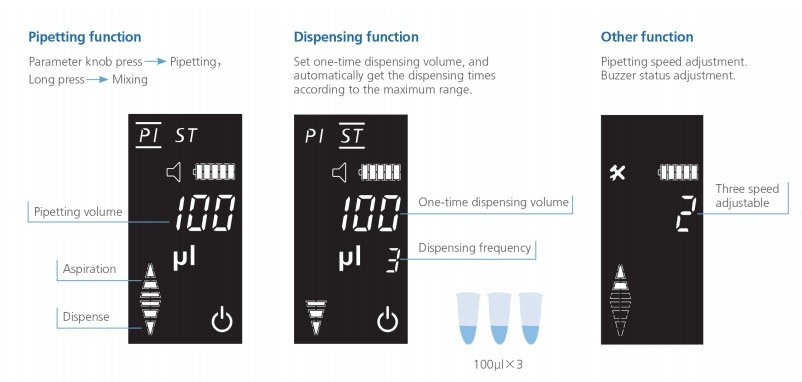
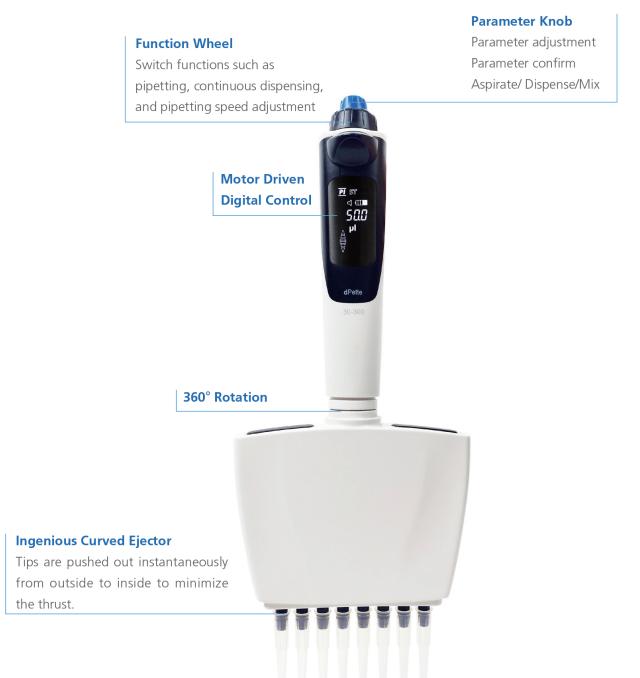
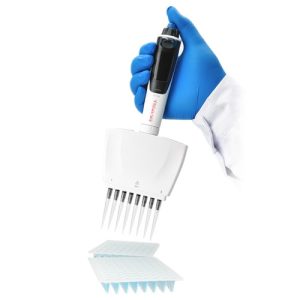
The frequency and intensity of pipetting tasks also kind of steer equipment selection. In high-throughput labs where repetitive liquid handling is happening all day, ergonomic efficiency becomes almost as important, as accuracy. Usually electronic pipettes , or multichannel systems are picked to cut down on manual effort and keep things consistent when you’re in a medium to high volume range.
On the other hand, labs with only occasional use, or more low-volume kind of routines may choose manual adjustable pipettes. Those give flexibility without needing advanced automation. The tradeoff between workload and efficiency helps point to whether simplicity wins out or automation is the better fit.
5. Ergonomics and User Comfort
Ergonomic design is something that’s often underestimated in pipette selection, especially when dealing with medium or large volume ranges that demand frequent repetition. If the instrument is not well designed, prolonged pipetting can cause hand fatigue . or repetitive strain injuries, pretty easily.
Lightweight pipettes with smoother plunger mechanisms, low-force operation, and well balanced structures helps reduce physical strain. This matters even more in clinical, or industrial laboratories, where staff may do hundreds of pipetting actions a day , without really noticing it.
6. Contamination Control and Sterility Requirements
In lots of biological and clinical tasks, preventing contamination is essential, like, always. So the choice of pipettes for different volume ranges should also factor in sterility needs. Things such as filter tips, autoclavable materials, and sealed inner mechanisms help lower the risk of sample-to-sample cross contamination.
For small volume work in molecular biology, even a tiny trace of contamination can mess up results. Because of that, pipette systems made for ultra low volumes usually come with stronger contamination control features than those used for bulk liquid transfer.
7. Calibration Stability and Maintenance Needs
Pipette performance, over time is kind a influenced by calibration stability and how often maintenance happens. Like even if you choose a good device, it still has to stay accurate under repeated use, especially when it’s being used across different volume ranges. That really depends on servicing being done regularly and on basic handling that’s not messy or careless.
High-precision pipettes, especially those meant for low-volume work, need more frequent calibration checks. For larger-volume pipettes, they’re often more resilient, but they still depend on correct maintenance so they stay dependable long term. So labs should think about how quickly a pipette can be calibrated and then kept in service when choosing it for routine tasks.
8. Application-Specific Requirements
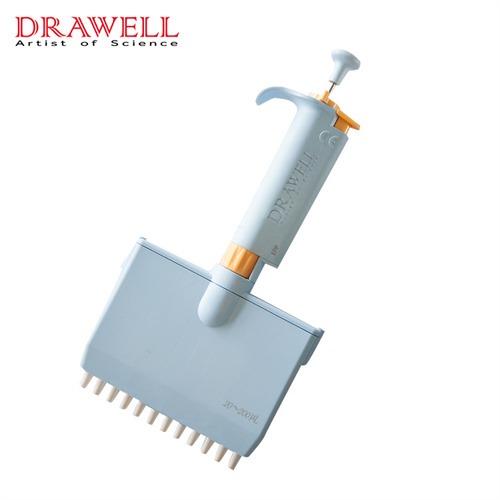
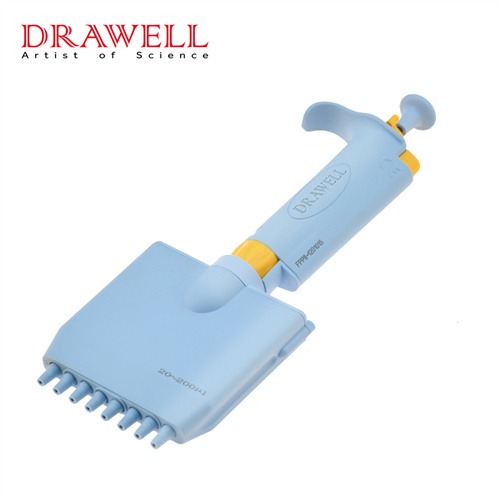
In the end, the actual application something like it, more often than not, decides which pipette you pick, rather than any single other factor. Research labs, diagnostic centers, and industrial testing stations all run their own distinct routines, and those routines shape the preferred volume range, plus the pipette type that feels most natural. For example, in molecular biology you typically want reliable ultra low volume precision, but in environmental testing it may be more important to manage larger sample volumes in a sturdier way. When you grasp the real working context, you make sure that the chosen pipette matches the technical needs, while also fitting the day to day workflow demands.
.jpg)

Final Thoughts
Selecting the right lab pipette for different volume ranges is kind of essential if you want accurate , and also reproducible lab results. Because there isn’t really one pipette that works for every use, labs should take a careful look at what volume is actually needed, what the liquid behaves like, how much precision is required, and even how busy the workflow is before choosing lab pipetting equipment. When you match the pipette to the target volume band and keep up with correct calibration routines, labs can end up with more trustworthy experiments, smoother day to day operations, and better quality scientific outcomes across a large set of analytical and research use.
What Next?
For more information, or to arrange an equipment demonstration, please visit our dedicated Product Homepage or contact one of our Product Managers.


